


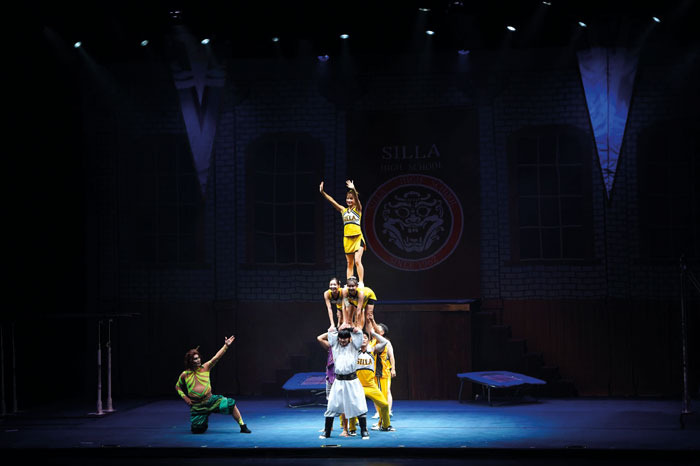
Since establishing diplomatic relations in 1973, South Korea and Indonesia have continued to strengthen cooperation across a wide range of fields. While the relationship was initially centred largely on economic and industrial collaboration, the past decade has seen a significant shift towards a more cultural and people-oriented partnership. Recognising this growing exchange, the Korean Cultural Centre Indonesia (KCCI) was established to bring Indonesians closer to Korean culture through programmes, performances, language initiatives, and creative collaborations.
KCCI, dedicated to promoting South Korean culture abroad, operates under the Ministry of Culture, Sports, and Tourism of the Republic of Korea. Since opening in Jakarta in 2011, it has introduced the country’s heritage and traditions to the Indonesian public while serving as a platform for cultural exchange.
One of KCCI’s main programmes is Korean language education through the King Sejong Institute (Sejong Hakdang), which offers regular language classes alongside various cultural immersion activities. It is also home to a library containing more than 2,000 books in Korean, Indonesian, and English, as well as K-Pop albums, films, and television dramas that visitors can freely access and borrow.
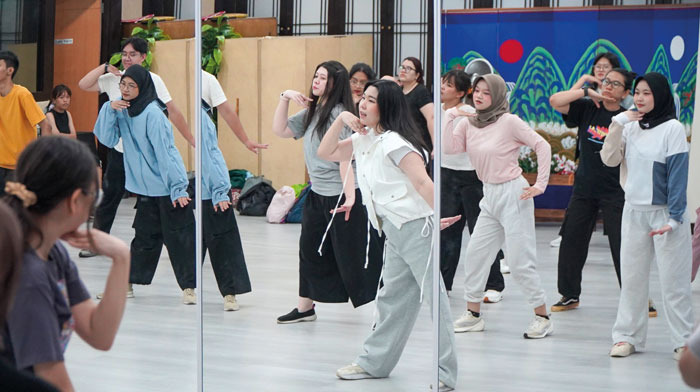
Each year, KCCI’s K-Pop Academy attracts growing interest, offering participants a unique experience of diving into the energising world of K-Pop through structured dance and performance training.
The centre has also broadened its programming to spotlight traditional arts, traditional music, film, literature, and K-Beauty. Recent events include an exhibition of silk lanterns from Jinju and Jongmyo Jeryeak, a ritual performed to honour the ancestral kings and queens of the Joseon Kingdom.
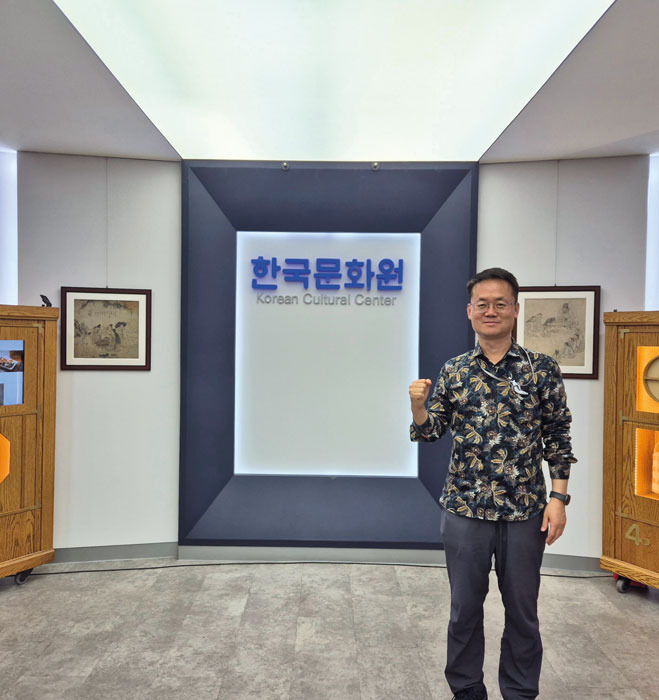
KCCI has also organised talchum (traditional performance using masks) and samulnori (percussion music and dance) workshops at an arts school in Yogyakarta, as well as geommu (sword dance) and sanjo (folk dance) classes at Jakarta State University.
“KCCI consistently hosts various performing arts programmes. However, they are not fixed programmes with the same format; rather, they are organised around different themes each year,” explains KCCI Director Lee Sang Jun. “Our K-Pop-related events continue to receive an overwhelmingly positive response. Our flagship K-Pop Academy and the K-Pop Cover Dance Competition at KOREA 360, which are held annually, receive tremendous enthusiasm from the younger generation. In my opinion, these activities are no longer simply fan culture, but have evolved into a youth culture that provides space for learning, expression, and creativity.”Culture, he adds, should create empathy and mutual understanding through direct experiences and two-way exchange, which is why KCCI is also committed to promoting Indonesian traditions and expanding collaborative programmes in the future.
The events include the Oullim Korean Cultural Festival in Bandung, West Java, on 5–7 June, and in Surabaya, East Java, later this year.
Korean Cultural Centre Indonesia
Equity Tower 17th Floor
Jl. Jend. Sudirman, SCBD, Lot 9,
South Jakarta 12190
+62 21 29035650
@kcc.id
id.korean-culture.org