


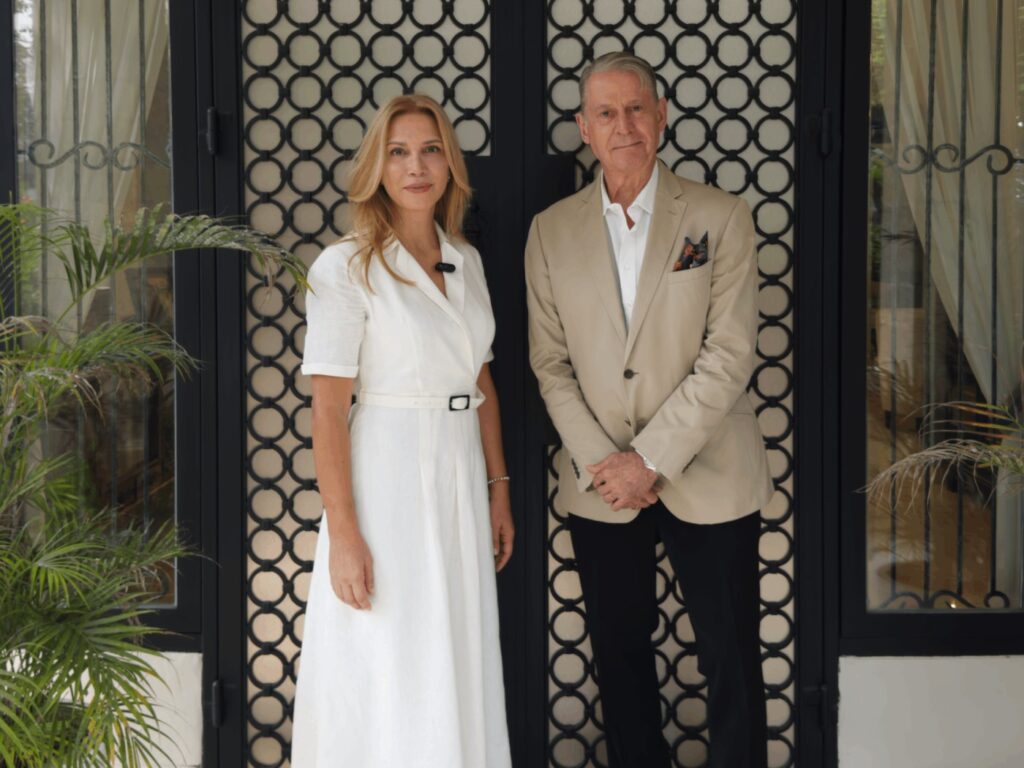
In this thirteenth edition of our series of ambassador interviews, we again change track and head to Eastern Europe, where there is a wealth of history and an abundance of culture about which we perhaps do not know enough. To rectify that, NOW! Jakarta founder Alistair Speirs (AGS) sat down to uncover the history and current relationship of Bulgaria with their Ambassador Extraordinary and Plenipotentiary, Mme. Tanya Dimitrova Dimitrova, Ph.D (TDD).
Dr Dimitrova holds not only a Doctorate but four Master’s Degrees in Economic Relations, Business Administration, Theology, and Psychology, making her a formidable academic as well as a diplomat. She has served in Indonesia since 2024 and, before that, held posts in Italy and Croatia, as well as becoming the Governor of the Yambol Region. She is widely published across a number of fields, in both books and articles.
AGS: What have been the high points in the relationship between Bulgaria and the Republic of Indonesia over the years? Were there any breakthrough moments that stand out?
TDD: The relationship between Bulgaria and Indonesia has been stable and gradually expanding, with several periods of stronger momentum that stand out as real milestones.
First, 2026 marks 70 years of diplomatic relations, which is not merely symbolic — it reflects continuity and mutual respect, with the relationship developing steadily across different geopolitical contexts.
If we look at more recent developments, a key moment has been the renewed high-level political engagement. The visit of Bulgaria’s Deputy Foreign Minister to Indonesia in 2025 helped further strengthen the dialogue and acted as a catalyst for a broader intensification of bilateral contacts, leading to more regular political consultations, stronger institutional interaction, and a more structured and consistent exchange between the two countries.
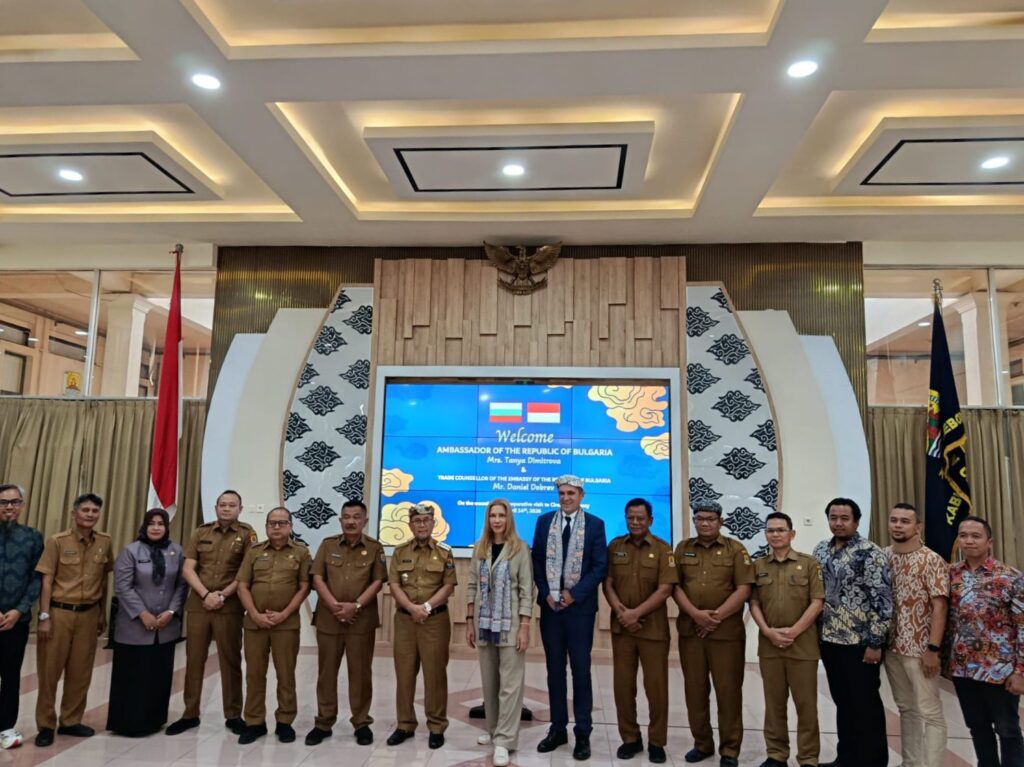
Another important step forward is the shift towards more structured economic cooperation. The work of the Joint Commission for Economic Cooperation and the increasingly direct engagement with Indonesian institutions — such as the ministries of trade, investment, and industry — demonstrate that the relationship is becoming more practical and results-oriented.
I would also point to the growing role of the European Union dimension. Bulgaria is not acting in isolation, but as part of the EU’s broader engagement with Indonesia, especially through the EU–Indonesia Partnership and Cooperation Agreement. This adds weight and opens additional opportunities for trade, investment, and political coordination.
Finally, what is increasingly visible in recent years is a transition from a traditionally diplomatic relationship to one that is more dynamic, multi-sectoral, and future-oriented — including cooperation in areas such as digitalisation, innovation, and connectivity.
AGS: What are the strongest elements in the relationship today? What are the factors and sectors that you are concentrating on most?
TDD: I would say that the current agenda of bilateral relations is shaped by the tense and rapidly evolving global and regional environment, which requires both synchronised and flexible engagement across the detailed and specific aspects of our comprehensive dialogue, whilst taking into account the national specificities of Bulgaria and Indonesia.
This implies concreteness in the political dimension, efficiency in the economic field (increasing trade turnover from EUR 185 million to EUR 250 million), and tangible social impact in relations between the two nations and their citizens (sectoral policies and projects either ready or under implementation, involving the maximum number of cooperating stakeholders).
The political dimension is expressed through the development of a legal framework on various bilateral issues and institutional cooperation. In this context, it is important to highlight cooperation in education and culture, the active political dialogue between the Ministries of Foreign Affairs of Indonesia and Bulgaria (exchange of information and positions on regional and global issues at expert level), and the Memorandum of Understanding on labour migration initiated by the Indonesian side.
At the institutional level, the signing of cooperation agreements is planned between the Bulgarian Drug Agency and BPOM (Indonesia’s Food and Drug Authority), between the Chief Mufti’s Office of the Republic of Bulgaria and BPJPH (Indonesia’s Halal Agency) in the field of halal certification, between the development banks of the two countries, between the national libraries, and between the arbitration courts of both sides, amongst others. These will contribute to strengthening partnerships in areas of mutual interest.
The economic dimension has been marked by concrete actions and active participation of companies, institutions, and associations. The regional aspect of cooperation should be noted, highlighted by the visit in December 2025 of a delegation from RAO Trakia, comprising 11 mayors and an accompanying business delegation. A visit by regional chambers of commerce from two Bulgarian cities to Indonesia is also planned for 2026.
Sectoral cooperation has developed in the automotive industries of both countries (a trade mission of the Bulgarian Automotive Cluster at the INAPA 2025 international exhibition, organised by the Bulgarian SME Promotion Agency). Bulgarian products such as natural cosmetics, food supplements and pharmaceuticals, machinery, and equipment have entered the Indonesian market, whilst the sustained presence of traditional exports such as wheat and technical oils has increased. Cooperation in IT development and advanced communication solutions (satellites, radar systems) has accelerated. Initial steps have been taken towards cooperation in the defence sector and joint arms development, as well as the participation of Bulgarian companies in energy projects (renewables, cogeneration, etc.).
Investor interest from Indonesia in Bulgaria is increasing, particularly in the establishment of hybrid economic zones (combining production, training and practice, and high technologies), based on public-private partnerships, driven by Bulgaria’s favourable macroeconomic and tax environment.
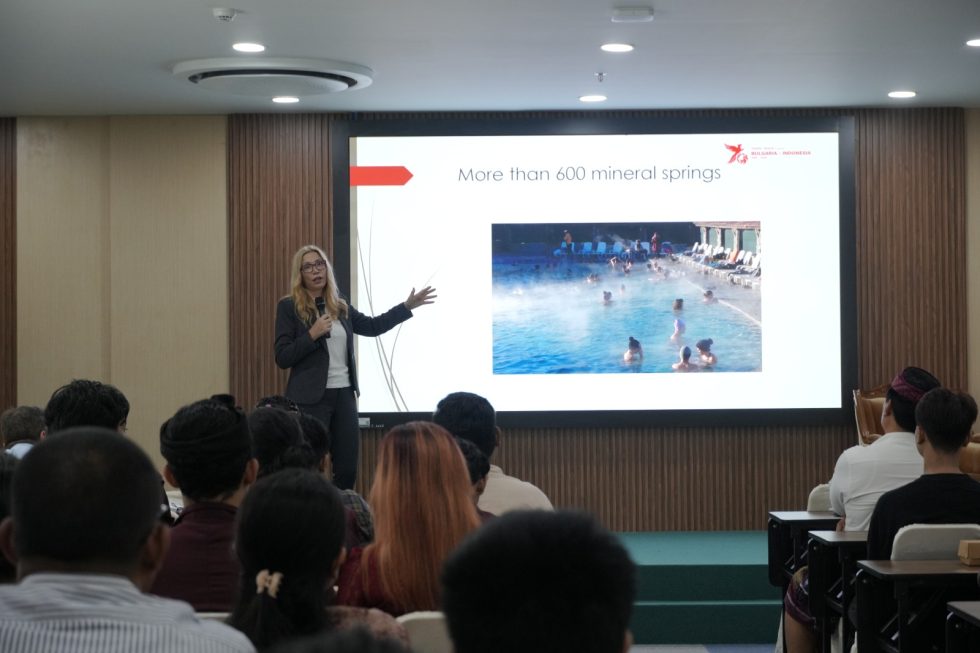
Sectoral projects are developing in the following areas:
- Science and education: cooperation under ERASMUS+ and exchange of specialists in fields such as ecology, the green and circular economy, energy efficiency, testing of IT modules, and the use of artificial intelligence in sectoral platforms and applications.
- Tourism: development of specialised historical, religious, and congress tourism, including engagement of companies for product and package promotion and targeted campaigns.
- Labour mobility: recruitment and placement of skilled workers from Indonesia, with approximately 2,000 workers expected to be engaged this year in sectors such as services and manufacturing.
- Cultural exchange: based on twinning between cities and regions, interest groups, and the expansion of cultural projects and participation in events, involving a broad range of social groups from both countries.
AGS: What about the future — where do you want to take the relationship?
TDD: Looking ahead, the goal is clear: to move from a solid but still relatively modest partnership to a more strategic and visible relationship.
First, politically, we want to upgrade the level of engagement, including more frequent high-level visits and a more structured dialogue on global issues such as security, energy, and food resilience.
Second, economically, the focus is on scaling up real business presence — not just contacts. That means:
1) Increasing Bulgarian exports to Indonesia
2) Attracting Indonesian investments in Bulgaria
3) Integrating Bulgarian companies into larger regional projects, especially in infrastructure, logistics, and digital transformation
Third, there is a clear ambition to connect innovation ecosystems — linking start-ups, research institutes, and universities, especially in digital technologies and applied science.
Another key direction is people-to-people connectivity — education, cultural exchange, and mobility. This is often underestimated, but it creates long-term impact and trust.
And finally, Bulgaria aims to position itself more clearly in South-East Asia by:
1) Deepening engagement with ASEAN
2) Joining regional frameworks such as the Treaty of Amity and Cooperation
3) Using its EU membership to act as a bridge between Indonesia and Europe
In short, the future is about moving from potential to scale — more visibility, more projects, and more tangible results.
AGS: Thank you, Your Excellency. This was a very revealing and positive overview of the excellent relationship between your country and the Republic of Indonesia, and it indicates a very promising future together.
Learn more about Ambassador Extraordinary and Plenipotentiary, Mme. Tanya Dimitrova Dimitrova, Ph.D & Bulgaria here: @tanya_di_dubes_bulgaria