


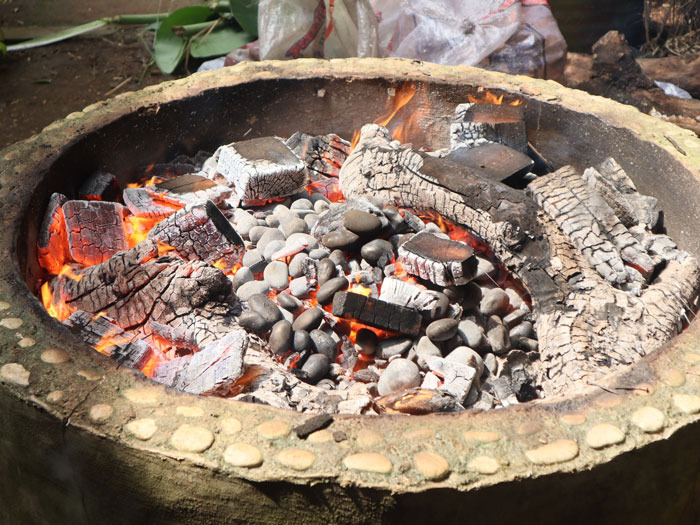
New Zealand and Indonesia recently enjoyed a moment of ‘gastronomic diplomacy’, expressed through a presentation of traditional cooking methods shared by both the Māori and Papuan peoples. Using roaring fires to heat stones that are later layered with fresh ingredients, the process produces dishes deeply rooted in ancestral culinary heritage. Beyond sustenance, this shared method reveals a common sense of taste, respect for nature, and cultural values that connect the two countries.
Puffs of smoke rose into the air, against the lush green backdrop of Vida Bekasi, West Java. At first, onlookers were unsure what was unfolding before them. Stones were heated until they reached an intense temperature, then carefully arranged with fresh ingredients before being neatly covered with banana leaves, clay, and gunny sacks. Hours later, as the layers of banana leaves were peeled back one by one, hot steam billowed from within—a clear sign that the food had been perfectly cooked. What began as smoke slowly transformed into fragrant steam, drawing people closer.
At the heart of the ritual stood a proud Māori man, whom we soon came to know as Chef Kia Kanuta, who softly sang Hoki Mai, a 1940s folk song written to welcome Māori soldiers returning home after World War II. The song, gentle yet resolute, filled the space with emotion. Auckland-based and deeply connected to his roots, Chef Kanuta wore his heritage visibly; his tā moko mataora, the traditional Māori facial tattoo, spoke of ancestry tied to a coastal clan in Kerikeri, Northland.
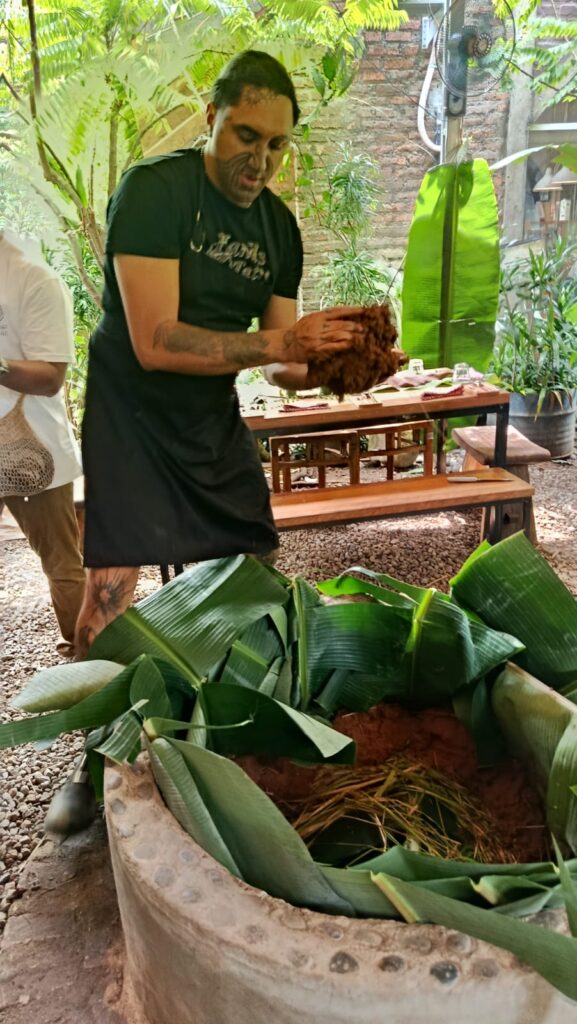
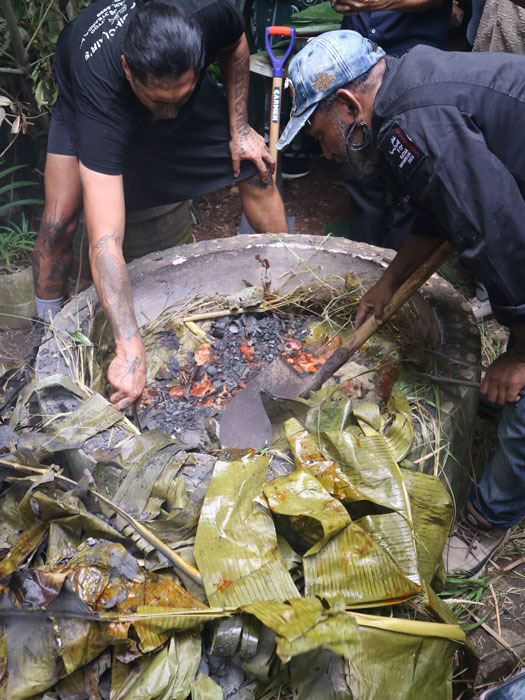
This was New Zealand’s hāngi, a traditional Māori cooking method in which food is wrapped and slowly cooked beneath the earth over heated stones. More than a culinary technique, hāngi is a communal ritual, one that honours patience, respect for nature, and the act of coming together. The flavours that emerge are subtle but complex: delicately smoky, tender, and deeply grounding.
With a tong in hand, he carefully lifted away the hot stones, leaves, and sacks, revealing neatly stacked banana-leaf parcels beneath. Pausing for a moment, he smiled. “It’s beautiful,” he said quietly, an expression of reverence as much as satisfaction, before joyfully plating the food and sharing it with the gathered guests.
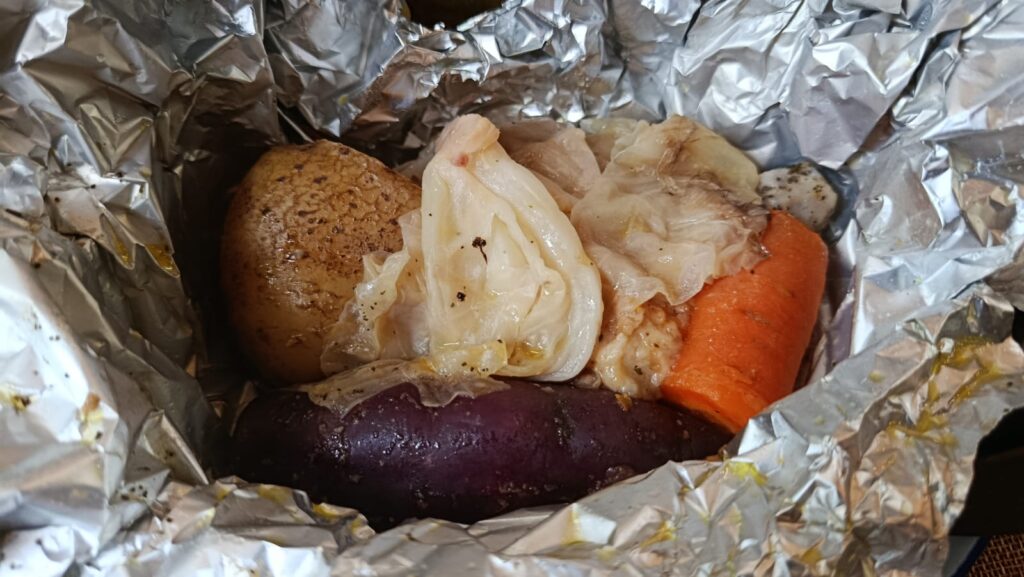
For this occasion, Chef Kanuta presented a thoughtful selection of ingredients: purple yam, potatoes, carrots, and chicken—wrapped in aluminium foil and banana leaves. It was an ancient cooking tradition, adapted gently to its surroundings, yet uncompromised in spirit.
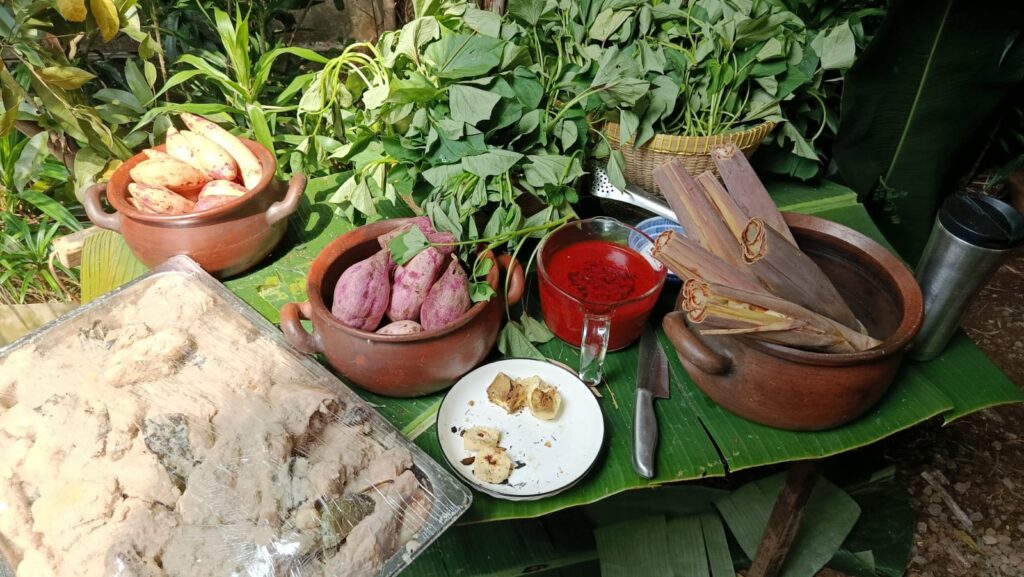
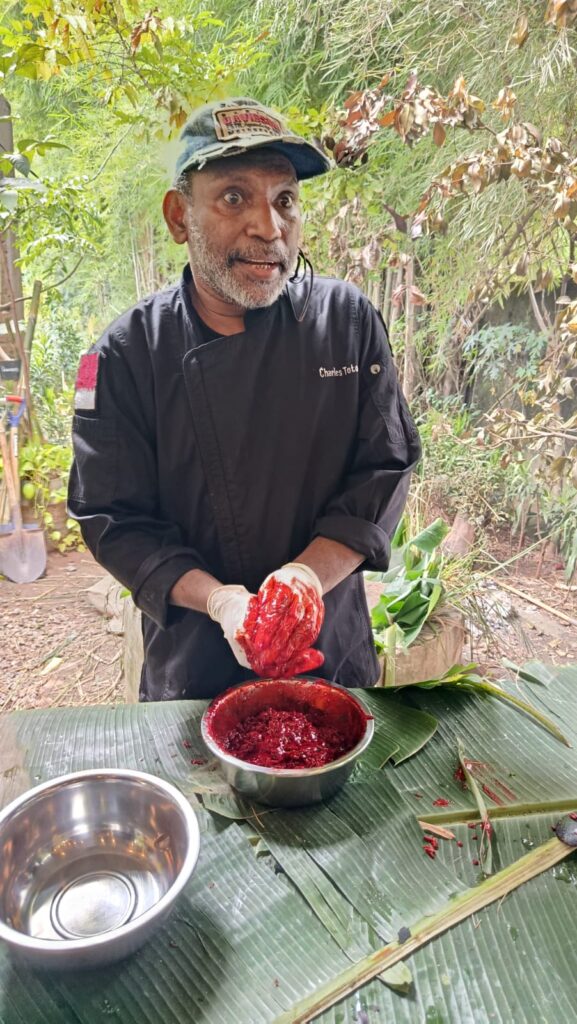
In addition to chicken, purple yam, and sweet potato, Chef Toto’s bubigi features distinctive local ingredients such as the Papuan crimson-red Pandanus conoideus fruit (buah merah) and terubuk—literally known as sugarcane eggs (Saccharum edule)—which have a taro-like taste, as well as tender sweet potato leaves.
Alongside Chef Kanuta, Papuan “jungle chef” Charles Toto, widely known as Chef Chato, presented bubigi (bakar batu), a powerful communal cooking ceremony where hot stones, layered ingredients, and natural steam come together. Chef Toto explained that bubigi is a specific cooking method practiced by the Intan Jaya tribe of Central Papua. More than a culinary technique, it reflects a Papuan philosophy of cooking without heavy seasoning, allowing flavours to emerge naturally from the ingredients themselves. Traditionally, bubigi is reserved for sacred occasions such as wedding vows, the coronation of tribal chiefs, and large communal celebrations that unite entire clans. In this case, it was for a rare moment of cultural exchange.
Unlike hangi, bubigi does not use clay or sacks, relying instead solely on banana leaves and hot stones. Chef Toto explained that fire serves only as a medium: a force that transfers heat energy to the stones, which then become the true heart of the kitchen. Papuans typically use crushed stones or river rocks as their primary heat source.
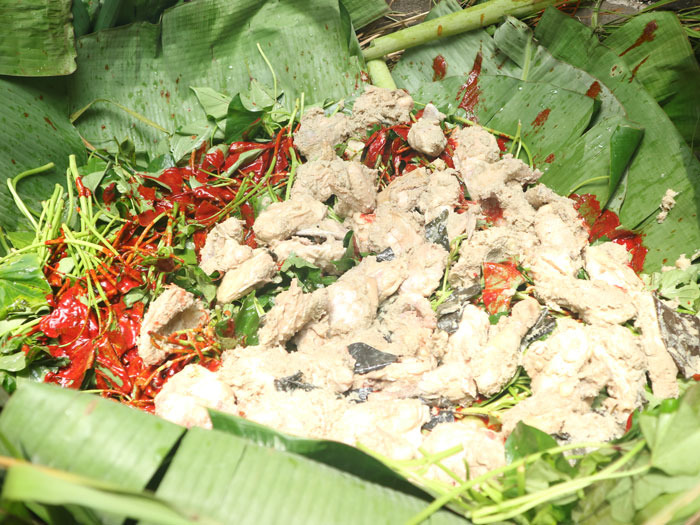
The ingredients in bubigi always reflect the three pillars of life: protein, carbohydrates, and vegetables, arranged in a deliberate layered structure that creates a rich culinary architecture. Carbohydrates in the form of tubers such as taro, sweet potato, and cassava are placed at the bottom of the pit. Above them are vegetables, particularly sweet potato leaves, drizzled with aromatic oil of buah merah. The protein layer sits at the very top.
“The meat should always be on top,” Chef Toto explained. “This is the secret to the distinctive stone-grilled flavour. When heat from the stones below stimulates the meat’s juices, the drippings fall through the layers beneath, giving the entire dish a naturally savoury depth.”
Both hangi and bubigi have unique and similar characteristics which have a common thread: honour the earth, the element of fire and togetherness that brought to life an unforgettable moment.
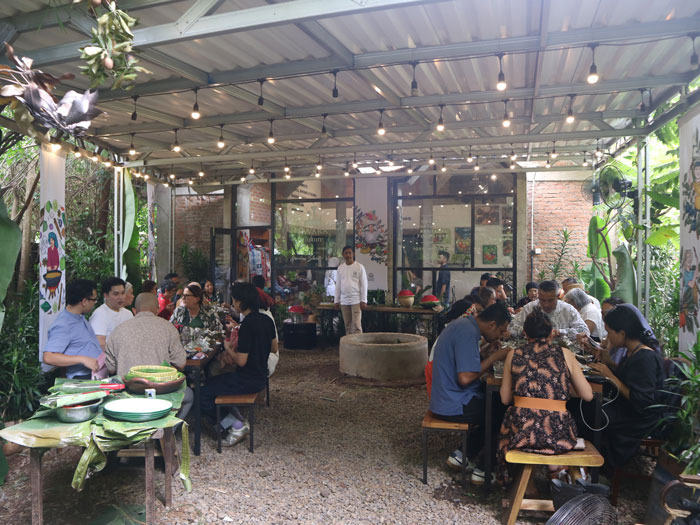
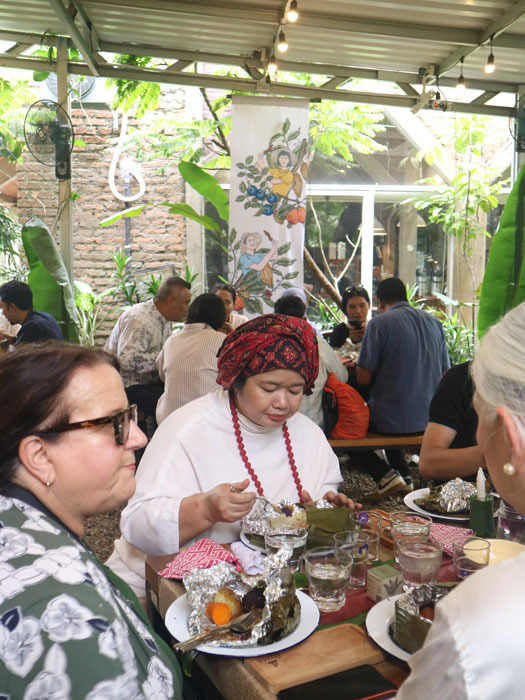
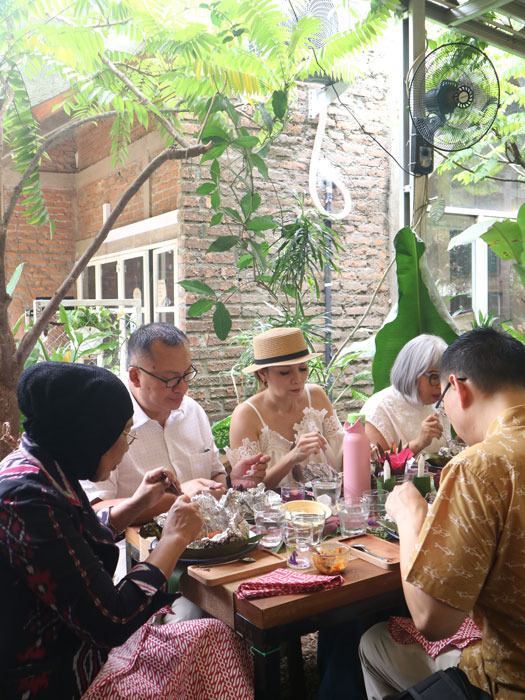
This cross-cultural event was held on 10 December 2025 at the Sekolah Seniman Pangan (Javara Culture Garden Store), a food-entrepreneurship school for farmers, foragers, and food artisans founded by Helinati Hilman. The event was organised by the New Zealand Embassy and Javara Indonesia.
According to New Zealand Ambassador to Indonesia H.E. Phillip Taula, Indonesia and New Zealand have many similarities, including language and cooking culture. Stone-baked food is also found in Lovo in Fiji, Umu in Samoa, and Mumu in Papua New Guinea. These similarities demonstrate the strong and compelling bond between New Zealand and Indonesia.
“Food is a great way to strengthen relationships, and we hope that through the food you eat today, we can forge even stronger ties. New Zealand wants to strengthen relations not only with Indonesia but also with ASEAN. We want to take this opportunity to celebrate 50 years of dialogue between ASEAN and New Zealand.” said H.E. Phillip Taula.