


Sate, or satay, is one of Indonesia’s most beloved traditional dishes. Consisting of skewered and grilled meat served with richly seasoned accompaniments, sate can be found across the archipelago in countless regional variations. The Betawi people of Jakarta have also developed their own interpretations of sate, including the distinctive sate asam manis and sate lembut.
Sate carries a long history shaped by foreign influences arriving in the archipelago. Its origins in Indonesia are believed to date back to the 15th century, following the arrival of Muslim traders from Tamil Nadu and Gujarat in India. These communities introduced various forms of grilled meat dishes, including kebab, which gradually influenced local culinary practices and transformed methods of preparing meat that had previously been more commonly boiled or stewed.
The word sate itself is also thought to derive from the Tamil term catai, meaning meat. Over time, the grilling techniques and spice traditions brought by these traders merged with local ingredients and tastes, eventually giving rise to the rich sate culture found across Indonesia today.
Quoting the website of Gadjah Mada University, Food Science and Technology Professor and culinary expert Murdijati Gardjito noted that Indonesia is home to 252 varieties of sate, each reflecting distinctive local flavours and cultural heritage. Of these, 175 can still be traced to their places of origin, while the remaining 77 no longer have clearly identifiable roots. The statement reflects the remarkable diversity of sate traditions across the Indonesian archipelago and offers the richness of the nation’s culinary heritage.
Jakarta itself, as a showcase of Indonesia’s regional cuisines, may not command the same culinary reputation as the sate of Madura, Padang, Java, Lombok, or Bali. Betawi sate exists more quietly within the capital’s gastronomic landscape, yet is no less distinctive in flavour.
Betawi cuisine boasts two particularly prominent varieties of sate: sate asam manis and sate lembut. These differ not only in flavour and texture, but also in their preparation methods and ingredients. Both reflect the Betawi appreciation for balancing sweet, savoury, and sour notes in harmonious ways.
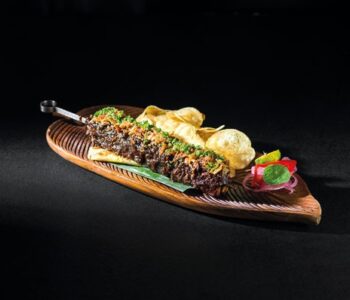
Sate asam manis, or sweet and sour satay, consists of large cubes of beef marinated in a blend of ground spices, palm sugar, sweet soy sauce, tamarind, and water, producing its characteristic sweet and tangy flavour. The meat is then skewered and grilled over charcoal, occasionally basted with the remaining marinade and infused with the fragrance of lime leaves during cooking.
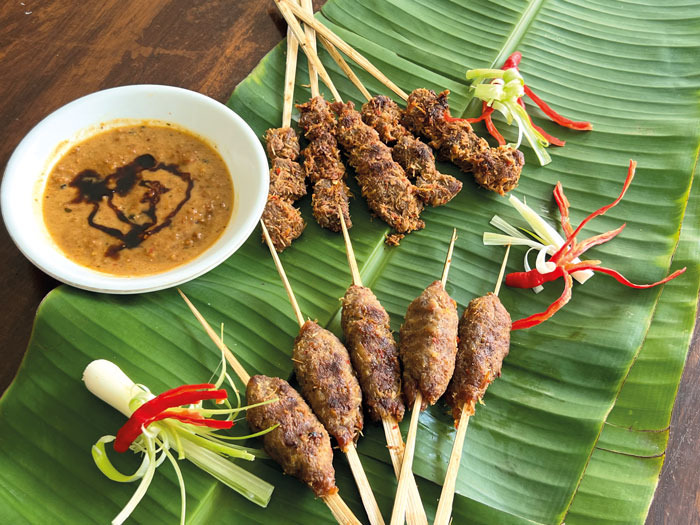
Sate lembut, or soft satay, is especially notable for its delicate texture, somewhat reminiscent of Balinese sate lilit. The name sate lembut derives from its ingredients: finely minced beef combined with grated coconut, which gives the satay its tender texture. The aromatic seasoning includes palm sugar, fried shallots, fried garlic, pepper, coriander, cumin, shallots, garlic, young galangal, and salt. The minced beef mixture is then made by wrapping the meat mixture around bamboo skewers and grilled over charcoal.
Both are traditionally served with laksa, lontong or ketupat (rice cakes), and are especially associated with Eid al-Fitr celebrations and traditional ceremonies.
In Jakarta itself, sate asam manis and sate lembut have become surprisingly difficult to find today. Once closely associated with Betawi communities in areas such as Kebon Kacang in Central Jakarta, both dishes are now considered rare culinary traditions, surviving only through a handful of family-run vendors and heritage food stalls.