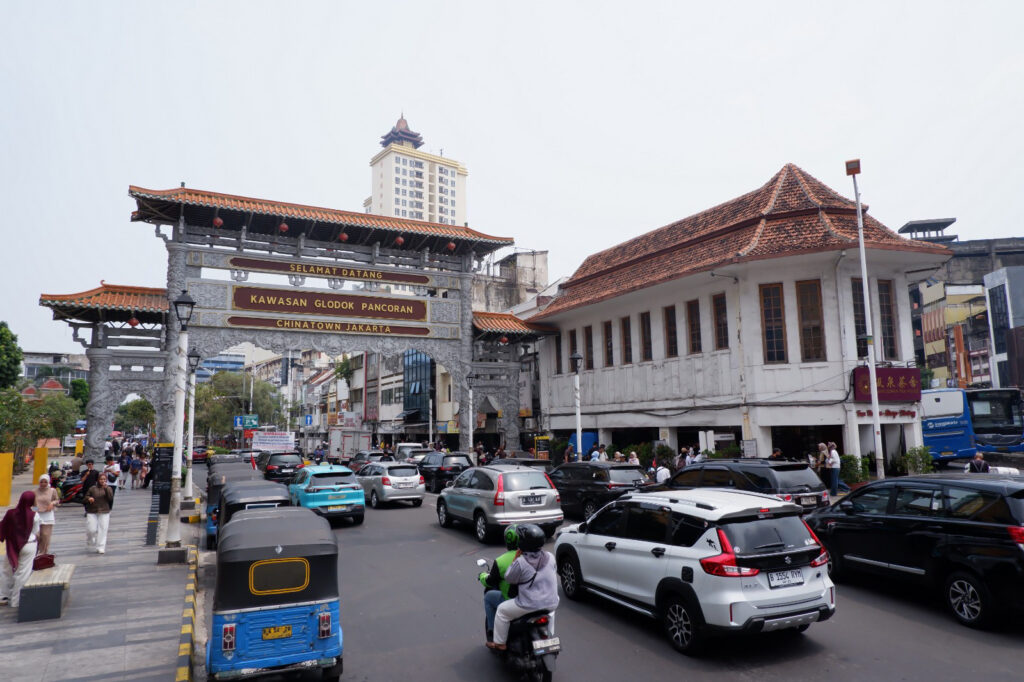
Temples, coffee, traditional shops and little discoveries around every corner. Jakarta’s Chinatown is a wonderland for the curious city pedestrian.
In Glodok, a walk is never quick. The old shophouses that line the streets always entice for a little extra exploration, be it a quirky café, food stall or a traditional medicine shop. Part of Jakarta’s Old City and recognised as Indonesia’s oldest Chinatown, Glodok has retained its cultural identity through the decades. Spend a little time walking around and you’ll see it in the old buildings, long-running shops and food businesses, as well as in the everyday life happening around them.
First Things First, Coffee at Djauw Coffee
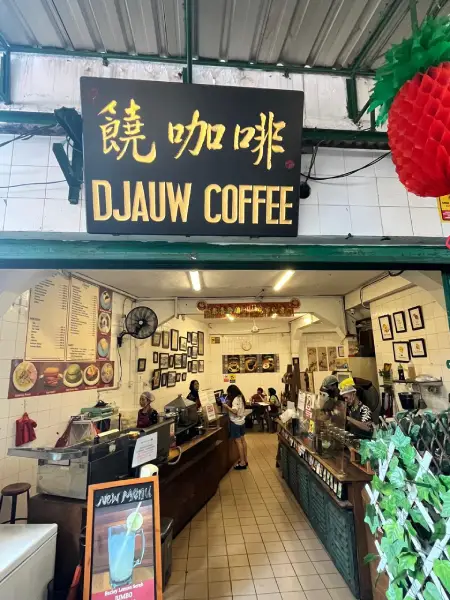
Fuel up in one of Glodok’s iconic coffee shops, Djauw Coffee. This is a quintessential Peranakan ‘kopitiam,’ shutters at the front and vintage shophouse interiors, spread across two floors. White ceramic tiles run across the floor and walls, where old photographs of Pancoran hang; and the simple, dark wood tables and chairs complete the old-time feel. The coffeeshop dates back to 1943 but have moved to the current location in 2021 – somehow they’ve retained their sense of history in the new venue.
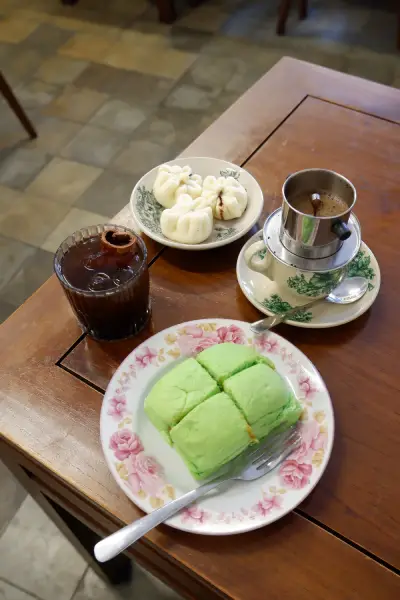
Famously, Djauw Coffee prepares their brew using the traditional Turkish method, heated in hot silica sand, with their cinnamon-and-palm-sugar Kopi Pancoran one of their signatures. Add a Roti Kaya and that’s your neighbourhood-appropriate breakfast sorted.
Jl. Kemenangan Raya No. 58B | @djauwcoffee
Toasebio
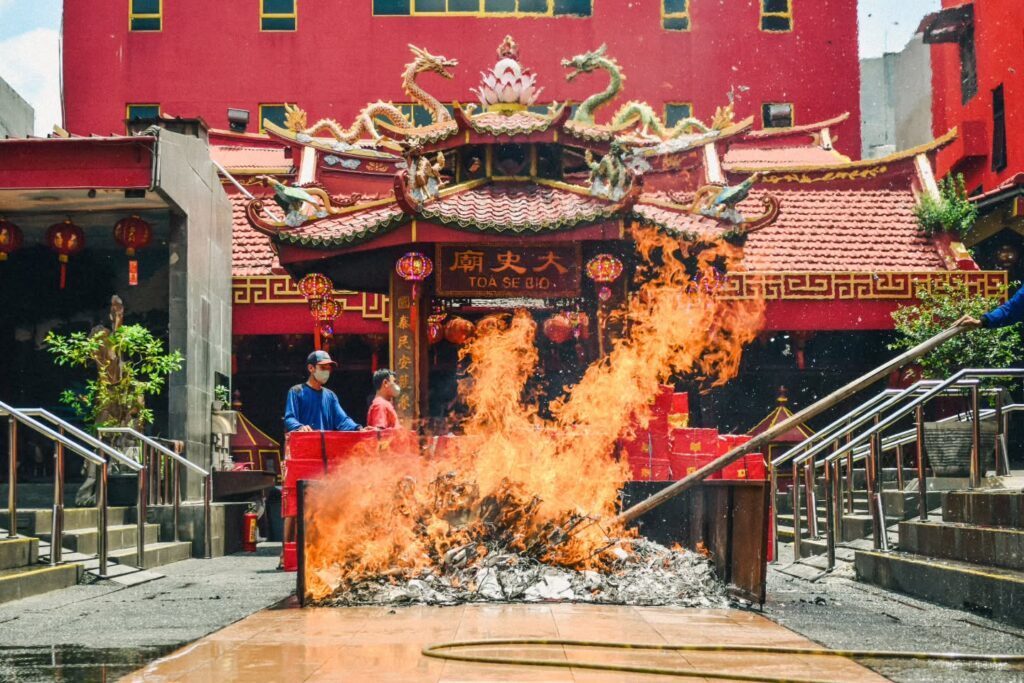
Continue to Vihara Toasebio, a short walk from Glodok’s better-known temples and one of the neighbourhood’s longstanding places of worship. Dating back to 1751, the temple has been part of Glodok’s Chinese community for centuries and still retains details from its long history, including an old hiolo and Chinese inscriptions. Visitors are welcome to look around when the temples are open, with appropriate dress and a quieter voice appreciated inside. Photography is accepted, although flash is best avoided and it is thoughtful to ask before taking close-up photographs of people at prayer.
Jl. Kemenangan III No. 48 | @vihara_toasebio
MET Glodok
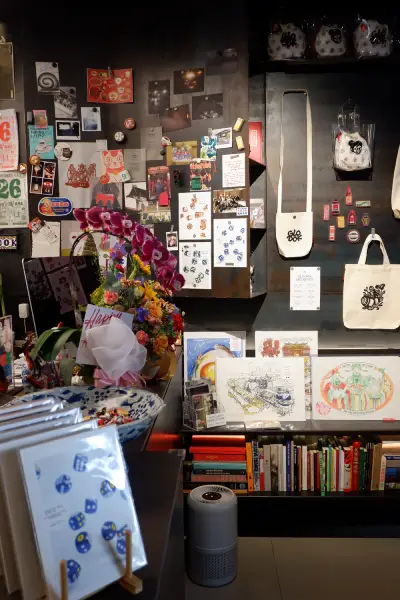
For a creative detour in the middle of Glodok, MET offers something a little different from the neighbourhood’s usual heritage sights.
The gallery studio is open on weekdays, while the café welcomes visitors on weekends, and Glodok-themed merchandise is available to take home. Founded in 2024 by fourth-generation Glodok local and multidisciplinary artist Metta Setiandi, this artist-run cultural space hosts heritage walks, talks, workshops and exhibitions centred on the neighbourhood’s Chinese-Indonesian history and community. Contemporary art is also part of the programme, with exhibitions and activities that connect local stories with creative practice.
Jl. Kemenangan III No. 78 | @met_glodok
Lunch at Petak Enam di Chandra
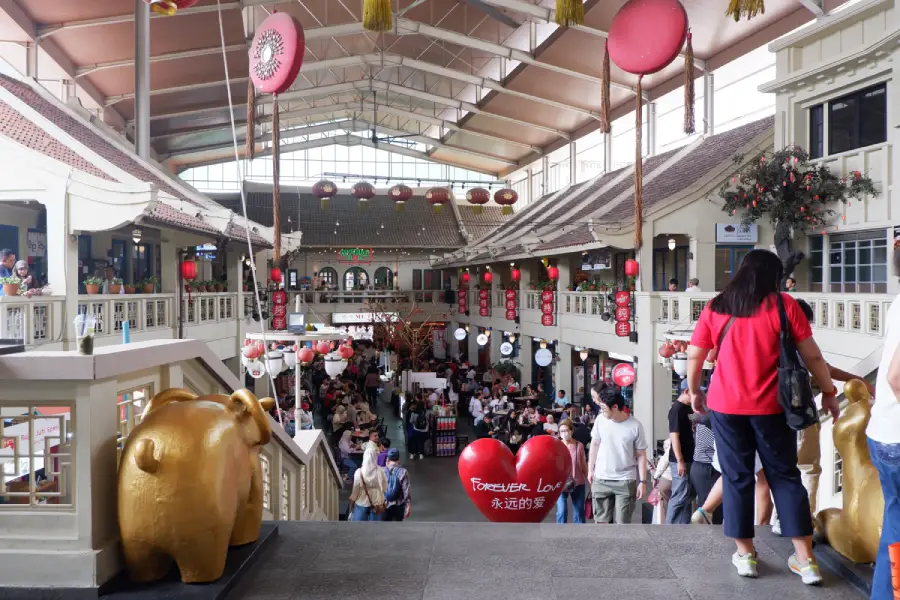
Formerly the Chandra shopping centre, Petak Enam is the food court of Glodok, where dozens of Chinese-Indonesian food vendors are found under one roof.
The dining area spills out into the central foyer, with restaurants and vendors lined up on the sides, giving Petak Enam its charming market feel, with visitors strolling through to find something that entices them. This is a snacking haven – classic kuotie, Taiwanese grilled buns to traditional ice cream. Heavier Chinese-Indonesian meals like Nasi Campur Babi, Bakmi Babi Hong, to roasted duck and more are also to be found. Spread across two floors, the space is air-conditioned, with clean facilities and toilets, making it a convenient reprieve from tight, busy lanes of Glodok.
Jl. Pancoran No. 43 | @petak_enam
Tay Seng Ho
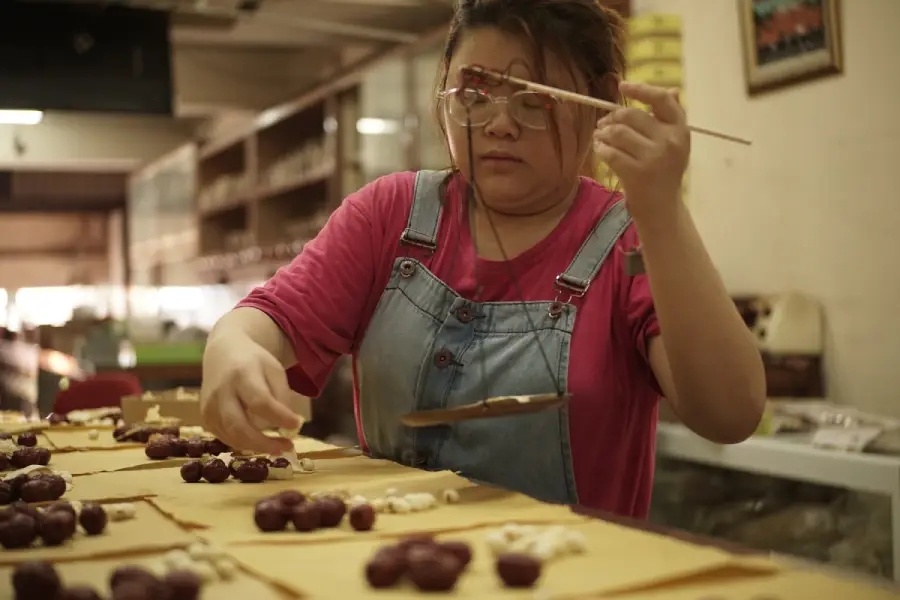
One of Glodok’s more intriguing stops can be found at Tay Seng Ho, a traditional Chinese medicine shop that has served the neighbourhood for generations. Inside, rows of wooden drawers hold dried herbs, roots, seeds and other ingredients used in traditional Chinese medicine, while the sinshe provides consultations for those seeking one. Prescriptions are then prepared by the shop’s pharmacists. The shop is part of Glodok’s long-standing Chinese-Indonesian medicine trade, which remains visible along the Jalan Pancoran area.
Jl. Pancoran No. 28
Dinner at Pantjoran Tea House
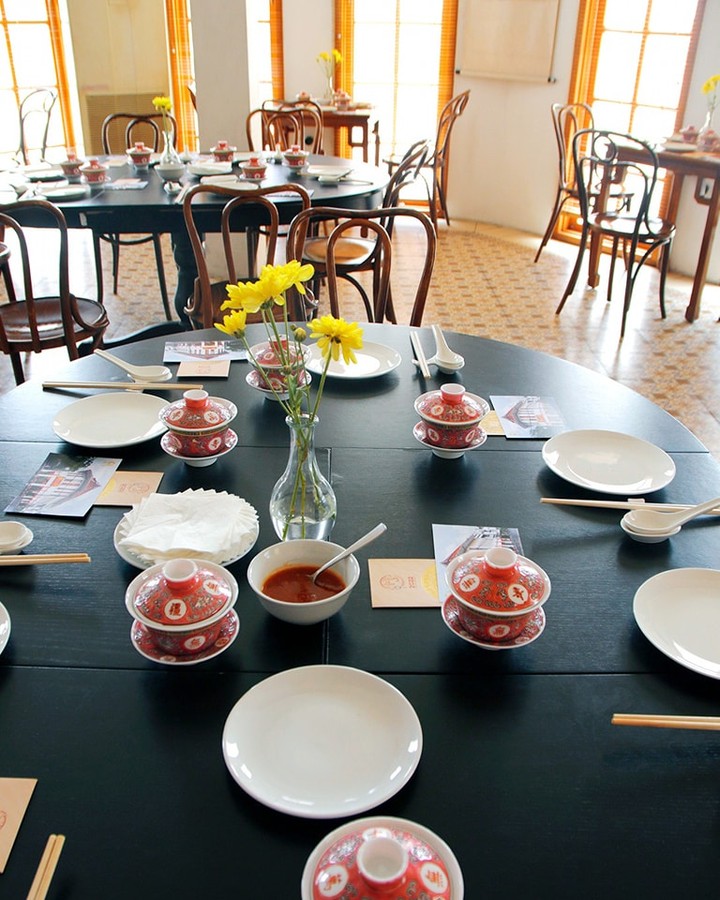
Pantjoran Tea House is a good place to call it a day, especially after a long walk through Glodok. The menu covers Chinese dishes and dim sum, from hakao and siew may to xiao long bao, with tea to go alongside. The restaurant occupies a restored 1928 building that once housed Apotheek Chung Hwa, but the detail worth noticing before dinner is outside: eight teapots of free tea for passers-by, part of the patekoan tradition. Pour a glass before heading inside, then take your pick from the dim sum and other Chinese dishes for a relaxed dinner.
Jl. Pancoran Raya No 4-6 | @pantjoran_tea