



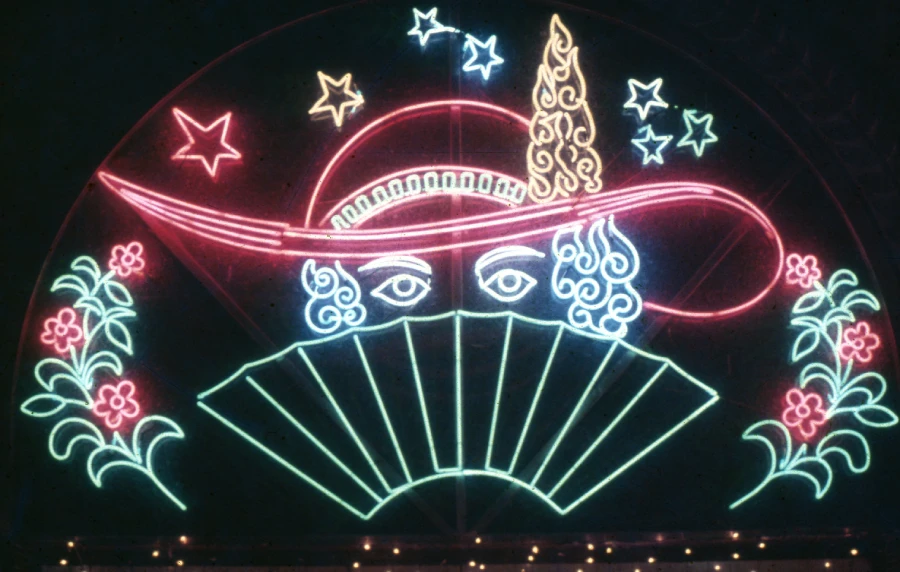
The bright neon lights of the big city don’t shine like they used to do. Formerly a striking part of Jakarta’s commercial streetscape—especially in older shopping districts, entertainment areas, and storefront-heavy corridors—the luminous, distinctive quality of traditional neon signage is alas far less prevalent now.
Beginning in the mid-20th century, neon’s handcrafted glass tubes—bent by master artisans and filled with electrified gases—made up much of Jakarta’s urban landscape.
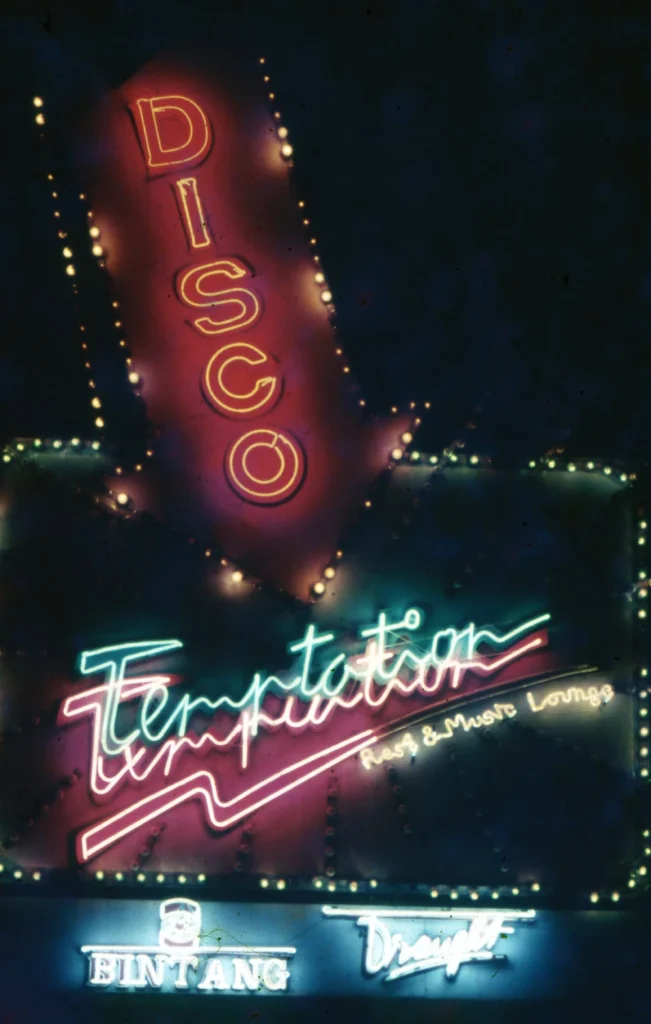
The city’s neon signs were part of the vibrant, glowing soul of the city’s visual identity. After dark, neon’s shimmering colours promoted restaurants, bars, cinemas, pawnshops, theaters, nightclubs hotels and shops, dramatically lighting up Jakarta’s streets.
Suspended over congested areas such as Old Town Kota, neon signs were dynamic symbols of the city’s booming post-independence commercial energy. Neon’s saturated hues bled into Jakarta’s humid night air, reflecting off wet pavements and shop windows. Signs projected above the streets, overlapped with neighbouring buildings and competed for attention. Their typography, colours and imperfections created a random visual composition full of character. Like many cities, Jakarta’s identity emerged from its own collision of commerce, architecture, nightlife and everyday activities. Neon was part of that often chaotic mixture.
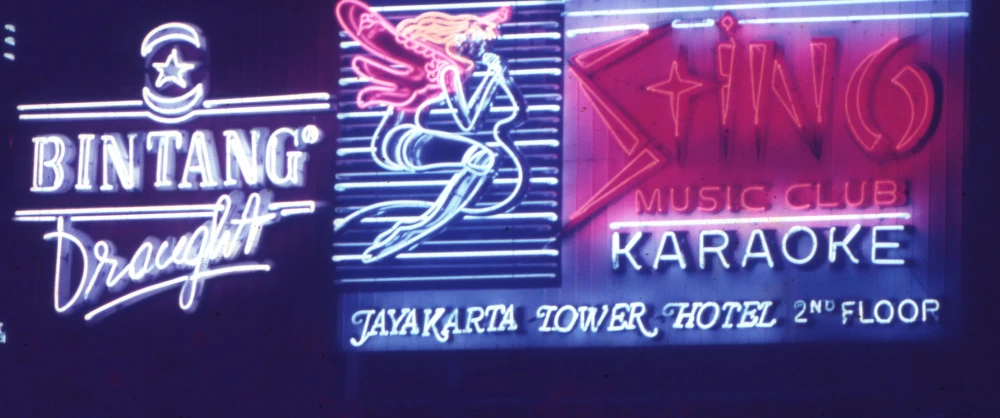
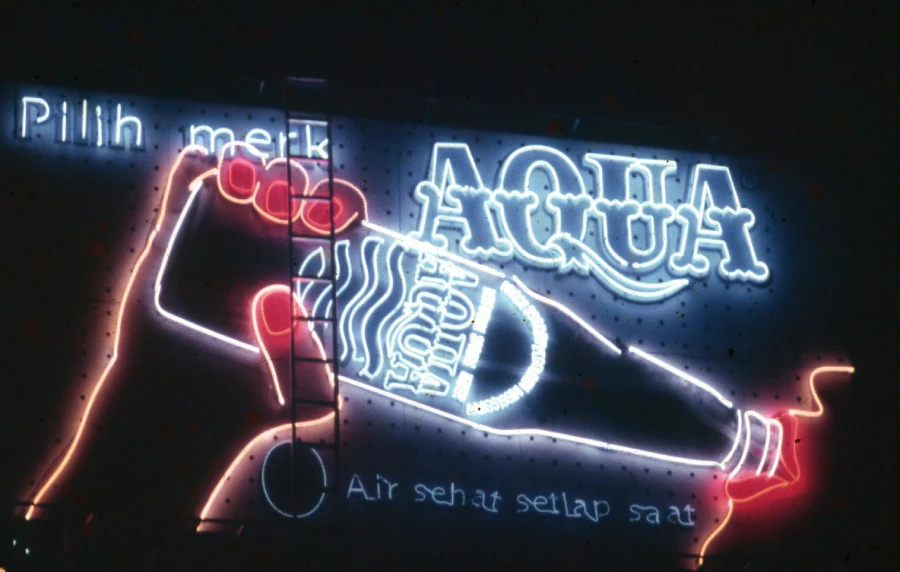
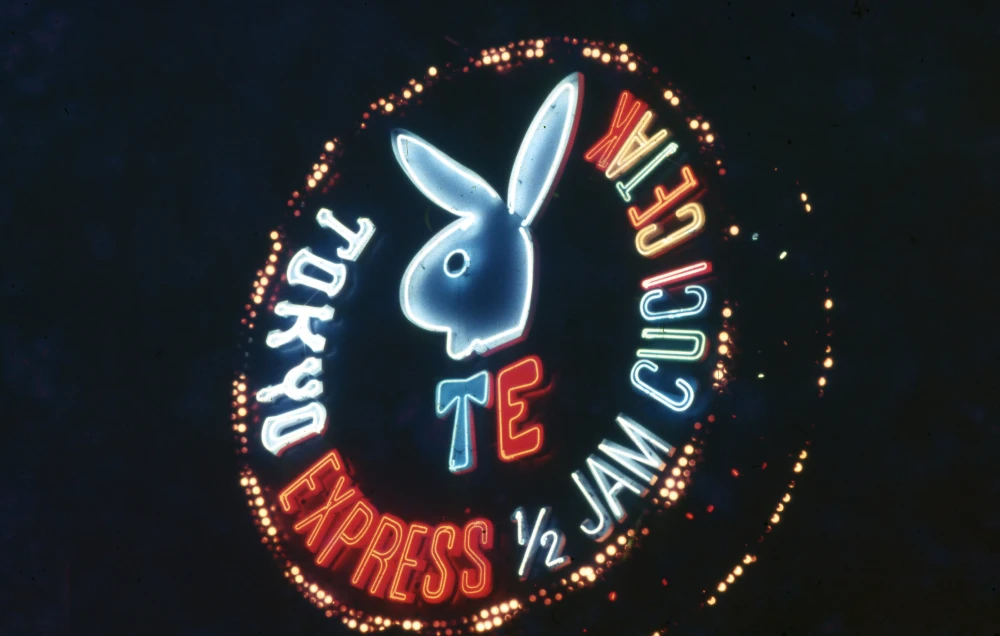
Jakarta’s neon lights have not gone quietly into the night, however. They still survive in niche cultural spaces—art installations, upscale cafés, and nightlife venues—where its warm, organic radiance is valued as an aesthetic choice rather than a functional advertising tool. In these settings, neon is often used deliberately to signal creativity, nostalgia, or authenticity. Overall, neon in Jakarta has not vanished, but as a mainstream form of outdoor advertising and storefront identity, it has largely been replaced.
A central reason for neon’s replacement is perception and marketing. Neon lighting is often associated with retro aesthetics rather than modern corporate branding. Many companies—especially banks, telecoms, and retail chains—prefer the sharp, bright, and highly legible appearance of LED signage, which reads better from a distance and in daylight. Walk through Jakarta today and the change is noticeable. Digital screens can deliver more information and illumination, but they don’t seem to reproduce the depth, texture and individuality of a neon-lit avenue.
What was once a common urban advertising format, neon is now a specialised, stylistic medium, overtaken by LED systems that better match the city’s modernisation. As Jakarta’s economy becomes more corporate and digitally oriented, signage trends have followed suit. This is also happening in other Asian cities such as Hong Kong.
Jakarta’s changing commercial landscape is hardly akin to Hong Kong’s but the broader pattern is similar. Businesses prioritise cost, visibility and consistency. Property owners modernise façades. Commercial developments favour controlled imaging over the visual improvisation of older streets.
There is also a supply-chain dimension. Neon signs require skilled artisans to fabricate and repair them. Fewer local craftsmen now specialise in traditional neon tube bending, and some equipment and materials are harder to source or less economically viable to import. This makes neon production slower and more expensive relative to LED alternatives, further discouraging new installations.
Jakarta has many reasons to modernise as too much of it is congested, run down and poorly maintained. But urban character is not produced exclusively by contemporary architecture, landscaped boulevards or carefully planned developments. It also emerges from the small, informal details such as flashing neon through which people experience a city.
We may not consciously miss Jakarta’s neon signs. But if the city’s streets become increasingly uniform, perhaps we will miss what neon once offered; a sometimes sultry atmosphere, even a slightly risqué sense of possibility. Jakarta is not simply a collection of buildings and businesses. There are places with moods, memories and personalities. When their familiar details disappear, the loss can be more subconscious than immediately felt.
Neon’s slow disappearance doesn’t mean Jakarta has lost its nightlife or its dynamism. Not at all. It remains energetic, highly social, more efficient and commercially polished. But with less of neon’s pulsating lighting, the question is whether the city has lost a little of its soul along the way.