


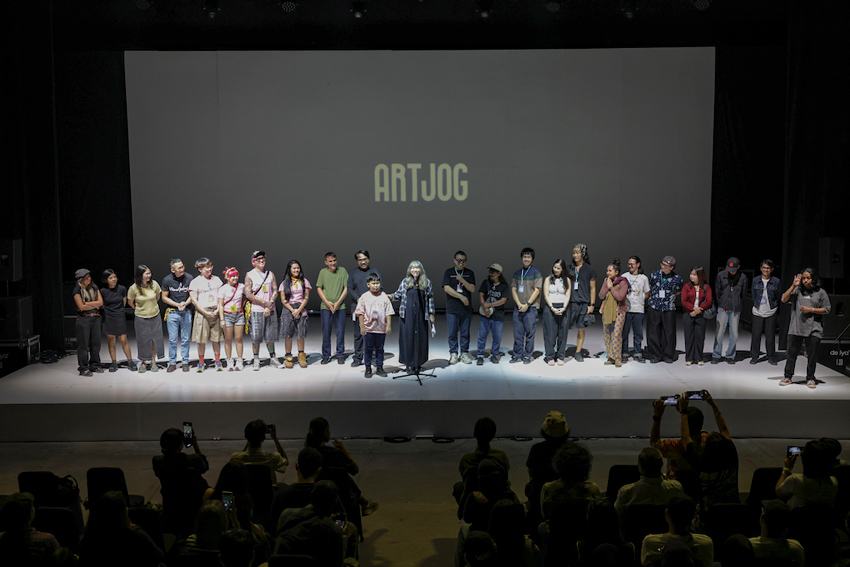
The opening of ARTJOG 2026, Indonesia’s premiere contemporary art festival at the Jogja National Museum (JNM), Yogyakarta, June 19, 2026 was marred by spectacle and controversy.
An activist from the ArtJokes collective threw red paint at the JMN entrance art installation, proclaiming, “Literature is dead, art is dead. Intellectuals without a sense of rebellion are extensions of the state.” Moments later, JNM security detained him and used force, raising concerns about ARTJOG’s handling of the unsolicited performance and its strict security. The dispute stemmed from ARTJOG’s sponsorship deal with the Didit Hediprasetyo Foundation (DHF), owned by Didit Hediprasetyo, son of Indonesian President Prabowo Subianto.
Opinion erupted across Social Media with accusations of “art-washing” over DHF artists’ involvement and commercial partnerships, and co-sponsors decided to withdraw funding from the event. DHF bulk-purchased entry tickets distributed through their networks, including schools and communities (source: radarjogja). Because of DHF’s legal responsibilities, it was impossible to determine the amount of funding and whether they received support from the President.
Political power manipulates public opinion by infiltrating social and cultural institutions, extending beyond parties and bureaucracies into civil society and culture. Cultural sponsorship helps power networks gain symbolic capital. The criticism presented raises valid concerns about the independence of cultural spaces and blurred lines between art and political power in Indonesia.
Ironically, this incident was most-pertinent to what was launched at ARTJOG 2026. This year’s event, curated by Farah Wardani, was the first of a trilogy – ‘Ars Longa Trilogia’ – exploring art’s role amid social, political and ecological change through three sub-themes: Generatio (2026), Legatum (2027), and Mundus (2028). Beginning with Generatio, the series addresses intergenerational dialogue, regeneration, and how art voices current generational concerns.
Responsible Mediation
“ART AND POWER: Art Independence, Arts Funding, and Freedom of Expression in Contemporary Art Spaces,” a public forum held on 8 July 2026 at Sanata Dharma University in Yogyakarta, invited academics and experts in law, politics, economics, activism, journalism, culture, and art, including ARTJOG management.
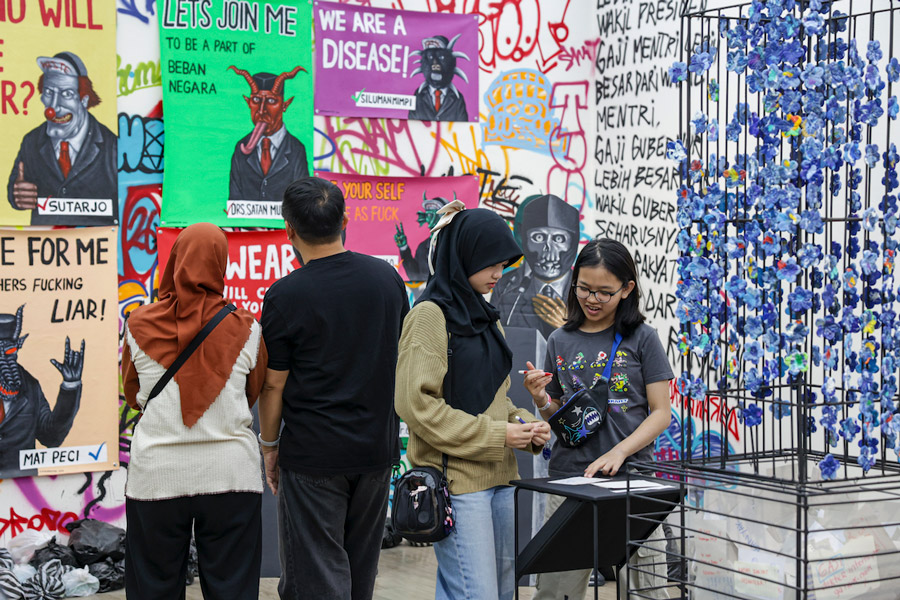
The relationship between art and power, covering issues associated to art independence, politics, economics, and culture, as well as freedom of expression within an arts ecosystem, was discussed. During the three-hour forum, diverse opinions were shared. Many speakers concerned about governance urged the need for protocols and for ARTJOG to rethink its position in relation to power.
ARTJOG management revealed the challenging array of complexities related to Technical Obstacles & Structural Commitments that arose from confusion and a lack of system structures, and their inability to attend swiftly to certain issues that came to light immediately after the opening ceremony incident and the massive Social Media reaction.
CEO Heri Pemad explained that ARTJOG involves political figures in events as a strategy to address funding difficulties, balancing festival independence with economic realities. “This strategy is purely based on the fact […] it would be difficult to gain support within the state-owned enterprise sector. Because that’s how it’s always been.” Farah Wardani noted the challenge of balancing curatorial independence with funding, and called for a review of the Code of Conduct and better discussions on patronage in the arts ecosystem.
Artists’ Observations
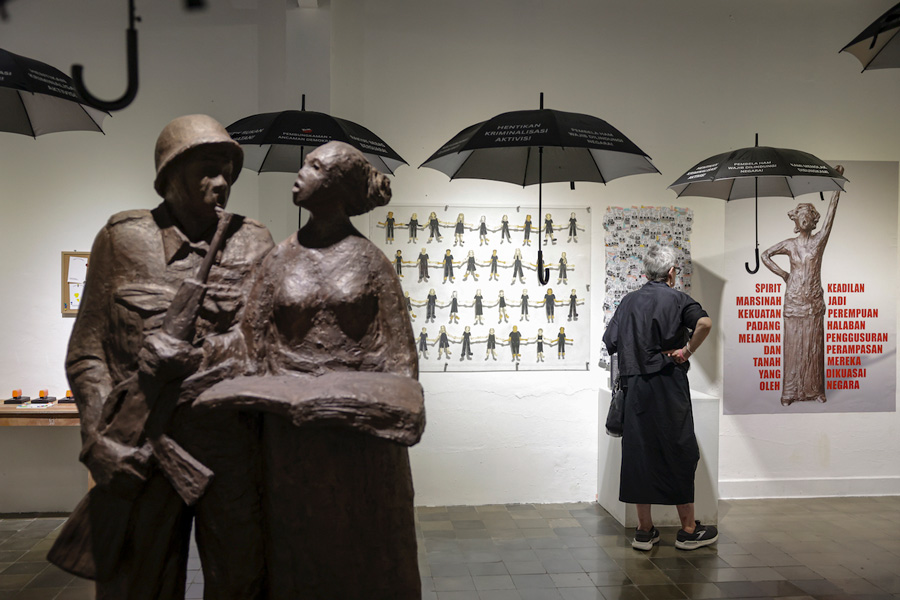
“Artists (may) no longer be artists, but rather simulate being artists because it is no longer about practice, but more about the production of objects, the production of spectacles,” said participating artist Restu Ratnaningtyas seeing the dilemma as a result of the capitalist scarcity mindset, where joining events with controversial figures stems from the limits of an unbalanced arts ecosystem. Artist Bambang Paningron saw the public reaction as a symptom of a society built on trauma and paranoia, stating funding controversies in arts festivals are inevitable in a society still trapped in binary logic.
What the polemic has revealed is the deep array of community emotions invested in ARTJOG which navigates the sensitive territory between the community and society’s bastions of power.
ARTJOG 2026 Concluding Remarks
During ARTJOG’s closing event on 30 August, management, the curator, and the Artist Evaluation Summary shared valuable points and recommendations for ARTJOG’s 20th Anniversary in 2027, all aimed at improving and making the Indonesian arts ecosystem more democratic.
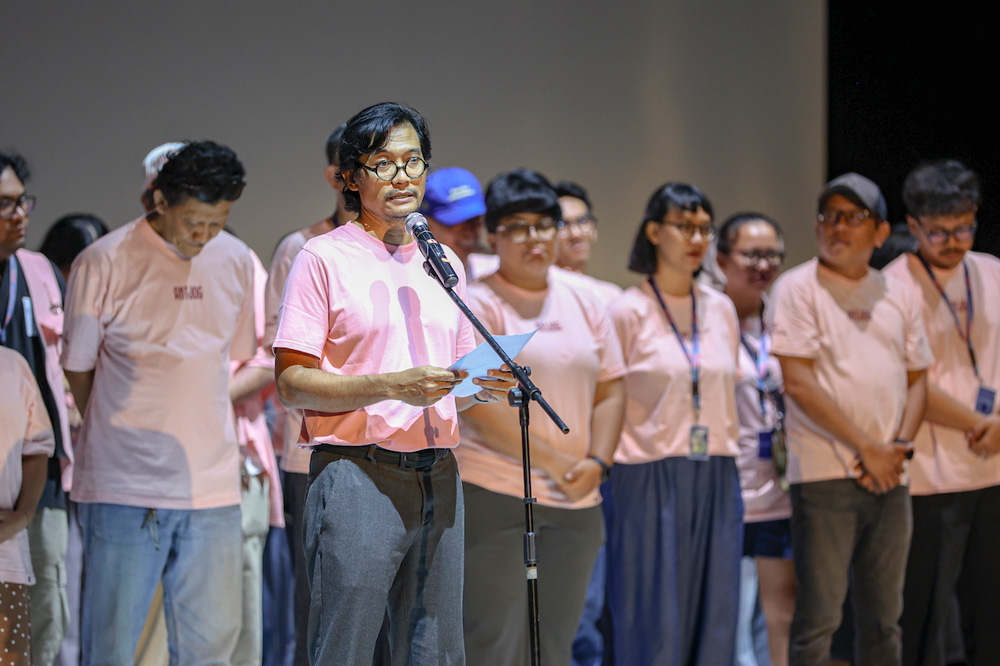
“Ultimately, ARTJOG would not have come to fruition without the support of many—especially all of you who attended and appreciated the event. ARTJOG would not grow better or stronger without your criticism and care. We sincerely apologise for any shortcomings or errors during the event,” said Heri Pemad.
“The works in this exhibition resonate and correlate directly with real-world issues and societal unrest; amidst the criticism and the multitude of differing perceptions, the exhibition felt as though it had plunged straight into a vortex of public discourse. [….] I feel we are all in the process of building a new collective consciousness—a process that inevitably feels uncomfortable, and at times, painful,” stated Farah Wardani.
“I see that what we experienced at ARTJOG was something necessary to go through; perhaps the time has come for art to enter the broader arena of public conversation. The narratives behind the artworks are themselves part of that conversation, affirming that art must continue to speak out—especially for a wounded society.”
The polemic and social media uproar, however failed to hinder public enthusiasm. ARTJOG 2026 was attended by over 90,000 visitors.
“I see how public perceptions and opinions have broadened beyond the Artjokes bashing or the art-washing allegations. Many people comment on how the artworks relate so closely to the situations they feel the exhibition represents,” Wardani told NOW! Jakarta Magazine. “ARTJOG runs parallel to the debates and discussions on social media about our political upheavals. That is why I found it special how this event and the exhibition somehow correlate directly with what is happening outside the art bubble.”
Looking Forward
Social Media is a volatile yet essential beast in the digital age; with the power of viral exposure and connectivity, it often becomes a harbinger of intense emotions. Unfortunately, it becomes mired in Netizen’s reactionary diatribe that may eclipse the positive, creative responses. The public uproar reflects the chaotic era humanity is enduring and the potent collective emotions devoted to ARTJOG.
Art communities, including researchers, environmentalists, activists, poets, artists, filmmakers, writers, performers and art lovers, are the intellectual pulse of society. They are the eyes, ears and mouthpiece of our collective. At first polarising, then inviting debate, discussion, healing and positive solutions, the ARTJOG polemic has had many benefits. Opportunities often arrive in disguise.
Society is experiencing rapid change and rebirthing as the old-paradigm capitalist system collapses. New systems, leadership and empowering human narratives are emerging, guiding us out of scarcity consciousness and toward greater harmony and abundance. Art opens public perception and stimulates the evolution of the collective consciousness. Art increasingly plays a key role in this significant transition.
Throughout recent history, big money and power have hijacked art. Its integrity has been compromised. We must strive to uphold art’s sanctity and safeguard it from the unconscious, regressive members of society. During the ART AND POWER forum, artist and humanitarian activist Dolorosa Sinaga reminded us that we are the solution: “So, if power creates boundaries, we, artists, and art lovers, must multiply our efforts to fill those boundaries with all the ideas that must exist to resist it.”