


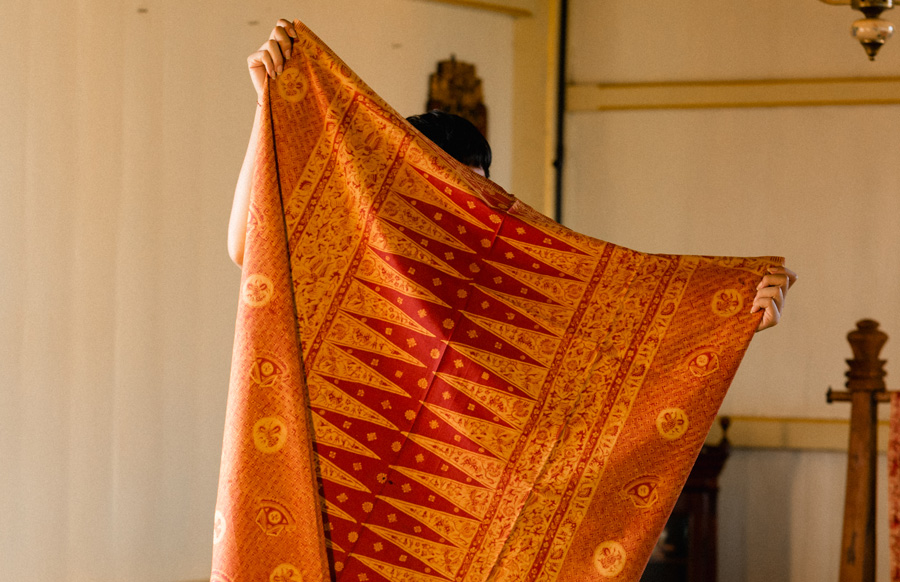
Every Friday in Java, the streets fill with people dressed in batik. Office workers, teachers, students, and civil servants wear shirts, dresses, skirts, and blouses alive with lines, dots, and intricate motifs. Today, the phrase pakai batik—or in Javanese, batikan—simply means putting on clothing adorned with batik patterns. But look closely at any two pieces in that Friday crowd, and they rarely speak the same visual language. Batik, it turns out, is less a single tradition than a shared vocabulary. It is one that different communities across the archipelago have learned to speak in their own accent.
Since UNESCO recognised Indonesian batik as an Intangible Cultural Heritage of Humanity in 2009, wearing batik on Fridays has become customary, particularly in government offices and schools in Java. Batik has become so embedded into everyday life that almost any fabric bearing batik motifs is simply called batik. In doing so, the word has gradually expanded beyond the wax-resist technique itself to embrace a broader visual identity; a common tongue porous enough to carry very different messages depending on who is speaking it.
The word batik is believed to derive from the Javanese phrase amba titik, meaning “to write dots.” Even the vocabulary carries traces of exchange — cap, the technique using copper stamps, comes from Hindi, meaning “stamp.” Over centuries, maritime trade routes, particularly with India and China, introduced new motifs, colours, and artistic influences that became woven into batik’s visual language, while the meanings layered onto them are where each region’s accent comes through.
Yet batik has never belonged to Java only. Across the Indonesian archipelago, communities have nurtured their own batik traditions, each shaped by local landscapes, beliefs, and encounters with neighboring cultures. While they share a common technique, every region tells its own story through a piece of patterned cloth.
Tracing Patterns
In Jambi, batik reflects the province’s riverine landscape as much as its Malay heritage. Floral and foliage motifs appear to carry meanings that have long accompanied ceremonies from birth to death. Deep indigo and earthy tones lend the textiles a modesty, while certain cloth retain layers of older symbolism. One example is the selendang bersidang, a scarf distinguished by a large lozenge motif at its centre. Traditionally worn as a head covering by Muslim women, the central lozenge has been interpreted by some scholars as representing the “door of the sky,” positioned between the wearer and the heavens.
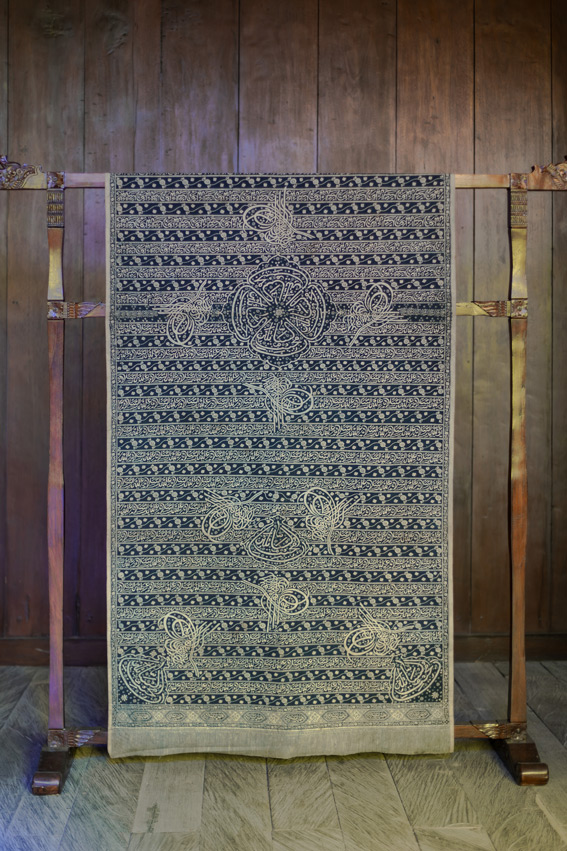
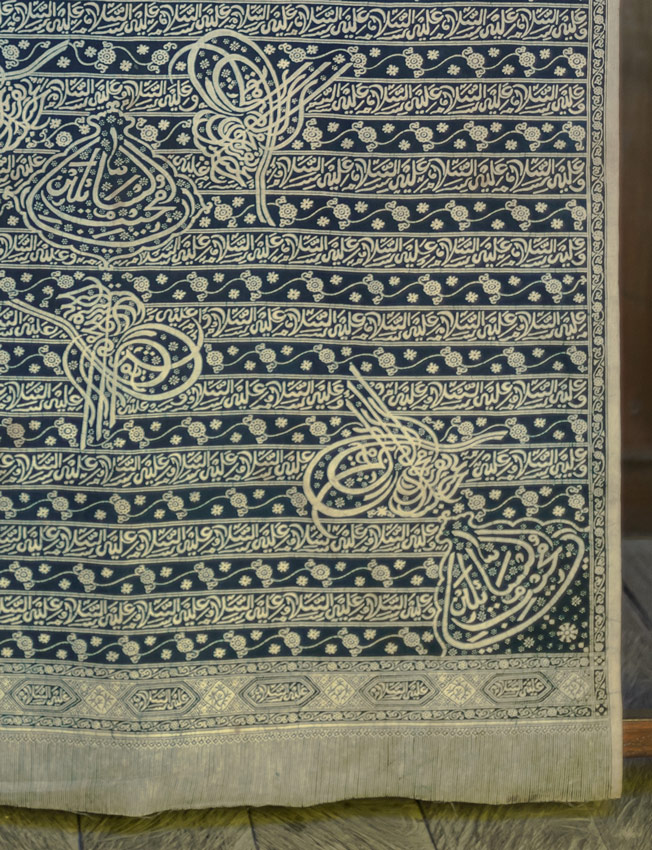
An Islamic identity also shines through today’s Bengkulu. On this side of Sumatra where trade is synonymous with imams and merchants from Yemen, Ottoman, and south India, calligraphy is written on Batik Besurek. One form of Ottoman influence in Bengkulu is the presence of tughra or Ottoman Sultan’s authority emblem on some Batik Besurek.
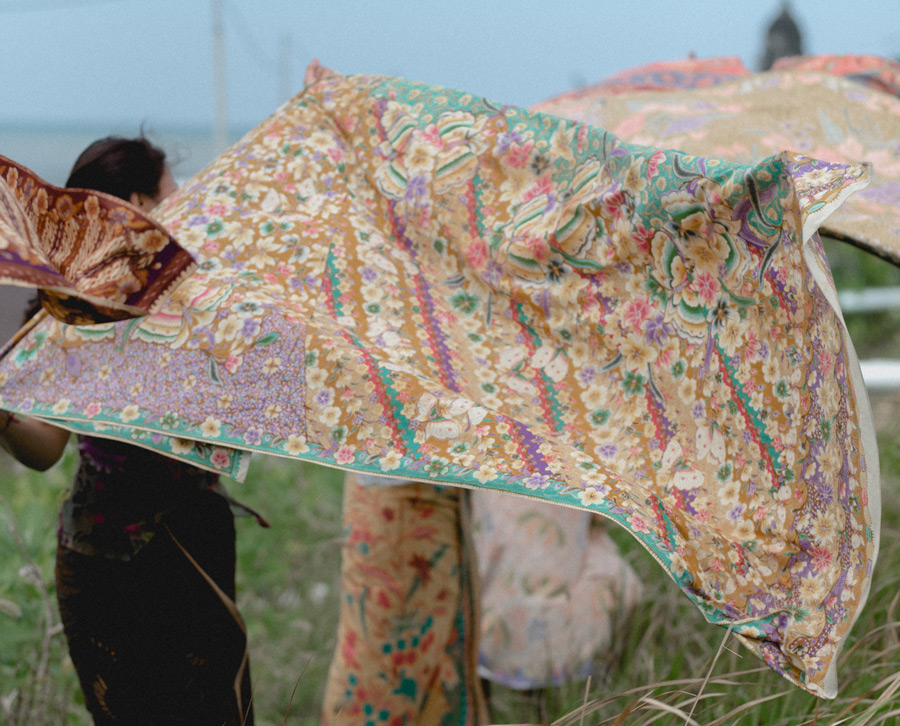
Moving to Java, north coast ports lended batik a cosmopolitan edge. In Pekalongan, Indo-European, Peranakan, and Arab-Javanese elites shaped batik to their own tastes with flower bouquets, phoenixes, butterflies, and geometric motifs in complex, colorful dye palettes of yellow, pink, green, red, blue, and purple.
This same coastal encounter later produced Batik Hokokai, born in Pekalongan during the 1940s Japanese occupation for the Japanese market. It merged Japanese aesthetics with Javanese and Peranakan tradition, most notably in sushimoyo — floral borders evoking sakura blossoms. Other motifs, like butterflies, chrysanthemums, and peonies in vivid yellow and purple, created densely layered patterns rich in symbolism and movement. Like batik produced during World War II, Batik Hokokai has two motifs — Pagi Sore, with the brighter motif meant to be worn in daytime and the darker one meant to be worn after sunset. The reason behind this was because there was a shortage of kain mori or plain cotton cloth, meaning batik producers had limited amounts of cloth to work with.
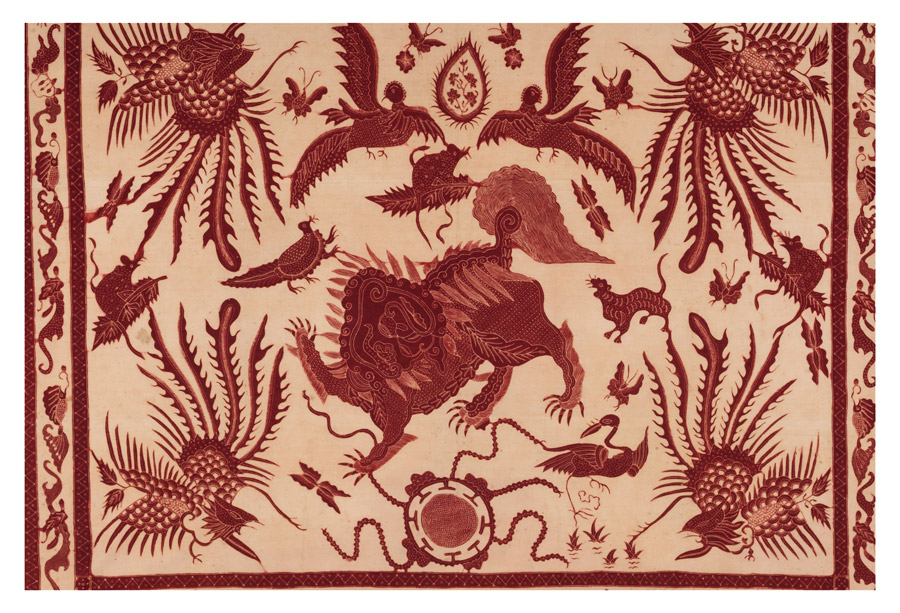
In another coastal town, the colour red found its full expression. Lasem, holds one of Indonesia’s oldest Pecinan settlements, with a Chinese presence dating back to the 13th century. This deep, layered history is woven directly into Batik Lasem, renowned for abang getih pitik — a red as rich as chicken’s blood, achieved from mastering natural dyeing with mengkudu roots. This red carries distinct meaning across communities: for the Peranakan, it resonates with joy and celebration; for the Javanese, it signifies courage.
This shared meaning became a point of encounter and gave birth to another remarkable batik. Batik Tiga Negeri — dyed across three regions, each showing its colour mastery. Lasem contributes the deep, blood-red hue; Pekalongan adds coastal blue through indigo dye; and Solo completes it with the earthy soga brown drawn from soga tree bark. The motifs on Tiga Negeri show the juxtaposition of Javanese classic symbolism with Chinese mythological animals. One of the famous batik tiga negeri motifs is tumpal pasung merak where you can see a proud peacock in a forest full of foliage, next to a geometric Javanese tumpal.
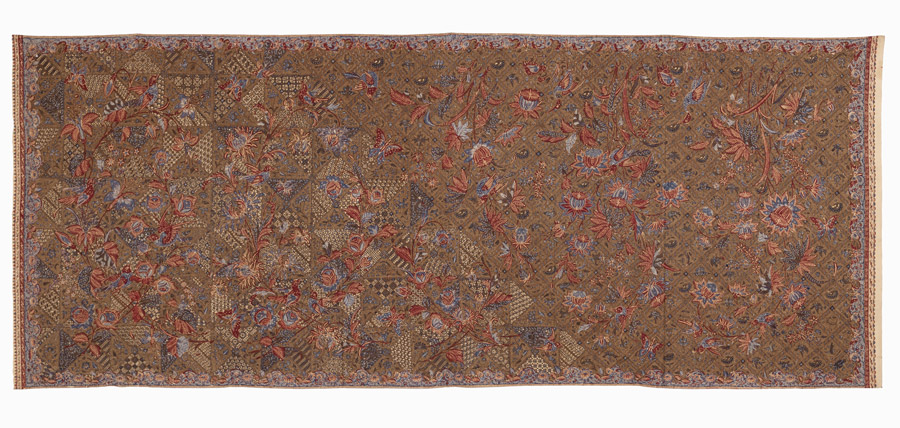
Inland, in Yogyakarta and Solo, batik remains rooted: far from the busy ports of the north coast, these regions allowed batik to stay closely tied to the land itself. Dyes were drawn from what grew abundantly: indigo leaves for blue, and the bark of soga and tingi trees for warm, earthy browns. Indigo, in particular, carries its own meaning where the dark blue symbolises endearing commitment. Where coastal batik absorbed colours and meanings from trade and a rendezvous of many cultures, Yogyakarta and Solo looked inward. The motifs reflect hope and protection for the wearers. Motifs like udan liris show a stack of classic motifs stacked diagonally; kawung, banji sawut, mlinjon, tritis, ada-ada, and untu walang. This ensemble of motifs in udan liris is a wish that the wearer will be blessed in abundance just like its name.
Java may have given the world the word batik and much of its most recognisable imagery, but the archipelago’s inheritance is plural. To wear batik on a Friday morning as you rush to the office is, whether you realise it or not, to wear a fragment of Jambi’s rivers, Bengkulu’s mosques, Pekalongan’s ports, Lasem’s bustling pecinan, and the deep devotion of Yogyakarta and Solo.