


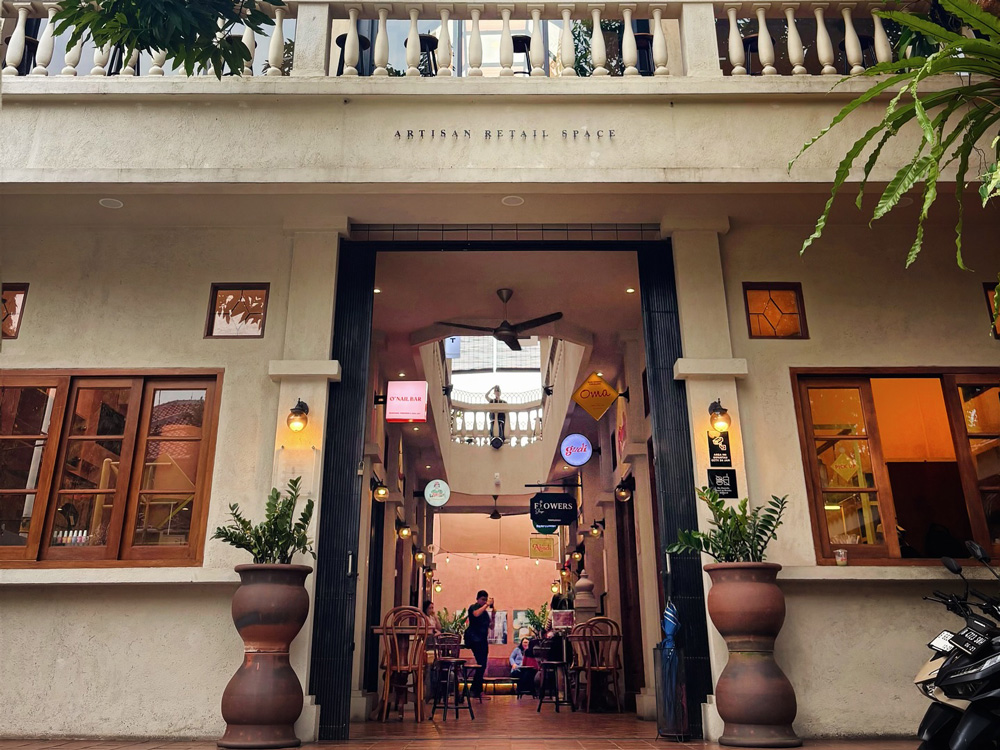
Slip off Cikajang Street on an ordinary weekday morning and you could almost miss it, if not for the distinctive, chalky broken-white Indische colonial façade. A two-storey house in weathered limewash, wooden windows flung open, and a balcony running the full width of the upper floor. Step inside, follow the half-corridor, half-courtyard passage, and the roar of Jakarta softens to a murmur.
This is Oma Huis, the quietly magnetic compound where Jimmy Ray and Eko Bintang have fashioned a tiny village-within-a-city for Jakarta’s next wave of independent makers and culinary dreamers.
The name, literally “Grandma’s House” in a lightly Dutch-tinged Indonesian, hints at the project’s origin story. A decade ago, Ray ran a small stall selling Nasi Kuning Oma, turmeric rice scented with fragrant lemongrass and pandan, served with a range of condiments from chicken to smoked fish, which is essentially a family heirloom recipe handed down from his Oma.
At first, the food stall occupied a third of this same plot, while the rest remained a family house owned by an ageing landlord. Then, as the pandemic paused the city mid-stride, an unexpected opportunity surfaced. Ray and Eko were offered the chance to reimagine the land.
“We wanted it to feel like you’d wandered into your grandmother’s garden,” Ray explained, “somewhere comforting, but still full of little surprises.”
To achieve that, the pair resisted Jakarta’s prevailing taste for glossy minimalism. Instead, they leaned into a design language hovering somewhere between Indische heritage and Mediterranean reverie. There are balustrades that echo old Batavia, yet also ivory walls recalling a southern Italian home, and arches that could have been lifted from a riad in Marrakech.
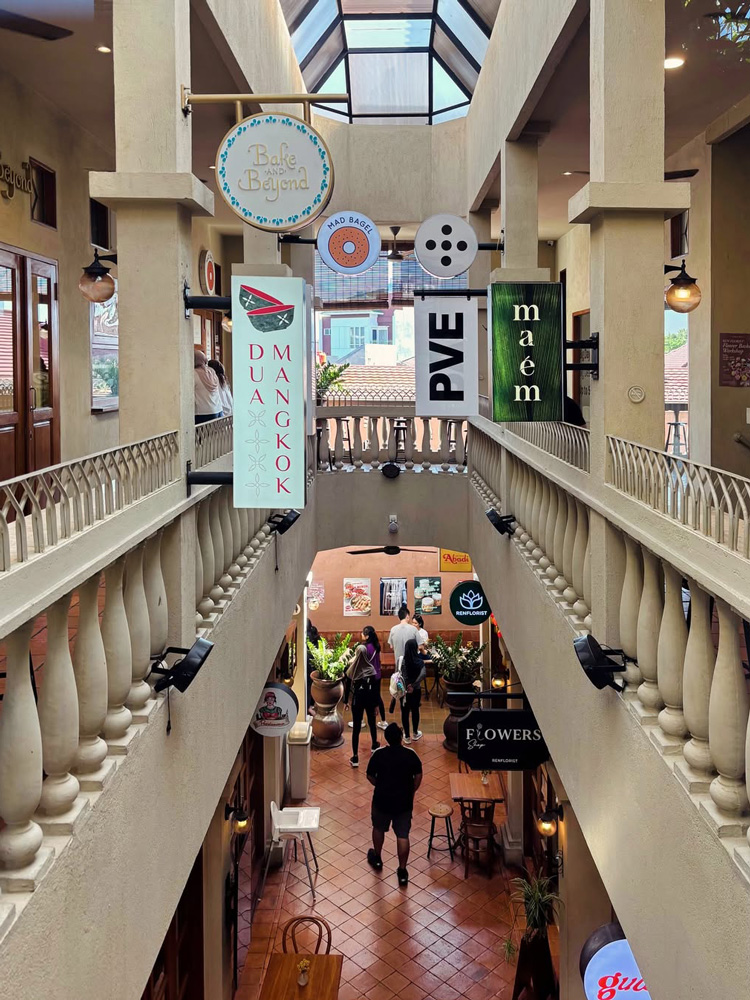
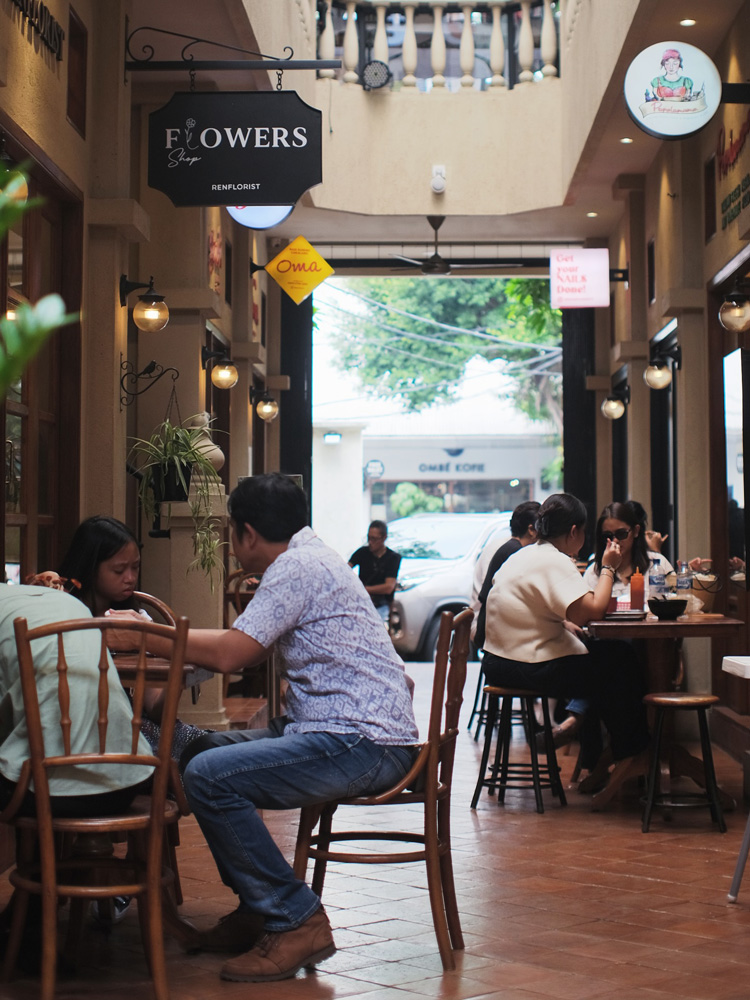
The house doesn’t feel overly polished, in fact, the intentional imperfections of the render and the sun-bleached parasols lend the architecture that sense of familiarity and comfort one always seeks at grandma’s home.
Strolling Around the Compound
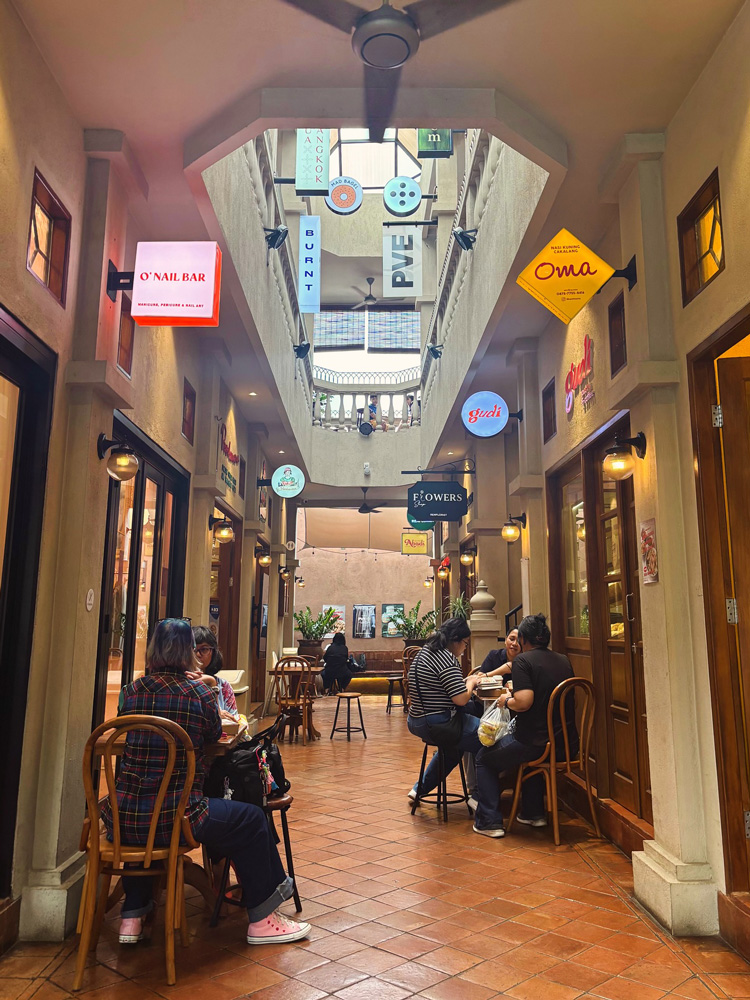
A clutch of wooden café tables lines the sides of the corridor, just one or two in front of each shop, enough for customers wanting to wait or enjoy a quick hot coffee and a croissant. At the back lies the semi-outdoor communal space, where the tiles darken to burnished terracotta, running halfway up the walls to form benches encircling the small courtyard. Here, you are transported to a Tuscan farmhouse summer, where you want to linger longer, perhaps open a book and lose yourself in the rare quiet hum, or open a laptop and work, momentarily lifted away from the hectic bustle of the concrete jungle.
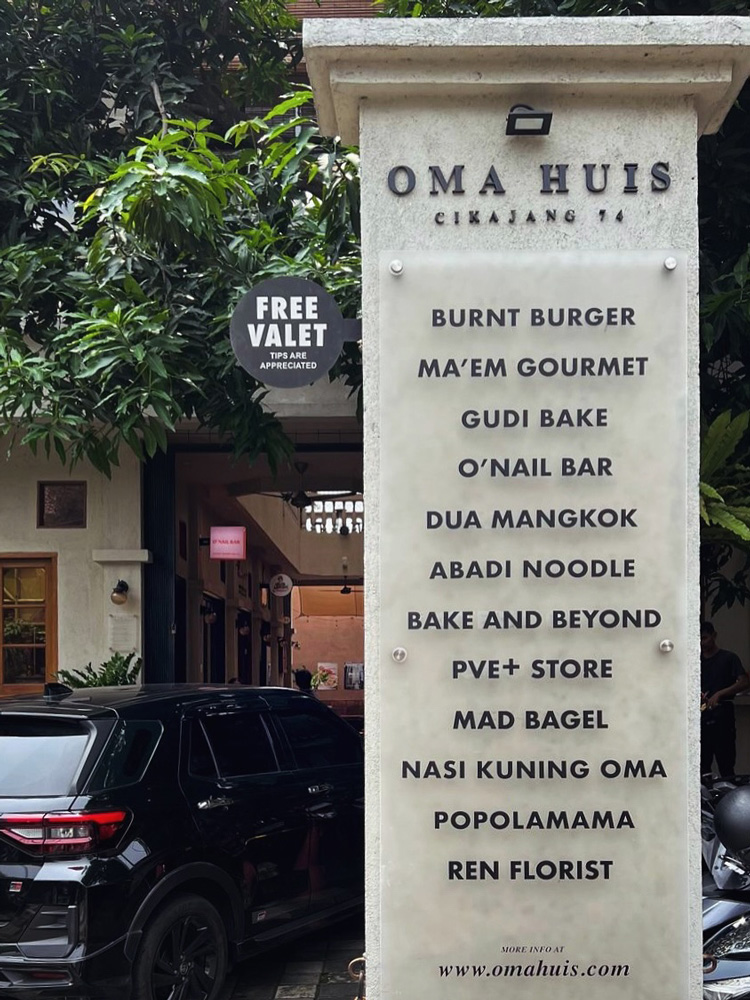
Fifteen units fill the compound, each with pocket-sized façades, brown-wood windows and doors, classic and timeless. Ray and Eko asked every tenant to harmonise with the compound’s palette, yet left the interiors entirely theirs to play with, which turned out to be a blessing for small businesses, as they didn’t have to invest heavily in exterior décor.
“This is something we didn’t realise was needed until we went through it,” Ray explained. “It turns out when compounds offer blank canvases, many small shops feel burdened by the expectation to invest a lot of money to make their façades stand out. With us, the simplicity of each shop actually makes visitors more intrigued to explore all the vendors.” One doorway beckons with the scent of freshly baked pastries; another brims with rows of flowers; upstairs, a small retail shop displays a new collection of clothes in sizes the fast-fashion malls rarely bother to stock.
It is, in short, an ecosystem, deliberately modest in scale, yet vibrantly alive. The morning we visited, cyclists queued for bagels at Mad Bagel, their bikes propped in the designated parking. By noon, a pair of expat mums commandeered the big communal table, juggling a toddler and a laptop apiece; behind them, two students compared film photography prints over lattes from the kiosk next door. Come late afternoon, office workers trickled in, waiting out the Kebayoran traffic while Oma Huis’ valets take away their stress to find parking spots. Some head in for a bowl of soto tangkar by Ma’em Gourmet, while others treate themselves to a pre-dinner pedicure at O’NAIL BAR.
The upstairs mezzanine, air-conditioned, whitewashed, with an outdoor balcony overlooking Cikajang Street, doubles as a workshop studio. One Saturday, it might host a collage-journalling circle; the next, a poetry masterclass. That flexibility, as Ray tells it, sprang from pandemic logic. “We thought, if fresh air matters, let downstairs breathe; if air-con matters, tuck it safely above.” The result is a building both porous and sheltered, able to adapt to Jakarta’s thunderstorms and heatwaves.
The Men of the House
Despite the curated sheen, nothing about Oma Huis feels corporate. Ray still monitors the plumbing himself (“Building management is just glorified caretaking,” he laughs). Eko, who was once an art director at some of Jakarta’s renowned publications (and still works as an artist), handles the design and décor of each unit, collaborating closely with the vendors on the compound’s overall look.
“We’re not developers,” he insists. “We’re hosts, only the house happens to belong to dozens of people at once.”
Their curatorial process is famously personal. Prospective tenants chat over coffee while Eko sketches ideas on brown paper. Variety is rule one: they always ensure no vendors sell the same main products. Rule two is less tangible, Ray calls it a “grow-together spirit.” A brand must want its neighbours to thrive because, in this micro-economy, foot traffic is shared. A family arriving for turmeric rice might discover handmade soap next door; a florist’s regulars might drift towards the pizzeria at supper. At weekends, the cross-pollination is happily chaotic.
Because leases renew annually, the line-up evolves. “It means Oma Huis 2024 isn’t the same as Oma Huis 2025,” Ray notes, “and that keeps regulars curious.” What remains constant is the compound’s talent for turning ordinary days into pocket festivals. In late August, for the anniversary, the celebratory spirit is palpable from the entrance right down to every shop. At Christmas, Eko drapes pine garlands and tiny brass bells along every lintel, conjuring an Indonesian-European mash-up market.
Jakarta has a lot of fashionable compounds, each sleek, air-conditioned, modern, and algorithm-friendly. What sets Oma Huis apart is its refusal to chase novelty just for the sake of it. The buildings feel permanent, but never finished; the tenants turn over, but neighbourliness endures. Ray and Eko have baked slow rhythms into the city’s headlong rush. From the unhurried breakfast crowd at seven, the lunchtime lull to the post-work traffic escapees.
You’ll find the compound on Jl.Cikajang 74, only a ten-minute drive from Kemang and an even shorter scooter hop from Sudirman. Doors open at 7 am, with closing times varying by tenant, though the courtyard usually hums until 10 pm. Weekends are busiest, while weekdays lend themselves to slow appreciation of the details.
So go on, slip down that alleyway. Grandma’s waiting with all her rice and cookies.
Oma Huis
Jl. Cikajang No.74, Petogogan, Kebayoran Baru, South Jakarta.
+6281289190008
@oma.huis