


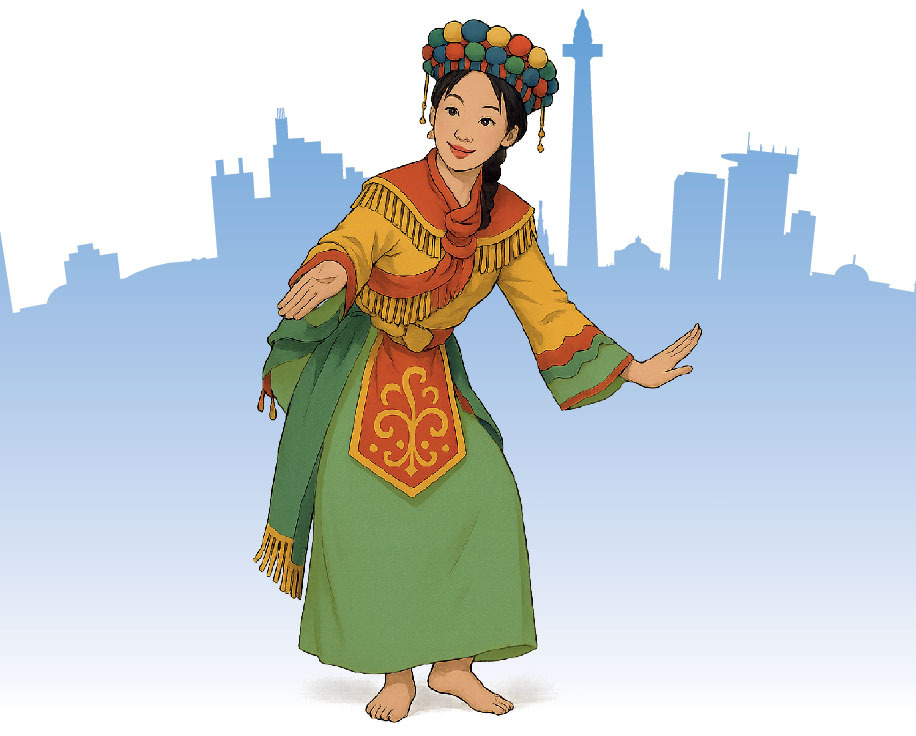
Tari cokek (cokek dance) represents a rich cultural journey rooted in the traditions of the Peranakan Chinese community in Tangerang, Banten province, and Jakarta. Once a sacred ritual performed in temples, this dance has evolved into a vibrant social and artistic expression that continues to reflect Indonesia’s dynamic multicultural spirit.
Tari cokek evolved from a traditional Han Dynasty dance called sipatmo, which was initially reserved for religious rituals in temples or monasteries, particularly among Chinese diasporas. Over time, sipatmo moved beyond these sacred settings and became a highlight among Cina Benteng (Chinese Indonesians in Banten) community events such as weddings and Lunar New Year celebrations. As it integrated into local traditions, sipatmo gradually transformed in both form and name, becoming known as tari cokek.
This evolution was closely linked to the gambang kromong orchestra, a musical ensemble typically owned by cukong (Chinese businessmen or brokers). Female singers and dancers, often referred to as cokek, would perform alongside the ensemble, blending music and movement into a lively and colourful spectacle. These performers were sometimes called wayang cokek, a term highlighting their dual roles as singers and dancers.
The origin of the name cokek is debated. One theory traces it to the Hokkien term chniou-kek, meaning “to sing a song.” Other credits the historical figure Tan Sio Kek, a Chinese landowner in Tangerang who once hosted a gathering where three female dancers performed to gambang kromong music. The dancers were dubbed cokek.
Unlike sipatmo, which has rarely been performed since the 1950s, tari cokek continues to gain popularity as a social dance, merging elements of its Chinese origins with Sundanese influences. Its choreography combines the dynamic movements of traditional Sundanese dances—characterised by graceful hand gestures at shoulder level and fluid hip sways—with the traditional elegance of Chinese dance, resulting in a style that is both expressive and captivating.
A unique feature of tari cokek is the interactive aspect of its performance. Dancers often invite guests to join them on stage by draping scarves around their necks—a gesture that has given rise to the term ngibing (to dance together). In the past, this practice occasionally led to negative perceptions of the dance, but its deeper symbolism remains intact.
At its core, tari cokek conveys themes of purity, joy, gratitude, refinement, and hospitality. Many of its movements carry symbolic meaning: raised hands represent prayers to God, gestures towards the eyes signify the importance of guarding one’s gaze, and pointing to the forehead serves as a reminder to protect oneself from evil thoughts and intentions.