


At a time when brick-and-mortar bookstores are compelled to redefine themselves, Indonesia’s longstanding bookstore chain Gramedia draws on its legacy—and its instinct for reinvention—to shape meaningful spaces for the reading public in Indonesia.
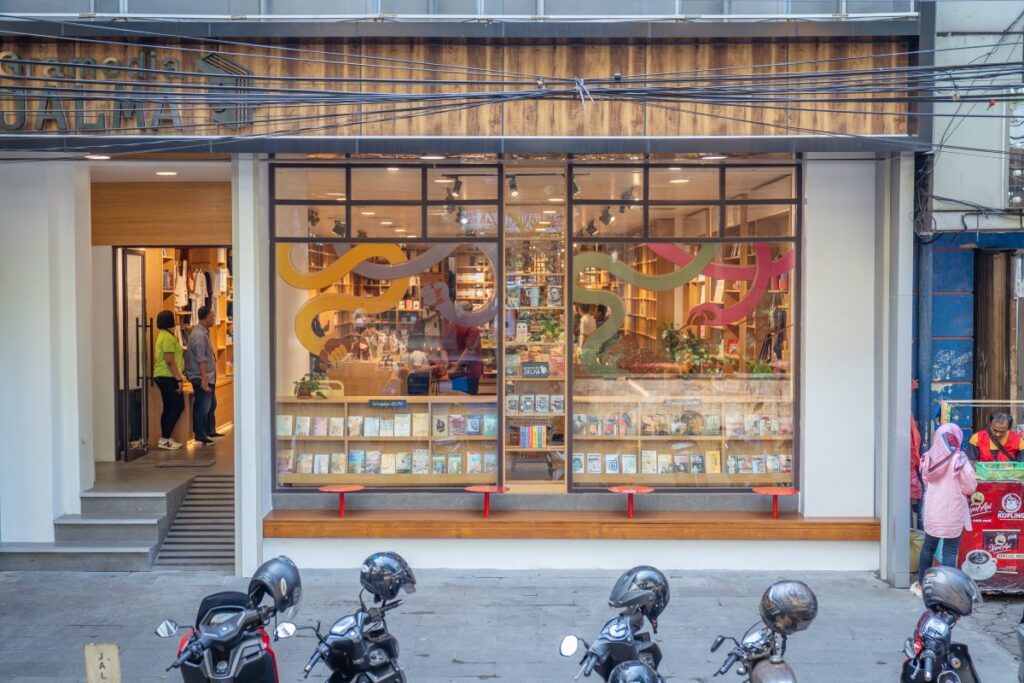
Early this February 2026, Gramedia celebrated 56 years in the business at the newly-renovated Gramedia Jalma in the lively Blok M neighbourhood. Rather than leaning on nostalgia, the milestone arrived with momentum: announcement of three store openings, followed by a merchandise collaboration with illustrator Nadya Noor—a glimpse into the longtime bookstore’s current trajectory.
But the half-century mark also emphasised just how far Gramedia has come. From a confined 25-square-metre storefront in West Jakarta to opening 148 stores across the archipelago, Gramedia is the one bookstore that has grown alongside a country in motion, embedding itself into malls and neighbourhood centres, quietly shaping the public’s reading habits and learning culture.
Founded by Jakob Oetama and P.K. Ojong, prominent journalists behind the leading national newspaper Kompas, the bookstore began simply by stocking books and publications from the founders’ personal collection. “In the beginning, our founders would provide reading materials for anyone who wanted to enjoy reading freely. Back then, the enthusiasm for reading—this thirst for knowledge—was already strong,” said Heri Darmawan, Operations Director at Gramedia, who has been with the company for 35 years. The goal was grand but simple: make books accessible, and literacy would follow.
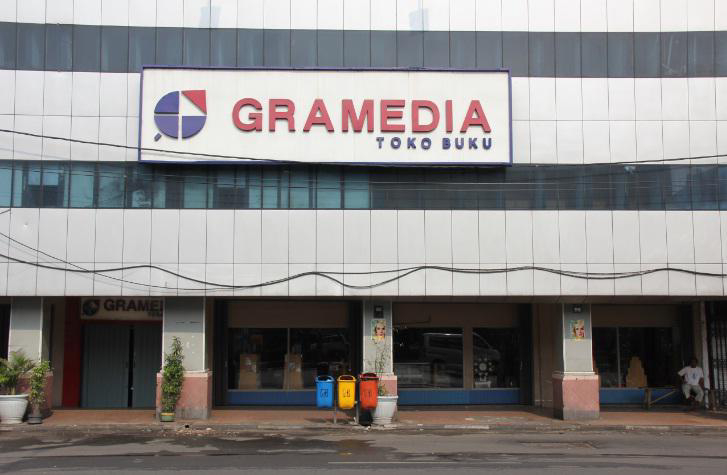
More than five decades on, Gramedia’s footprint has stretched beyond major cities, reaching regional areas as part of its long-standing commitment to book accessibility and literary education. That scale is sustained by its role within the Kompas Gramedia Group, an ecosystem of publishing houses, printing and distribution networks that forms the backbone of its operations.
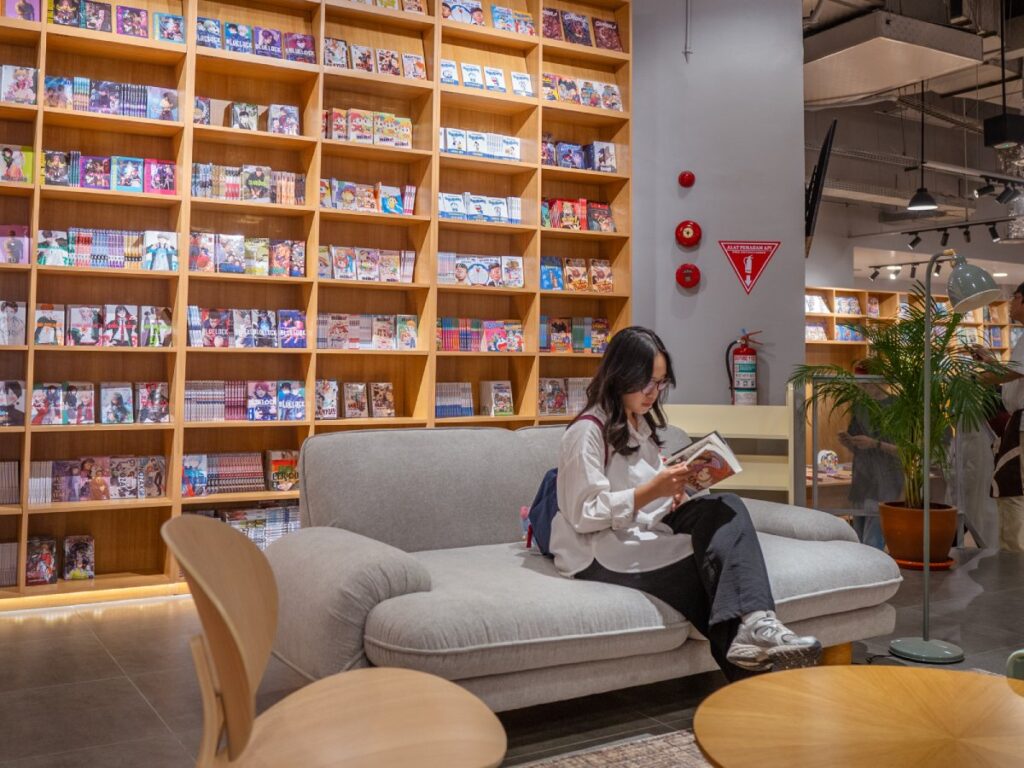
Over time, Gramedia’s shelves have embraced readers in tandem with a changing, increasingly open society, evolving from a focus on educational materials to a diverse range of genres. Once-banned seminal works by Pramoedya Ananta Toer returned to circulation through reprinted editions, while contemporary Indonesian voices such as Leila S. Chudori and Eka Kurniawan gained new generations of readers. International writers—including Vietnamese-American novelist Ocean Vuong and South Korean author Han Kang—added broader representation. Japanese manga came to occupy a generous shelf space, reflecting a readership increasingly shaped by global influences.
The aisles also expanded alongside the books, where stationery, art supplies, and even musical instruments entered the fold. “The goal was to support not just reading, but the broader educational and personal development needs of a community. We always adjust as needs evolve,” said Heri.
Growth, Heri added, has always been steady for Gramedia. It has withstood consumer trend shifts, the ascent of e-commerce, and a pandemic that shuttered many of its peers. The setback, in hindsight, became a defining lesson. “From 2020 to 2022, store expansion stalled,” he recalled. “Online sales rose, and they certainly helped, but they couldn’t fully replace in-store revenue. What this experience showed us is that people still value physical books, and ultimately, the tactile experience of visiting a bookstore.”
With a younger generation driving its business development strategy, Gramedia began reshaping its bookstores around experience and cultural connection. “When we rethink bookstores, we ask ourselves: what kind of physical space do we want to become? What are people actually looking for?” prompted Immaculata Adhista, who serves as Gramedia’s New Retail Concept & IP Development Manager.
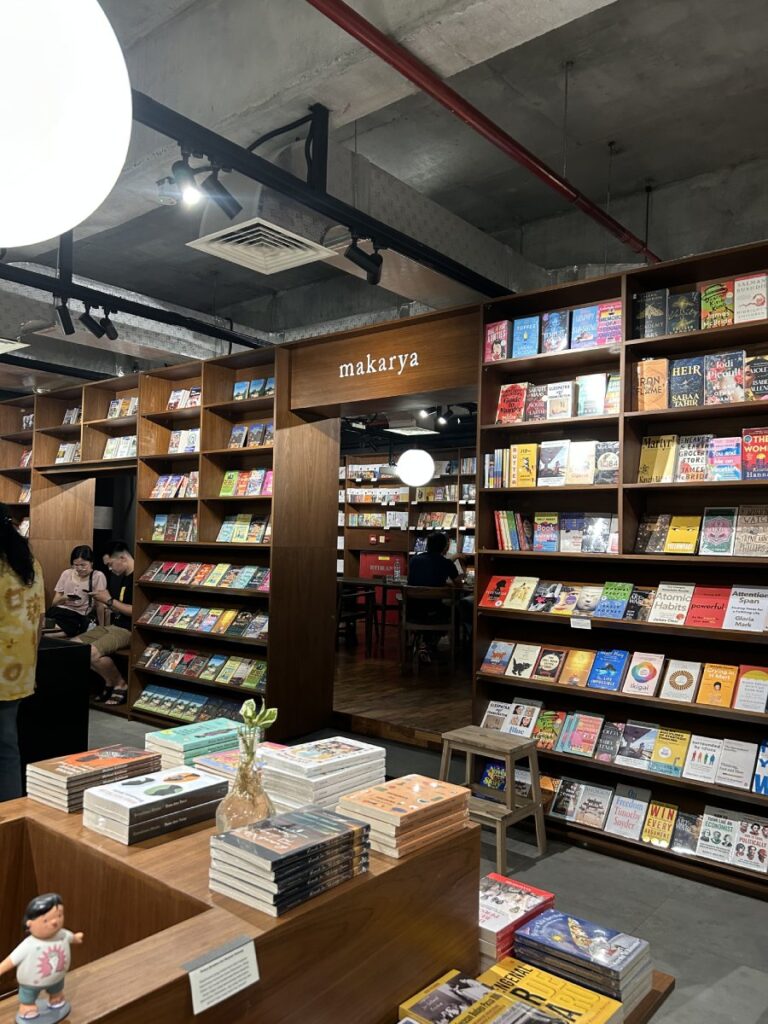
The response took form in Makarya, a bookstore-slash-coffee shop inside the storied Gramedia Matraman, and the newly revitalised Gramedia Jalma. If older stores were built for convenience, these iterations were designed around experiences: shelves annotated with staff recommendations, communal seating corners inviting longer reading time, conversations unfolding over coffee, and intimate gatherings connecting authors and readers.
“The concept of omnichannel is important, where online and offline elements collaborate to create a meaningful impact,” said Adhista. Discovery of books and reading trends, she explained, often begins digitally through algorithmic feeds and social listening, but the intention is still to bring that curiosity back into the physical space. “We can’t deny digital, but we can use it to amplify the offline experience. It’s about combining these two worlds instead of working against each other.”
The team studied bookstores across Asia, Europe, and the United States, observing how physical retail continues to endure even in saturated digital markets. What stood out was the burgeoning of community-driven spaces shaped by strong curation and cross-sector collaboration. Gramedia began adopting a similar approach by inviting independent booksellers as curators, as well as F&B operators and creative collectives to help animate the space.
“We’ve learned a lot from independent bookstores and booksellers,” said Adhista. “It’s not purely a strategy—it also comes from respect for those who keep literature alive.”
Adhista admits that concept-led spaces like Makarya and Gramedia Jalma were a gamble at first. The response, however, has been encouraging. Since its opening in 2025, Gramedia Jalma has drawn between 5,000 and 7,000 visitors daily, and in an exciting move, a second Jalma outlet is now planned for Semarang, where the long-standing Gramedia Pandanaran will be reimagined under a similar third-space concept.
Around the world, bookstores are reexamining their purpose. As print enjoys a post-pandemic rebound—with online discovery fueling offline sales—physical stores are reclaiming their role as spaces for culture and community. Gramedia sits within this global recalibration, where evolution is less about resisting digital change and more about reimagining what a physical bookstore can be today.
“At the end of the day, whether you’re a big bookstore chain or a small independent shop, we’re all facing the same challenge,” said Adhista. “The question isn’t about competing with each other. It’s about sustaining literacy and meaningful spaces in an ever-evolving world.”
Learn more about Gramedia Jalma here: @gramedia.jalma , and Makarya here: @makaryabuku