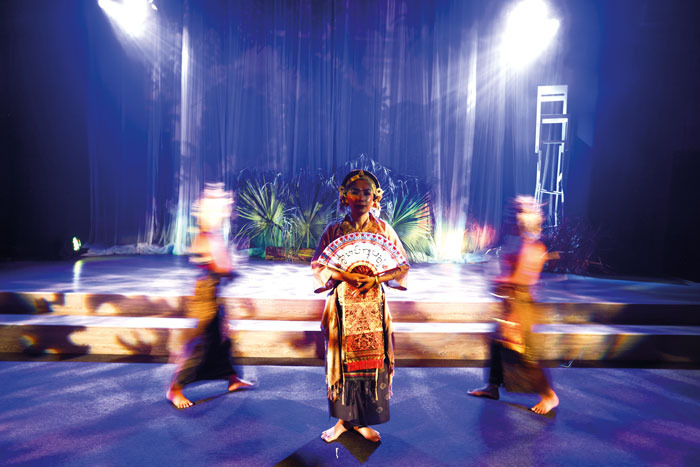
Legong, the quintessential Balinese dance, the elegant ‘welcome’ performance that has graced many a stage. In Bali, it remains central to ceremony and celebration – but what place does such a dance hold in the midst of Jakarta’s concrete jungle? Through the AyuBulan Dance Group, the Legong has found an unexpected guardian for its preservation and regeneration.
As many stories go in Bali, the Legong’s origin is steeped in mysticism. According to the Babad Dalem Sukawati, the royal historical record of Sukawati, Ubud, the Legong was envisioned by King I Dewa Agung Made Karna (1775-1825) during a trance, in which he witnessed two heavenly nymphs dancing in gold. After waking, he taught what he saw to his courtly musicians, thus birthing a new style of Balinese dance.
In form, the Legong is a meeting of two Balinese dance traditions: Gambuh, a form of classical dance-drama, and the sacred Sanghyang, a ritual trance dance. Its beauty lies in the interplay of softness and precision, as flowing gestures give way to sudden, fleeting accents, all moving in harmony with the dynamic rhythms of Palegongan music and the shimmering sounds of the gamelan. Yet behind its apparent elegance lies a demanding discipline, requiring technical precision, grace, concentration and an instinctive feel for the music.
“Legong is not just a single dance; it is a genre encompassing hundreds of variations. There are likely more than 40 types of Legong in the classical repertoire alone. However, since the 1970s due to the standardisation and regulation of the curriculum for teaching Balinese dance in dance studios, the only form of Legong dance known to the general public—especially those outside Bali—is Legong Keraton.” explains Nyoman Trianawati, a Balinese dance artist and Head of Bengkel Tari AyuBulan.
Often regarded as the ‘mother of Balinese dance’, Legong Keraton is considered a foundational form and an important reference point for Balinese dance, from classical repertoire to contemporary creations.
Trianawati’s own journey with Legong began in Bandung, under the guidance of the late Dr. A.A. Ayu Bulantrisna Djelantik, one of Indonesia’s leading Legong Keraton maestros. An ENT specialist and lecturer at the Medical Faculty of Padjadjaran University, Bulantrisna’s work kept her in Bandung but as a dancer, she remained concerned about the regeneration of the Legong. In 1993 she opened a dance studio, inviting dancers to deepen their mastery of this classical choreography. This was no casual matter for the maestro, who only sought dancers who could dedicate themselves to the craft.
Among them were Trianawati: “I was a student at Parahyangan University in Bandung when I heard about the opportunity. I approached the maestro for an audition – she was not willing to teach the dance to beginners. The opportunity was open only to those who already understood and could perform traditional Balinese dances.”
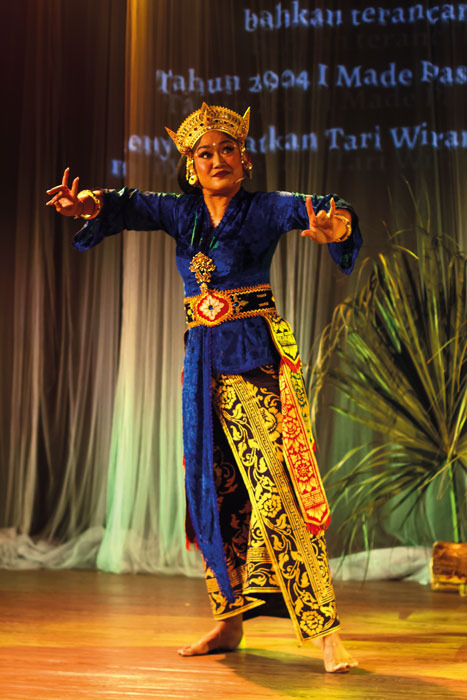
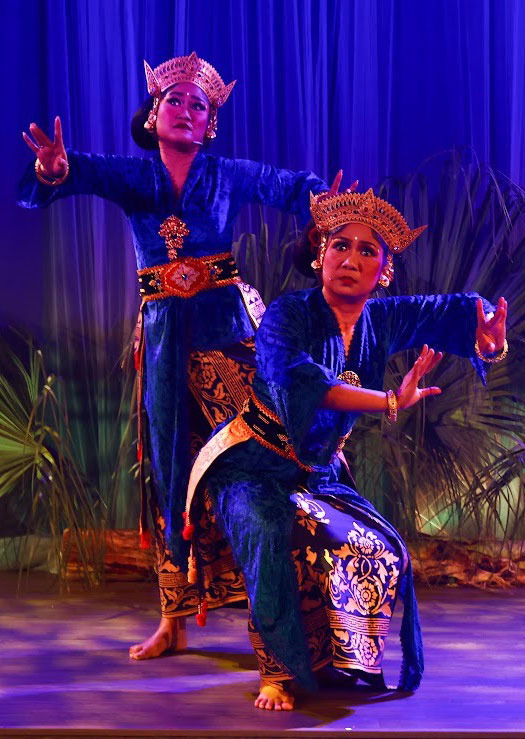
The audition tested not only her dancing but also her understanding of ngagem, the fundamental stance and positioning of the body. “The maestro corrected my position to ensure it was just right for Legong,” adds Trianawati.
Once accepted, Trianawati was asked to gather other dancers. With strict requirements and only a handful of dance studios in Bandung at the time, around 40 dancers were selected. The small group allowed them to train intensively under the maestro.
A year later, in 1994, they gave their first performance, marking the establishment of Bengkel Tari AyuBulan (AyuBulan Dance). The group was founded to deepen knowledge of traditional Balinese dance, particularly classic Legong, through learning, teaching and performance.
Trianawati admits that, like many dancers at the time, she had little idea that Legong encompassed such a vast repertoire. Affectionately known as Biang Bulan, the maestro introduced her to numerous classical works, including Legong Kuntul, Legong Kupu-Kupu Tarum and Legong Lasem Peliatan style, among many others.
In 1997, Trianawati moved to Jakarta for work, putting her dancing on hold. Several years later, however, the maestro invited her to perform in Jakarta. By then, several of the dancers she had trained with in Bandung had also relocated to Jakarta. Their reunion rekindled their shared commitment to their guru’s vision and eventually led to the establishment of a dance community, followed by the formalisation of Bengkel Tari AyuBulan’s legal status in Jakarta in 2004.
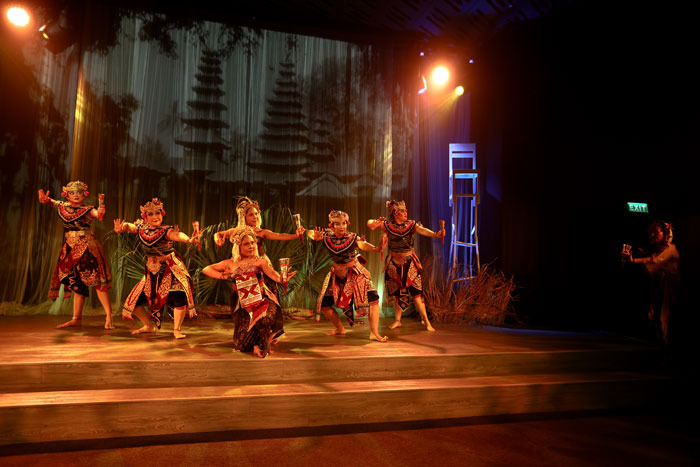
The reunited dancers also made their Jakarta debut in Bedoyo-Legong Calonarang at Graha Bhakti Budaya, Taman Ismail Marzuki, in 2006. The landmark work brought together two distinguished Indonesian dance maestros: Javanese dance maestro Retno Maruti and Balinese dance maestro A.A. Ayu Bulantrisna Djelantik.
For the dancers, the performance marked more than a return to the stage. It was a continuation of their teacher’s vision and a new chapter for classic Legong in Jakarta. Since then, the professional dancers have continued to perform extensively, both in Indonesia and abroad.
Over time, the members of Bengkel Tari AyuBulan evolved from professional performers into dedicated teachers. Their commitment to Balinese dance led them to establish Lestari AyuBulan in 2013. As the second generation of the Bengkel Tari AyuBulan, the studio welcomes anyone wishing to learn Balinese dances, from complete beginners to experienced dancers, regardless of age.
Today, Lestari AyuBulan has grown to eight studios across Jakarta, making Balinese dance more accessible to those who wish to explore it, whether simply for enjoyment or with the ambition of pursuing it professionally.
The studio holds two regular events each year: examinations, through which students’ progress in their training, and Family Day, when students come together to perform on stage. Classes are organised into Basic, Intermediate and Advanced levels, depending on the styles and techniques mastered by each student.
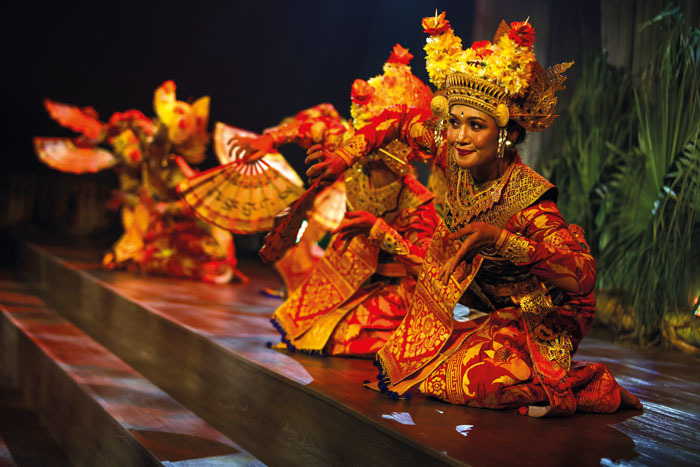
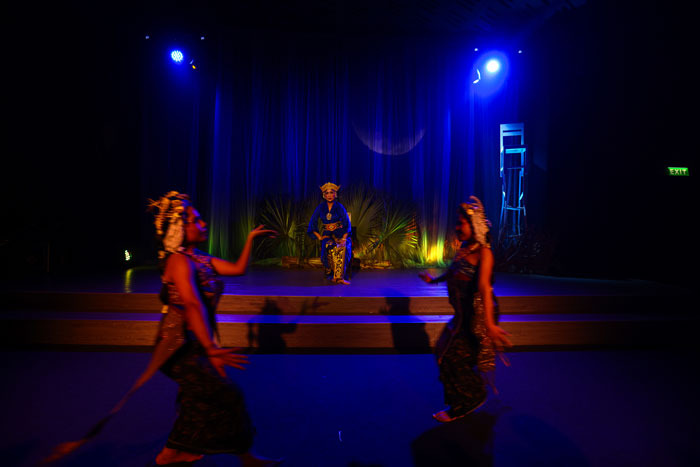
For those who reach the advanced level, learning does not end with mastering the movements. They are encouraged to bring the repertoire back to the stage, particularly works that are rarely performed. On 3 October 2026, dancers from Bengkel Tari AyuBulan and Lestari AyuBulan performed two lesser-known Legong pieces and one Kekebyaran dance from Singaraja, North Bali at Galeri Indonesia Kaya (GIK) as part of the gallery’s anniversary celebrations.
“We traveled directly to Bali to learn nearly-extinct classic Legong dances: Legong Pengeleb, reconstructed in 2010 by I Made Pasca Wirsutha and learned under the guidance of I Made Keranca, and Legong Tombol, reconstructed in 2013 by Ida Ayu Wimba Ruspawati from the Indonesian Institute of the Arts (ISI) Denpasar, and Wiranjaya dance which reconstructed in 2004 by I Made Pasca Wirsutha and learned under the guidance of Ida Ayu Sadrika. This is one of our efforts to preserve classical Legong and keep it alive, and we will continue to share its story in Jakarta,” stated Trianawati.
In Jakarta, AyuBulan’s dancers are not simply learning the steps handed down by their teachers; they are carrying them forward, ensuring that the many faces of Legong continue to be seen, heard and experienced by generations to come.
Those interested in learning Balinese dance can register directly with the AyuBulan community and choose from several studios across Jakarta that offer classes.
Studio AyuBulan Pondok Pinang (Headquarter)
Perumahan Pondok Pinang Centre,
Jalan Pondok Pinang CR 3 RT 001 RW 05, Pondok Pinang, South Jakarta.
@bengkeltariayubulan
@lestariayubulan