


Across the Indonesian archipelago, biodiversity offers abundance: tubers, grains, spices, leaves, fruits, resins, roots, forest harvests, and marine bounty. Yet nature alone does not create cuisine. Between what grows on the land, what is gathered from the sea, and what finally arrives on the table lies something far more powerful: culture.
Culture is the collective intelligence that interprets, adapts, and transforms nature into nourishment, flavour, and identity. Indigenous knowledge is not merely tradition; it is a living system: encoding ecological understanding, sensory wisdom, and technological ingenuity long before the modern language of nutrition, sustainability, or gastronomy existed. Through culture, communities do not simply consume nature; they converse with it.
Across the islands, communities encounter similar plants, the same seas, and a shared tropical climate. Yet what emerges on their tables is remarkably different. Culture acts as a translator—decoding nature into techniques, rituals, and taste.
This is where gastronomy truly begins.
Nypah: One Plant, Many Interpretations
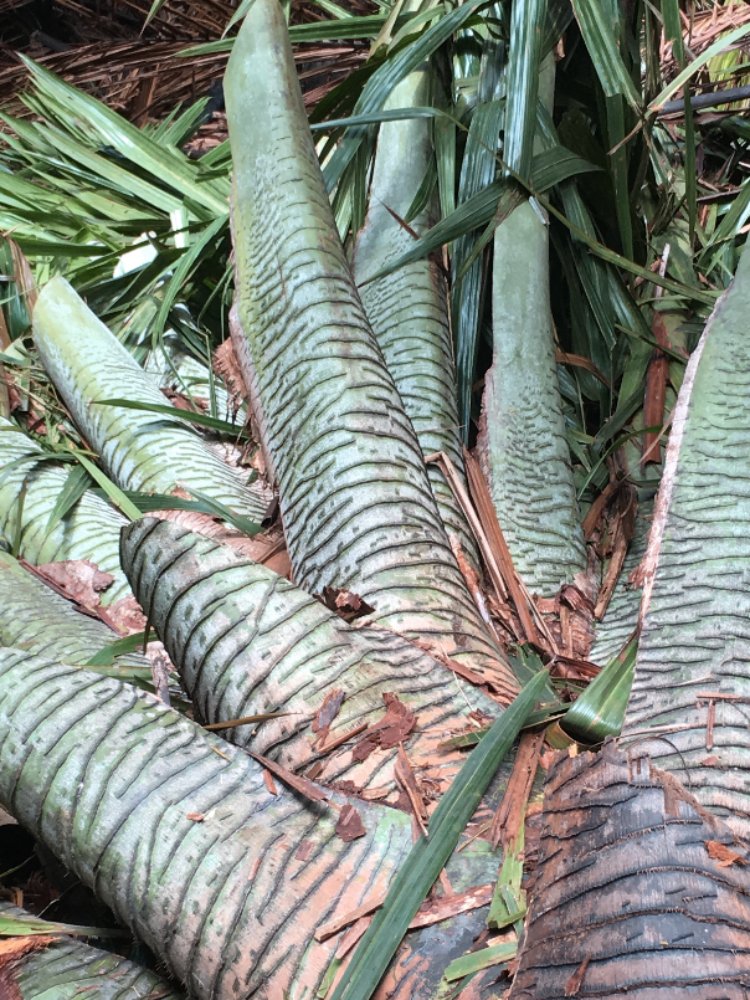
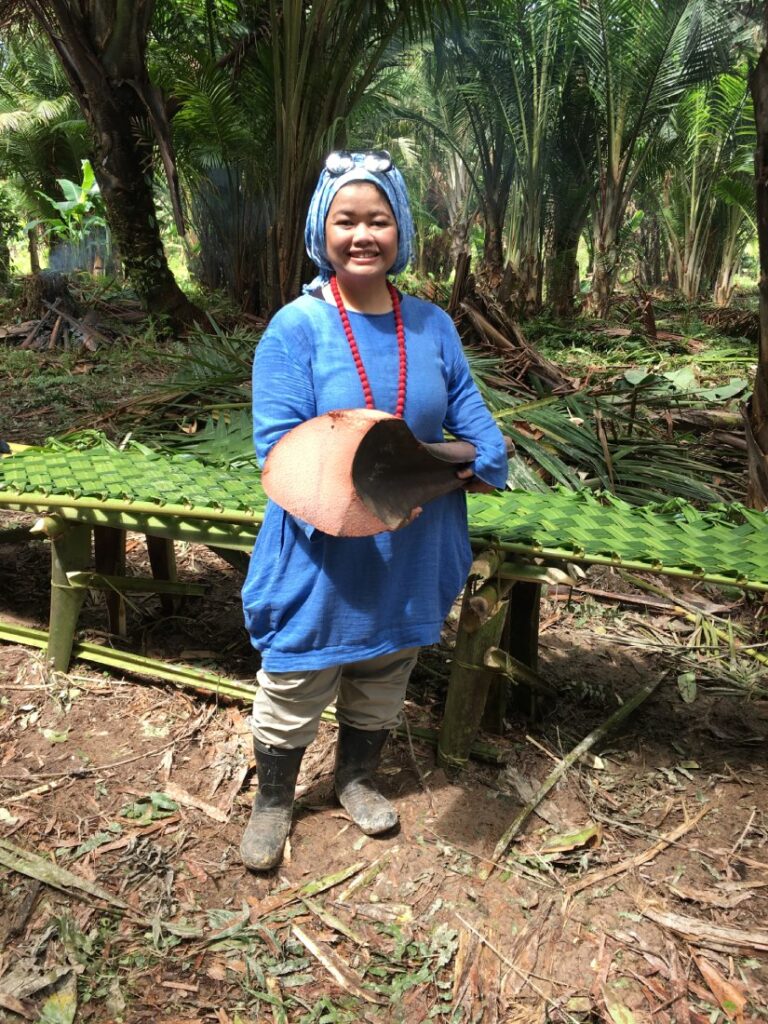
In coastal ecosystems across the archipelago grows the humble nypah palm—often overlooked, yet deeply embedded in local foodways. Different cultures interpret this plant in distinct ways.
In Papua, coastal communities use the inner part of mature stalks to impart a gentle salty nuance to dishes—an intuitive response to living between forest and mangrove landscape. Such practice led to the birth of an award-winning plant-based salt and create local business. Meanwhile, in Bengkulu and Pangandaran, the same plant becomes a source of sweetness: its flower nectar is tapped and cooked into palm sugar. Across regions, the translucent nypah fruit is universally enjoyed as a refreshing delicacy.
One plant, three culinary identities, salt, sugar, and fruit, revealing how culture translates nature into taste.
Coconut: The Tree of Complete Use
Few plants illustrate cultural intelligence as clearly as the coconut tree. Across Indonesian traditions, nearly every part becomes nourishment.
The flesh is pressed into coconut milk or toasted into fragrant serundeng. Coconut water refreshes and marinates. Blossom nectar becomes sugar or vinegar. In rare traditions, the tender blossom itself becomes a dish, as in gudeg manggar. The palm heart, textured like bamboo shoots, is cooked into curries, while leaves are woven into wrappers for rice cakes such as ketupat.
This is more than resourcefulness; it is an indigenous zero-waste philosophy.
The Craft of Sweetness
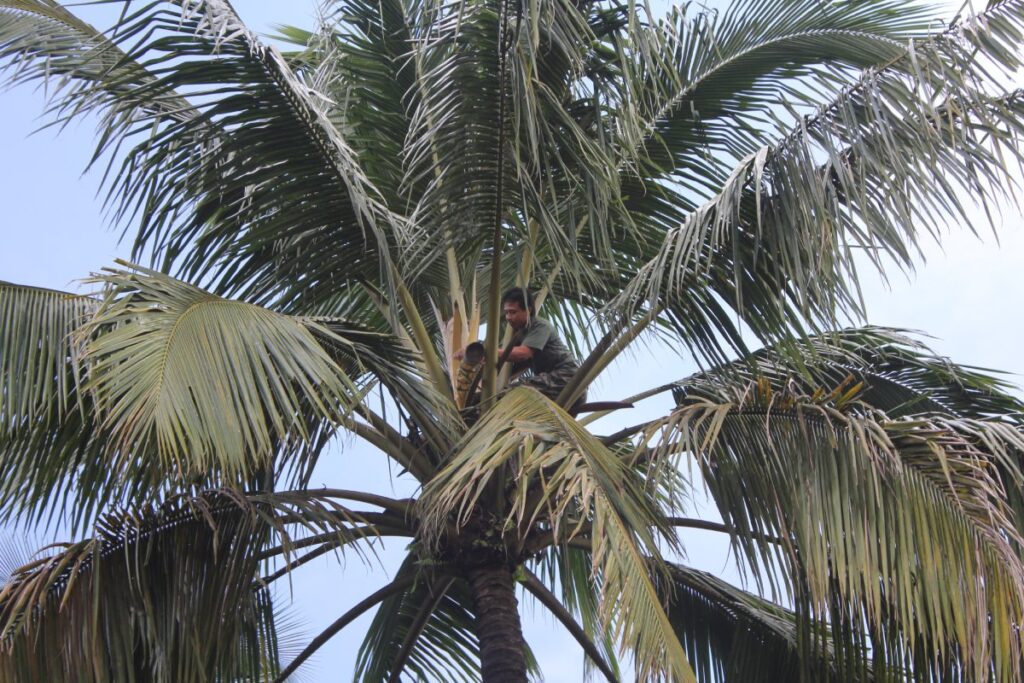
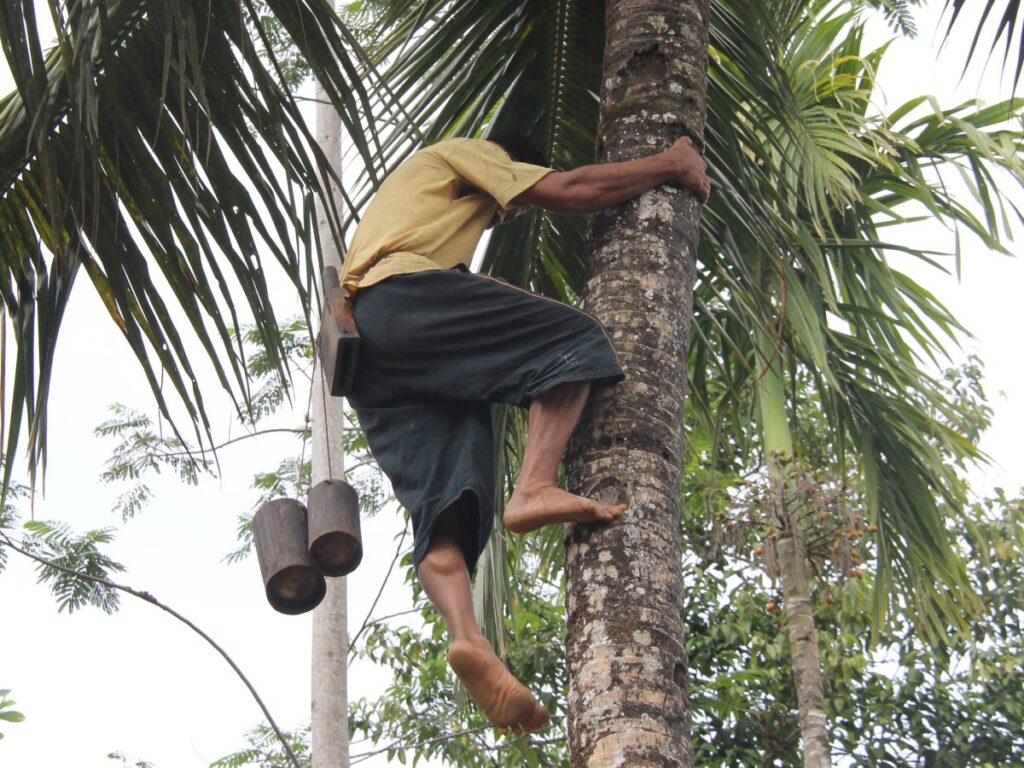
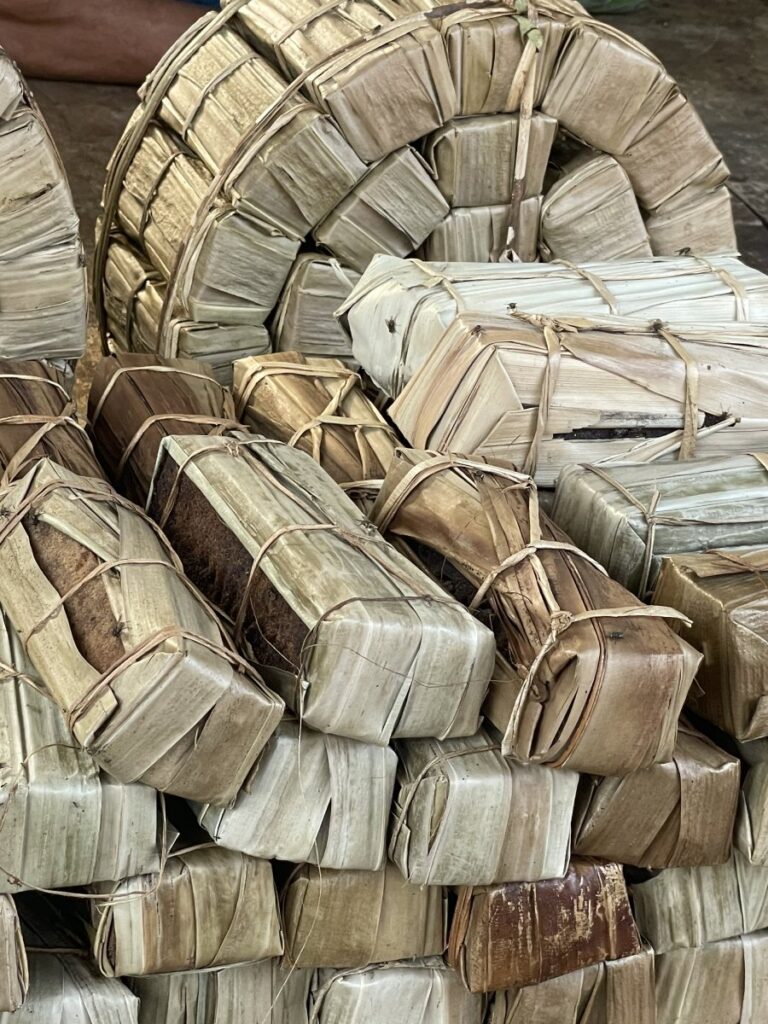
In many island communities, sweetness is not extracted; it is cultivated through patience, skill, and intimate knowledge of living trees. Across the archipelago, people tap coconut and arenga blossoms to collect nectar, transforming it into sugar or syrup, with similar, subtle cultural variations that shape the final flavour.
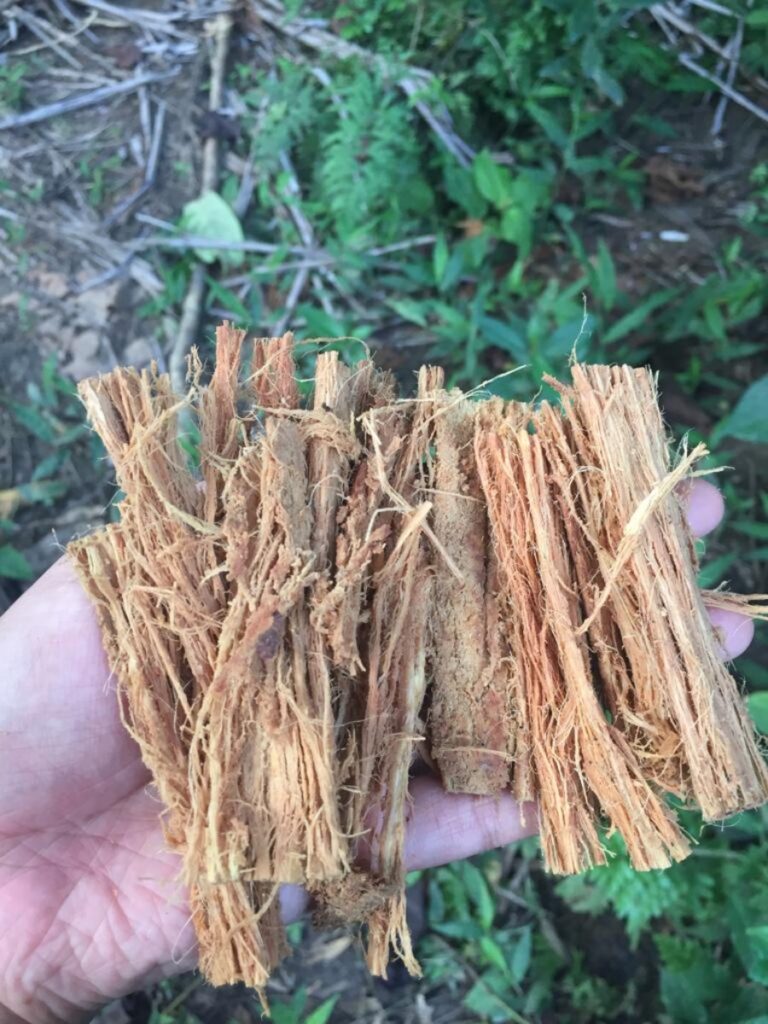
Different regions apply different botanical wisdom to prevent fermentation: in Belitung, artisans use akar kayu entuban; in parts of Central Java, mangosteen rind, slatri leaves, or jackfruit wood shavings are added. During long boiling, when nectar threatens to overflow, some add coconut oil, others crushed candlenut, small gestures that influence aroma and depth of sweetness.

Even before the nectar flows, the trees require different forms of dialogue. Coconut blossoms yield through daily pruning and gentle massaging, while Arenga blossoms demand a more rigorous ritual; the flower must be swayed and the stem rhythmically pounded before the first drops appear. One cannot help but wonder how such intimate knowledge was first discovered.
The Cultural Science of Taste — Refining Flavour
Culinary intelligence is also revealed in how communities refine taste. Across regions, bitterness in papaya flowers is removed through different methods: some boil with clay, others with guava or harendong leaves, or simply massage with salt. To neutralise fishy or goaty aromas, many use citrus such as lime or Calamansi, while others rely on aromatic leaves like Torbangun.
These practices are not random but are rather a sensory science shaped by generations of observation. There is no single correct technique, only cultural intelligence at work.
From Poison to Umami: Kluwak & Beyond
Few ingredients demonstrate cultural translation as profoundly as kluwak. Found across Indonesia, this naturally toxic nut must be detoxified before consumption, yet each culture transforms it differently.
In West Java, soaked kluwak (picung) becomes dishes like sautéed picung or gulai picung, with a subtle, creamy flavor reminiscent of tofu, fresh mozzarella, and chestnut. In East Java, Bugis, and Toraja traditions, kluwak is cured until blackened, developing deep umami that defines dishes such as Rawon and Konro.
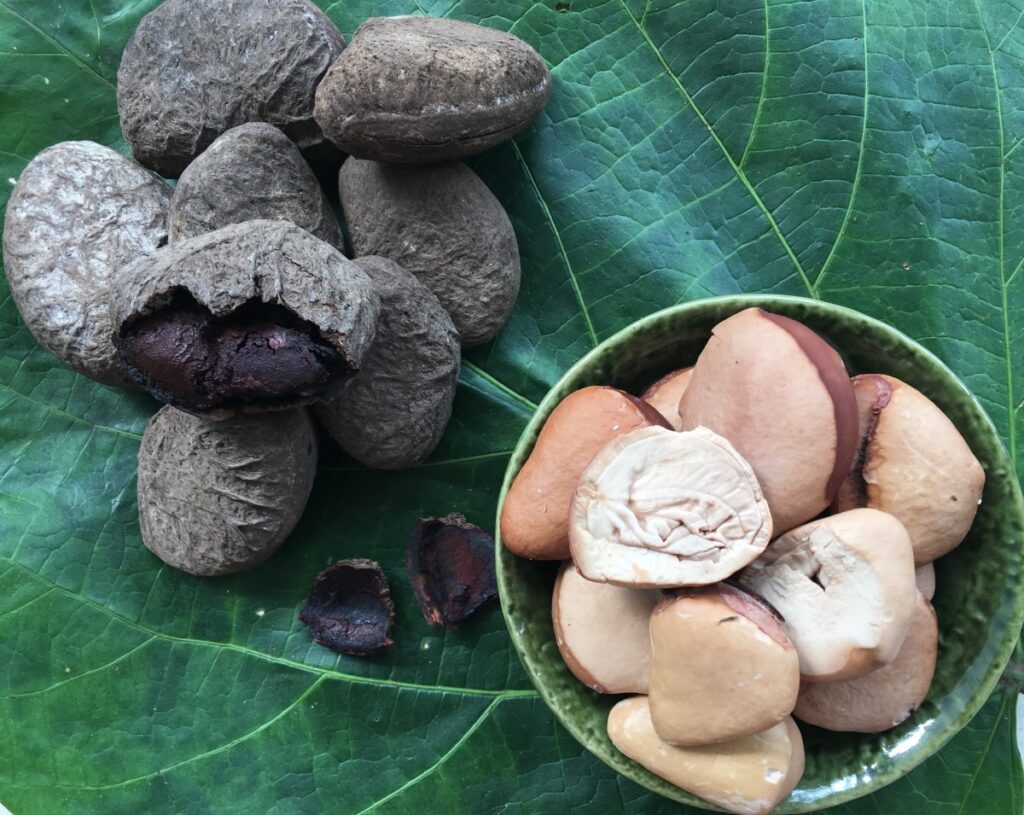
The curing itself varies. In Java, kluwak ferments by being buried in the mud. In Toraja, pamarassan involves staged drying and pounding into a dark aromatic powder. Among Dayak communities of North Kalimantan, Kluwak undergoes another transformation, fermented into a plant-based paste resembling terasi, rich and pungent.
A toxic seed becomes seasoning, identity, and innovation. This is not about nutritional survival but a sophisticated gastronomic intelligence.
Salt: Not All Created Equal
Even salt, seemingly simple, reveals cultural diversity. Along Bali’s coastline, different communities craft salt using techniques shaped by landscape, ecology, and inherited knowledge. In Kusamba, seawater is first evaporated in sand, then rinsed and filtered before being cooked in hollowed coconut trunks. In Amed, brine is absorbed using mud-lined baskets before sun-drying. Along the northwest coast, salt is produced in evaporation ponds similar to those of Madura. The same sea, the same island, yet distinct techniques yield different textures, crystal structures, and tastes.
Culture, however, is never static. As climate change disrupts seasonal rhythms, some Bali salt makers, such as Bali Artisan Salt of Pemuteran Village, have introduced solar dome dryers to protect crystallisation from unpredictable rain. This innovation improves purity, accelerates drying, and produces cleaner crystals. Under the right balance of mineral-rich seawater and intense sun, delicate natural pyramid crystals may form—an elegant expression of tradition evolving with time.

Foraged Food — Wisdom from the Wild
Long before cultivation, it was indigenous intuitive eating that guided communities to understand what is edible and what is not in the wild. This deep ecological literacy, passed down through generations, unlocked a vast living pantry: fruits, aromatic leaves, tubers, mushrooms, and countless wild greens.
In Muara Jambi, local communities can identify and gather more than 120 edible greens from forests and wetlands, forming the botanical foundation of their iconic Rempah Ratus Belut. In Belitung, rare wild mushrooms such as kulat pelawan emerge only after the first lightning of the rainy season—ephemeral, luxurious, and deeply tied to forest cycles. The island’s foragers also know precisely which leaves can neutralise toxins from puffer fish, a knowledge rooted in lived experience rather than written science.
Across Kalimantan, forests offer an abundance of wild fruits, including Lai: a durian relative without the pungency, alongside many other seasonal treasures. In Papua, nature provides a variety of tubers, aromatic leaves, medicinal woods, and even plant-based mineral salts harvested from traditional ecological practices.

These ingredients are not accidental discoveries. They are revelations shaped by centuries of observation, trial, memory, and cultural transmission. Foraged food is the epitome of a sophisticated knowledge system, where taste, safety, seasonality, and ecology are inseparable from identity and landscape.
Culture as Living Gastronomic Intelligence
Indigenous food knowledge is not static heritage. It is adaptive, experimental, and deeply ecological. It transforms toxins into nourishment, bitterness into delicacy, aroma into balance, and plants into identity. Long before laboratories defined nutrition, communities understood fermentation, detoxification, preservation, and flavour architecture—through lived experience across generations.
Gastronomy is not born in kitchens alone. It is born in forests, rivers, coastlines, farms, and in the collective memory of people who learned to listen to nature.
Indigenous knowledge is more than heritage; it is a living intelligence guiding sustainability, nutrition, and flavour long before these became global concerns. Biodiversity becomes cuisine only through human interpretation. To understand Indonesian gastronomy, one must look beyond ingredients and into the cultural wisdom that transforms nature into taste, memory, and identity.
In the end, gastronomy is not only about what we eat, but how culture teaches us to taste the world.