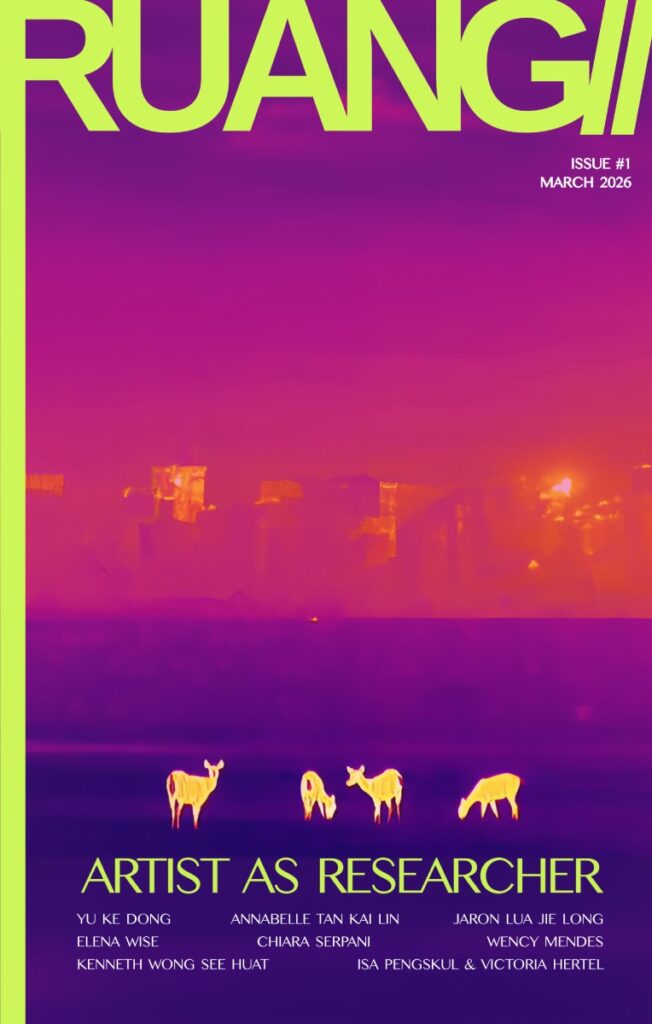



Art journal RUANG// is reframing everyday experiences through artist perspectives.
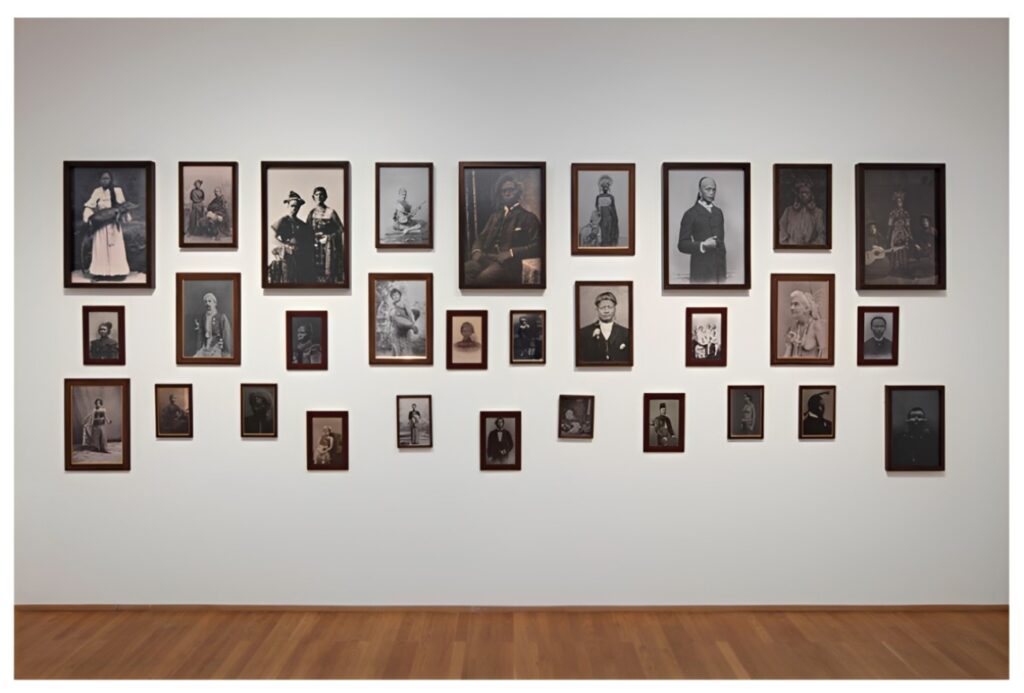
What happens when nickel is pulled from the earth until landscapes collapse, or when colonial portraits continue to shape identity long after the empire has gone? What stories do forests tell when cameras catch the flicker of animals moving through the night? These are questions that diverse academic fields often explore, but now artists are joining the very same discussions.
This is the philosophy that drives RUANG// Journal, a new publication that invites artists to be investigators, asking them to explore Southeast Asia’s shifting ecologies, infrastructure and histories.
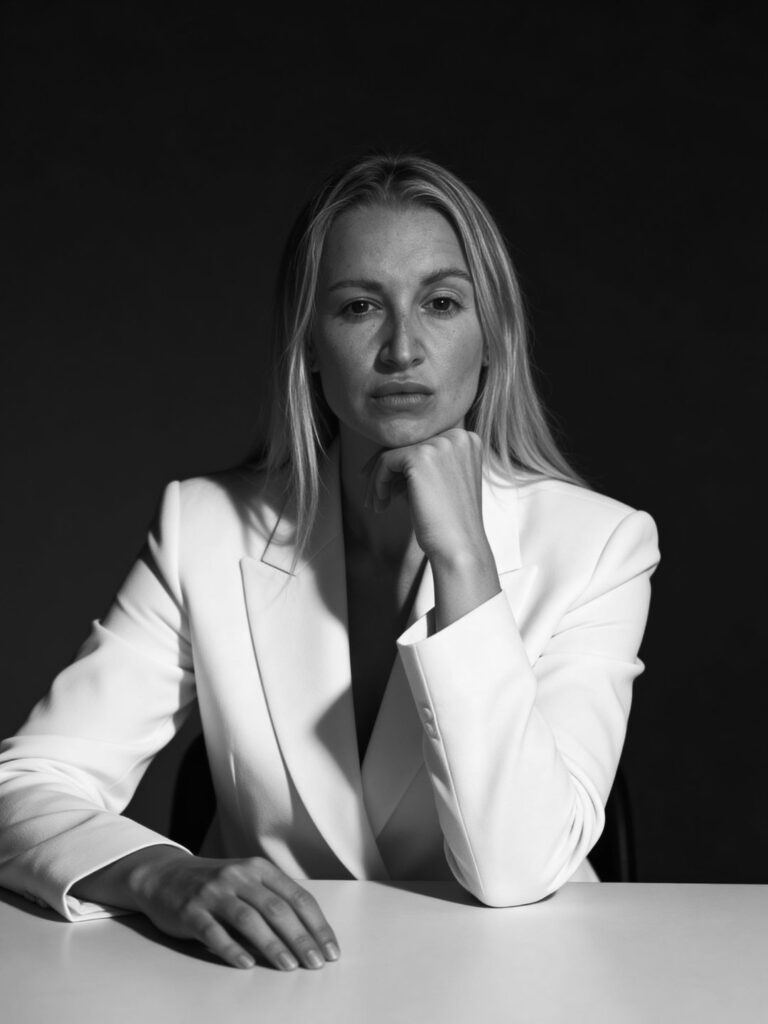
At the centre is curator and Editor-in-Chief, Natasha Doroshenko Murray, who sees art as a way of noticing. “Artists are embedded in the environments they study,” she says. “They sense changes before they are formally recognised. RUANG// Journal was created to support writing that treats these artistic inquiries as knowledge.”
Though its editorial base flows between Jakarta and Bali, the journal stretches across Southeast Asia. The first issue brings together eight writers from five countries and dives into the practices of 25 artists — from Bagus Pandega’s installations probing the ecological fallout of nickel extraction to Agan Harahap’s reconstructed colonial portraits reframing histories of slavery and identity. Other contributions follow Robert Zhao Renhui’s wildlife investigations, Yee I‑Lann’s collaborations with coastal communities, and Tuan Andrew Nguyen’s explorations of displacement and memory.
The publication presents itself as an academic journal, but does so in a way that engages the everyday reader: “We work closely with writers so the texts carry analytical depth but remain readable beyond academic circles,” Murray explains. The result is writing that feels rigorous but approachable, a space where art transcends a visual experience and becomes a mode of inquiry and exploration. Many would admit that they could not produce like an artist, and this journal takes that further and says well, perhaps you don’t see the world like one too. Thus, the written word bridges this gap, very much in the same way the artist and audience are bridged through an art piece.
Across Southeast Asia the art scene feels young and restless, full of urgency and experimentation. Artists are embracing new media, engaging ecological and technological questions, and drawing on indigenous knowledge to shape their practices. Yet colonial legacies still weigh heavily, with much of the theoretical framework tied to Western modernisms and few platforms dedicated to archiving or sustained critical writing.
In Indonesia the art market is lively and visible, but spaces for experimental or process‑based practices remain limited, creating pressures for those who work outside conventional formats. RUANG// was born to respond to this need. “Ruang means room, and we wanted to create space for discourse grounded in local contexts, histories, and languages, while enabling exchange across Southeast Asia,” Murray says, framing the journal as both a response to the present and a foundation for the future.
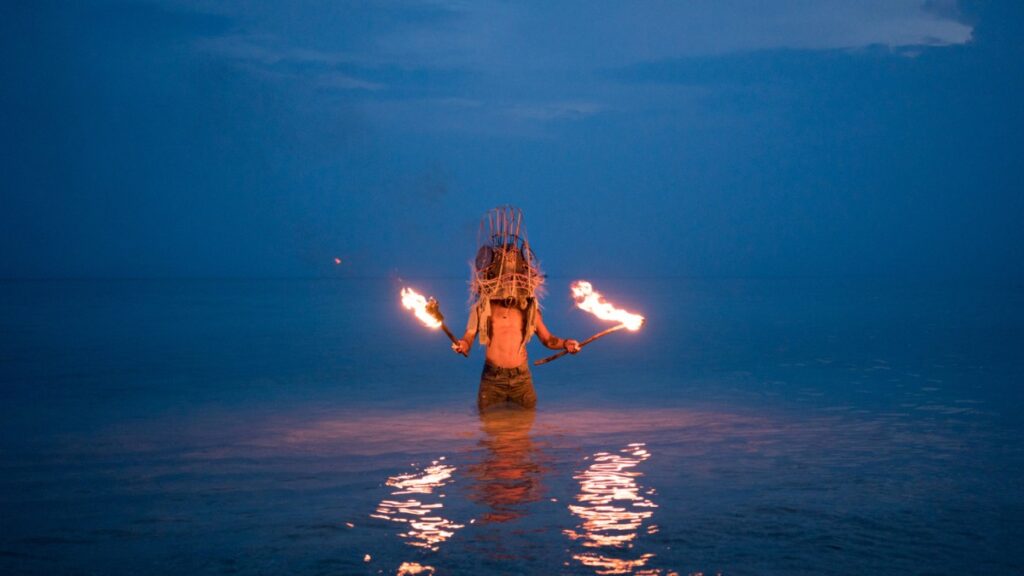
She is emphatic about why artists’ voices matter, “Artists often notice shifts before anyone else. They shape how we perceive the world, and in doing so, they can shift how we act within it. In short, art can save the world.”
With its opening edition, RUANG// Journal offers a place to follow artists as they play with ideas, experiment, and imagine futures drawn from ordinary moments.
Published free and welcoming anyone curious, RUANG// Journal reflects a commitment to accessibility and exchange. It brings together emerging and established voices, building discursive infrastructure for contemporary art in Southeast Asia.
RUANG// also runs exhibitions and research‑based initiatives, creating space for conversations rooted in local contexts, histories, and languages, while enabling exchange across the region.