


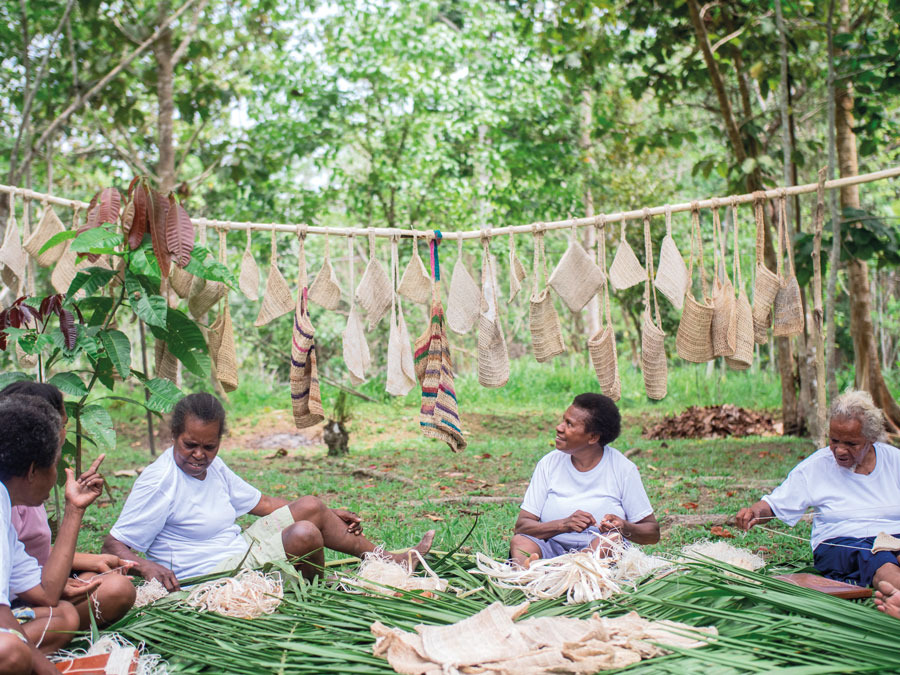
From its indigenous roots to its transformation into a contemporary fashion statement, the noken is more than just a bag. In the hands of Ki.Basic, this traditional woven bag from Papua has evolved into a stylish and meaningful fashion item that invites modern consumers to experience the cultural journey and philosophy behind each piece. Photos courtesy of Ki.Basic.
Long before government policies discouraged single-use plastic bags, the people of Papua had embraced sustainability through their everyday use of the noken. For them, the noken isn’t just an eco-friendly carrier; it is deeply embedded in their cultural identity and life values.
Across nearly 250 tribes in Papua, the noken holds various meanings. Among mountain tribes such as the Yali, Lani, Dani, and Damal, it symbolises peace, fertility, and the promise of a good life.
Handcrafted entirely from tree bark fibres, each noken undergoes an intricate process—from stripping and drying the bark to manually spinning fibres into threads and naturally dyeing them using plant-based pigments. Even the way it’s carried is unique. Papuans traditionally hang the noken from their heads, using it to carry everything from crops and firewood to groceries—and even babies. In recognition of its cultural importance and uniqueness, UNESCO designated the noken a Masterpiece of the Intangible Cultural Heritage of Humanity on 4 December 2012.
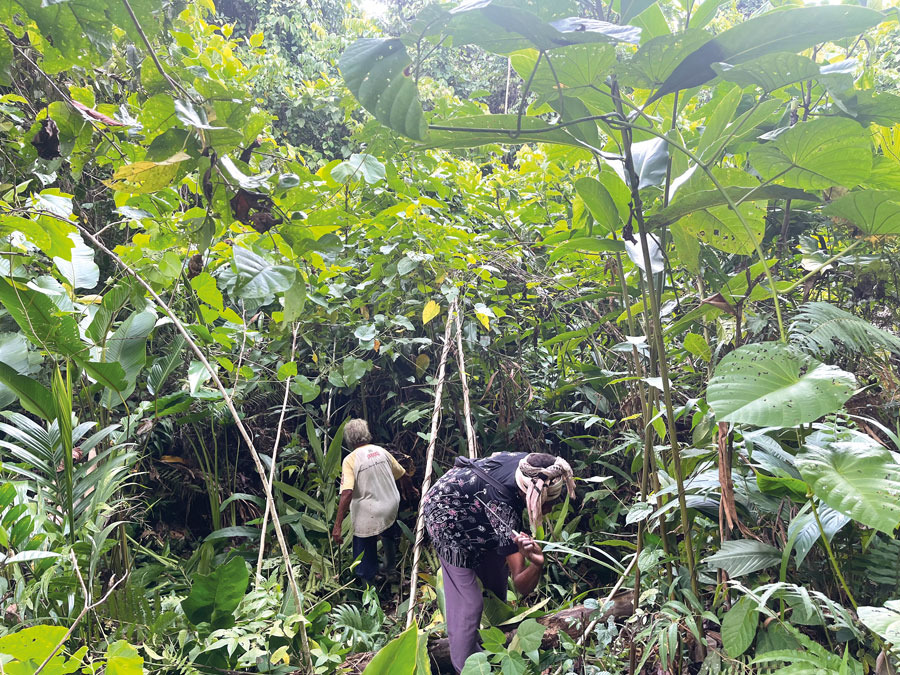
Of the many noken types known to travellers, most come from Papua’s mountainous regions. To spotlight the lesser known noken of the lowlands, particularly those made by the Namblong community, sisters Caroline and Naomi Waisimon founded Ki.Basic in 2021. In Namblong, located in the Grime valley behind scenic Sentani Lake in Jayapura, the bag is called KBO (pronounced kebo).
“The noken holds profound meaning in Papuan society, reflecting diverse cultural philosophies. Namblong’s open-weave noken symbolises transparency and flexibility. It allows us to see what’s inside. When I give you a noken, I’m offering more than a bag; I’m sharing a piece of myself, a value. And I hope you’ll return it filled with your own,” Naomi Waisimon tells NOW! Jakarta.
The name Ki.Basic draws from the Namblong word ki (woman)—referring to the women who craft these bags—and basic, representing the foundational role of the noken in Papuan life. The brand empowers local women to preserve this ancestral tradition while sharing its philosophy with a wider audience. They work closely with the local artisan in three villages in Jayapura, namely Rhepang Muaib, Ombrob, and Yenggu.
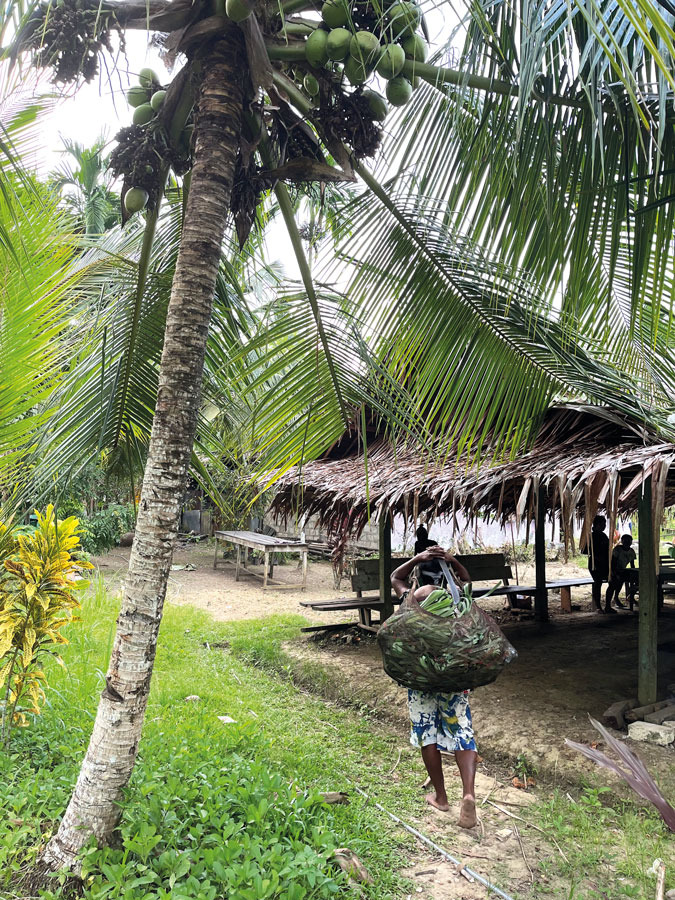
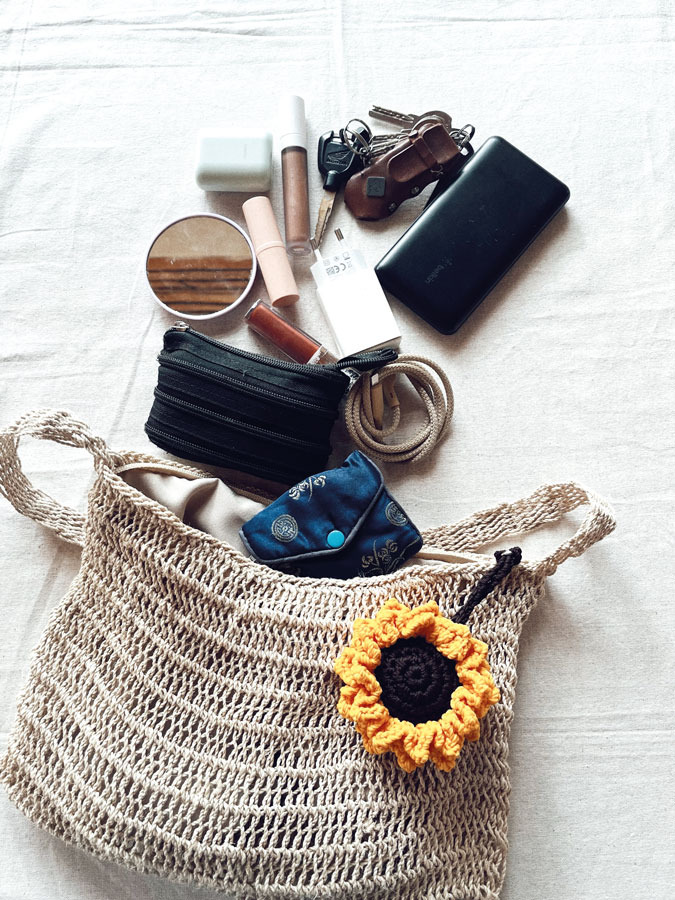
One defining feature of Namblong’s noken is an 88-knit pattern, which resembles the number eight and is commonly worn by the wider public. More exclusive is the KBO Dong, a noken reserved for iram (tribal leaders). Complex and time-consuming, KBO Dong bags can only be made by master knitters, some of whom are proudly part of the Ki.Basic team.
In keeping with traditional practices, Ki.Basic uses natural materials sourced from surrounding forests and community gardens. Every step, from harvesting raw materials to spinning and knitting, is done by hand, following methods passed down through generations. Because of this, Ki.Basic produces just 30 bags per month.
Ki.Basic is also reviving natural dyeing traditions once pushed aside by modern synthetic colours. Using indigenous plants such as mere (for brick red), kenewatekere (purple), and iwi (blue), the brand cultivates and uses local dye plants that reflect the essence of Papua’s land. For the thread, they rely on fibres from trees like mahkota dewa (Phaleria macrocarpa) and pakwey (Drymis sp.).
Naomi concedes that it took time and patience to transform the traditional noken into modern handcrafted products. She and her sister Caroline worked closely with local mothers, explaining the concept, developing designs, and ensuring that the philosophy of the noken is never compromised in the process.
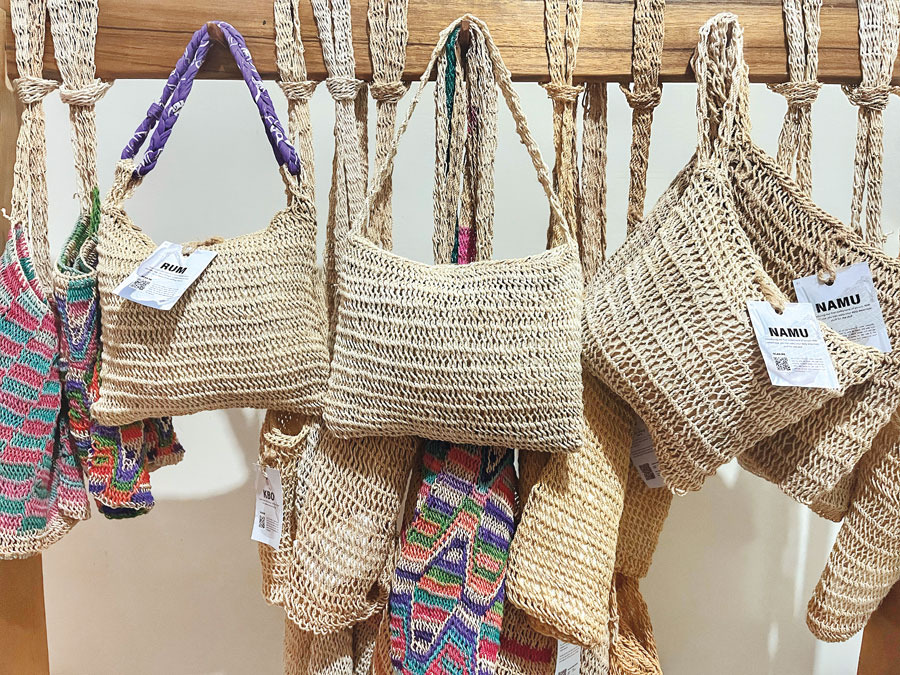
One of their first creations was the Namu, a beautifully crafted pouch. Fittingly, namu in the local Namblong language means “wait”, a nod to the long journey it took to bring this product to market. In addition to the Namu, Ki.Basic offers other contemporary noken-inspired items such as the Rum, a practical shoulder bag, and the KBO, a versatile sling bag. Each design respects the spirit of their traditional predecessors while offering function and form suited to modern lifestyles.
Despite the innovations in their designs, Ki.Basic remains committed to preserving the authenticity of the noken.
“We haven’t changed the size or structure of the bag itself,” Naomi explains. “Like a pouch, we’ve only modified the strap to suit modern wear, but at its core, the bag remains a true noken.”
Through this careful balance of tradition and innovation, Ki.Basic hopes buyers understand they are not just purchasing a fashion item; they’re engaging with a piece of living culture.
Ki.Basic collections are available at select offline stores in Jayapura, Papua, and Bali.
Information:
kiart.id21@gmail.com
@ki.basic
kibasic.com
STORES
- Papua
Galeri-Isyo Lodge Papua Lobby Entrance
Kampung Rhepang Muaib, Nimbokrang District, Jayapura, Papua - Pusat Oleh-Oleh Papua (Galeri Kreatif
Kehutanan)
Jl. Raya Abepura, Kota Baru, Jayapura, Papua - Bali
Myrah Peñaloza Shop & Tea Sanctuary
Jl. Pantai Pererenan No.132, Badung, Bali