


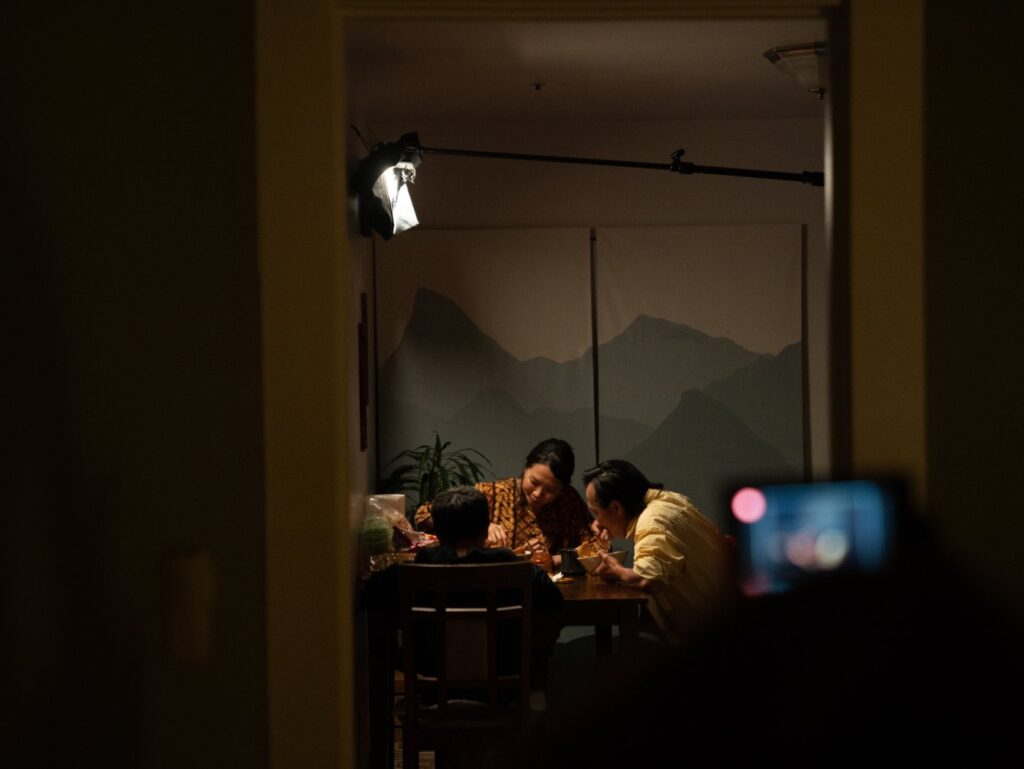
Filmmaker Nick Hartanto examines assimilation, identity, and the quiet cost of being the “model minority” in this autobiographical, Oscar-eligible short film about an Indonesian American family.
Bastian is a young Indonesian boy who grows up in the United States; cheerful, curious and quietly attentive to the social cues around him. One evening, he watches his mother, Eliawati, pick up a chicken takeout from a Chinese restaurant for a church potluck, and later presents it as a homemade Indonesian dish to the predominantly white congregation. And to the mother-and-son’s awkward surprise, it wins the night’s top prize.
The lie is small, almost instinctive. Yet in that moment, approval becomes synonymous with feeling safe and accepted. This brief, formative moment opens ‘Daly City’, an autobiographical short film by Indonesian American filmmaker Nick Hartanto.
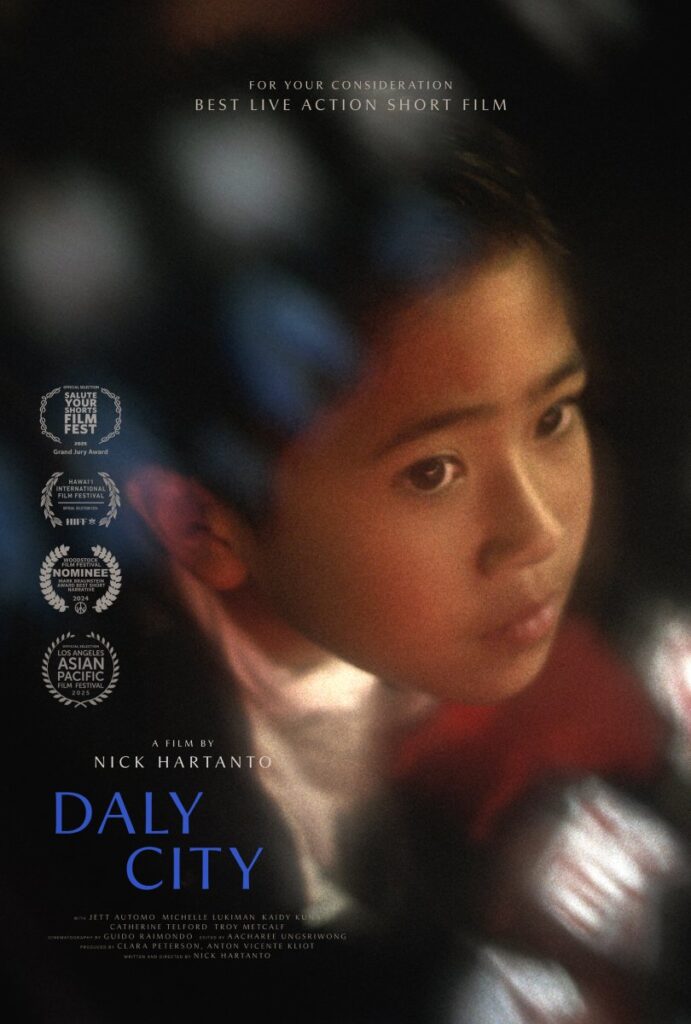
Since its initial release in 2024, Daly City has screened at numerous film festivals across the U.S., including the Asian American International Film Festival, Indonesian Film Festival New York, and the Woodstock Film Festival. It has been showcased in Japan, South Korea and Yogyakarta, and received various accolades, notably the Special Jury Award at the Salute Your Shorts Film Festival, a prize that qualified it for Academy Awards submission.
The short was later selected as one of the three films representing Indonesia at the 2026 Academy Awards, alongside the feature film ‘Sore: Istri Dari Masa Depan’ by Yandy Laurens and the short film ‘Little Rebels Cinema Club’ by Khozy Rizal.
Shot in the fog-shrouded San Francisco suburb where Nick grew up, and in the very locations where these moments unfolded, Daly City captures a child’s early understanding of identity, assimilation, and the quiet performances immigrant families learn to fit in.
“This was the first film I wrote and directed on my own. So, it’s a story where I asked myself, ‘What is a story that I can tell that is completely me?’” said the Surabaya-born filmmaker, who moved to the U.S. with his family at a very young age. “[Daly City] ended up being about my parents and my childhood. It was also an opportunity to finally make a film with an all-Indonesian cast.”
Eliawati is portrayed by LA-born actress Michelle Lukiman, while Heruawan, the father, is played by actor Kaidy Kuna, who moved to the United States as a teenager. Child actor Jeff Automo portrays the young Bastian.
Casting, however, was no easy task. Finding Indonesian performers in the United States proved to be a needle-in-the-haystack process, with the team auditioning talents based in Jakarta as well as aspiring actors who had only recently arrived in the U.S. But Nick was determined to assemble a central cast who could truly grasp and inhabit the delicate conflict of being a model minority.
“I think that understanding only comes from living in America for a certain amount of time,” shared Nick, who is based in New York. “The idea that many Asian immigrants try to become the best, the hardest working, and the most obedient to be accepted and favoured. That conflict is complex and grey. So, we really needed Indonesian American actors who could instinctively understand it.”
In one pivotal scene of the 16-minute film, Bastian arrives at the car dealership where his father, Heruawan, works. There, he watches his father laugh off the subtle mockery and casual aggression of his American coworkers, leaving Bastian confused and unsettled at his dad’s inaction.
“Being the more fluent English speaker, we often assume our parents don’t fully understand the subtext and the nuances,” said Nick, who draws the scene from his own experience with his father. “But only as an adult did I realise they’re emotionally aware of everything.” Making the film, then, pushed him to reconsider these moments from a different standpoint. “When you first arrive in America, you’re in survival mode. You’re focused on finding stability, putting food on the table, and raising your family. If someone insults you, you power through it. One of the biggest takeaways when making this film was being able to step into my parents’ shoes.”
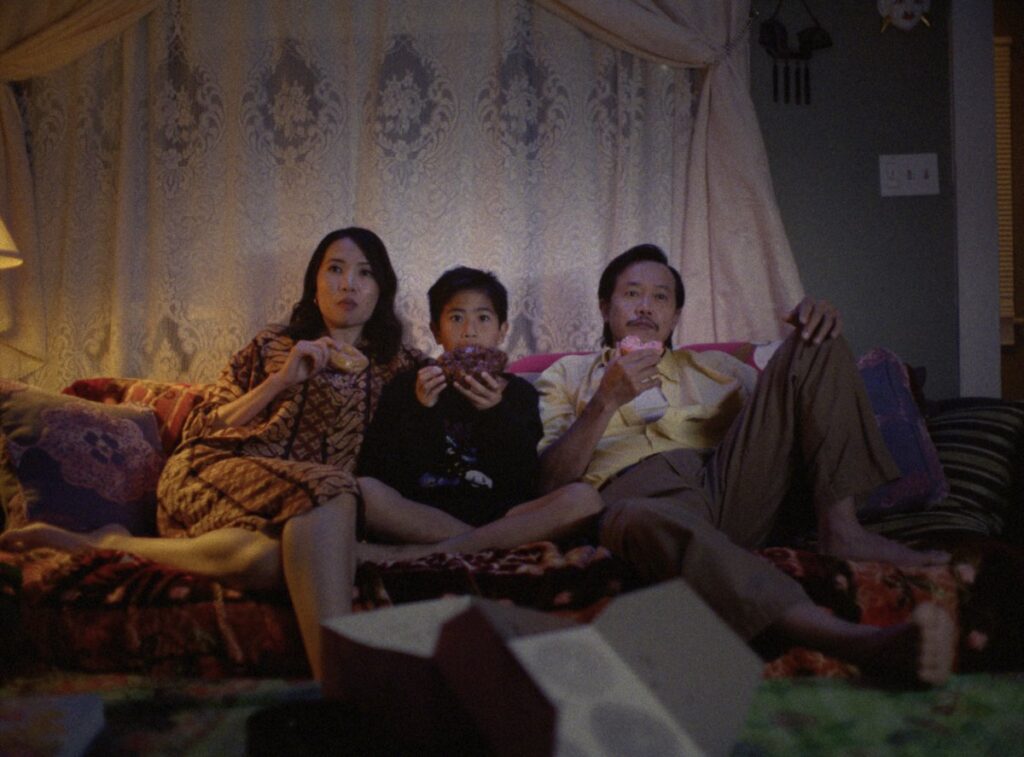
Daly City closes with a familiar domestic scene of Eliawati preparing dadar jagung (Indonesian corn fritters) for the family, rendered vivid through flashes of red chillies being crushed against a mortar and pestle, oil sizzling in the pan, and kerupuk crackling as it fries. Where the chicken takeout signals performance and assimilation, dadar jagung represents the family’s nourishment, comfort and sense of return.
“Dadar jagung is something my mother likes to make after a long day. Simple yet comforting,” Nick recalled. Today, cooking Indonesian food remains one of Nick’s intimate ways of reconnecting to his roots. Having lost much of his mother tongue after being encouraged to only speak English, food steps in as a substitute for language that carries memory when words no longer come easily.
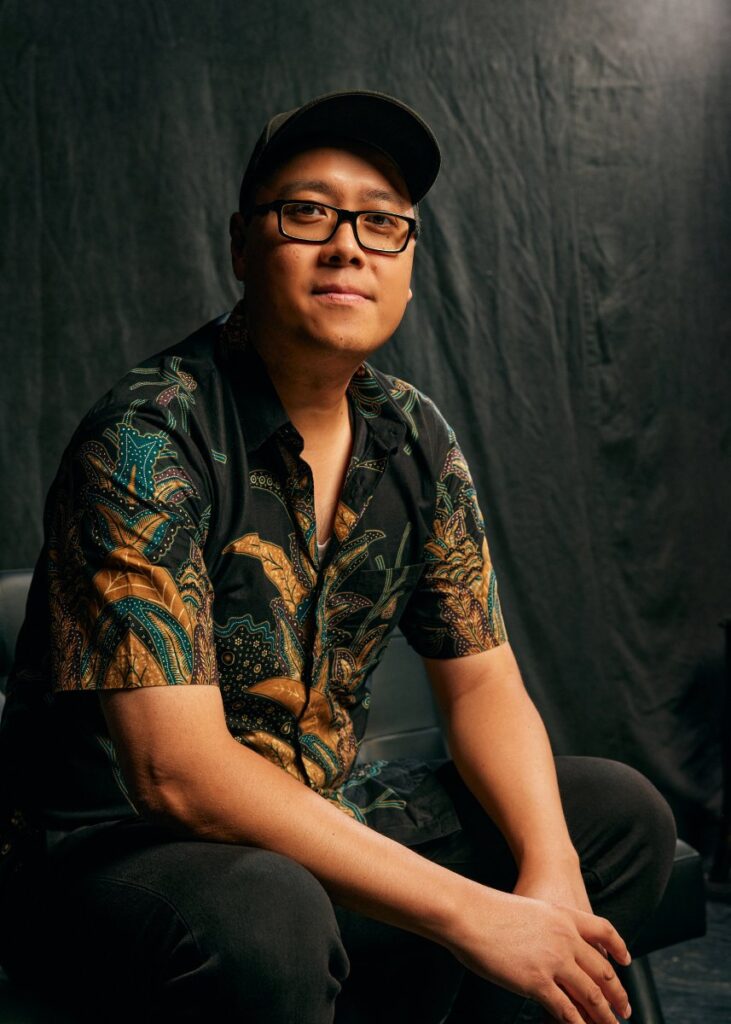
When this interview took place, the 2026 Academy Award nominations had just been announced the day before, with none of the Indonesian entries making the shortlist. But instead of dwelling on the disappointment, Nick approached the whole experience as a pivotal chapter in his career and in the broader effort to bring more Indonesian stories into the global film conversation.
“In the U.S., Indonesian cinema is often associated with horror films. So to see these films being recognised as well‑written, intelligent, artistic works that challenge expectations is refreshing.” He added that the shared campaigning process with fellow Indonesian filmmakers was an experience he remains deeply grateful for. “I’m confident there will be more voices like ours in the future.”
Arriving at a moment when conversations around identity and nationhood are growing louder and more divided, Daly City leans into the Indonesian American experience with nuance and empathy, carving out a space for the Indonesian diaspora to be seen in all their complexity. In this portrait of a childhood lived between cultures, a meditation on parental sacrifice, and a quiet reckoning with identity, the film speaks to shared experiences that resonate beyond Indonesian Americans.
“I’ve been contacted by Indonesians all over the world, from France to Canada, telling me, ‘I’ve never seen this played out on screen before. This is exactly my experience!” shared Nick. “The collective response has been a really beautiful consequence of making this film.”
For more on the film and the filmmaker, follow them on Instagram:
@nickhartanto
@dalycityshortfilm