


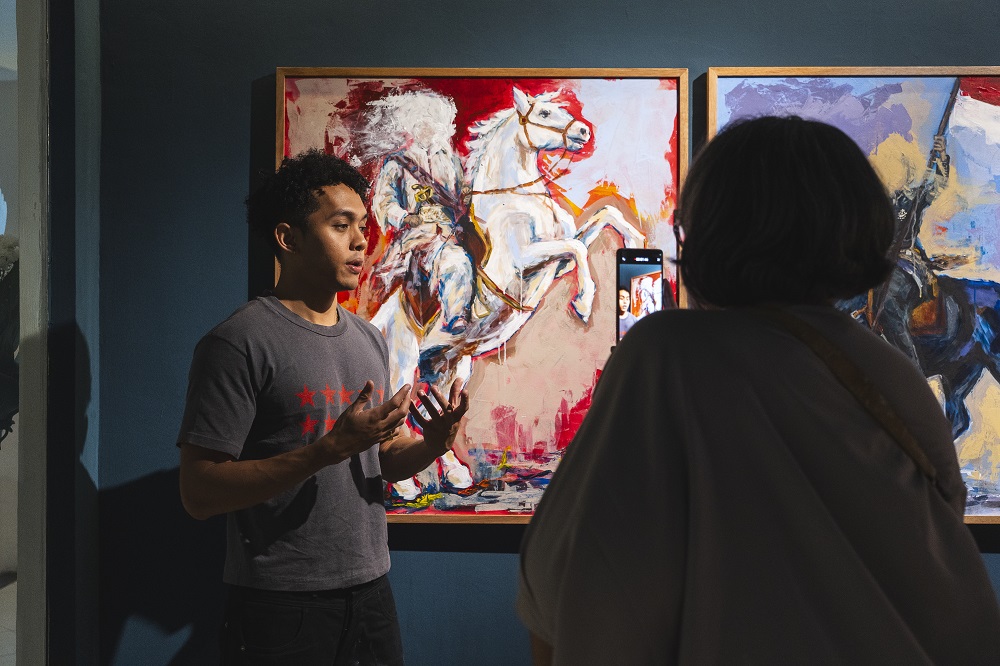
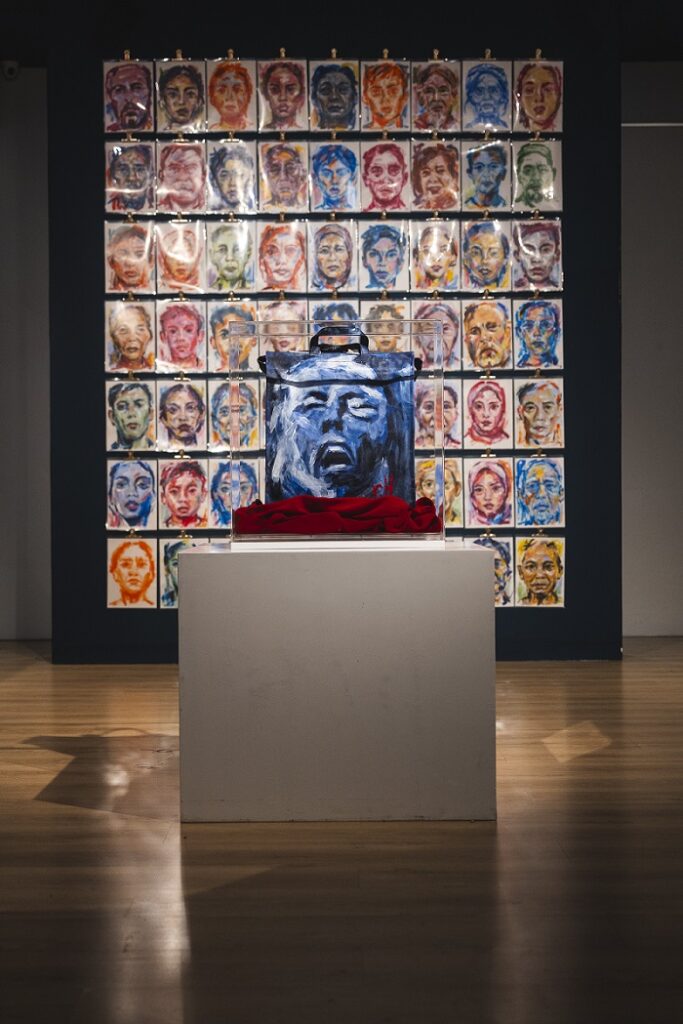
There are 150 faces in Rajata Hakim’s Terlihat / Terasa, and almost as many reasons to distrust what a face seems to reveal. Now showing at The Darmawangsa Square, Second Floor, Unit 66, Kebayoran Baru, the multidisciplinary artist’s exhibition pairs portraits with anonymous recorded voices and historical figures, letting recognition repeatedly slip into uncertainty. Opened on 29 August and running until 27 September 2026, it turns the familiar act of looking at another person into a less comfortable question: how much do we ever really know from what we can see?
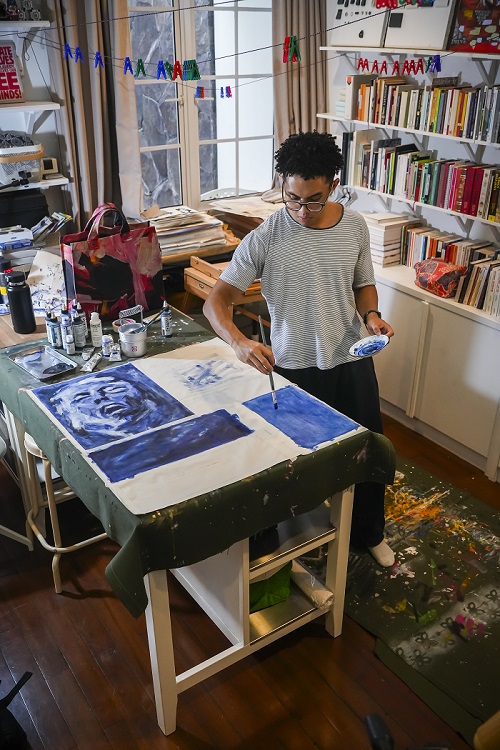
That question begins with strangers, every Friday, Hakim holds public live-painting sessions, while other sitters are approached in streets and shared spaces. He asks for no particular pose or expression and does not use biography to guide the portrait. Instead, he paints directly from life until the expression first presented to him begins to loosen.
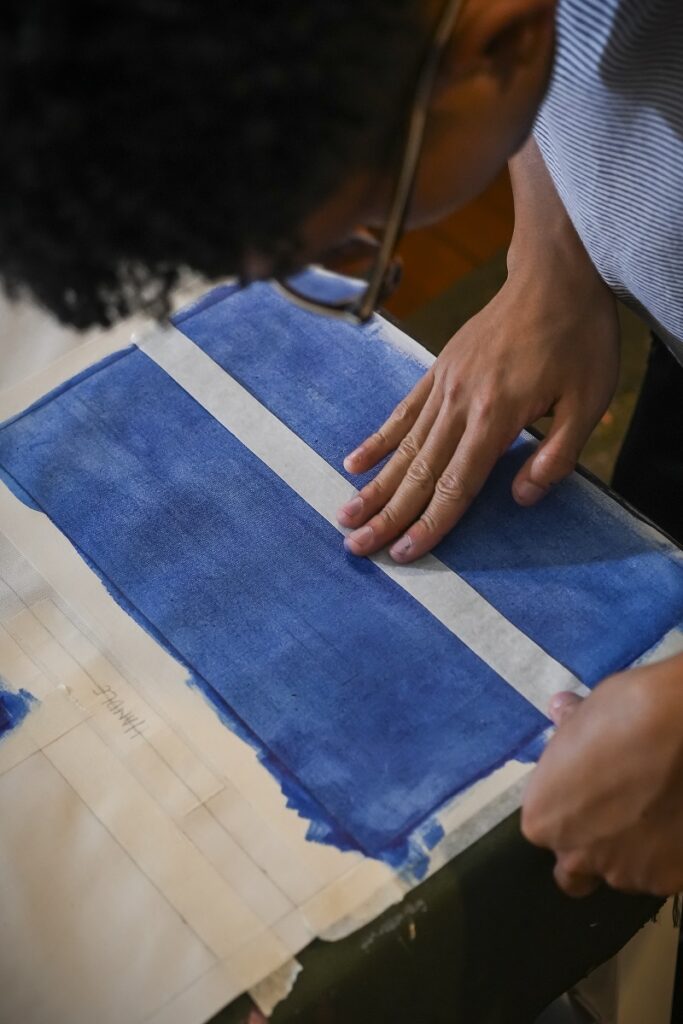
Each face is painted in acrylic on A4 tracing paper, with visible brushwork and sections deliberately left unpainted. The translucent surface lets light pass through and keeps each figure physically connected to the space around it. Once the painting is finished, the sitter is left alone to answer one prompt: “Describe yourself to me. I cannot see.” Their recording remains anonymous and is separated from the portrait it belongs to. Visitors may encounter a face beside a voice, but there is no way to know whether the two belong together.
It is a simple disruption, and an effective one, a face gives us plenty to interpret, from age, expression, gesture, perhaps a mood we think we recognise, while the person behind it remains less obliging. Hakim describes Terlihat / Terasa as emerging from precisely that limitation. “The more carefully I observed another person, the more conscious I became that attention does not necessarily produce understanding.”
The exhibition’s title sets up its central tension in two words, terlihat for what can be seen and terasa for what is felt. Across 150 portraits, Hakim puts the authority of the archive under pressure. Faces appear, voices intervene, and neither offers a complete version of the person in front of us.
As part of the wider 1830 Project, and curated by visual artist Melissa Sunjaya and historian Peter Carey, this project returns to the Java War of 1825–1830 and its aftermath through material culture, autoethnographic research and contemporary visual work, with particular attention to who recorded Java, whose accounts endured and whose did not.
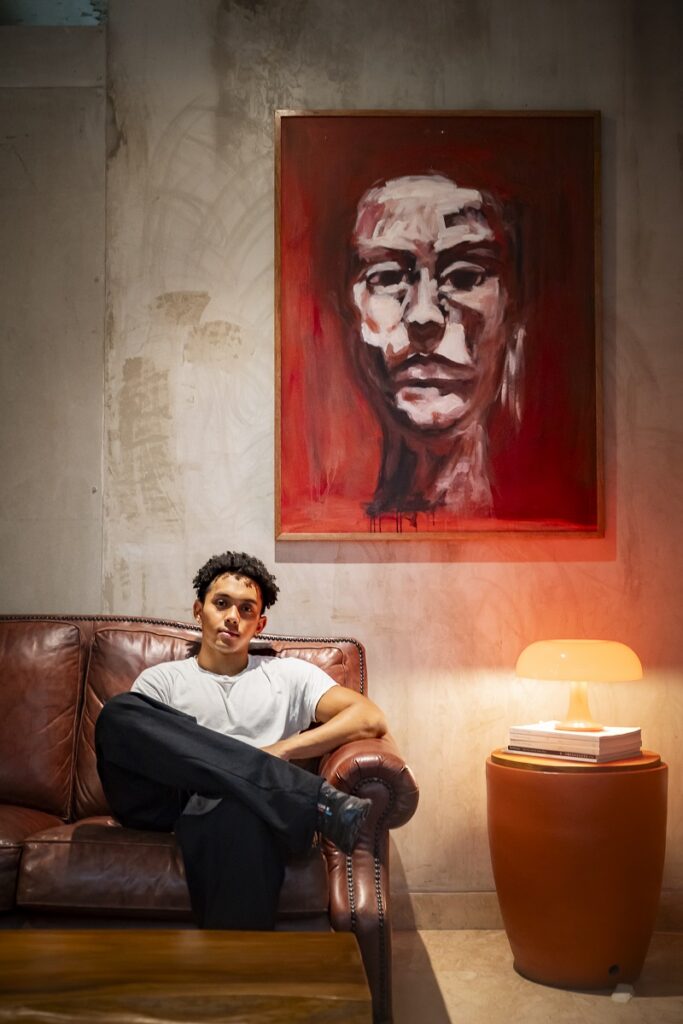
That question becomes concrete through Prince Diponegoro, Nyi Ageng Serang and Dutch officer Johan Jacob Roeps. Their records survive in very different forms. Diponegoro left the Babad Diponegoro, written in exile. Nyi Ageng Serang is documented for her military role, but far less remains of her personal thoughts and experiences. Roeps served in the colonial army, spoke Javanese and became trusted by Diponegoro as a counsellor to his family. Placed together, the three figures expose the unevenness of historical memory, with some lives preserved in detail and others reduced to fragments, names and faces.
Hakim is currently a Tulisan Artist-in-Residence and works between painting and writing, with archives, memory and personal storytelling recurring through his practice. Curator Melissa Sunjaya describes the exhibition’s movement succinctly, “We begin with a question that emerges from within. We then observe others to better understand ourselves.”
Terlihat / Terasa remains open to the public at The Darmawangsa Square until 27 September 2026. For anyone inclined to trust a first impression, 150 unfamiliar faces may provide a useful reason to look twice.