



Though their bright and festive appearance seems to have degraded over the years — with (somewhat frightening) street-side buskers cheapening the city’s mascot for a little extra change — no one can deny how iconic and recognisable Jakarta’s ‘ondel-ondel’ are. But what are ondel-ondel, and where did they originate?
If you love stories about Jakarta, make sure to subscribe to NOW! Jakarta’s weekly newsletter to get freshly published articles every week.
The History of Ondel-Ondel
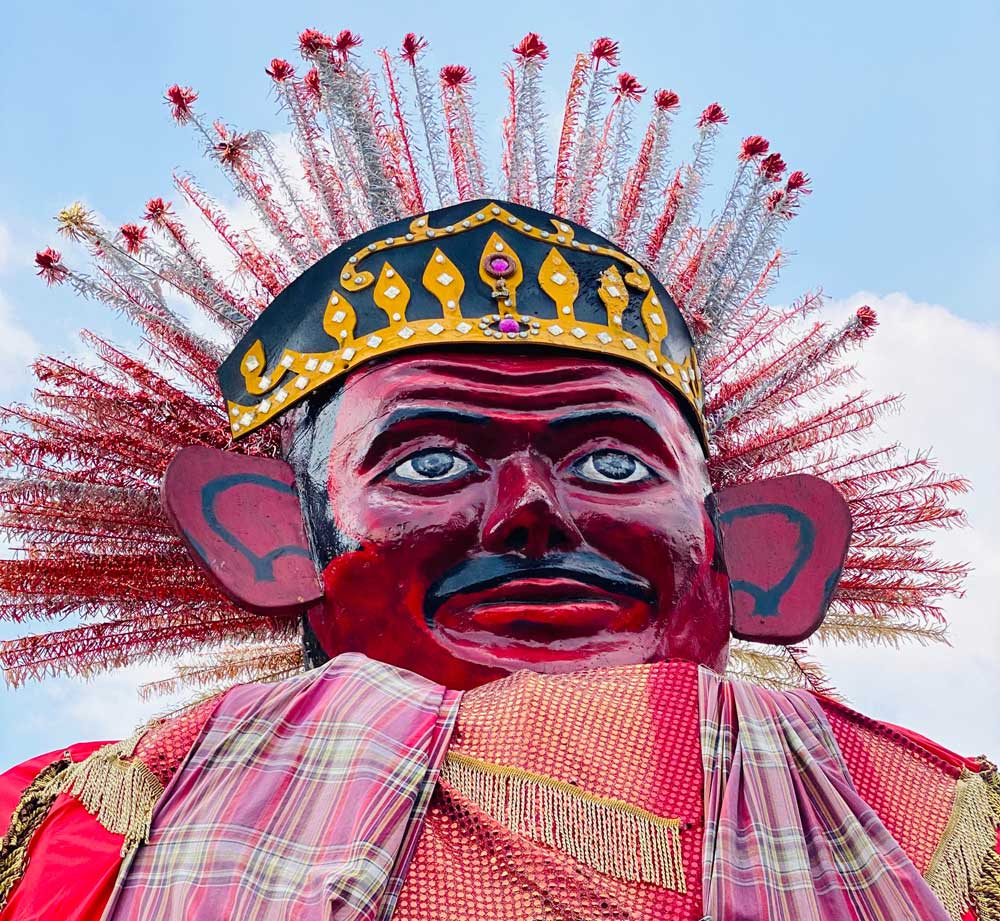
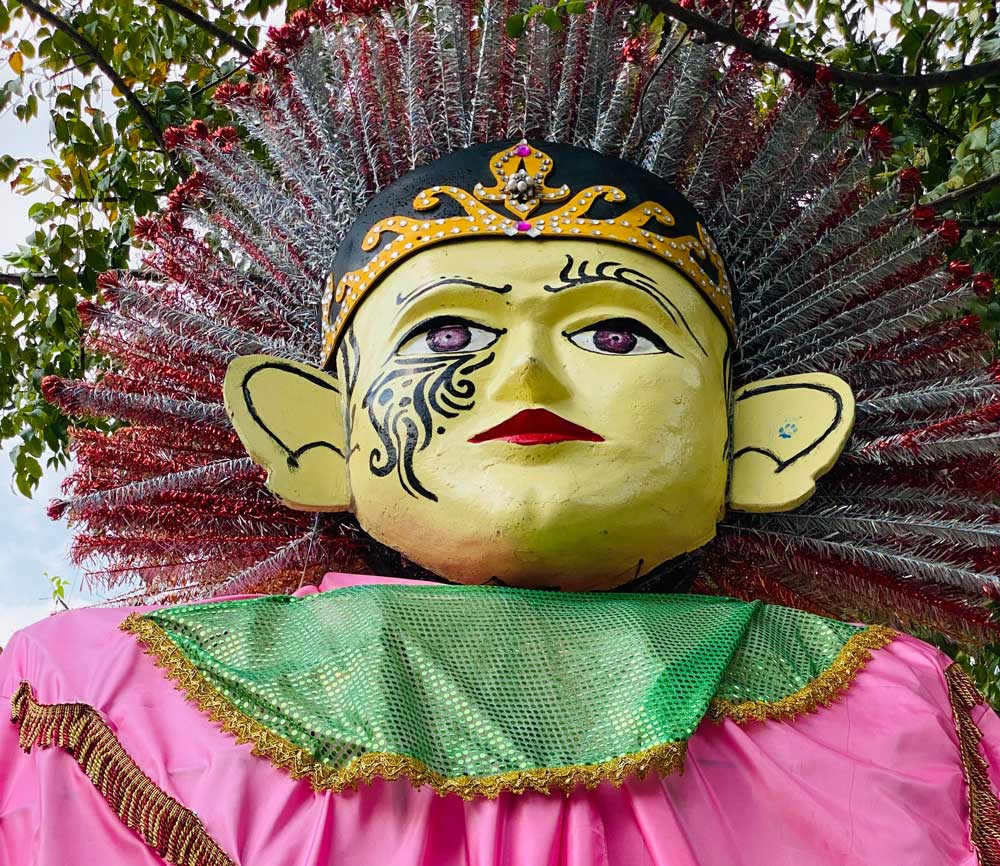
These large puppet figures, always a pair, a man and a woman, tower to 2,5 metres high. Their frames are made of bamboo, and their faces, eyes glaring, are made with wood. Atop their heads, a wild crown of black ijuk palm fibres spring in all directions –these are called kembang kelapa. These puppets are worn atop the shoulders of the performer, who parades and dances to traditional songs; ‘theatre without speech’.
Though seen in times of vibrant celebration, and certainly colourful, their faces cast an eerie glare. It was said that they were once used as a tool to exorcise the streets, scaring off bad spirits with loud sounds and towering stature — not unlike Bali’s ‘ogoh-ogoh’ ritual before Nyepi. There are also similarities to the island’s ‘barong landung’ puppets, also a pair of male and female puppets worn upon the shoulders. Like the landung, these Betawi puppets also represent duality: the male’s face painted with an evil red, the female’s a pure and innocent white. Holding the balance of the world upon one’s shoulders.
In fact, the definitive origin of these Betawi puppets is unknown, but their history dates back to at least 1605 — noted in the writings of the English trader W.Scot during his time in Java. It was said that the very making of this puppet pair needed certain rituals and offerings, lest the puppets would become possessed by spirits or ill-doers. Perhaps a practice that needs to be resumed in today’s Jakarta!
The use of ondel-ondel became more, well, gentrified, when Ali Sadikin — Governor of Jakarta between 1967 and 1977 — wanted to uplift Betawi traditions to give Jakarta a unified culture. Ever since, they became icons of the city itself, their unknown origins harkening back to the intriguing roots of Betawi culture itself.
If you love reading stories about Jakarta, make sure to subscribe to our weekly newsletter to get them straight in your inbox: Subscribe Now