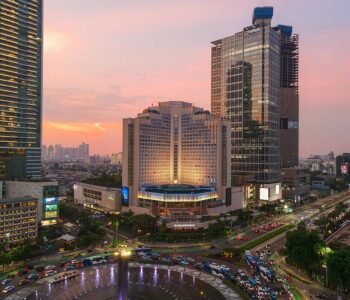



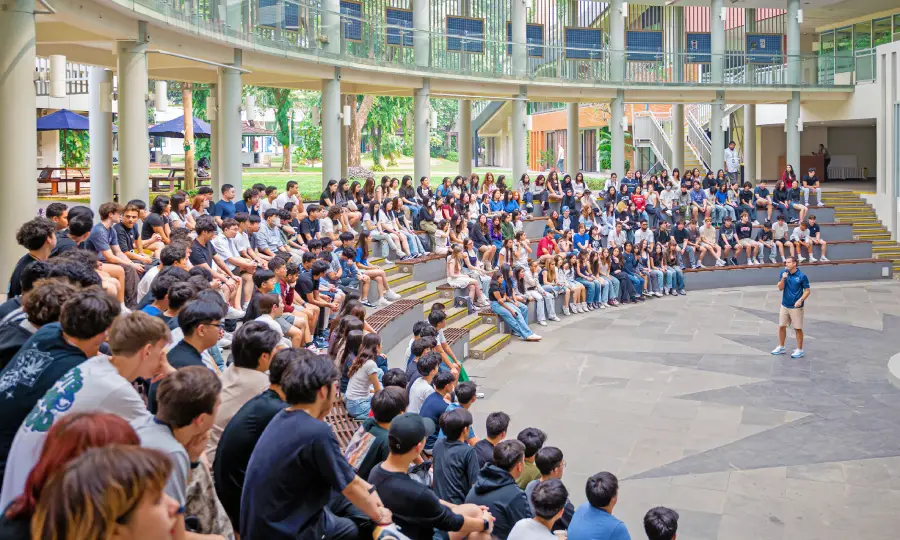
This year, Jakarta Intercultural School (JIS) celebrates its 75 year anniversary. Initially founded in 1951 as a school for the children of United Nations staff, then opening up to children of chosen embassies – becoming the ‘Joint Embassy School’ – JIS has become a historic institution in the capital. Today the school has over 2,000 students, representing 70 nationalities, and is one of Jakarta’s most well-known educational organisations.
NOW! Jakarta’s Alistair Speirs (AGS) sat down with JIS Head of School, Maya Nelson (MN), to reflect on the school’s remarkable history, its enduring values and its vision for the future.
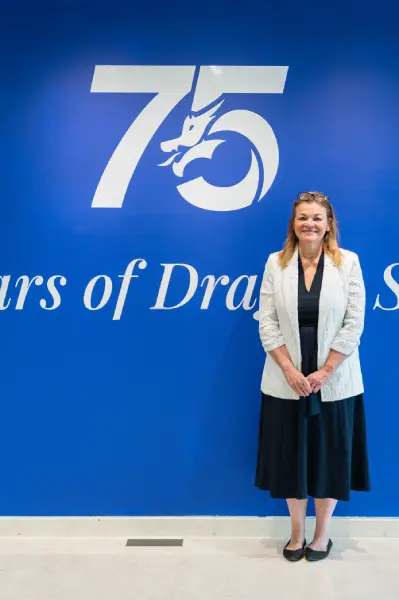
AGS: Congratulations on JIS celebrating 75 years. Why is this such a defining milestone?
MN: It’s pretty incredible for a school anywhere in the world to reach 75 years, but for us in Indonesia it is particularly meaningful. The school has evolved from the former Joint Embassy School, to Jakarta International School and now Jakarta Intercultural School.
75 years represents longevity and resilience. It represents thousands, if not tens of thousands, of alumni around the world who carry a little bit of JIS with them. It also represents an international community that has been built around the school and the many brilliant people whose lives have been shaped here.
AGS: Your own history with JIS is equally remarkable, beginning as a student. What are your earliest memories?
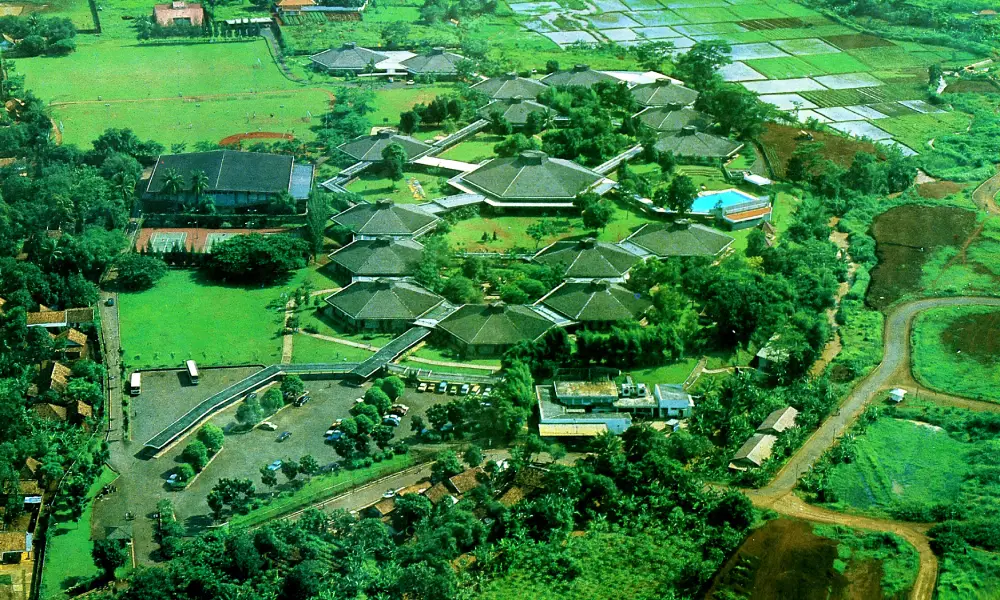
MN: I’ve had almost every role you can possibly have at the school, but I started as a student. I vividly remember coming onto the Cilandak campus in the early 1970s, when it was surrounded by rice fields and jungle. There were no houses around the school.
There was even a sign saying “Wear your shoes”. In those days many of us wore flip-flops, but there were snakes and all sorts of creatures around the campus!
What I remember most, though, was how beautiful and green the school was and how connected it felt to the environment. Faculty, staff, students and parents were incredibly welcoming. Even as a young child, I felt a real sense of belonging.
AGS: How has JIS’s educational approach evolved while remaining true to its mission?
MN: JIS has always been very mission-focused. We believe that students come first, and every decision is based on student learning and wellbeing.
Education has obviously changed enormously. Technology has transformed how students learn, and research continues to give us a better understanding of what works. But the principle remains the same: what do students need to learn, and how can we give them the best opportunities?
We want academically rigorous learning alongside the development of young people as whole human beings. Our core values have remained remarkably consistent. Students need to develop cognitively, socially and emotionally so they can become well-rounded people and pursue whatever path is right for them.
We also believe strongly in giving back. JIS is a service-driven school, and students have always been encouraged to contribute to the community, the country in which we live and the wider world.
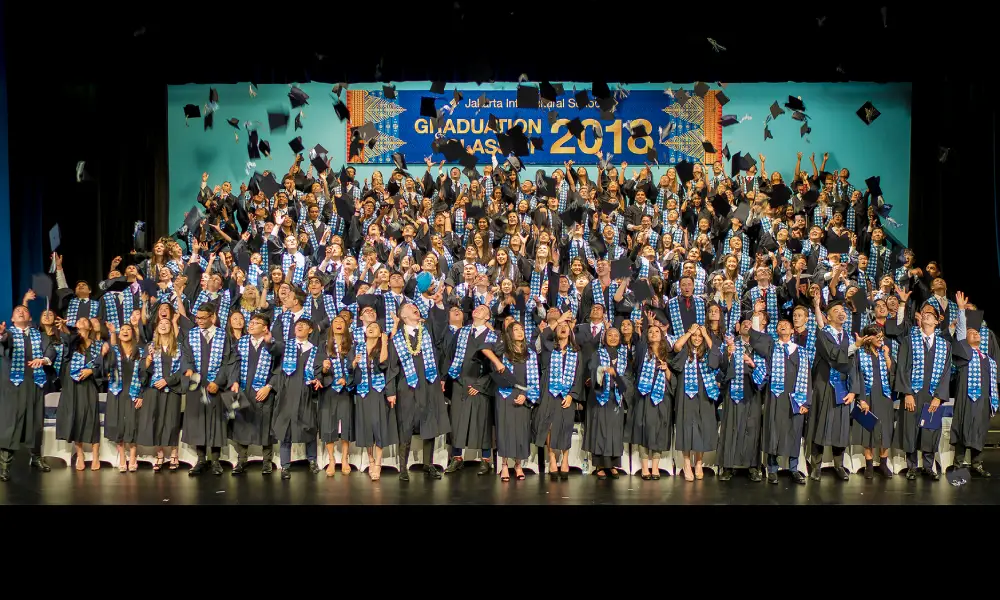
AGS: You recently brought together more than 500 alumni. What does that global community mean to JIS?
MN: Alumni are incredibly important. They are the “place savers” of our school. They preserve the memories and stories of what JIS meant to them.
When alumni returned, they remembered the Dragon Fountain, the old buildings, the huts that were there in the 1970s and 1980s. They wanted to reconnect with the physical places that helped make them who they became.
But alumni are much more than memories. They represent our school around the world. They are doctors, lawyers, teachers, entrepreneurs, CEOs and leaders in countless professions. Leadership doesn’t necessarily mean being a president or a CEO. We want our alumni to be confident, contribute meaningfully to their communities, support others and give back.
At the alumni gathering, people who had graduated decades apart told us the same thing: “JIS changed me. JIS shaped who I became”. The word I heard again and again was “magical”.
AGS: What is JIS’s educational philosophy today?
MN: We continue to believe deeply in a well-rounded education. Cognitive development is as important as social and emotional development.
We remain academically rigorous, and our students achieve excellent results and gain admission to leading universities around the world. But we are equally proud of students who find the university or next step that is right for them.
We provide multiple pathways. From an early age, students develop literacy, mathematics, science, social studies and inquiry skills. But young children also need to learn how to navigate the world, communicate, cooperate and understand their place in society.
Play is an important part of that learning. As students get older, we offer IB and AP pathways, as well as support and programs for neuro-diverse students. Our goal is for every student to find their own path.
Ultimately, we want successful students — but we also want happy alumni who understand themselves, discover their passions and find their place in the world.
AGS: Has JIS influenced education more broadly in Indonesia?
I hope so. We are very fortunate to live in such a remarkable country, and we have always believed that education is about partnership and sharing.
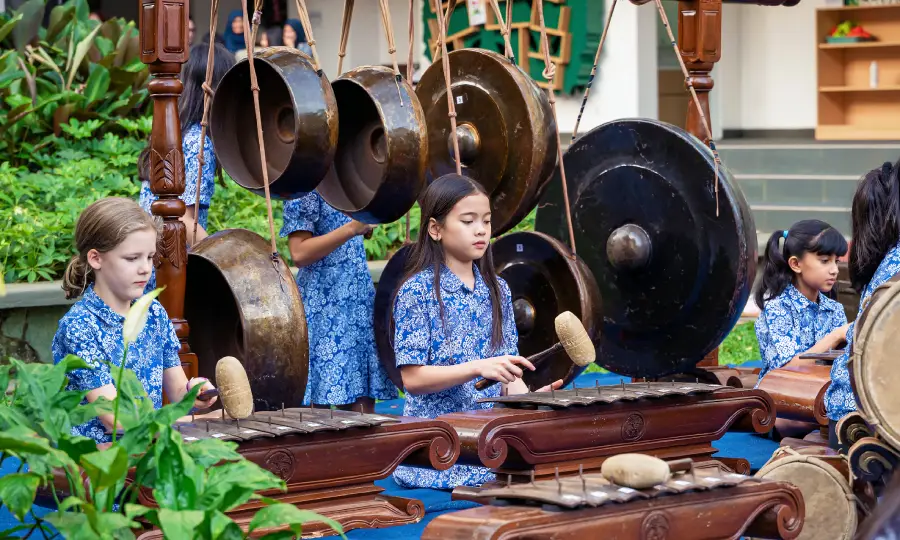
We work with neighbourhood schools, organisations and the Ministry of Education, and we provide professional development and opportunities for Indonesian educators to exchange ideas with us. We also learn from our Indonesian counterparts. Education isn’t a one-way process. It is about working together, sharing knowledge and helping young people become successful adults, whatever that means for each individual.
AGS: Looking ahead, what is your dream for education and for JIS?
MN: Education is the answer to so many things in the world. My global hope is that we continue to promote education and provide opportunities for all children to learn.
For JIS, I want us to continue to be “Best for the World”. The next decade will bring transformative changes. Our programmes and facilities will evolve, and our alumni community will continue to grow. But I hope we never lose what our alumni call the “magic” of the school — the place where people find purpose, connections and friendships; the place where you can be whoever you want to be.
One young alum told me, “What I studied at JIS is who I am”. She became a nuclear physicist and said that without the science classes and the opportunity to find her voice, she would not be the person she is today.
That is what I want for every student who walks through our halls in the decades ahead.
AGS: Finally, what do you think the founders hoped JIS would become?
MN: The school began with a family educating a few children in their home before growing into the Pattimura campus and eventually becoming JIS. Four founding embassies — the United States, Britain, Australia and Yugoslavia — helped establish the school for the international community.
I would hope they were thinking beyond the immediate need for a school. They were creating a platform where students from different parts of the world could come together, learn together and build an international community. Their hope was to educate children and support families coming to Indonesia, while contributing to the development of Jakarta and the country.
I hope that if they could see what we have achieved over the past 75 years, they would be proud.
Our legacy should be that every student does their best, represents our school and helps us continue to be Best for the World.
AGS: Thank you Maya, that was a truly inspiring interview – we wish you and all the many different parts of the JIS family the very best in the next 75 years.
Jakarta Intercultural School
Jl. Terogong Raya No.33, Cilandak
@jakartainterculturalschool
jisedu.or.id