


In a city where live bands and lounge DJs reign, Indonesia’s traditional music has become increasingly drowned out and pushed aside. Yet, nothing quite captures the ‘essence’ of Java quite like the sounds of gamelan; the unmistakable ensemble of sonorous bongs and clangor that is able to transport us to another era – one of ancient royal courts and dances for the kings and gods.
Fortunately, there are still places where the hypnotic gongs of the gamelan continue to reverberate here in Jakarta. At Gamelan Bodro Sewu and Gamelan Tantular, both the Javanese and Balinese gamelan traditions respectively live on. Going beyond simply showcasing these musical traditions, both centres also invite visitors to immerse themselves in the experience, offering gamelan classes and lessons to those keen to get behind the gongs.
Gamelan Bodro Sewu
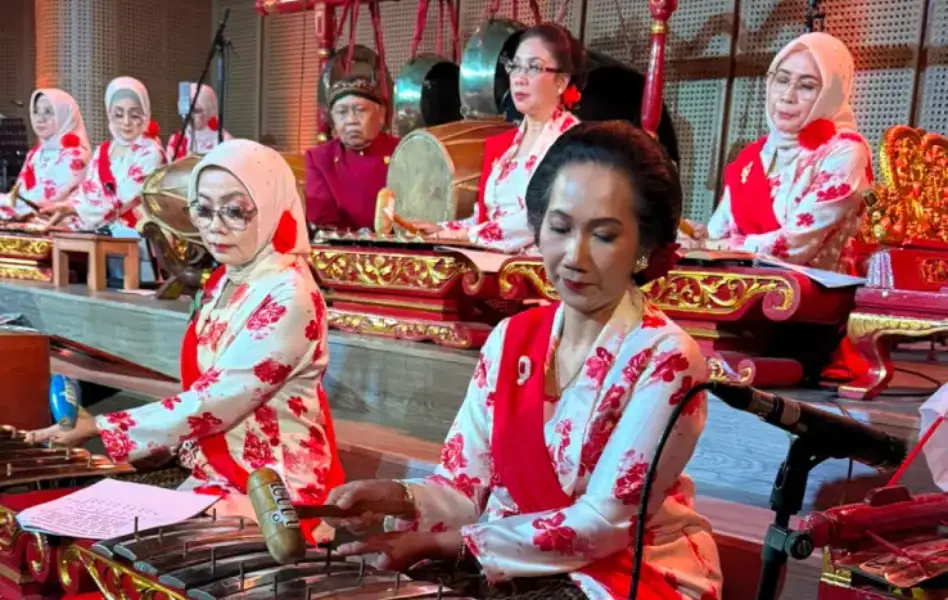
Founded by a group of family members—Mutiara Gayatri, Bambang Suryoputro, Yorangga Citra A, and Astrangga Yoga—Gamelan Bodro Sewu began initially as a rescue mission. A local gamelan ensemble was at the risk of being sold off, but the instruments were considered sacred heirlooms to Gayatri and her family. Having saved the ensemble, they found a permanent home for the instruments in 2017, which became a destination for family ‘jam’ sessions during the pandemic. This organically grew into a bustling community of over a hundred, gamelan-loving members.
The name of the group comes from a Javanese inscription on the main gong which reads Kyai Bodro Sewu, meaning “a thousand blessings,” which accurately reflects the welcoming atmosphere of the space. Today, it has evolved into a full-blown cultural collective, featuring a gallery for gamelan and batik in Gandaria alongside a dedicated dance studio in Senayan.
The community runs on a beautiful philosophy: ngurup-urup to ignite the spark, ngurip-urip to keep it alive, and nguri-uri to preserve the culture. The public are invited to discover the magic of gamelan through their group sessions, which have become popular as the instruments require players to slow down, focus and get very present, be it knowing when to strike the heavy bronze balungan or keeping up with a rapid peking rhythm.
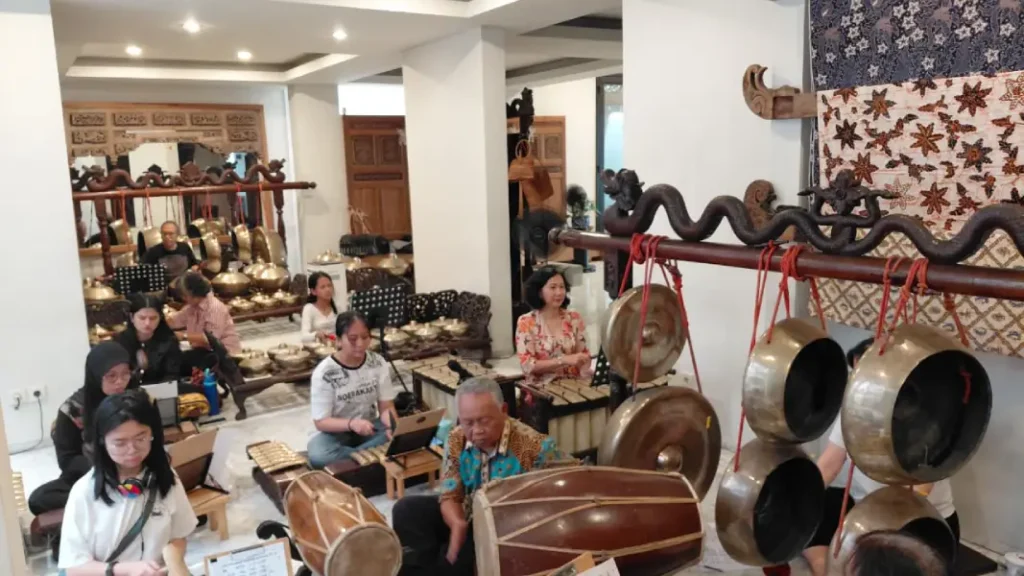
The sessions are a communal experience, adding a social or team element to the musical immersion. Beginners start by finding their footing with simple Lancaran songs, progress to the more elaborate Ladrang and Ketawang pieces, and eventually graduate to tracking live dancers, wayang puppets, or traditional wedding ceremonies. It is a real-world reflection of Bhineka Tunggal Ika—unity in diversity. Playing the music requires a group of seven to fifteen people, with everyone handling completely different instruments and techniques.
That universal focus on collective playing is exactly why the community connects different worlds so effortlessly. Take Wednesday mornings, when the Sewu Nagari class kicks off. The name literally means “Many Nations,” and it brings together expats from Japan, Vietnam, America, India, and New Zealand. The sessions are taught in English and it is incredible to see foreign students flawlessly executing the most complex parts of an arrangement.
From curious beginners to older adults, the space welcomes anyone eager to pick up a new skill and learn alongside others. To review the schedule or reserve a spot, contact the team via Instagram.
Jl. H. Najihun No. 3,
Radio Dalam, Gandaria
@bodro_sewu_gallery
Gamelan Tantular
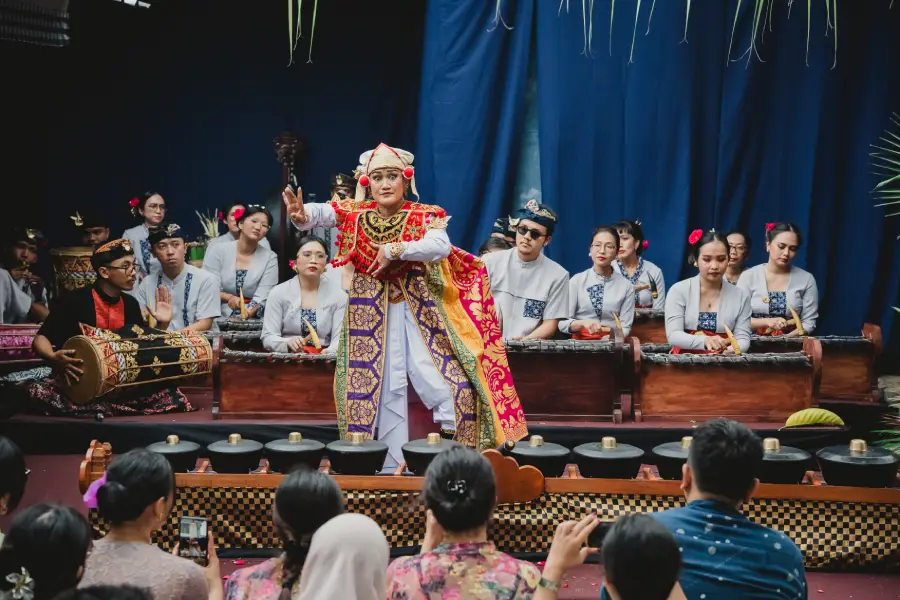
While the serene sound of Javanese gamelan offers calming qualities, Gamelan Tantular appeals to those seeking a more energetic alternative. Tucked away in Pejaten, South Jakarta, this musical community started only recently, in February 2025, when three millennial friends decided to expand their passion for gamelan. They had been learning together at another studio but thought, “Why not just build our own place?” with a mission of establishing a dedicated centre for Balinese gamelan in the heart of Jakarta.
Those familiar with gamelan will know that the Balinese style of playing is different – it’s fast-paced, energetic, dynamic. What’s more, it is taught entirely through memory and repetition, requiring learners to watch, listen and feel. Javanese gamelan, meanwhile, offers written numbers and some notation.
Mastering a basic piece takes about two months, while fully grasping complex songs takes around four to five months. To keep everyone comfortable, Gamelan Tantular’s studio structures the community into four distinct levels. Complete beginners start in the Smaradhana class, then move up through two intermediate stages, eventually graduating into the advanced Genta class to join the seasoned players.
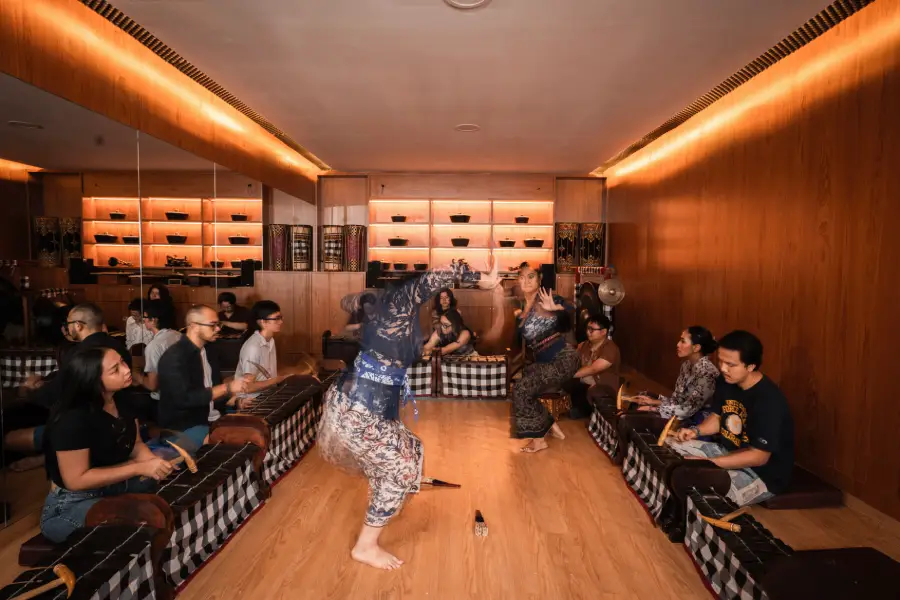
The crowd here is incredibly diverse, too, welcoming everyone above 12 years old to enthusiastic senior players. The studio has even caught the attention of global music lovers with international visitors regularly dropping by for single-session workshops. Anyone can just drop by, sit in on any class that has an open slot, or watch from the sidelines to see if the energy feels right.
When members aren’t learning, Gamelan Tantular stays busy playing at temple anniversaries, as well as major cultural events like the Jakarta Contemporary Gamelan Festival and even Ogoh-Ogoh festivals at Bundaran Hotel Indonesia. Forget intimidating recitals, the end-of-semester performance is a casual space for students to share their six-month musical journey, gathering everyone at Semesta’s Gallery in Cilandak for a relaxed class evaluation called “Tabuh Semester.” While that showcase focuses on intimate class progress, the studio elevates the concept for “Tabuhan Tantular”, packaging those same student achievements into a grand performance with a much more festive energy.
Gamelan Tantular’s vision goes beyond preserving history. While students begin with classic compositions, the main goal is to empower the community to create new contemporary music rooted in tradition. To join their classes, sign up online via their Instagram page.
Jl. Pejaten Barat Raya No. 10
Pasar Minggu
@gamelan.tantular