


Botanical art is a unique fusion of science and aesthetics, where the method of observation meets the grace of artistic expression. More than simple flower paintings, botanical art is the careful study of plants translated into images that are scientifically accurate and visually appealing. Botanical artists turn to plants as subjects of study and sources of inspiration, and work closely with scientists to document rare or endangered species, capturing them in art even as their habitats are threatened. Modern practitioners use watercolors, colored pencils, or digital tools, but the spirit remains the same: a commitment to precision and beauty.
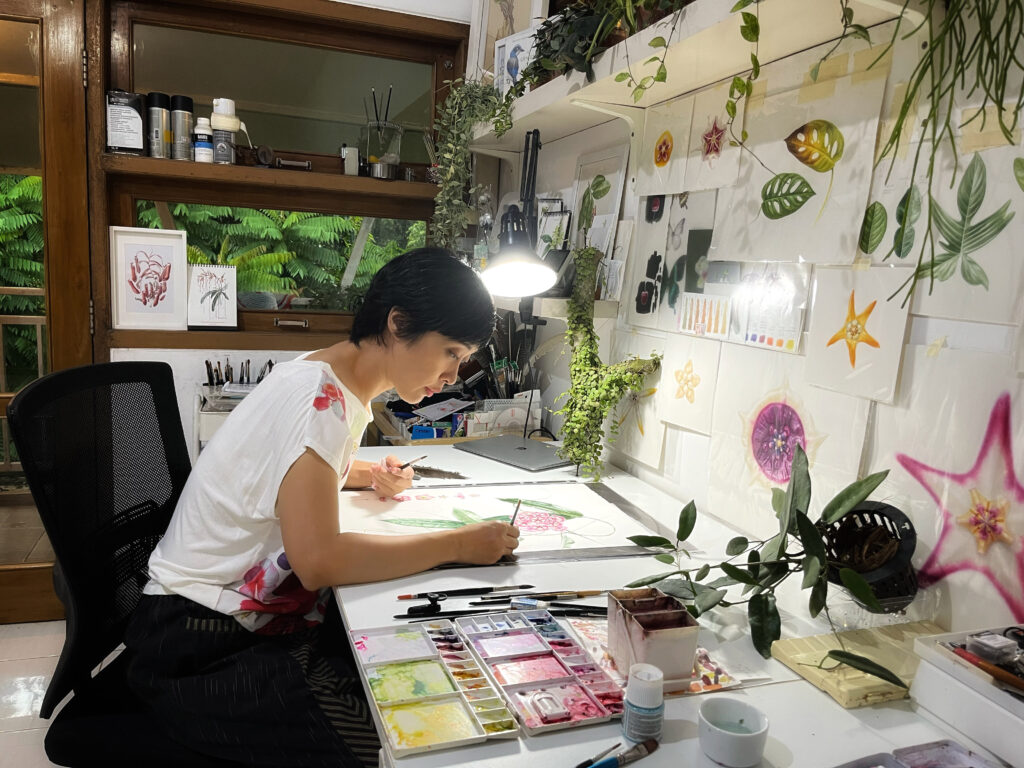
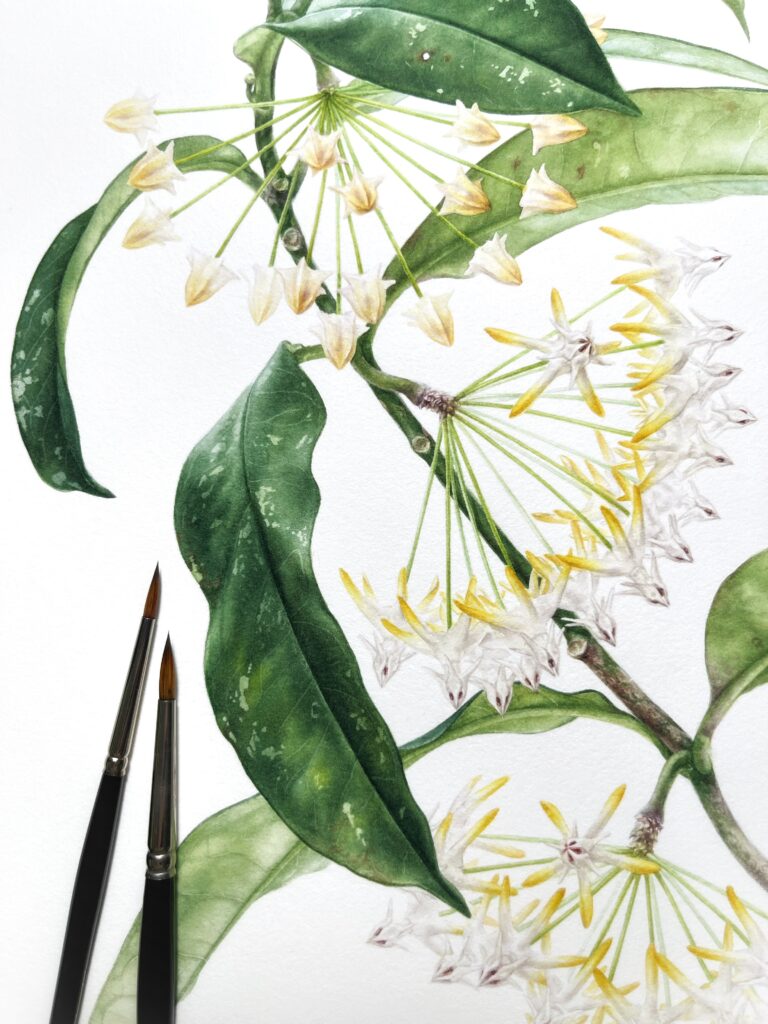
As much of Indonesia is a botanical garden, it’s no surprise that here reside some of the finest botanical artists, whose creations are admired for their timeless elegance and are now being celebrated in galleries and international collections. One such artist is Eunike Nugroho, a watercolour specialist based in Yogyakarta. Eunike won a gold medal and Best Botanical Artwork award for her “Bell(a)”, Hoya archboldiana painting at the Saatchi Gallery 2025 Royal Horticultural Society Botanical Art Show in London, one of the world’s top botanical art exhibitions.
“I never planned to become a botanical artist,” says Eunike, “but I quickly fell in love with it. I was also deeply moved – even humbled – when I realised how much I had taken Indonesia’s rich flora for granted, especially when fellow artists in other countries were enthusiastically discussing our plants, particularly orchids. During the colonial period, artists such as Berthe Hoola van Nooten produced beautiful botanical paintings, but in later years her work was mostly continued by a small number of scientific illustrators at institutions like Herbarium Bogoriense. Their drawings, often in black and white pen and ink, were created mainly for scientific publications”.
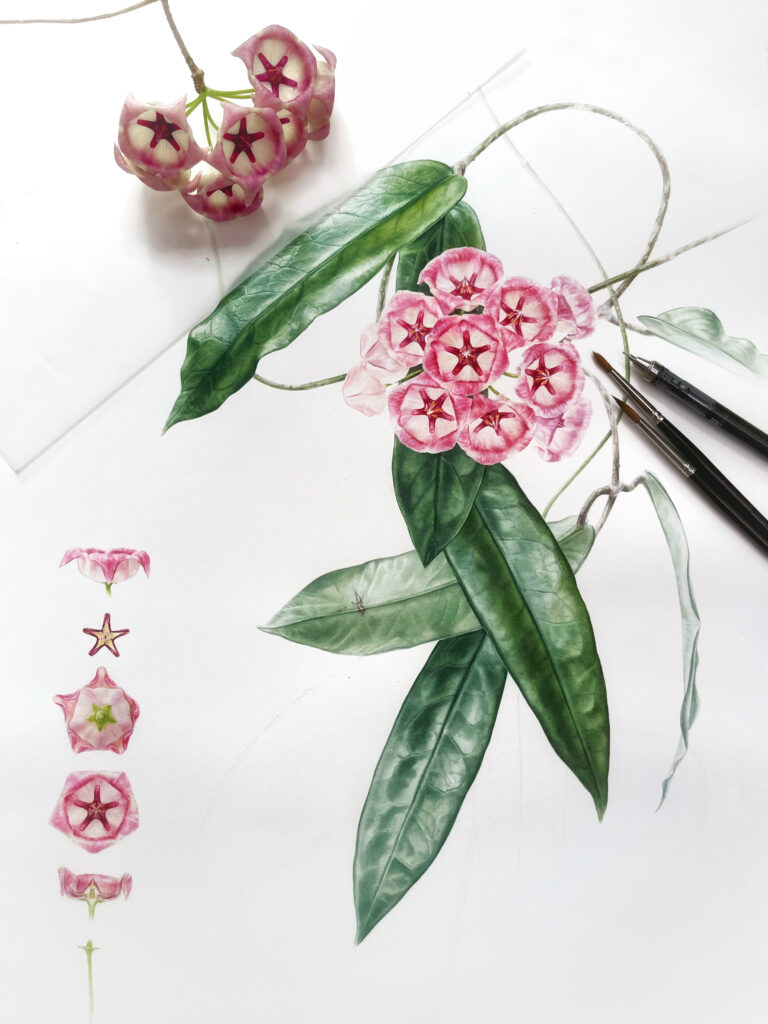
Eunike founded the Indonesian Society of Botanical Artists (IDSBA) in 2017, which helped give recognition to Indonesian botanical artists and bring exposure from overseas. “Before IDSBA was established, botanical art was not widely practised here in Indonesia and there was little acknowledgement of it as its own artistic genre. In 2016 I began teaching botanical art workshops and finally met others who shared the same passion. This gap in practice and awareness was one of the reasons that eventually led to the founding of IDSBA.”
While her work has taken Eunike around the world, “My more serious finished paintings are always created at home, where I can work more comfortably. I also love gardening, so I usually grow my subjects myself in order to observe them freely and closely. It makes me happy knowing that my work can be meaningful to others. Beyond being visually pleasing, it can share knowledge, inspire curiosity, and spark a deeper awareness of plants and nature.”
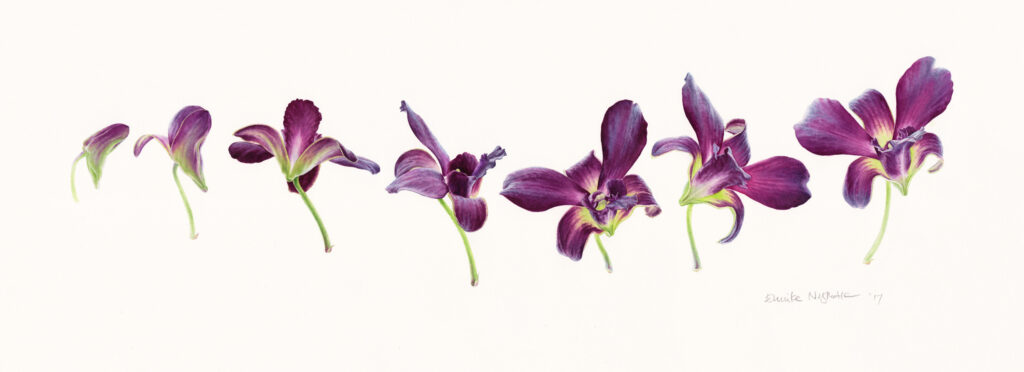
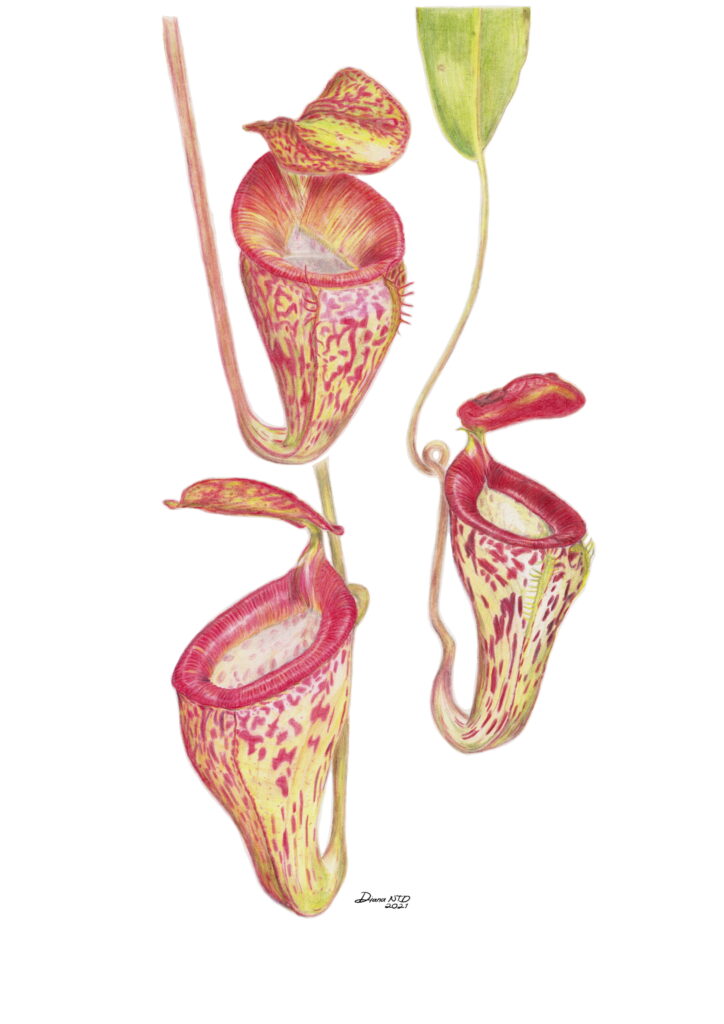
Diana Novitasari Trisna, who paints under the name of Diana NTD, is an up-and-coming botanical artist in her own right. A member of IDSBA and the Taiwan Botanical Art Association, Diana received a Certificate in Botanical Illustration (with Distinction) from the Royal Botanic Garden Edinburgh in October 2024. “I’m a natural healing practitioner in my daily life and love spending time outdoors. For me, plants bring healing and transformation in many forms. Some even carry their own stories of resilience, even though they look so tender. For endangered species, the urge to make them visible and recognised motivates me to paint them so people can see their beauty and value. In my artwork, I try to channel the plant’s actual energy rather than masking it with my own, even though I inevitably pour myself into it. I allow my truest feelings to surface, while still honouring the essence of the plant”.
Whether studied as a record of biodiversity or appreciated as a form of visual poetry, botanical art bridges the worlds of science and beauty and reminds us of the delicacy and wonder of plant life. In an age of rapid change and environmental uncertainty it offers something deeply human and invites us to look closely at the everyday leaf, the garden bloom, or the wild grass underfoot. Botanical art reconnects us to nature’s intricacy and endures not simply because it records the beauty of plants, but also their significance—fragile, fleeting, and infinitely worth preserving.
The Indonesian Society of Botanical Artists
info@idsba.com
@idsba
idsba.com