


The dramatic rise of women artists in Indonesia over the past two decades has enabled the recalibration of national art and cultural narratives. Significant discourse has heightened public awareness and recognition of the valuable roles women have played, and continue to play, in shaping the modern Indonesian identity and forging exciting future prospects for emerging generations.
At the beginning of the new millennium, an initiative by three Indonesian curators, Carla Bianpoen, Farah Wardhani and Wulan Dirgantoro, ignited events that have transformed the Indonesian art landscape. Inspired by a dilemma: up until the early 2000s, documentation of Indonesian women artists remained virtually nonexistent. Their research revealed that names existed in a few exhibition catalogues and media reviews, but seldom as part of a broader, inclusive Indonesian narrative.
The innovative trio unearthed data on 34 emerging, established, and senior artists, which served as the basis for their landmark book, Indonesian Women Artists: The Curtain Opens, published in 2007. An exhibition at the National Gallery of Indonesia (Galnas) of the same title that year, in collaboration with Yayasan Seni Rupa Indonesia, showcased the artist’s work, marking the beginning of the Indonesian Women Artists (IWA #1) exhibition series.
In 2019, IWA #2, supported by Yayasan Cemara 6, a platform for Indonesian art and culture and a long-time collaborator with women artists, published Into the Future, documenting the practices of 21 Indonesian women artists aged 27 to 41, also authored by Bianpoen. IWA #3: Infusions Into Contemporary Art in Indonesia, in 2022, exhibited ten artists over fifty years of age whose primary themes included racial discrimination, human rights violations, and adverse colonial influences. The exhibition, again at Galnas, aimed to close gender gaps in art history.
Indonesian Women Artist #4: ON THE MAP — Art, Science, Technology & Culture, open 9 April until 30 June 2026 at Galnas, emphasises explorations into the self, the land and the nation and stands as a testament to the value and potency of the Bianpoen, Wardhani and Dirgantoro’s vision.
Curated by Carla Bianpoen, Vidhyasuri Utami, and Bagus Purwoadi, IWA #4 showcases work by Bibiana Lee, Dyantini Adeline, KaNA Fuddy Prakoso, Tara Kasenda, and VeDhanito from Jakarta. Endang Lestari, Irene Agrivina, and Nona Yoani Shara from Yogyakarta.Ni Nyoman Sani, Citra Sasmita & Cinta Bumi Artisan, and Ines Katamso from Bali; and Rani Jambak from Lasi. The exhibition also dedicates a special Galnas pavilion to the works of five late artists: Sri Astari Rasjid, Lucia Hartini, Hildawati Soemantri, Marida Nasution, and Umi Dachlan.
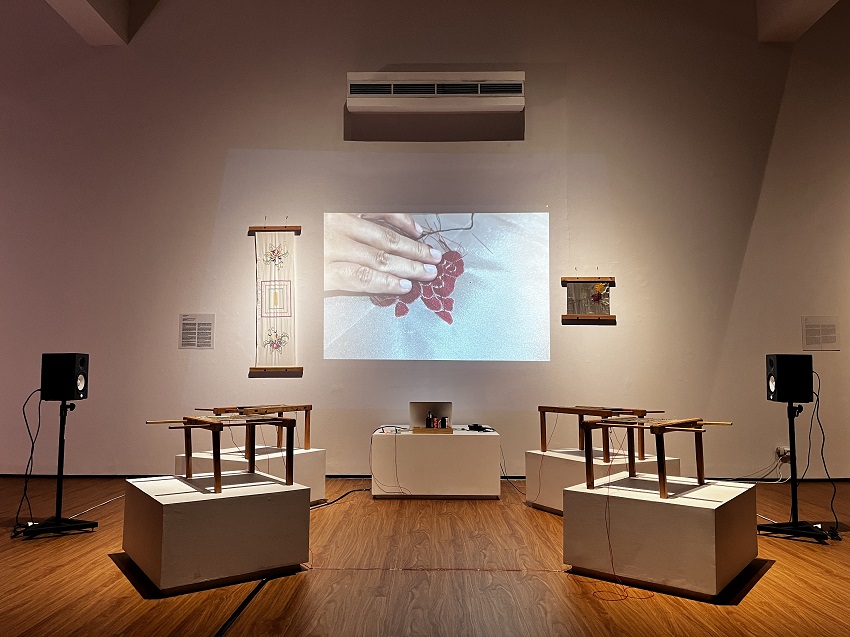
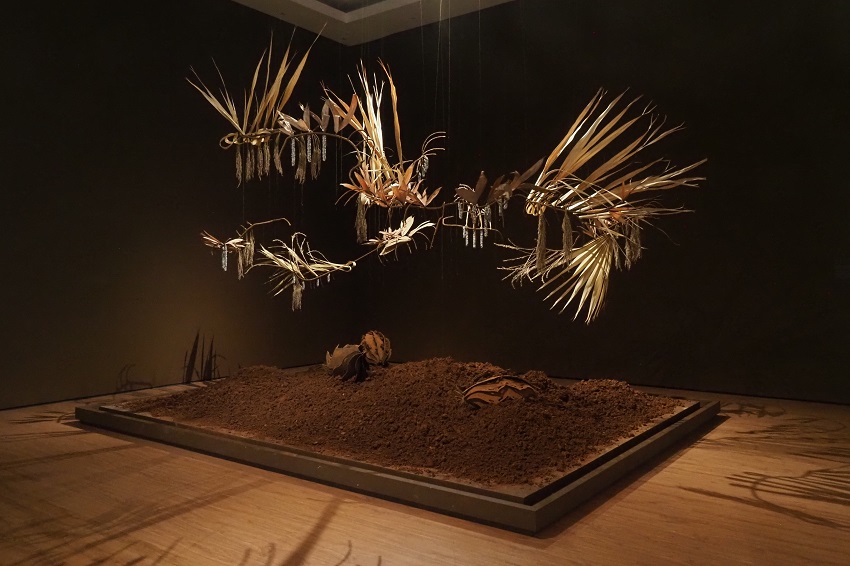
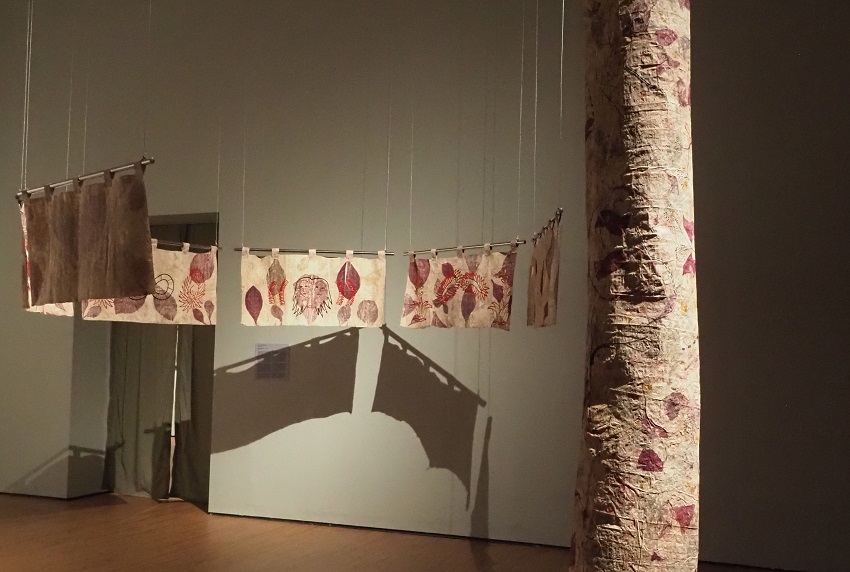
Media diversity, an exciting collision between the old and the new, including the utilisation of advanced technology with traditional examination, through myths and knowledge highlights IWA #4. Featured are two and three-dimensional work in an array of media, including an interactive sound installation created from the working melodies from a pamedangan, a traditional Minangkabau embroidery frame, by sound artist Rani Jambak (b.1992). Ranta, traditional naturally sourced fabrics made by women in Lembah Bada, Central Sulawesi, distinguish “Fibers of Time”, an installation by Citra Sasmita (b.1990) and Cinta Bumi Artisan.
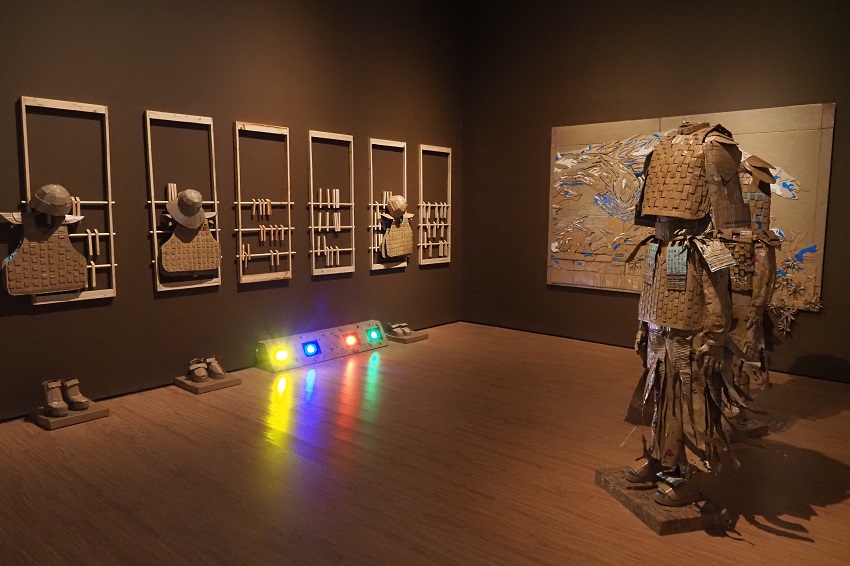
Kana Fuddy Prakoso (b.1973) offers up the only non-digital work of the exhibition by living artists. Her installation Armor of Awareness draws inspiration from the 16th-century maritime heroine queen of the sultanate Kalinyamat and Jepara, Central Java, Ratna Kencana. Assembled from discarded packing cardboard, two life-sized armoured figures stand guard over a large ocean map conjuring up ideas of Ratna Kencana’s war plan against the Portuguese.
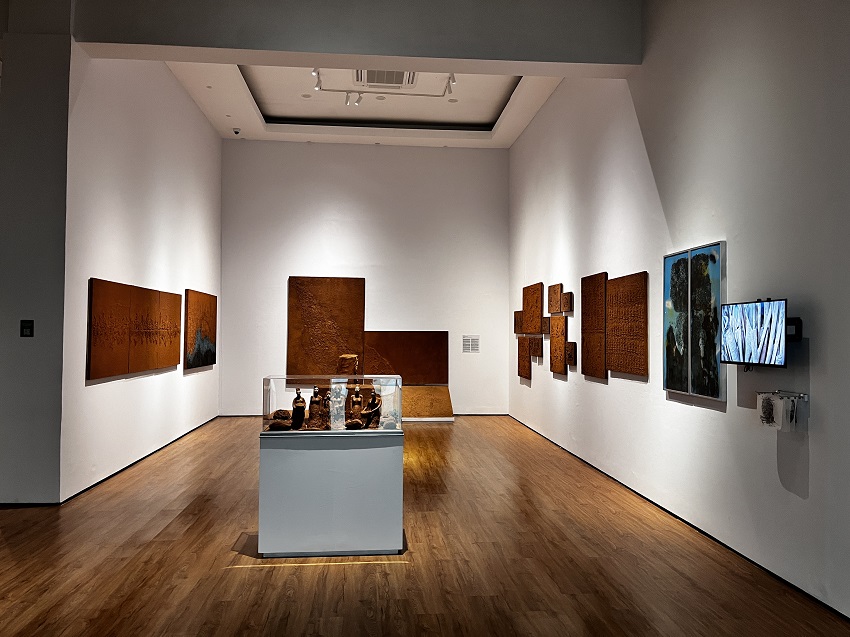
Endang Lestari (b.1976) unravels the collective memory about disasters, migration, healing and human collaboration with the earth via her practice with clay in Java and Aceh and an assortment of figurines. Tara Kasenda (b. 1990) is based in Paris, where she studied Transdisciplinary New Media. Her diptych Les Deux Ciels reflects on perception, distance, and memory, examining how geography is mediated through technology and translated back into painting.
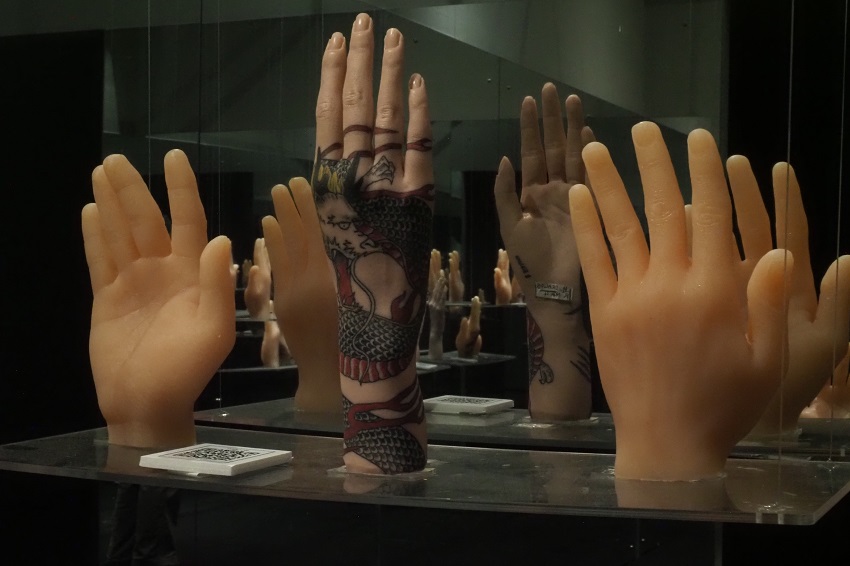
While We Watch, Bibiana Lee (b.1956)’s installation remembers the lives sacrificed in the 1998 pro-democracy struggle. Life-size, silicon-tattooed hands, imprinted with symbols expressing power, pain, resilience, and hope, describe her Anthro-Political installation. Utilising Augmented Reality (AR), Lee’s interactive work allows audience participation via smart-phone scanning a QR code. It reveals layered images; what is not immediately visible is a metaphor for the status quo of the current political reality, which is rarely transparent.
Art and technology have a long, and symbiotic relationship, scientific advancement and artistic innovation are deeply intertwined, and are currently evolving rapidly in cohesion, shaping the future of human experience. Technology enables artists to explore new techniques, while art provides human context for scientific advances.
The interaction of art, science, technology and culture as the foundation of an ongoing series of exhibitions at Galnas, with extensive supportive programs, is a landmark in Indonesian art. The functional role of art, and not art merely trend-driven for the market, offers distinct, tangible value, reaching out to diverse audiences and beyond perceived boundaries, nurturing healthy contemporary culture and societies, becomes increasingly relevant.
“The merging of these elements, technology, science and culture, with fine art makes the exhibition very contemporary and vibrant reflecting the times we live in,” Carla Biapoen told NOW!Jakarta Magazine. “New media works that include cultural roots, are certainly exciting as long as it fits in the contemporaneity of the work without changing its essential meaning.”
IWA has evolved into a dynamic platform creating opportunities for documentation, presentations, and public engagement. The community stakeholders who benefit from this project are undoubtedly numerous, yet at the moment difficult to quantify. This fourth edition of IWA marks the final chapter of the series, yet it has also given rise to plans for an upcoming Biennale or Triennale event in 2027, marking Jakarta’s 500th anniversary and focusing on women artists.
The modern Indonesian art narrative has been shaped by the stories of maverick figures, and in doing so, they help forge a distinct national identity. The pioneering work of Bianpoen, Wardhani Dirgantoro, along with many supporters, has realised an exciting, more inclusive future trajectory for Indonesian contemporary art.
Indonesian Women Artist #4: ON THE MAP — Art, Science, Technology & Culture
9 April – 30 June 2026
Galeri Nasional Indonesia, Gedung A
Jl. Medan Merdeka Timur No.14, Jakarta Pusat