


Nyok Kite Kenal Betawi (Let’s Get to Know Betawi) is a creative community dedicated to keeping Betawi culture alive using an educational, collaborative and contemporary approach. Connecting cultural heritage with the realities of modern urban life, the community seeks to engage Millennials and Generation Z through enjoyable experiences that encourage active participation and a deeper appreciation of Betawi culture.
Behind the initiative are sisters Roxanne Akil and Rahel Akil. What makes their story particularly interesting is that they have no Betawi ancestry. Their parents have Minang and Bugis backgrounds, yet their shared affection for Jakarta and its cultural heritage inspired them to pursue a cause close to their hearts: keeping Betawi art, traditions and stories relevant to younger generations.
The idea for Nyok Kite Kenal Betawi (NKKB) first took root with Rahel, the younger sister, as she was representing South Jakarta in the 2025 Abang None Jakarta pageant. The quarantine and training period included immersive lessons on Betawi culture and visits to several local villages. These experiences opened her eyes to the richness of the region’s traditions, customs and conventions that shape its cultural identity. Rather than simply appreciating what she had discovered, Rahel was moved to champion it.
Older sister Roxanne would bring a complementary set of skills to the table, having worked in public relations and event planning. Together, they decided to turn the idea into a lasting movement. In November 2025, they established NKKB with a clear mission: to bring Betawi culture closer to young Jakartans who may have grown up alongside the city’s heritage without truly understanding it.
“Even though we aren’t Betawi by blood, we are Betawi at heart,” Roxanne says with a broad smile. “We grew up in Pondok Pinang Mas, and as warlok [warga lokal, or local residents], we felt compelled to do something for Jakarta. It just so happened that Rahel wanted to pursue a career in the performing arts but wasn’t sure where to begin. With my experience in events and PR, NKKB was eventually born. We didn’t want this to be just a stepping stone; we really wanted to make a tangible contribution.”
Their decision to establish NKKB was further shaped by simple observation. While Jakarta is home to numerous thriving Betawi communities and cultural groups, few were actively reaching out to younger generations. For Roxanne and Rahel, this represented an opportunity waiting to be embraced. With Millennials and Gen Z making up a significant part of Jakarta’s population, they saw these generations eager to discover the cultural roots of the city they call home, yet without a clear or engaging space in which to do so.
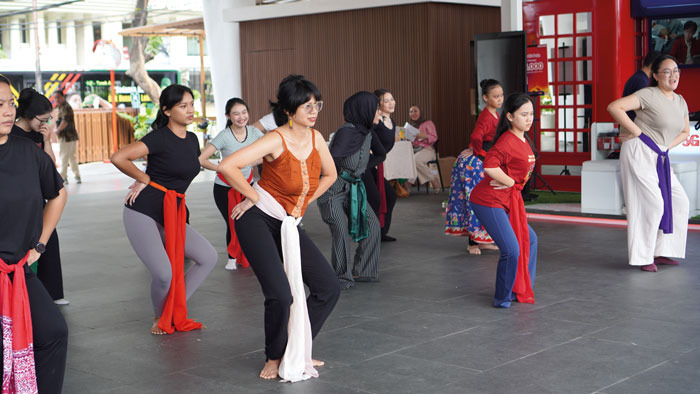
Tapping into her background in traditional and contemporary dance, Rahel wasted no time putting the community’s mission into motion. In the very month NKKB was founded, she launched its inaugural Betawi dance class in collaboration with Margasari Dance Studio in Condet, East Jakarta, where she and Roxanne had deepened their understanding of Betawi’s performing arts and culture. The response was immediate and encouraging, with the session drawing an enthusiastic crowd that filled the lobby of M Bloc Space in Blok M, South Jakarta.
“We want to offer a Betawi dance experience beyond conventional studios and halls, bringing it instead to spaces with a different atmosphere, such as galleries, museums, open spaces, and places young people enjoy visiting so people can be aware of what we are doing. We have partnered with M Bloc Space, where we have been entrusted to host our activities,” Rahel explained.
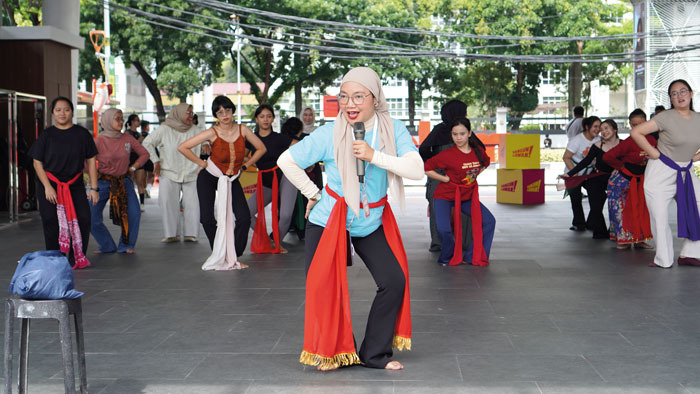
Today, NKKB regularly holds Betawi dance classes at Taman Bendera Pusaka in Kebayoran Baru, South Jakarta, every Wednesday at 6pm, priced at IDR 125,000 per session. According to Roxanne, most participants are women who come straight from work, with each class attracting between 30 and 50 people—numbers that have surpassed expectations.
For many participants, the appeal goes beyond cultural discovery. With its dynamic and energetic movements, Betawi dance offers an enjoyable way to stay active. This combination of exercise, culture and community has helped make the classes particularly popular among young women.
The strong turnout reflects NKKB’s success in making Betawi culture more accessible and relevant to Jakarta residents. Within its first year, the class has grown beyond a dance session into a lively gathering point for art enthusiasts and a welcoming platform for cultural learning—casual, interactive and open to people from all walks of life, particularly young South Jakartans.
NKKB has also expanded its activities through collaborations with the Indonesian Cultural Heritage Museum and the Ministry of Education, Culture, Research, and Technology, giving participants opportunities to take their learning beyond the classroom. After completing 12 dance classes, participants are invited to perform at cultural institutions, including the National Museum and the Museum of Batik in Taman Mini Indonesia Indah.
Although the community is less than a year old, Roxanne and Rahel have already made an energetic mark in promoting Betawi culture. Their efforts caught the attention of M Bloc Space, which entrusted NKKB to headline an event celebrating Jakarta’s 499th anniversary. Public enthusiasm was particularly strong among young people.
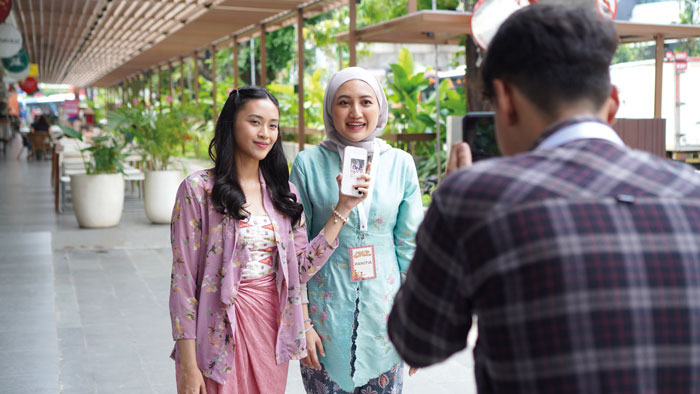
Titled Nyok Kite Rayain Jakarta (Let’s Celebrate Jakarta’s Anniversary), the event offered an engaging introduction to Betawi culture. NKKB showcased traditional dances such as Topeng Gegot and Geol Manis, alongside a gambang kromong performance and workshops on making bir pletok (a non-alcoholic traditional drink) and learning Topeng Gegot dance movements. Visitors could also try on traditional Betawi attire, including kebaya encim and pangsi, and capture the experience in photographs. To make the celebration even more participatory, NKKB invited the audience to join the ngibing, a traditional Betawi social dance, turning spectators into participants and the cultural showcase into a shared celebration.
Looking ahead, NKKB is developing a series of engaging programmes to mark Jakarta’s upcoming 500th anniversary while continuing to forge new partnerships. The sisters are also exploring initiatives that could appeal to more young men, particularly as their dance classes currently attract an audience that is almost entirely female.
“We want to turn it into a lifestyle. Just as Thailand has its widely popular Muay Thai, we want to make silat beksi a lifestyle choice for young people,” said the siblings, whose shared commitment is to ensure that Betawi culture continues to thrive amid the growing influence of cultures from around the world.
For Roxanne and Rahel, preserving Betawi culture is not about placing it behind glass or confining it to the past. It is about giving it a place in everyday Jakarta life—on the dance floor, in public spaces, at cultural institutions and, most importantly, in the lives of a new generation. Their hope is simple yet ambitious: that young Jakartans will not merely know Betawi culture but embrace it as part of who they are and how they live.
Nyok Kite Kenal Betawi Community
Jl. Yado III, No. Z-1 E, Gandaria Utara, Kebayoran Baru, South Jakarta
@nyokkitekenalbetawi