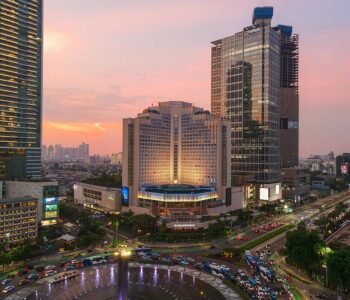




In collaboration with the Bremen Centre for Building Culture, Goethe-Institut Indonesien presents the photography exhibition ‘Living at the Urban Seafront’. Featuring 47 works by 17 Indonesian and German photographers, the exhibition explores the lives of those caught in the intersection of land and sea.
On display from 6 May to 1 June 2025, the exhibition captures the experiences, challenges and transformations of urban shorelines across a variety of urban shorelines, including Jakarta, Bekasi, Greski, Makassar as well as in Bremen, Germany. Through powerful visual storytelling, the exhibition reflects on how coastal communities adapt, survive, and evolve in response to environmental, social, and urban pressures.
Living at the Urban Seafront first debuted at the Bremen Centre for Building Culture in Germany from 14 March to 30 April 2025, and now comes to Goethe-Institut Jakarta as part of the GoetheHaus Foyer programme.
The exhibition features photographs by Aan Melliana, Abyan Madani, Agus Susanto, Arie Basuki, Dikye Ariani, Djuli Pamungkas, Fernando Randy, Idealita Ismanto, Iqro Rinaldi, Kay Michalak, Muhammad Fauzan, Nafiah Solikhah, Nikolai Wolff, Qeis Sulthon, Rejeky Kene, Wiagung Prayudha, and Yuan Adriles.
The fifteen Indonesian photographers were selected through an open call that attracted 31 submissions. Their works were chosen by an interdisciplinary jury comprising six members from Indonesia and Germany: Irene Berlian (photographer, Jakarta), Ulrike Heine (cultural scientist, Kiel), Sigit D. Pratama (exhibition designer, Jakarta), Jan-Philipp Possmann (curator, Mannheim), Elisa Sutanudjaja (urbanist, Jakarta), and Nikolai Wolff (photographer, Bremen).
“Climate change is a global phenomenon that we are compelled to confront with mitigation strategies. One such strategy, in response to rising sea levels, is coastal resilience. In the dialogue between such different institutions, it is our mission to foster awareness — because it is through shared problem-solving that understanding, connection, and hope can grow.” said Dr. Ingo Schöningh, Regional Head of Cultural Programmes.
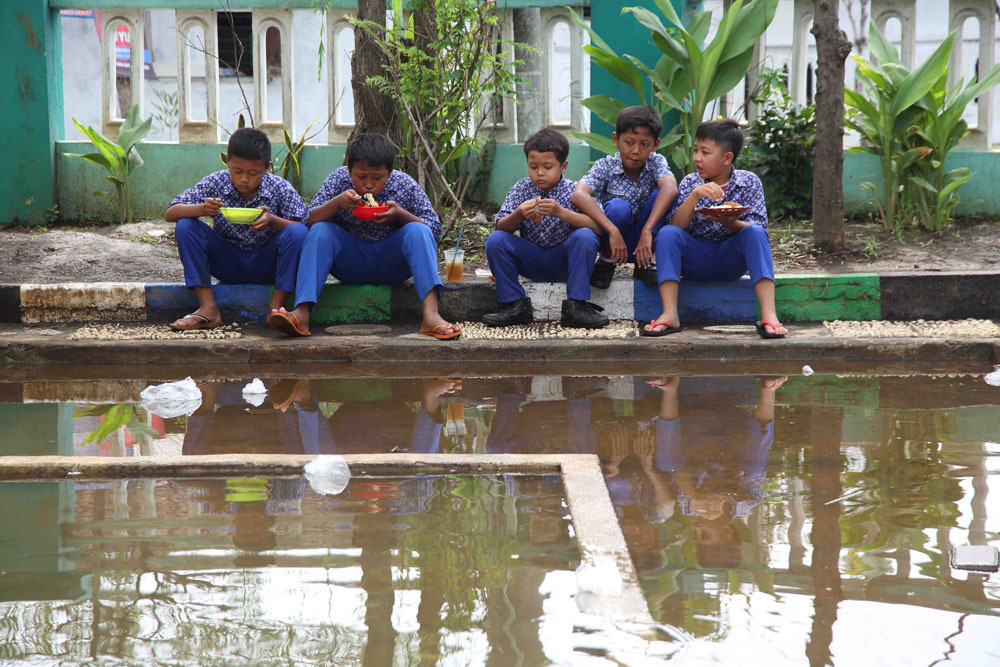
This exhibition cannot be separated from the increasingly pressing issue of climate change. Indonesia, with the second-longest coastline in the world, has over 60 percent of its population living in coastal areas. Yet, the living conditions in these zones are growing more uncertain. Sea level rise, land subsidence, coastal erosion, and tidal flooding are not sudden disasters, they unfold gradually, infiltrating daily life and reshaping environments quietly. These are slow, silent crises, often intensified by structural neglect and lack of long-term planning.
“The images in the exhibition offer glimpses into how people adapt, endure, and make meaning at the shifting edge between land and sea. Some images reveal efforts to defend against water through embankments, dikes, and pumps. Others show what happens when infrastructure falters, or when it never arrives. Many reflect quieter forms of persistence rebuilding homes, carrying water through flooded streets, waiting in uncertainty, or simply playing on ground that may soon be lost.” as the jury representative, Elisa Sutanudjaja explained.
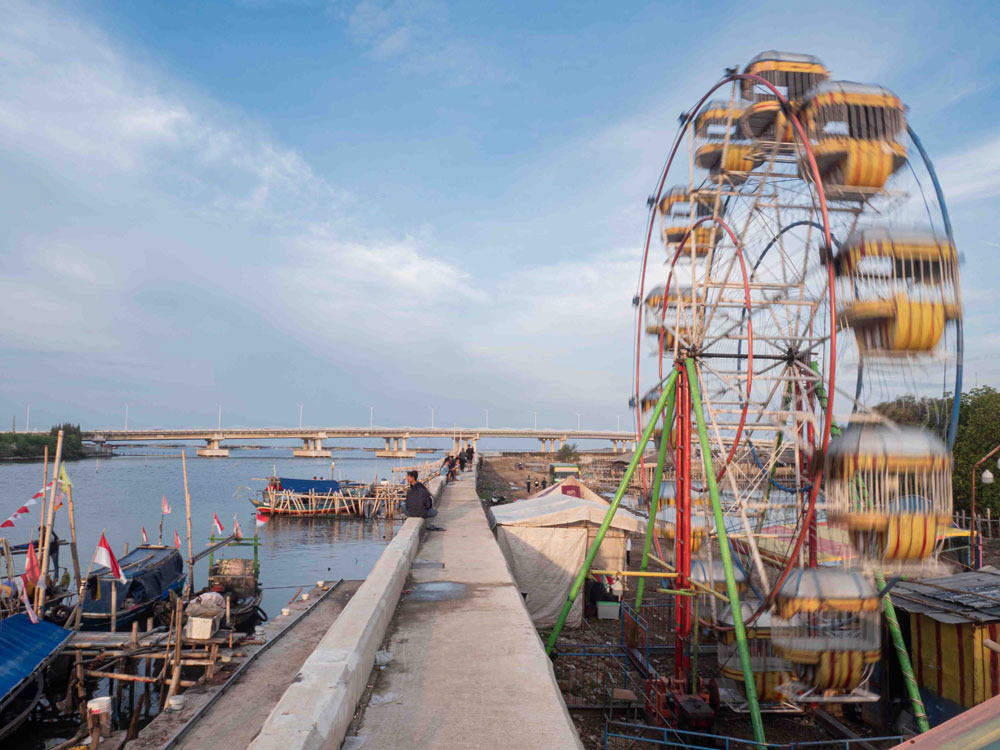
Living at the Urban Seafront is beyond an exhibition about the devastating consequences of the climate crisis. It is about reflection far from the tidal floods and receding shorelines, endurance, memory, and everyday life on ground that is, quite literally, disappearing.
These photographs also reveal the uneven ways in which cities like Jakarta and Bremen experience and respond to flooding, whether planned or unplanned, natural or man-made.
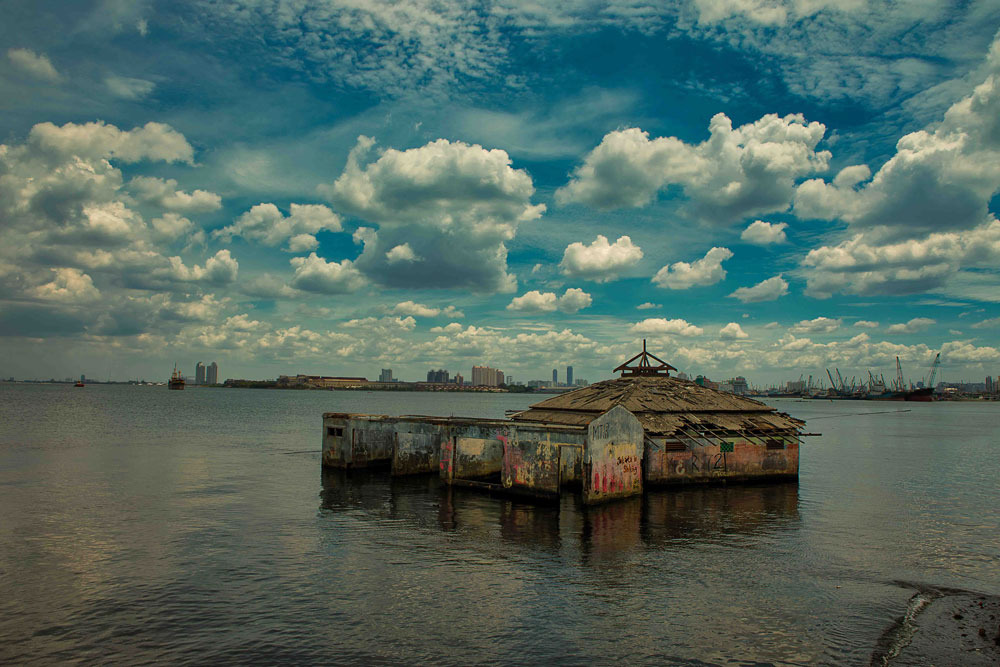
In Jakarta, a partially submerged mosque becomes a global symbol of the city’s sinking (Iqro Rinaldi, Qeis Sulthon), while its abandonment was ironically triggered by the very infrastructure built to protect it. In another image, pumps strain against floodwaters near toll-road embankments never designed to accommodate rain (Djuli Pamungkas).
In contrast, Bremen’s approach reflects a strategy of living with water. Here, rivers are given space to flood safely, an intentional act of urban design that prevents damage to homes and infrastructure. In Kay Michalak’s photograph, this policy is made visible.
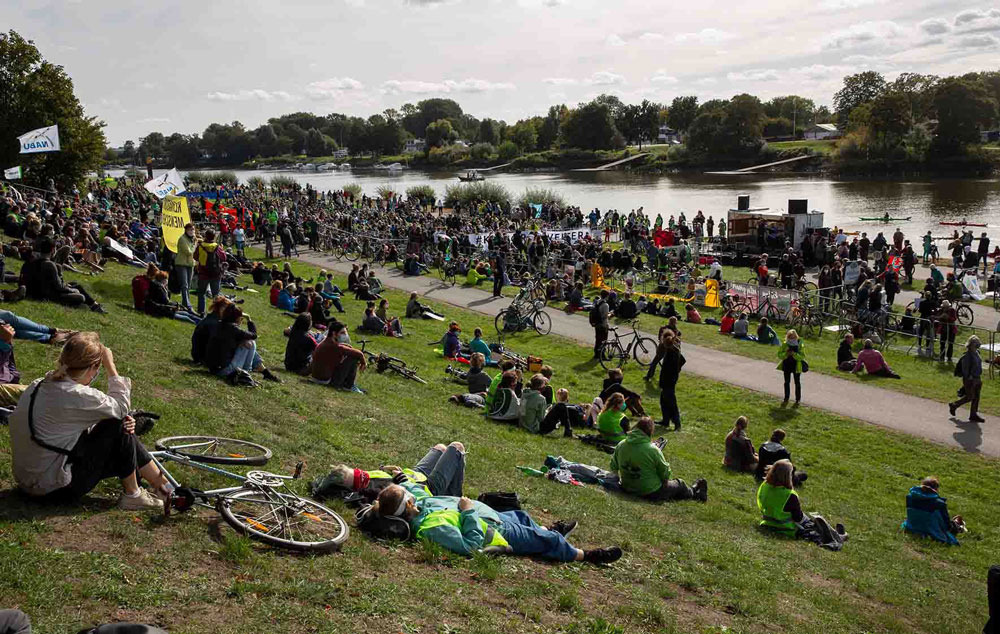
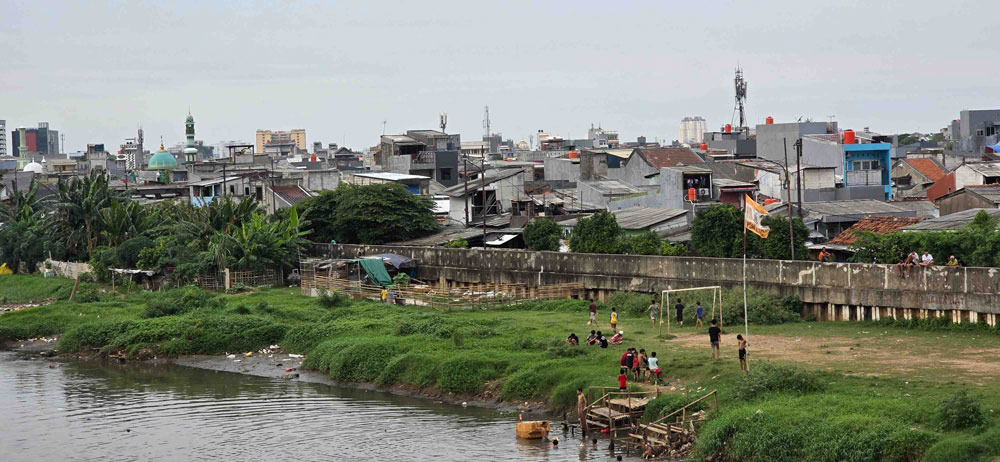
Michalak’s work is poignantly juxtaposed with that of Nafiah Solikhah, offering a striking comparison of floodplains in Bremen and Jakarta. In Bremen, the floodplain is intentionally protected: a green, public space that absorbs excess water while inviting people to walk, rest, and reconnect with the river. Flood adaptation becomes part of the landscape itself: not a boundary, but an invitation.
In Jakarta, however, Solikhah shows a very different kind of floodplain, one that was never planned. Instead, it emerged from mud piling up against the concretised riverbanks and canals. Over time, the community informally reclaimed this accidental land, turning it into something useful: a place to play, to grow, even to live.
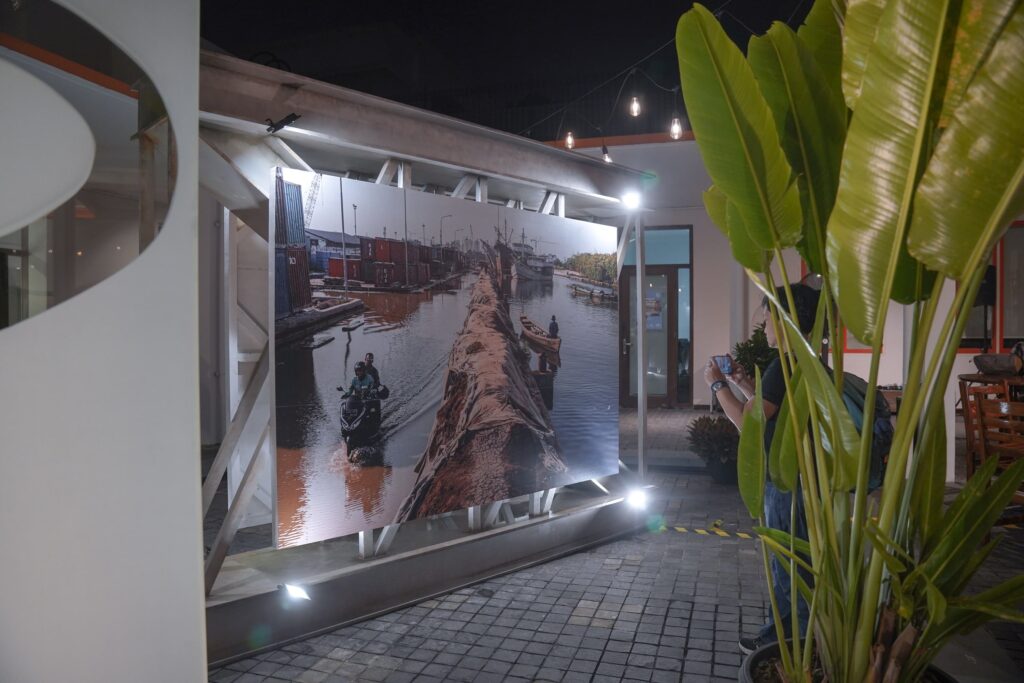
Living at the Urban Seafront exhibition can be visited at Goethe-Institut Jakarta, from 6 May to 1 June 2025, every Tuesday to Sunday (closed on Mondays), from 12 pm to 8 pm. It’s free of charge.
Goethe-Institut Jakarta
Jl. Sam Ratulangi 9-15, Menteng, Central Jakarta
+62 21 3914042
@goetheinstitut_indonesien