This article is written by Andrea Downie, British School Jakarta’s Deputy Principal
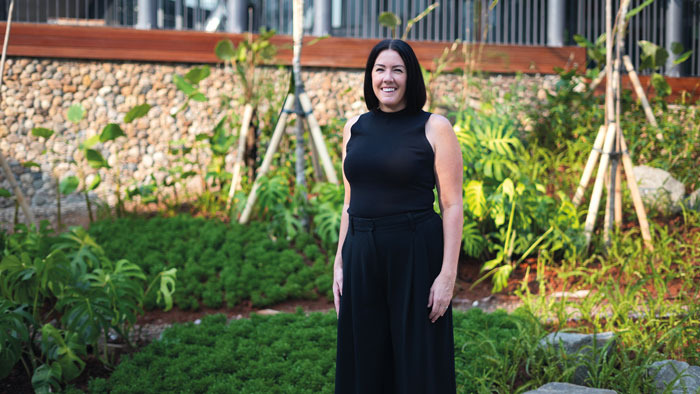
After working with 300 schools internationally, British School Jakarta’s Deputy Principal, Andrea Downie explores how school culture shapes children’s wellbeing, learning, and future readiness.
What if the greatest challenge facing education today isn’t what we teach children, but the environments we create for them to grow?
For generations, academic achievement has been one of the dominant measures of educational success. Examination results, university placements and qualifications have shaped how we define a good education and, often, how we measure a child’s potential.
Yet the world our children are entering is changing at an extraordinary pace. Artificial intelligence is reshaping industries, redefining knowledge and challenging long-held assumptions about the capabilities that will matter most in the future. We are preparing young people for careers that will evolve, technologies we cannot yet imagine and global challenges that will demand far more than academic knowledge.
In this new world, the ability to think critically, navigate uncertainty, build meaningful relationships, understand others, act ethically and adapt to change will be increasingly important.
Grades matter. But grades alone are not enough. The future demands young people who can thrive. And that requires us to rethink education itself.
The Wellbeing Paradox

Over the past 25 years, wellbeing science has made extraordinary advances. We understand more than ever about the psychological, social and environmental factors that help people flourish. Yet despite growing research, investment and increasing numbers of wellbeing programmes, concerns about student mental health, anxiety, disengagement and educator burnout persist across the world.
This raises an uncomfortable but important question: if we know so much about what supports wellbeing, why is flourishing still so difficult to sustain and scale?
Perhaps we have been asking the right questions at the wrong level. Much of our traditional approach focuses on the individual. When someone experiences stress, we teach resilience. When engagement declines, we introduce a programme. When anxiety rises, we offer additional support. These interventions can be valuable, sometimes life-changing. But they rarely transform an entire school community on their own.
What if, instead of only asking how we can help individuals become more resilient, we also asked what creates the conditions that make resilience, belonging, confidence and wellbeing possible in the first place?
This is the shift from delivering wellbeing to designing for wellbeing to emerge.
Schools are ecosystems, not collections of programmes
At this year’s European Conference on Positive Psychology in Dublin, I was invited to speak about my philosophy on wellbeing that has fundamentally shaped my work: wellbeing is not something a school or organisation can simply implement. It emerges through the everyday interactions between people, relationships, leadership, culture, learning and the environments in which we live and work.
We cannot implement trust, belonging or psychological safety in the same way we implement a new curriculum or technology platform. We can, however, intentionally design the conditions in which these experiences are more likely to flourish.
Think about a child’s experience of school.
It is shaped not only by the lessons they attend, but by how they are welcomed each morning, whether they feel known by an adult, the opportunities they have to make decisions, the way mistakes are handled, how achievement is recognised and whether they genuinely feel they belong.
A wellbeing workshop may occupy an hour of a student’s week. The culture of a school influences every hour. This is why wellbeing must move beyond a collection of initiatives and become part of the architecture of education itself.
It needs to be evident in leadership decisions, classroom experiences, relationships, physical spaces, assessment practices and the way a community responds when things become difficult.
When these elements work together, we begin to create environments where wellbeing and learning are not competing priorities, but mutually reinforcing outcomes.
Putting Whole-systems Design into Practice in Jakarta
At British School Jakarta, this thinking has become central to how we approach education and school improvement.
Our work goes beyond introducing wellbeing programmes. It involves intentionally shaping an entire school ecosystem around the conditions that enable children and adults to flourish.
Importantly, this has not been a model designed in isolation and handed down to a school community. It has been developed through listening, inquiry and collaboration with our stakeholders, including the voices of children as young as two through to our graduating students, alongside teachers, families, leaders and researchers.
In a community representing more than 50 nationalities, understanding context, culture and lived experiences is essential.
We ask not simply, “How are our people feeling?” but a deeper question: “What is producing the experiences our people are having?”
That question changes how we lead. It directs attention towards belonging, relationships, student agency, trust, learning design, leadership and the many everyday experiences that shape how people feel, learn and grow. It also challenges us to look beyond traditional measures of success and consider the human experience of education itself.
Our ambition is not to make wellbeing an additional feature of an excellent education. It is to demonstrate that an environment deliberately designed for thriving is fundamental to educational excellence.
The Human Advantage in an AI World
Perhaps nowhere is this shift more urgent than in the conversation about artificial intelligence.
As AI becomes increasingly capable of processing information, generating content and performing complex cognitive tasks, education must reconsider what it means to prepare a young person for success.
Knowledge and academic rigour remain essential. But knowing information is no longer the same as being prepared to use it wisely. The children who flourish in the future will need more than technical proficiency. They will need empathy to understand people, ethical judgement to navigate difficult decisions, creativity to imagine new possibilities and emotional intelligence to lead and collaborate across differences.
They will need a strong sense of identity, agency and purpose. These are not simply desirable personal qualities or ‘soft skills’. They are fundamental human capabilities for a rapidly changing world. And they cannot be developed through lessons alone.
Children learn about trust by experiencing it. They develop agency when their voices influence decisions. They learn to navigate challenge when they are supported to take appropriate risks, make mistakes and grow. They learn belonging by being part of communities in which they are genuinely valued.
The environments we create are always teaching, even when no formal lesson is taking place.
Redefining What Educational Success Looks Like
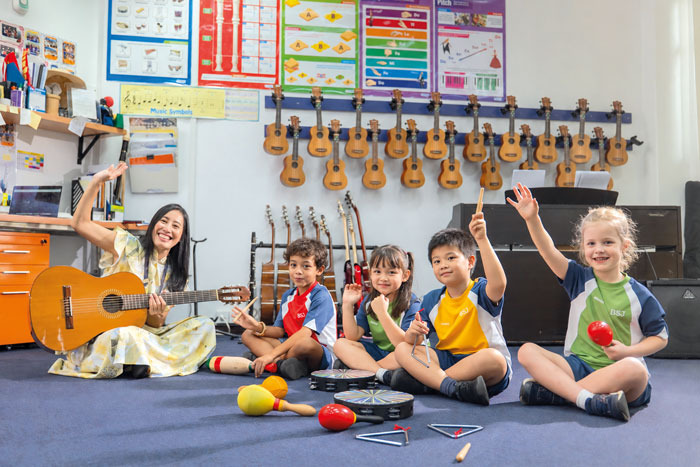
For parents across Indonesia and the international community, this conversation matters deeply.
We all want our children to succeed, but perhaps we need to broaden our understanding of what success means. What does an outstanding academic result mean if a young person lacks the confidence to navigate uncertainty, the ability to build healthy relationships or a sense of meaning and belonging? And what becomes possible when academic excellence is cultivated alongside wellbeing, character, agency and human connection?
The future of education is not about choosing between achievement and wellbeing. It is about recognising that the conditions enabling people to thrive are also the conditions that support meaningful learning, engagement and sustainable success.
Schools have an extraordinary opportunity, and responsibility, to help shape this future.
At British School Jakarta, we believe this is not simply a new direction for wellbeing. It represents a more ambitious vision for education itself. Because children do not spend their lives inside wellbeing programmes. They spend their lives inside systems. And those systems, whether we recognise it or not, are shaping the people they become.
The question that remains for all of global education is whether we are designing these systems intentionally enough so that all students can truly thrive now and into the future.
British School Jakarta
Bintaro Jaya, Jl. Jombang Raya Sektor 9, Pd. Pucung
+62 (21) 8082 8140
bsj.sch.id