




Developing alongside Indonesia’s burgeoning culinary industry are the country’s food producers. With consumers becoming increasingly conscious of where their food comes from, locally produced goods are gaining popularity, with qualities rising enough to pique the interest of premium hospitality venues and even overseas interest.
Two unique brands are shifting the status of Indonesian produce, one developing an artisanal dairy industry to match those found abroad; the other bringing a ‘mundane’ Indonesian staple onto the global stage.
Article by Sari Widiati & Dinda Mulia
Mazaraat Cheese
Cheese may not be a traditional part of Indonesian food culture, but it has slowly found its way into the country’s everyday diet. Yet, Indonesian cheese has long been made for the mass market, paling in comparison to sophisticated makers in Europe, for example, where the industry has benefited from a long history in the produce.
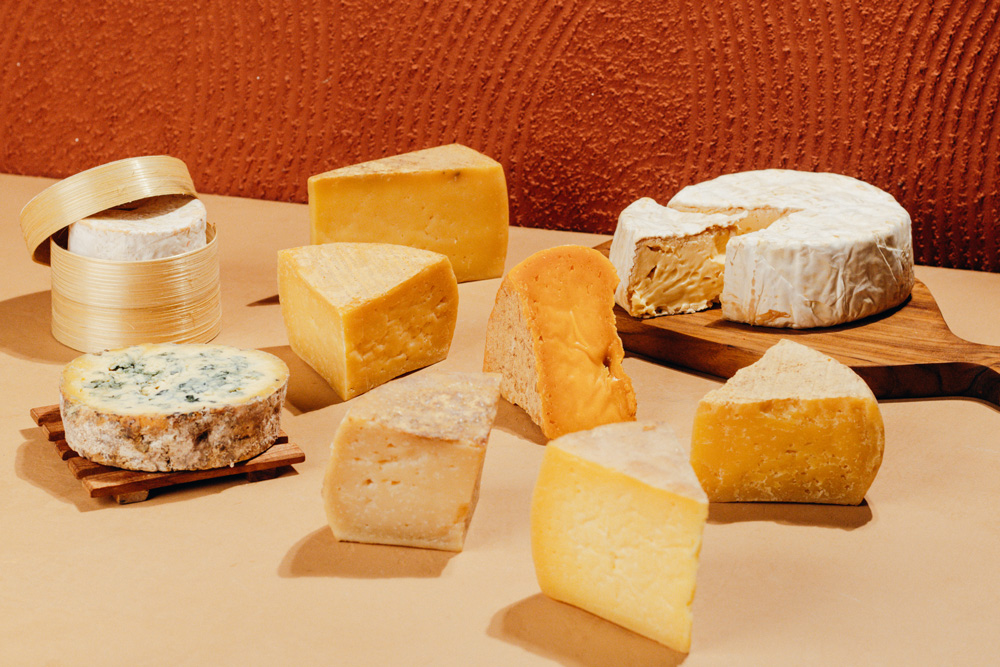
Enter husband-and-wife duo Muhammad Najmi (Jamie) and Nieta Pricilia Puspitasari (Nieta). Driven by a desire to make health fermented food for their family, bolstered by the needs of one of their children diagnosed with a heart condition, the couple ventured into the unlikely business of producing artisanal cheeses, made using Indonesia’s own fresh milk.
“As both owner and cheesemaker, I was awakened to the growing need for fresh, local, and nutritious food,” Jamie shares. “I embraced the challenge of crafting artisan cheese from the finest local cow’s and goat’s milk, along with other wholesome ingredients, always upholding strict quality standards and respecting the time-honoured traditions of old-world cheesemaking.”
Based originally out of Yogyakarta, Mazaraat Cheese’s journey began in 2015, debuting their first batch at the Kamisan Organic Market. From the get-go, the Indonesian-made cheese turned heads, captivating visitors – including seasoned food connoisseurs.
Encouraged by this enthusiastic response, Jamie and Nieta expanded their venture, establishing production facilities in Pasuruan (East Java), Solok (West Sumatra), and Kudus (Central Java), while keeping their Yogyakarta home as the heart of their artisanal craft. From this modest kitchen, their cheeses have found their way to the tables of fine dining restaurants and luxury hotels in Bali and Jakarta.
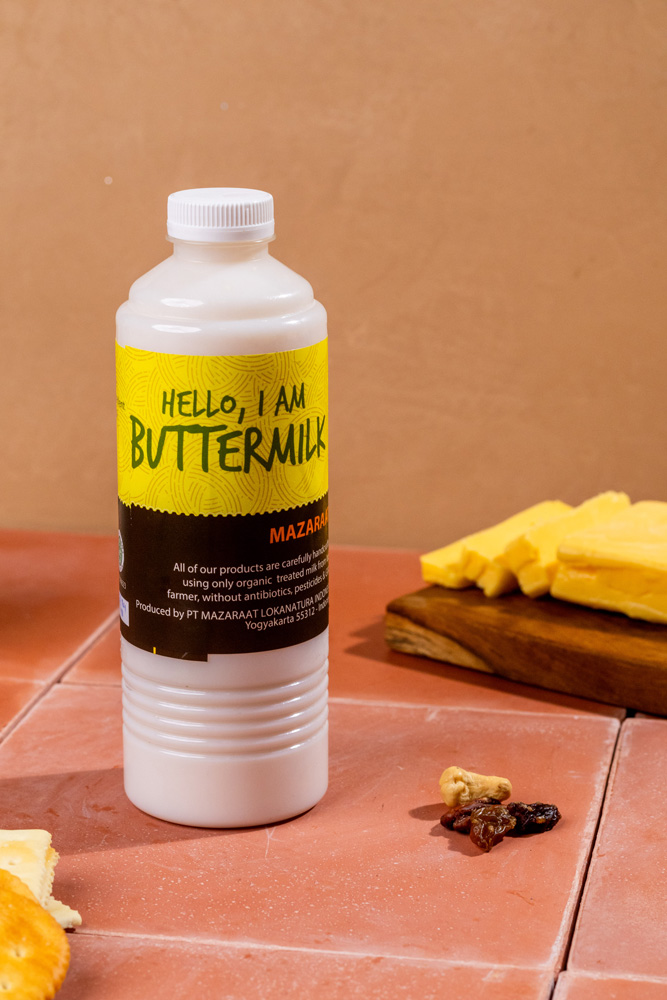
To date, the brand has developed around 20 varieties of cheese, including the blue cheese Ibra, goat’s milk cheeses Saphera and Khayya, British cheddar–style Arjun, burrata, and gouda, halloumi, as well as cultured butter, buttermilk, and clarified butter Ghee. Each product reflects Mazaraat’s dedication to rich flavours, diverse textures, and the artistry of Indonesian cheesemaking. Whilst not naming (nor claiming) their varieties to match those made in Europe, Mazaraat has successfully emulated their flavours and characteristics, delivering in some cases an indistinguishable product from those made abroad. Their latest creation is a pure butter that has chefs swapping out their imported alternatives.
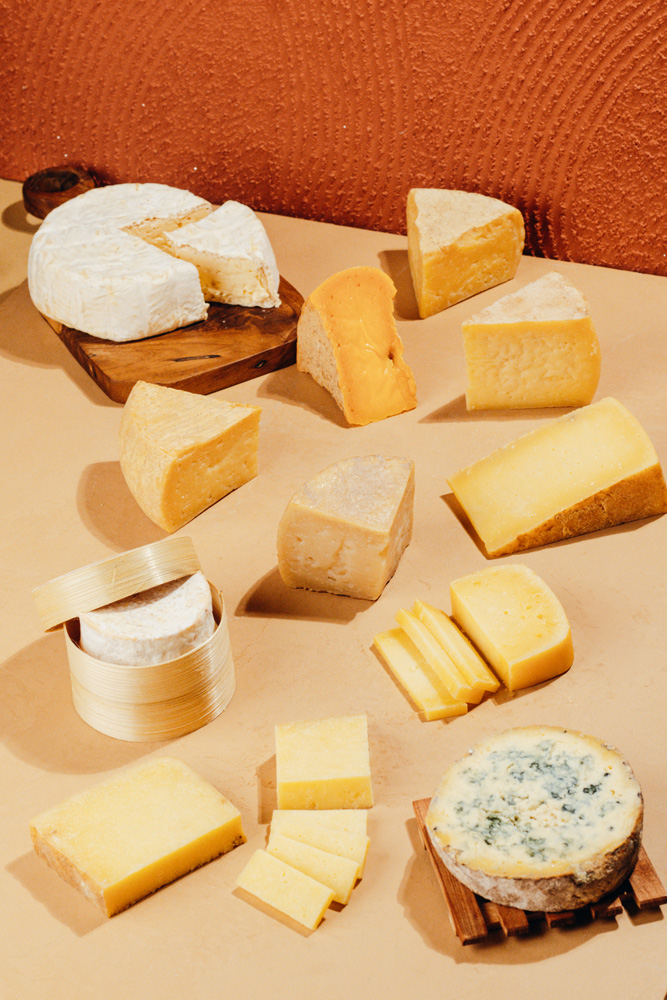
“Mazaraat Cheese has not only crafted artisanal products that meet international standards but has also written a compelling chapter in Indonesia’s cheese industry, all while helping to preserve the nation’s dairy ecosystem,” adds Jamie.
From its humble beginnings as a household cheesemaker, Mazaraat has grown into a company with a monthly production capacity of nine tons. For Jamie and Nieta, this journey is not only by their passion for cheese but also by a deep sense of purpose, a determination to educate the domestic market about the value of natural, artisanal cheese and to foster an appreciation for its craftsmanship.
@mazaraatartisancheese
mazaraatcheese.com
Better Nature
Tempeh, the ancient, fermented soybean cake that has been a centuries-old staple in Indonesia, has found a place on dining tables across Europe. Packed with plant-based protein, fibre, and nutrients, and celebrated for its earthy flavour and versatility, tempeh has transcended the warung and now performs on a global stage, thriving in today’s era of mindful eating.

Leading the charge in Europe is Better Nature, a London-based food startup transforming this humble Indonesian heritage food into a global protein contender.
For Indonesians, tempeh is nothing new: it’s affordable, delicious, and a cornerstone of the national diet. But internationally, its appeal is soaring. In 2023, it ranked fourth on TasteAtlas’s list of the world’s best traditional vegan dishes after Iran’s zeytoon parvardeh, Mexico’s guacamole, and Syria’s muhammara.
In today’s era of whole-food, plant-based eating, tempeh fits perfectly into global dietary trends. The growing appetite in Europe for natural, minimally processed, protein-rich foods inspired Indonesian food scientist Ando Ahnan-Winarno to co-found Better Nature alongside Elin Roberts (Wales), Christopher Kong (Hong Kong), and Fabio Rinaldo (Italy). Since its inception, the company has worked to showcase tempeh as a delicious, nutrient-dense alternative to conventional proteins.
“Tempeh is the healthiest protein source in the world,” says Ando Ahnan-Winarno, also the Co-Founder of Indonesian Tempeh Movement. “With protein levels like chicken breast, it’s also high in fibre, iron, B vitamins, and antioxidants, yet low in salt and saturated fat, and great for gut health. No other protein matches these benefits.”
Since launching in 2020, Better Nature’s portfolio comprises five SKUs (varieties), including a smoky tempeh block and BBQ-marinated pieces, which are listed nationally at various retailers in the UK, and in over 1,300 stores in Germany.
Better Nature has become the UK’s number one tempeh brand by sales volume, commanding a 38.1% market share and driving 41% category growth. Its Organic Tempeh is Tesco’s best-selling tempeh product, and the brand is also stocked in Asda, Ocado, Planet Organic, Whole Foods Market, Amazon, and foodservice distributor Bidfood.

In Germany, Better Nature leads with a 30% market share, tripling sales year-on-year, and is now available in major retailers including Rewe, Globus, and Tegut. The company has also entered Austria through MPREIS supermarkets.
The second quarter of 2025 marked the company’s strongest sales period yet, with UK revenue up 128% year-on-year, against an 8.3% decline in the broader plant-based food category. This performance helped secure IDR 24 billion in foreign investment to fuel its expansion in the UK, Germany, and Austria.
“With this funding, we’ll keep pushing the boundaries of the plant-based market and reach more people looking for healthy, natural protein, whether they’re vegan, vegetarian, or meat-eaters,” says co-founder Elin Roberts.
betternaturetempeh.com
tempe-movement.com
@betternaturetempeh