


Indonesia’s diversity is something to celebrate, but even blessings can come with complications. Just as defining Indonesian cuisine remains a constant debate among culinary experts, defining contemporary Indonesian design leads to a similarly elusive answer. The question appears simple, yet few experts seem able or willing to offer one definitive description. Does contemporary Indonesia have a fixed design style today?
Part of the difficulty comes from how design history is often read. Victorian and Georgian styles in England, Bauhaus in Germany and Art Deco in France have made people look for clear labels. They suggest that every period or place should leave behind a recognisable look. Indonesia does not fit neatly into that habit. Its current design language seems to move through something less rigid than a movement, shaped instead by climate, culture, place, material and the way people live now.
The Rise (and Fall) of Jengki
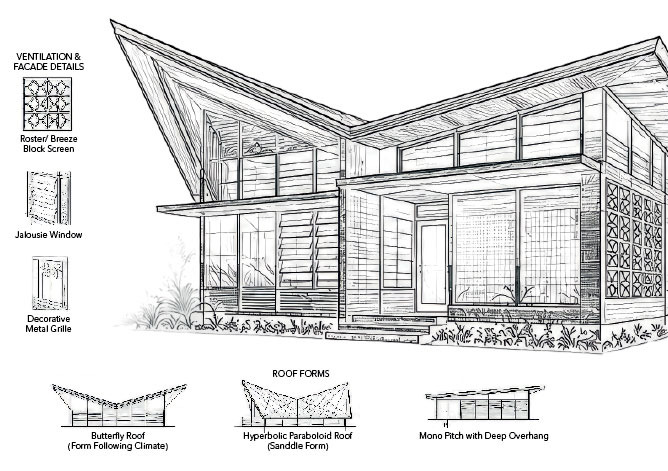
Before talking about the present, let alone the future, we must take a quick look at the past. Indonesia has produced recognisable architectural forms, from vernacular houses influenced by place and ritual to post-independence expressions such as Jengki. Popular in the 1950s and 1960s, Jengki came with a visible character with its sloping walls, pentagonal forms, pitched roofs, oblique façades, varied ventilation holes, terraces and asymmetrical openings. It was one of the closest moments Indonesia had to a distinct modern architectural expression, partly because it carried the mood of its time. Scholars have read it as a postcolonial expression of freedom and a break from Dutch-influenced architectural language.
Yet Jengki’s influence did not secure a permanent place in Indonesia’s modern design language – whilst its legacy is still discussed, and even revived through Neo-Jengki references, many original buildings have become rare as older structures are sold, altered or replaced. But the genre’s mission was also its downfall: the Jengki movement was so politically- and philosophically-charged (freedom, anticolonial, break the rules!) that it ignored many of the fundamental aspects of architecture, such as designing for climate, environment and efficiency.
From Indonesia’s most traditional structures to the later-adapted colonial architecture, these were more attuned to their immediate surroundings and the climatic necessities of its residents than Jengki. It was a lesson that a strong visual symbol can often conflict with practicality.
Indonesian Design Today
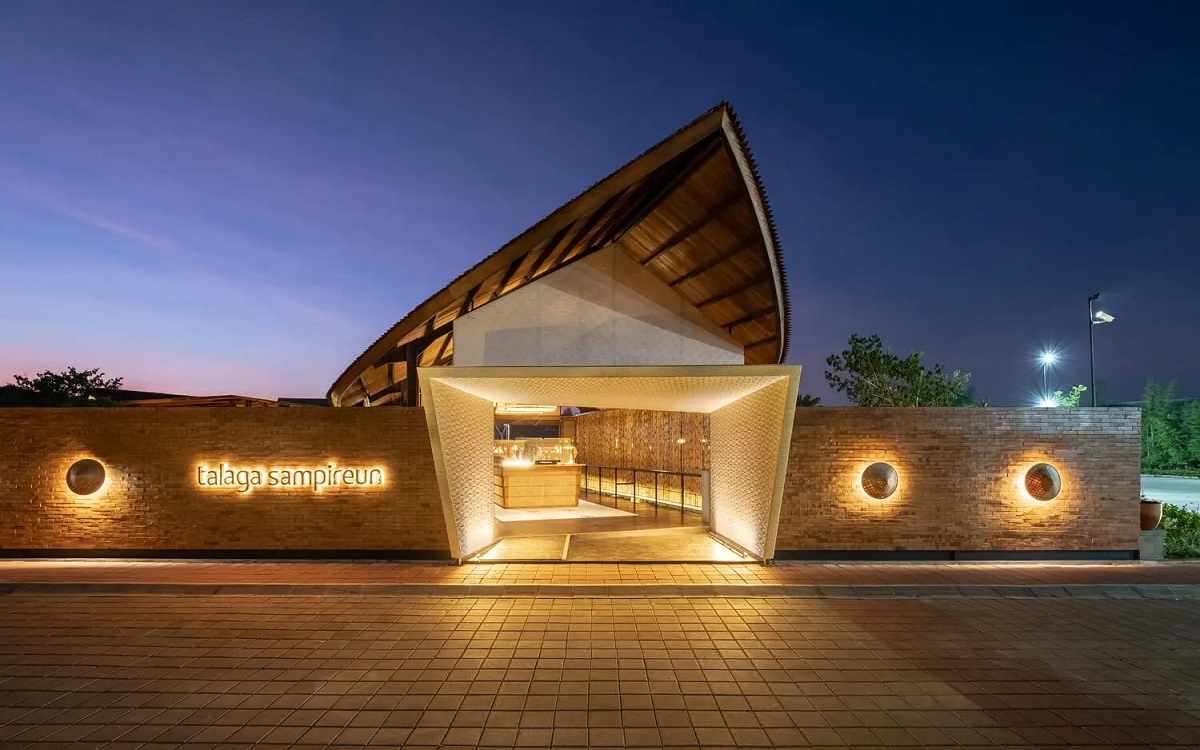
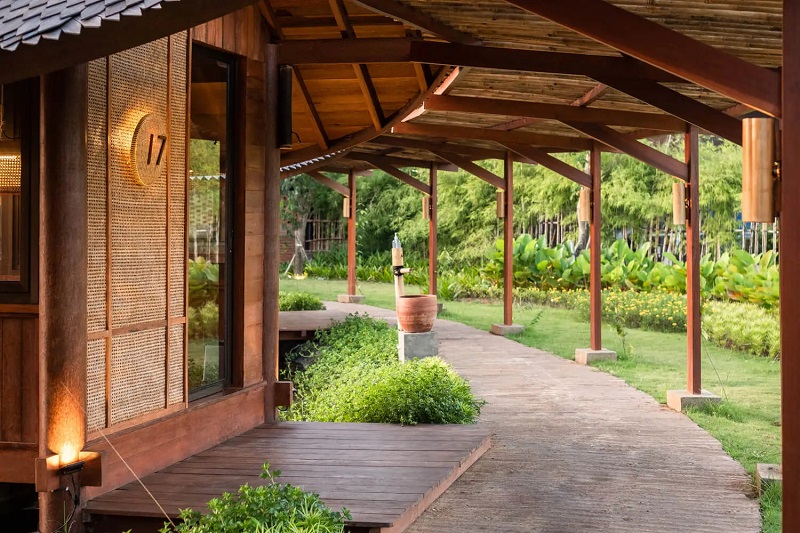
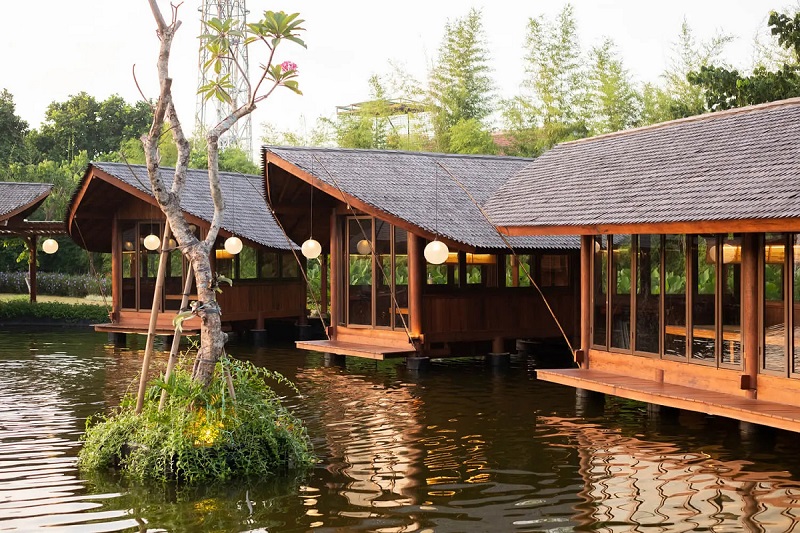
This is where the conversation on the present begins. When asked during the opening of Bintaro Design District on 11 June 2026, one of the country’s renowned architects, Andra Matin argues that Indonesia is too broad and heterogeneous to be reduced to a single visual identity. “It is too difficult if the end point has to be physical,” he says. “If we want to find the end point, it is actually more philosophical, or about how design responds to the surrounding environment and needs.”
Architectural designer Helen Agustine reaches a similar conclusion from contemporary practice. For her, contemporary Indonesian design is “less about visual style” and more about “the way of thinking” as a response to current situations, culture and context. From this perspective, Jengki was not the answer that Indonesian was searching for in the postcolonial period – it was simply a response to a previous period.
A house in Bandung, a resort in Bali, a restaurant in Jakarta and a public pavilion in Bintaro do not need to look alike to belong to the same design conversation. They may share an instinct to answer where they are, who they serve and what conditions they must face. This makes the search for an Indonesian design movement more complicated than looking for a Bauhaus-like system, built through a school, manifesto, teachers, workshops and a programme that could be repeated. Indonesia’s design language has grown through islands, climates, cities, rituals, colonial memory, local materials and everyday habits. Its scattering is part of its identity.
Jengki leaves a useful lesson for the present. A recognisable look can mark a period, but it cannot carry a design language on its own. In Indonesia, design must to answer heat, rain, humidity, ventilation, shade and the daily habits formed by the tropics.
While climate may be treated as background in other regions, in Indonesian design it is a determining force. Materials must deal with moss and moisture, buildings must negotiate heat and rain, and space has to work with the way people already live. Andra Matin points to one clear result of this condition: “In Indonesia, we can create spaces where the boundary between outside and inside is looser,” he says. “That is why here there are so many semi-outdoor spaces.”
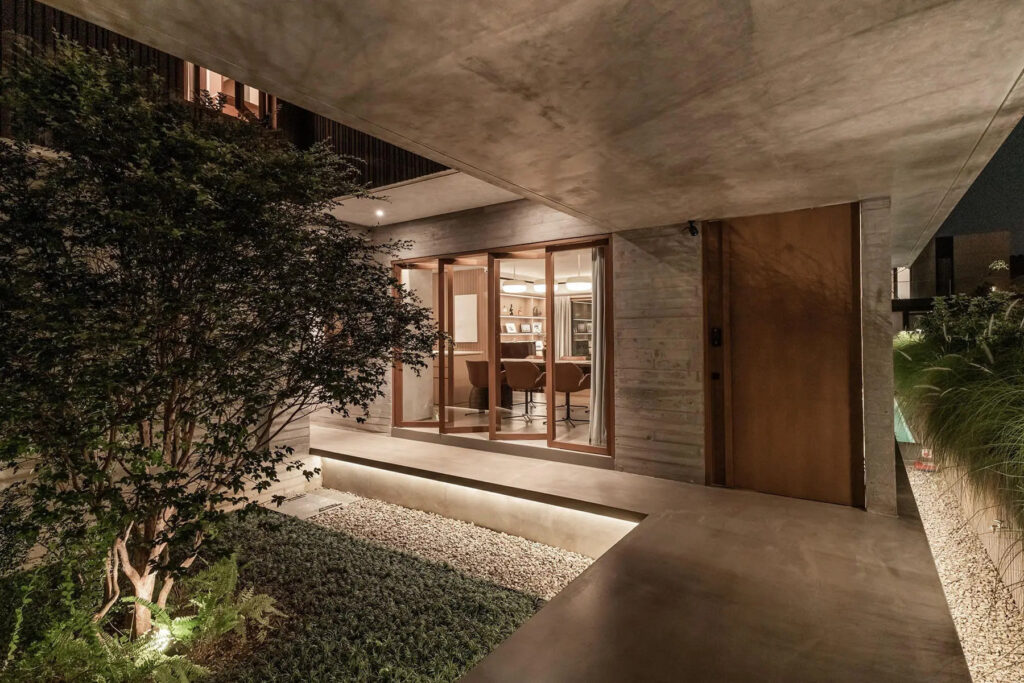
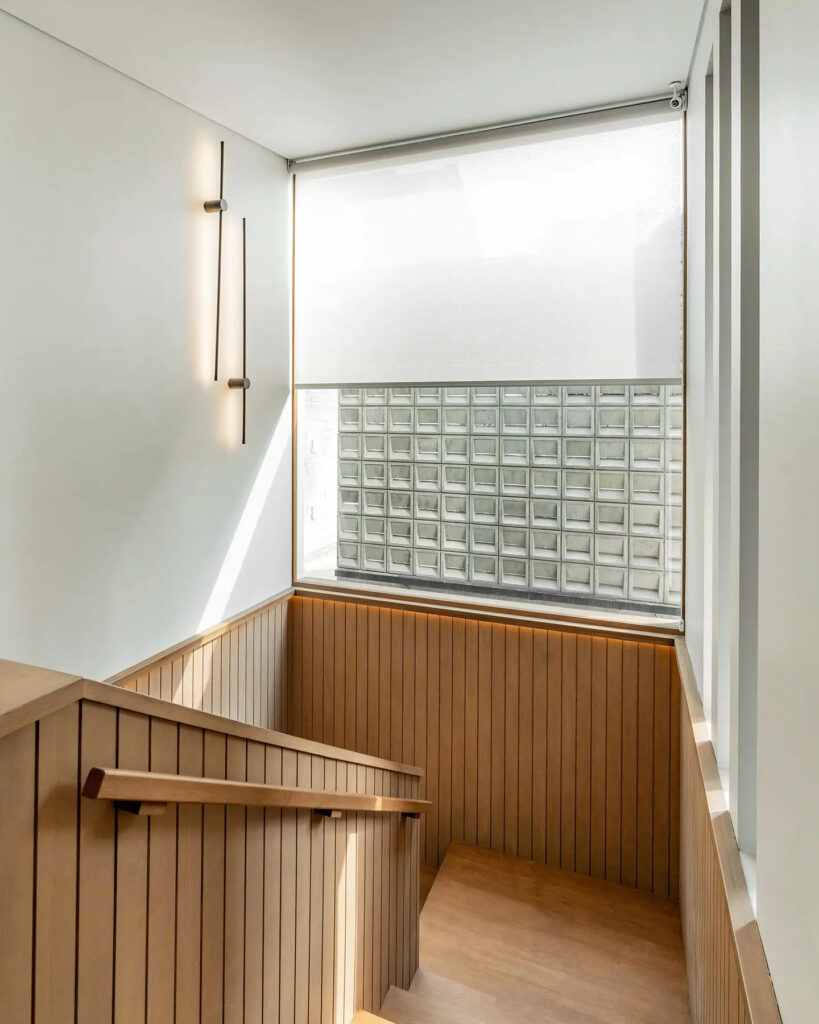
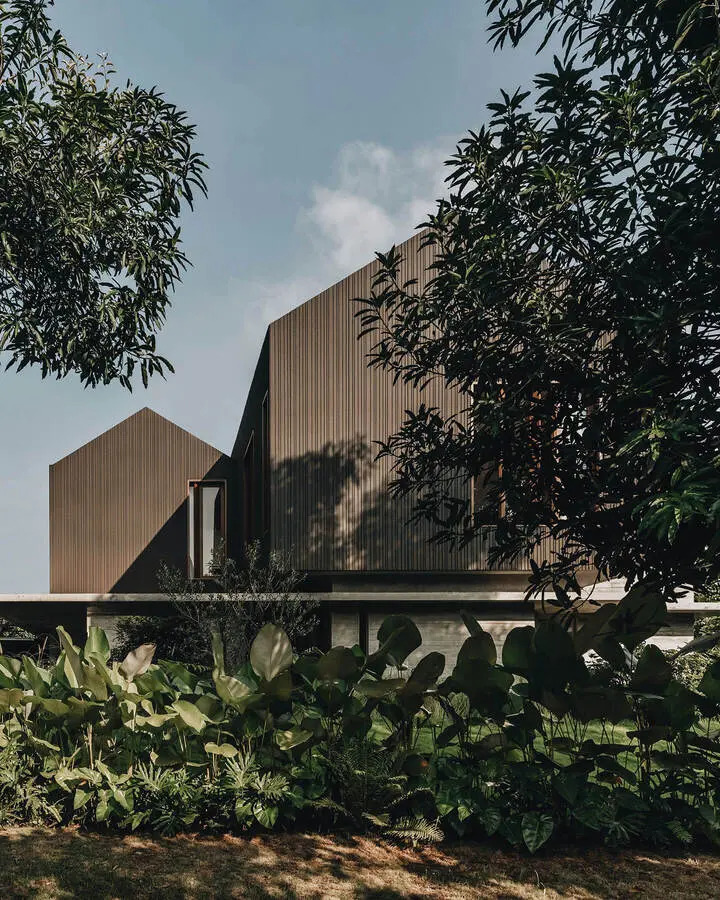
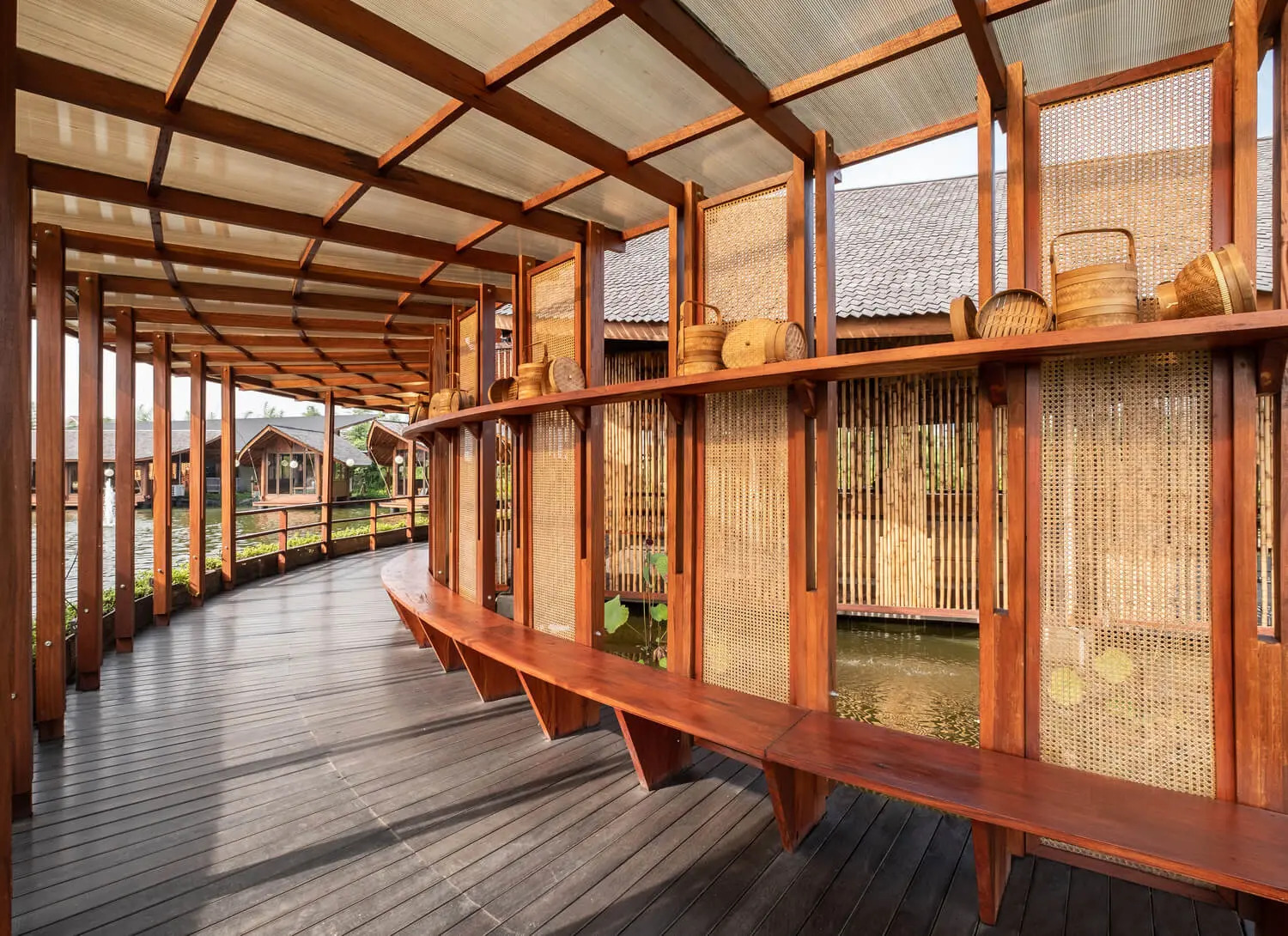
Indonesia’s climate makes the boundary between inside and outside more flexible. Terraces, courtyards, shaded walkways, verandas, pendopo-like areas and open living rooms are shaped by daily habits as much as aesthetics. They extend social life outward, let air move, and create shaded thresholds between enclosed rooms and open air.
For Helen Agustine, climate comes first. “It is actually the first thing we think about in design: the climate,” she says. Sunlight can reduce the need for artificial lighting, though too much of it increases heat. Rain calls for long eaves, so water does not enter the house or splash into living areas. Helen refers to this condition as ruang antara, the in-between space, now one of the clearest tendencies in many contemporary homes and hospitality projects.
In projects such as Nickhel Home, Kisaku Coffee and open, timber-led dining spaces such as Amanaina at Talaga Sampireun, climate is handled through cross-ventilation, shaded thresholds, semi-outdoor seating and materials that sit naturally beside greenery and water. From there, Indonesian design becomes an attitude that starts by asking what the site can bear, receive and protect.
Heritage follows the same logic. Indonesian design is often recognised through motifs, craft objects, traditional rooflines or familiar ornaments, yet Helen argues that identity can also be felt through experience. “Indonesian identity does not always have to be reflected in something that is visible from the outside, in visuals, form, or objects,” she says. “It can also be felt through experience.”
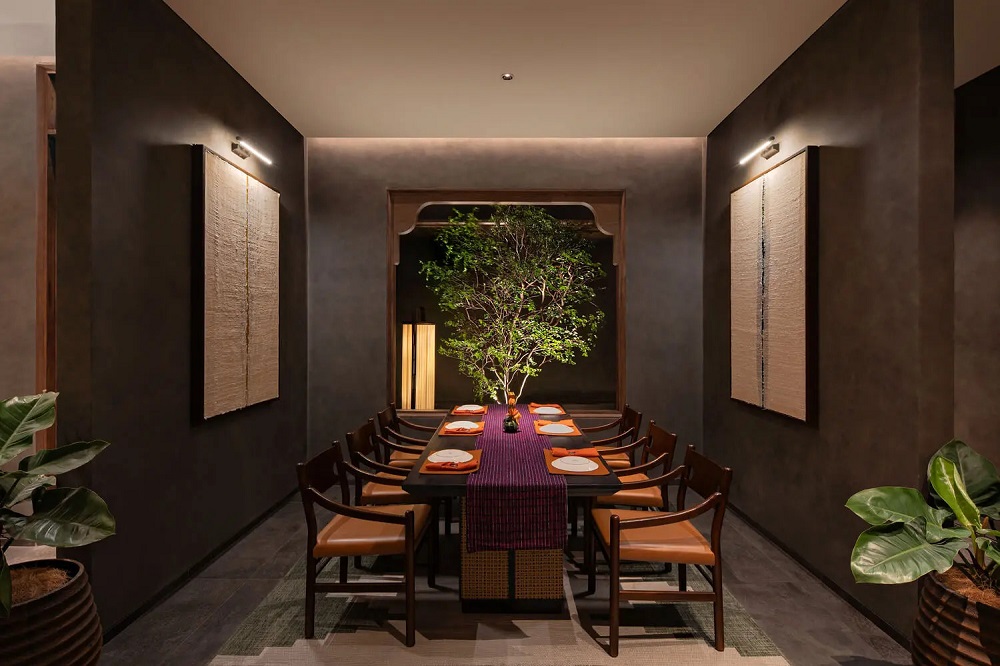
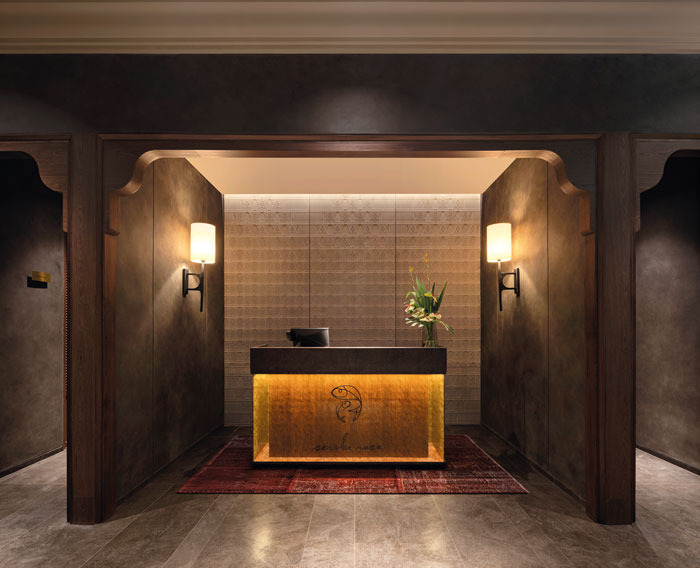
In Seribu Rasa Kemayoran, that idea appears through Troso weaving, CNC panels inspired by traditional motifs, a soko guru-inspired ceiling and artwork made from reworked Tuban cloth. It also appears in the spatial sequence, where visitors pass through a lower area before entering a wider room with a higher ceiling, recalling the movement into a Javanese house and the openness of a pendopo. As Helen puts it, the project applies “the experience from the past” as much as its visual references. Heritage, here, is carried through translation.
That act of translation also explains how global influence enters Indonesian design. Jengki drew from American popular culture and became part of Indonesia’s post-independence architectural identity, while Seribu Rasa uses contemporary fabrication to return to Javanese spatial memory. This may be why a single contemporary Indonesian style remains hard to name. The strongest works share less in surface than in how they read climate, site, social habits and inherited forms. That same habit of response now points towards the future.
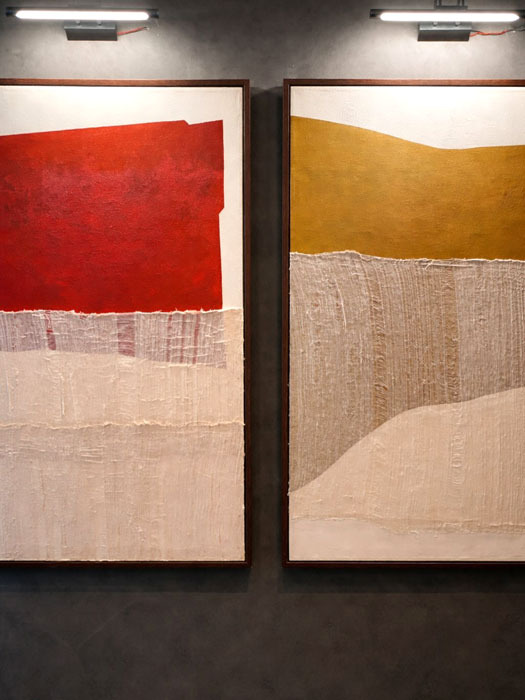
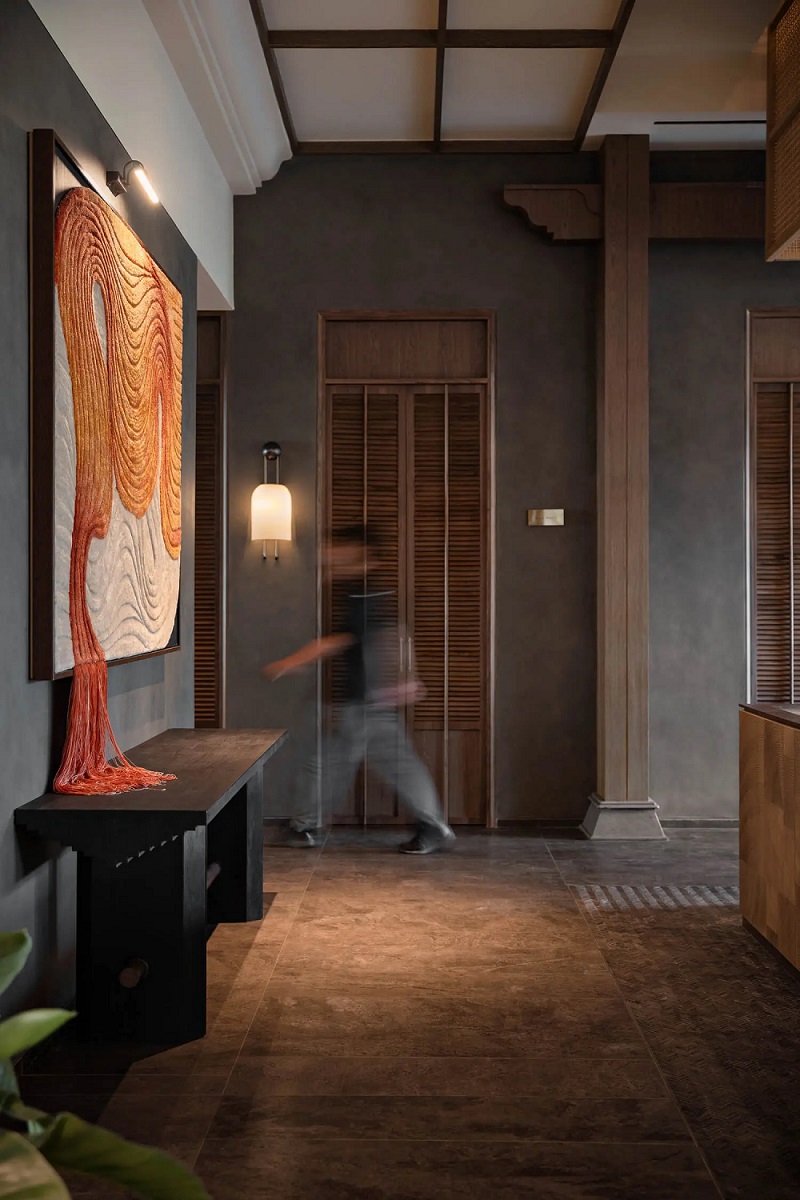
Helen sees sustainability and technology as two major directions for the coming years, from reducing waste and energy use to creating spaces that can adapt to changing needs. Her Kinematic Pavillion already suggests that direction. Built from recycled roller blinds, woven surfaces, patinated copper and rainwater pipes turned into musical instruments, it brings together material reuse, craft, public engagement and adaptability.
Contemporary Indonesian design may never settle into one form. Its direction is clearer than that. It responds to climate, culture, memory, material and daily life, then lets each place arrive at its own answer – and in a country this varied, that may be the closest thing to a defining style.
Explore more from Andra Matin at andramatin.com and Helen Agustine Studio at helenagustine.studio
References:
Alexandra Griffith Winton, “The Bauhaus, 1919–1933,” The Metropolitan Museum of Art;
G.A. Susilo, “Arsitektur Jengki: Bergeometri yang Kreatif,” Spectra, 2009;
Suprayitno, “Arsitektur Jengki: Salah Satu Warisan Sejarah Arsitektur Indonesia di Kota Medan,” Arbitek, 2015;
J. Prijotomo, “When West Meets East: One Century of Architecture in Indonesia, 1890s–1990s,” Architronic, 1996.