



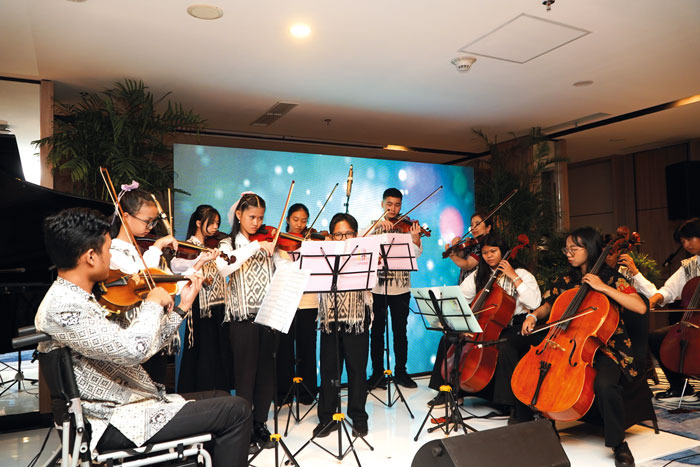
Sadly, in this day and age, classical music is still widely perceived as a privilege, most often accessed by those who can afford private lessons, personal instruments, and uninterrupted time to practise. However, in a country where still 11.8 percent of children still live below the national poverty line (Bappenas, UNICEF, 2023), classical music education is a distant dream for many.
Even here in Jakarta, the music lessons, instruments, plus the transportation required to reach classes is far beyond what many households can afford – with some children returning from school to care for younger siblings, or parents working irregular hours. In this reality, the idea of learning violin or cello, let alone joining an orchestra, becomes a near impossibility. So many potential talents lost to circumstance. This is precisely the issue Be Sharp was created to address.
Founded in 2018 by musicians Audrey Adiwana and Emily Kumalaputra, who themselves grew up with classical training, Be Sharp stands on the belief that music has shaped their lives and can shape the lives of others too. The founders saw their privilege as access and decided this access needed to be widened.
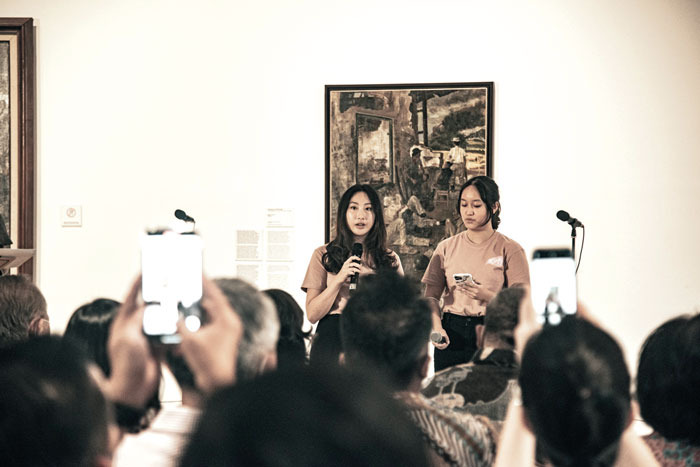
“Music changed our lives and taught us skills that no other activity could,” say the founding musicians. “That led us to look more closely at how music supports child development. That research confirmed what we had felt all along,” they added, sharing that embedded in journey of learning an instrument, children sharpen many other disciplines along the way.
Be Sharp operates through a quiet network of school partnerships, identifying children aged seven to fourteen from nearby, low-income communities who show both interest and commitment to learning music. Selection is careful as students and their parents or guardians are interviewed to ensure that motivation and circumstances align with the demands of sustained practice.
Those who are accepted enter the programme free of charge, with access to classical music education taught to SMAI standards, shared instruments within the school, and regular opportunities to perform in public concerts. When demand exceeds capacity, assessments help determine priority, with families asked to formally commit to supporting their child’s continued participation.
The programme does more than give instruments away. Each student receives a weekly private lesson, following the Suzuki Method, with their parents present to give consistency and emotional support. The pupils will also join group rehearsals, and periodic public performances that give real-world purpose to practice.
Learning classical music isn’t glamorous at first. Students often show up after a full school day, clutching borrowed instruments, fingers stiff and tentative. Lessons can be slow. Mistakes are frequent. The initial squeaks, the frustrated sighs, the finger cramps that aren’t erased by the promise of applause.
What happens instead is discipline. The children learn to sit still, to repeat scales, to listen not only to themselves, but to other players. They learn that progress requires persistence and patience. There isn’t always a noticeable improvement; they are subtle, like a note held longer, or a chord that finally matches another player’s. These increments matter. Over time, they become habits.
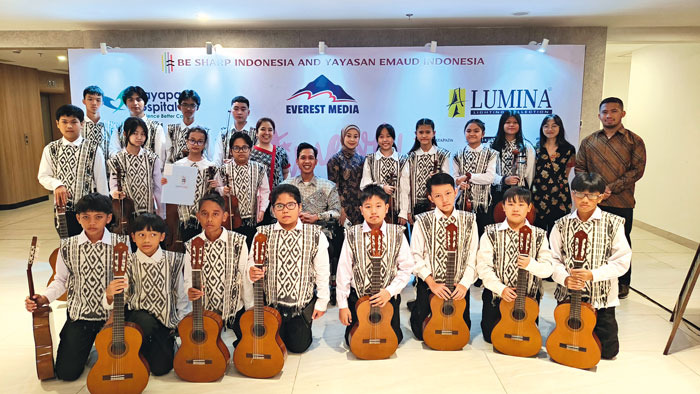
The new musical skills gained from these programmes are ultimately the main goal, but beyond that, for many students, the impact shows up off-stage. According to Audrey and Emily, they’ve noticed how some children carry their practice home purely out of eagerness and the desire to practice discipline. They talk about lessons with siblings, show off progress, or return home humming a melody.
“When children have access to music and the arts, you can see how it changes the way they think,” one founder reflects. “They become more focused, more patient, and more emotionally aware. They learn that it is okay to make mistakes, to try again, and to value progress over perfection. That kind of learning does not just make them smarter, it makes them more resilient and more connected to themselves and others.”
Running this free classical music programme depends largely on passionate volunteers: teachers who also study or hold jobs, founders balancing their own lives, staff juggling logistics. Behind every rehearsal and concert is a network of effort, from coordinating instruments, school schedules, to transport, and funding.
But these teachers are emboldened by the results, and by being part of a network that truly opens doors to previously unobtainable opportunities. And, as music lovers themselves, finding young talented individuals is certainly satisfying.
At Be Sharp’s latest concert, “Istimewa di Hati”, students stood in an orchestra, bows raised. Their instruments came from shared inventory, their preparation from borrowed time. As the first notes were played, the room settled into musical bliss.
Parents, teachers, and volunteers held their breath as they watched months of effort gather into a single performance. Maybe not every child on that stage will become a professional musician; what does endure is what they carry forward from the process itself. The discipline, commitment, confidence, and a strengthened sense of self, these are the elements detrimental in shaping a child’s path over time.
And if Be Sharp has proven that it is access rather than talent that has been the real barrier, what happens when more doors like this are open?
Be Sharp is active in both Jakarta and Bali, for more information visit besharp.id or follow @besharp.id on Instagram.