


As the meaning of leadership continues to evolve, many young people are asking one important question: How can they develop the character, skills, and vision needed to make a meaningful difference in the world? In an age of rapid technological change, globalisation and shifting social values, academic success alone is no longer enough. The future belongs to those who can lead with integrity, think across cultures, and act with clarity of purpose.
For today’s students, leadership is no longer confined to titles or positions. It is reflected in how we collaborate, how we communicate, and how we respond to challenges. The most respected leaders are those who build trust, listen carefully, and bring people together. They combine empathy with strategic thinking, and confidence with humility.
Recognising the need for this modern leadership style, the Ambassador’s Youth Diplomacy Academy (AYDA), an initiative led by the United States Embassy in Jakarta, aims to give aspiring young leaders the chance to hone their critical thinking skills, boost their confidence, and connect with their peers from across Indonesia.
The programme reflects the notion that leadership and diplomacy share the same pillars. At its core, diplomacy is grounded in thoughtful communication, principled negotiation, and cultural intelligence, equipping individuals to bridge differences and transform tension into opportunity. In a connected world such as ours, these qualities are not simply desirable; they are essential life skills.
Diplomats practise this form of leadership every day. Through negotiation, representation, and the careful stewardship of international relationships, they balance national interests with global responsibility. Their work is not only about resolving disputes but about building partnerships and shaping a more stable and cooperative future.
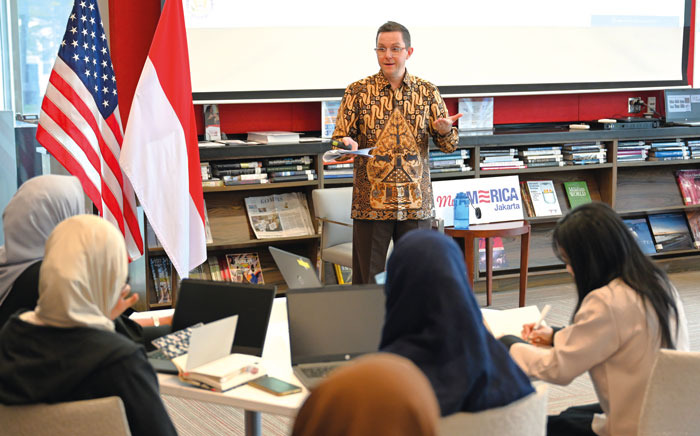
For Jason P. Rebholz, Minister Counsellor for Public Diplomacy at the U.S. Embassy in Jakarta, leadership has always been closely linked to education and service.
“I have been a diplomat for 23 years, having begun my career in 2002. I joined the United States Foreign Service shortly after graduating from university. The events of 11 September [2001] profoundly influenced my decision. I sat the Foreign Service examinations soon after those events. That moment shaped a central question that has guided my career: How can the United States engage more effectively and constructively with people around the world?” Rebholz tells NOW! Jakarta.
Over the course of his career, Rebholz has served in Korea, India, Indonesia, and Russia. He now finds himself back in Indonesia, a country for which he expresses deep affection. His professional journey underscores an important truth: leadership is rarely accidental; it is shaped by reflection, strengthened through experience, and guided by a commitment to something larger than oneself.
In preparing for the future, young people must not only decide on what kind of career they wish to pursue, but also what kind of leader they hope to become.
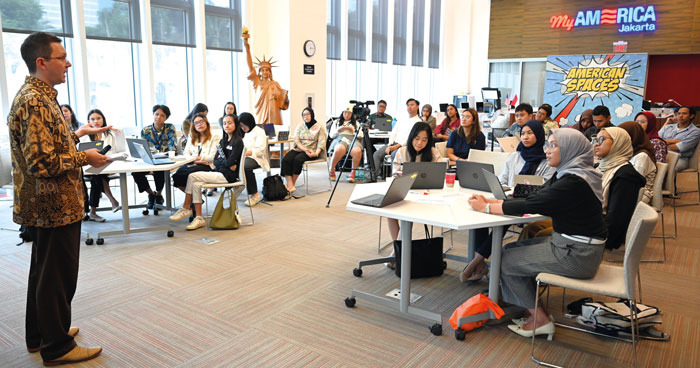
This belief in preparing young people for thoughtful global engagement lies at the heart of AYDA, whose six-month programme blends academic rigour with practical exposure and international affairs. Its curriculum is carefully designed to sharpen critical thinking, develop analytical writing, build self-confidence, and encourage cross-cultural dialogue.
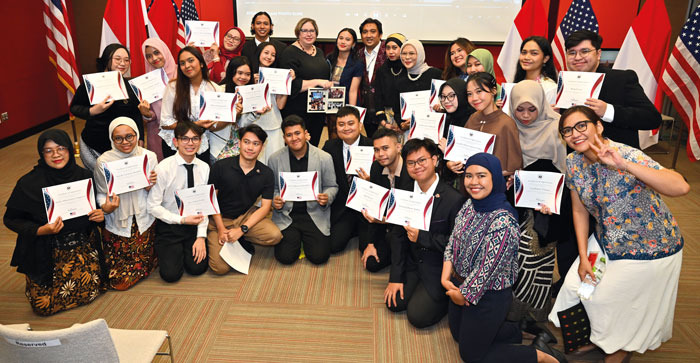
AYDA forms part of the broader U.S.–Indonesia Comprehensive Strategic Partnership, reflecting a shared commitment to strengthening ties not only between governments, but between people and institutions. Rebholz notes that while diplomatic agreements operate at a governmental level, they are sustained by educational exchange, mutual understanding, and long-term investment in young talent. They also make that partnership visible and meaningful, demonstrating how diplomacy can affect the everyday lives of ordinary people. AYDA received more than 1,100 applications upon its launch last year at MyAmerica Jakarta. Just 33 finalists were chosen, all of whom were university students or recent graduates. The selection process, including essays, a personal statement, and analytical writing, reflects the programme’s educational rigour as a formative intellectual and professional experience.
“These are among the brightest and most talented young Indonesians I have had the privilege to meet. We feel incredibly fortunate that so many are eager to take part. Participants are typically aged between 18 and 25, comprising both current university students and recent graduates,” Rebholz says. “Those most drawn to the programme tend to have a strong interest in international careers, whether in international business, foreign affairs or diplomacy.” The limited number of participants is intentional, ensuring that each benefits from a highly personalised, hands-on experience and understands the key insights in depth. They gain direct access to American diplomats, as well as structured seminars, masterclasses, and experiential learning opportunities. Upon completion, they become part of a growing alumni network and may contribute to supporting future cohorts.
The program’s aim is simple: to help participants understand why the Indonesia-United States Comprehensive Strategic Partnership truly matters, “not only to our governments, but to our people.”

“The United States of America-Indonesia relationship is extremely deep. We work together on so many issues because the U.S. and Indonesia are two large democracies with so much in common. We elevated our relationship to the highest possible level, showing just how important the U.S. is to Indonesia and Indonesia is to the U.S.,” Rebholz explains. “But underlying all that are the people-to-people relationships, because we couldn’t have any government-to-government partnership without connections between the Indonesian people and American people, and Indonesian institutions and American institutions. That’s really what the foundation of this program is.” AYDA combines core seminars and masterclasses with skills-based workshops, coursework, and educational visits. Foundational sessions feature the heads of mission from the Embassy of the United States of America, Jakarta, and the U.S. Mission to ASEAN, who provide an overview of the United States’ relationship with Indonesia and explain why the partnership is of strategic importance.
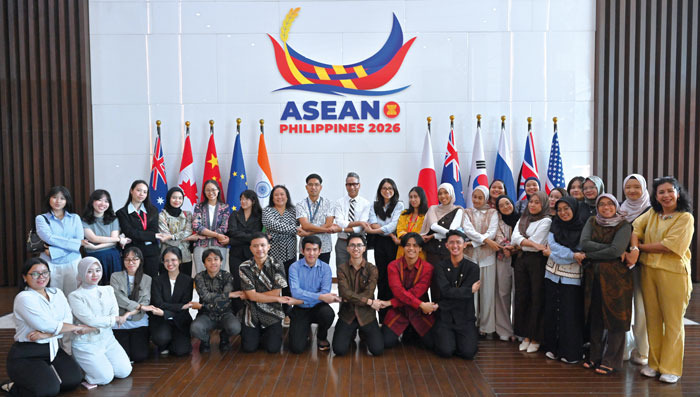
Educational visits to institutions such as the ASEAN Secretariat and Indonesia’s Ministry of Foreign Affairs complement the academic components of the course, offering first-hand insight into the practical workings of regional and international diplomacy.
“AYDA is a really creative programme because it brings together young people who share a strong interest in international affairs and diplomacy, giving them the opportunity to learn from one another while deepening their understanding of the United States-Indonesia relationship,” Rebholz elaborates. “They offer us valuable perspectives on Indonesia, enabling us to continue strengthening and developing this important partnership. In turn, they carry these insights forward whether as future diplomats, business leaders, academics, chief executives, ministers, or even presidents. Many of the young people we are working with today will go on to become the leaders of this country.”
In offering advice to the younger generation, he underlines that while technology continues to transform the way we live and work, creativity and adaptability remain among the most essential qualities of leadership.
“To any young person who’s interested in serving their country as a diplomat, it’s a wonderful career!” Rebholz adds.
At its core, AYDA affirms that education should prepare students not only for their careers but for responsibility, because in an interconnected world, leadership demands curiosity, cultural awareness, and moral courage. The annual initiative’s 2026 cohort runs from January to June, continuing its commitment to nurturing talent, strengthening bilateral understanding, and preparing participants for future roles on both the national and international stage.
For more information:
@usembassyjkt
@my_america_jakarta