


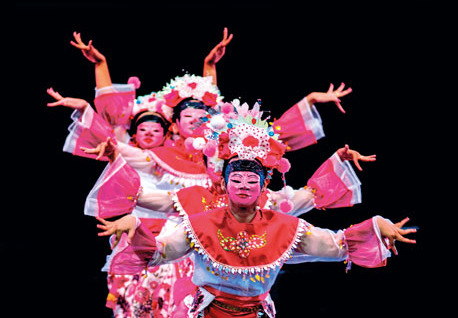
Among the diverse mask traditions of the Indonesian archipelago, topeng Betawi stands out as one of the oldest performing arts of Jakarta’s cultural heritage. Closely associated with Lenong Topeng, a traditional Betawi folk theatre, these masks are not merely decorative elements, but essential storytelling devices that bring characters and narratives vividly to life.
Born from the oral traditions of the Betawi people, topeng Betawi has been passed down through generations as a living expression of community identity. Its origins can be traced to the Topeng Babakan tradition of Cirebon, gradually evolving during the era of the Dutch East Indies in Batavia. What once began as a spiritual practice served as a bridge between the seen and unseen worlds, connecting human experience with deeper symbolic realms.
Long before it reached formal stages, topeng Betawi thrived among the people. In the early 20th century, it gained wider recognition through the Betawi Pinggir (Betawi Ora), communities on the outskirts of the city. Performed by travelling village buskers, the dance moved from one kampung to another, bringing stories, humour, and subtle social commentary into everyday life. These grassroots performances also absorbed influences from surrounding Sundanese culture, shaping the art form’s distinctive character.
Some historical accounts attribute the formalisation of this tradition to two Betawi artists, Mak Kinong and Kong Djioen, around the 1930s. At the time, performances were simple yet atmospheric, staged on open ground and illuminated by three-pronged oil lamps. A modest costume cart stood at the centre of the performance space. Though humble in setting, the experience was immersive, drawing audiences into a world where characters came alive through movement, rhythm, and mask.
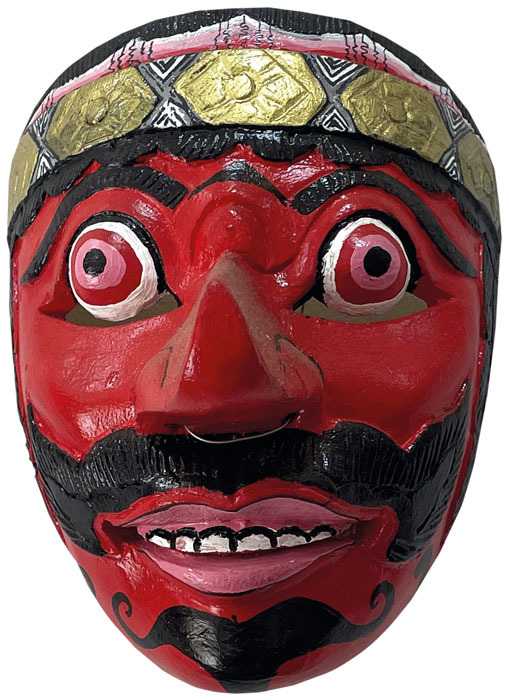
As Jakarta evolved, so too did topeng Betawi. By the 1970s, it had transitioned to formal stages, becoming a recognised performance art. Yet even within this more structured format, it retained its vibrant spirit, accompanied by the rhythmic sounds of traditional Betawi instruments such as such as kromong tiga (three musical instruments of gambang kromong), kempul (smallest hanging gongs), kecrek (tambourine), rebab (a two-stringed bowed instrument), large drum etc.
At the heart of the performance lies the mask itself. In Lenong Topeng, each mask represents a distinct character, ranging from refined and noble figures to comic and exaggerated personalities. While the masks may appear static, it is through the dancer’s subtle gestures and expressive movements that they are brought to life.
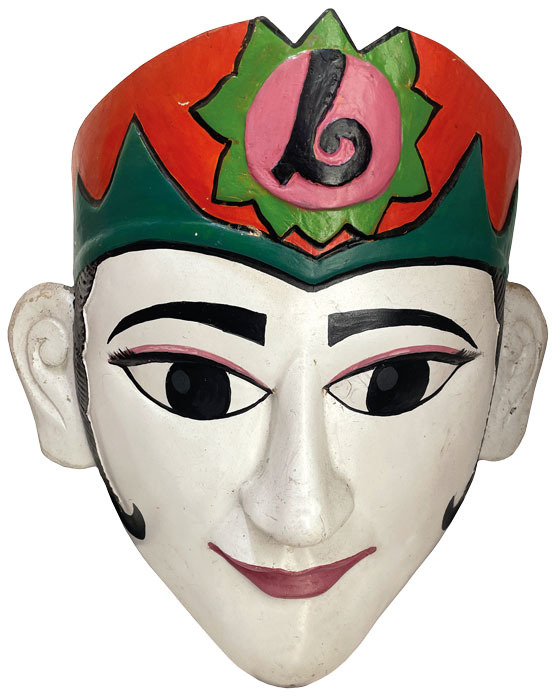
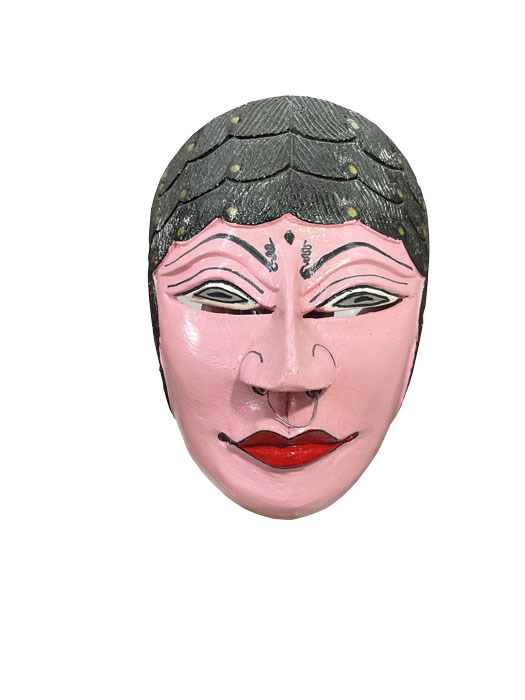
Typically, three primary masks are featured in the performance, each symbolising different aspects of human nature. The white Panji mask represents gentleness and grace. The pink Samba mask embodies liveliness, agility, and flirtation. Finally, the dark-red Klana mask, often adorned with a thick moustache, signifies strength, intensity, and anger. Together, these masks form a narrative cycle, reflecting the complexity of human emotion and character.
Today, Topeng Betawi remains more than a performance, it is a cultural memory in motion. Its performances have moved beyond village settings, becoming a prominent feature at major cultural events, arts centres, official state ceremonies, and international showcases.
In 2016, Topeng Betawi was formally designated as an Intangible Cultural Heritage of Jakarta Province. It is recognised within the performing arts domain, alongside lenong, by the Ministry of Education, Culture, Research, and Technology.