


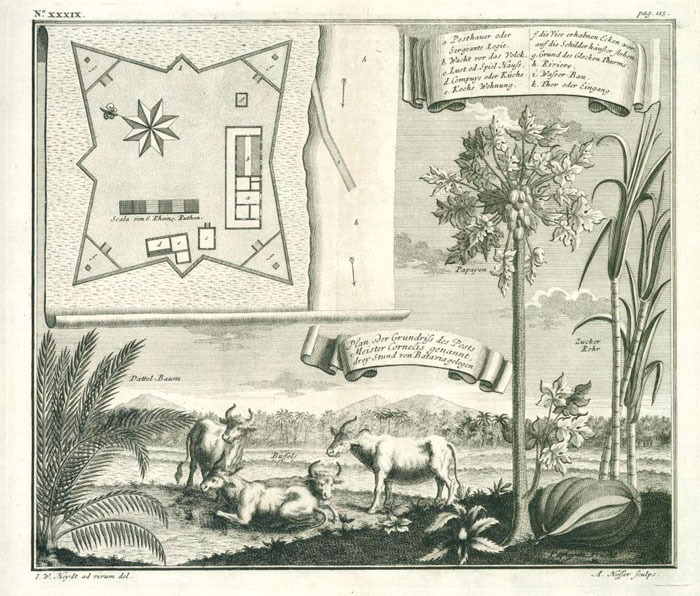
Once known as Meester Cornelis, Jatinegara evolved into a key satellite city alongside Kebayoran Lama, supporting the growth of old Jakarta. Today, the district remains an important centre of commerce and administration in the eastern part of the city. Its charm lies in the quiet coexistence of eras, where colonial-era architecture and historic places of worship stand alongside modern buildings.
Though hints of its history remain standing today, these don’t quite speak to just how storied the lands of this east Jakarta area actually are. Let us take you back to the very beginning.
Defeated, the Banten Sultanate, led by Prince Jayakarta (AKA Prince Ahmend, or Wijayakrama), retreated inland and eastwards, deep into the forests. It is here they established a ‘settlement in exile,’ giving it a defiant name of resistance: Jatina Negara, where the community there became known as Jatinegara Kaum, the ‘peoples of the true state.’ A neighbourhood which still exists to this day in the area.
Though in constant watch of the Dutch, the settlement slowly grew and only became of importance many, many years later when a Portuguese settler by the name of Cornelis Senen entered the picture.
A Portuguese Legacy
In 1621, the VOC took control of the spice-rich Banda Islands. They defeated the occupying Portuguese and carried out a brutal massacre of the Bandanese people as they did. Those who survived were captured and exiled to Batavia (Jayakarta only two years prior!) Among the captured was Cornelis Senen, who was of Portuguese-descent and lived on Lontor Island (Banda Besar). Once in Batavia, Cornelis was freed thanks to his background and ability to speak Portuguese, becoming part of the mardijker community of emancipated slaves.
Cornelis built a positive reputation among both the mardijker and the VOC. He served as a Christian teacher to the Bandanese, and his ability to speak and translate Portuguese and Malay made him invaluable to the VOC administration as well. His wisdom and piety granted him role and responsibility, as well as the honorific of Meester — Dutch for master or teacher.
In 1656, Cornelis purchased land in the area known as Jatina Negara, and the area was thus named after its new landowner: Meester Cornelis. Following his death in 1661, his land in this area was purchased by the VOC, but his name was immortalised as the designation of the region he had helped to shape. Meester Cornelis thus became a lasting tribute, reflecting the high regard in which he was held by the community.
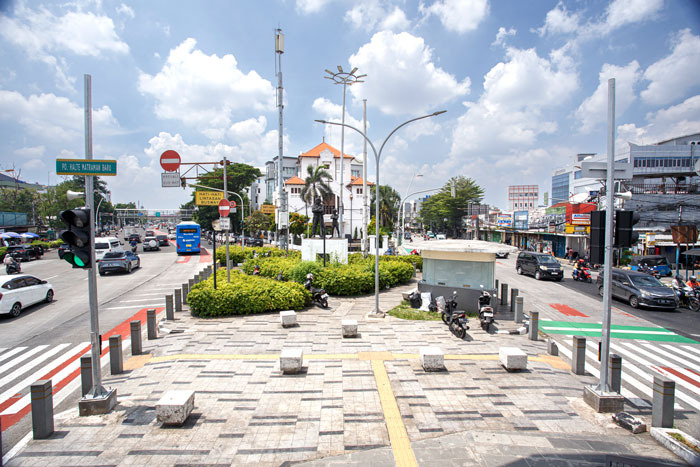
In the nineteenth century, Meester Cornlis became an important satellite city of Batavia, with its strategic location making it a key administrative and military centre. For many years it ran as an autonomous regency (Regentschap Meester Cornelis), an administrative region encompassing what we know today as Bekasi, Cikarang, Matraman, Tebet, Kramat Jati, Mampang, Pondok Gede, Pasar Rebo, Pancoran, and Kebayoran. It wasn’t until 1 January 1936 that it was ‘absorbed’ under the jurisdiction of Gemeente Batavia (gemeente meaning municipality), or the Greater Batavia region.
Meester Cornelis remained the region’s name until the end of Dutch occupation. When the Japanese took over Batavia there was a broad effort to remove traces of Dutch colonial influence and the area’s name was returned to ‘Jatinegara’. But some echoes of the past remain: bus conductors in East Jakarta will still call out ‘mester, mester’, in reference to the Jatinegara stop; and Pasar Lama Jatinegara is still referred to as Pasar Mester by some. Some of the unique linguistic legacies left behind…
Following various changes in name and administrative status, Jatinegara has evolved into a significant urban centre in East Jakarta and the wider Greater Jakarta metropolitan area. Its historical role as a former satellite city of Batavia, combined with its function as a major transportation hub, highlights its enduring importance in regional connectivity and trade. The presence of diverse communities, including long-established Chinese and Arab populations as well as Betawi people, further enriches its melting pot atmosphere
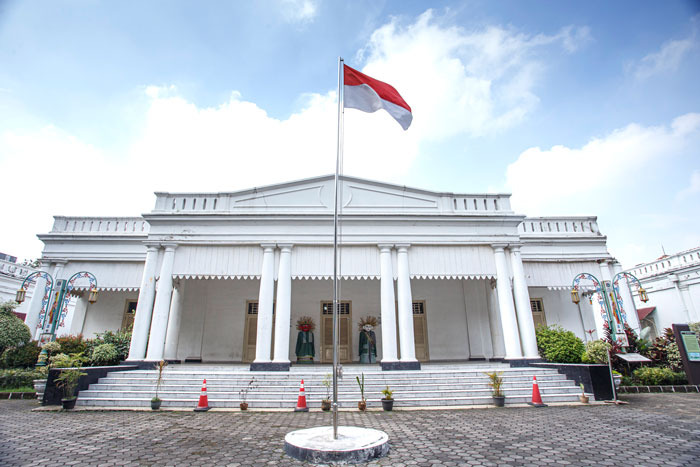
heritage landmarks in Jatinegara. Photo by Des Syafrizal.
Remnants of the Past
Present day Jatinegara is the result of many centuries: the combined legacies of Prince Jayakarta, Cornelis Senen, the VOC and Dutch colonial government have shaped the character and landscape of the area. Evidence of this layered past are still seen today, giving the area its deep-rooted history, now entwined with its modern surroundings.
One notable and visible example is the Benyamin Sueb Museum and Park. This neo-classical structure, distinguished by its twin pillars, triangular pediments, and symmetrical façade, stands on what was once part of the estate of Cornelis Senen. However, Cornelis’ own residence was far humbler: this grand, French Empire-style mansion was only built in 1811, a construction ordered by Governor-General Herman Willem Daendels.
During the Indonesian struggle for independence, it later served as the headquarters of the Laskar Rakyat Jakarta (Jakarta People’s Army), before becoming the Kodim 0505 Building, a symbol of the area’s military history. In 2018, the building was transformed into the Benyamin Sueb Museum, honouring the legacy of its namesake Betawi cultural icon.
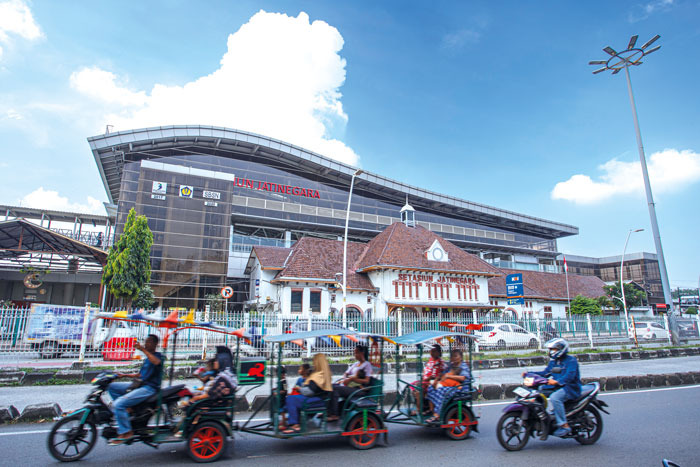
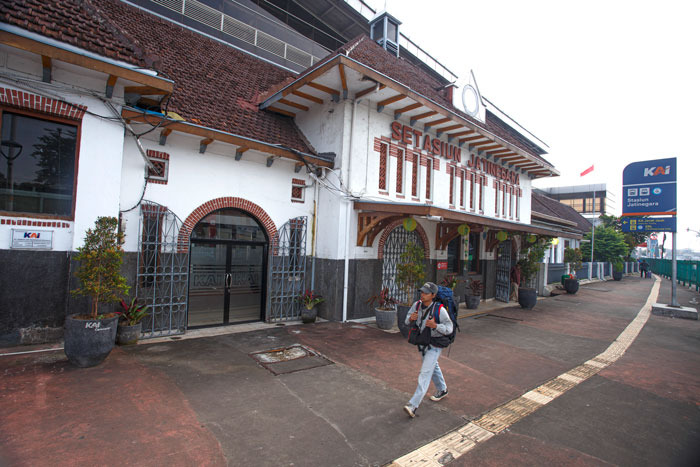
Just across the road, the old Jatinegara Station stands proudly in front of its modern successor. Originally known as Meester Cornelis Station, it was built in 1909 by the state railway company, Staatssporwegen (SS). Designed by S. Snuyf, the head of the Department of Public Works of the Dutch East Indies, the architectural style differs greatly from the imposing colonial structure across the street, reflecting the evolution of more localised designs to suit the environment and climate. The station was part of a major rail infrastructure expansion of the time, predominantly the Batavia Zuid (now Jakarta Kota Station) to Bekasi rail network, which was a significant factor in the growth and commercial importance of the area. Today’s national railway company, KAI, has designated the old station building as a cultural heritage site.
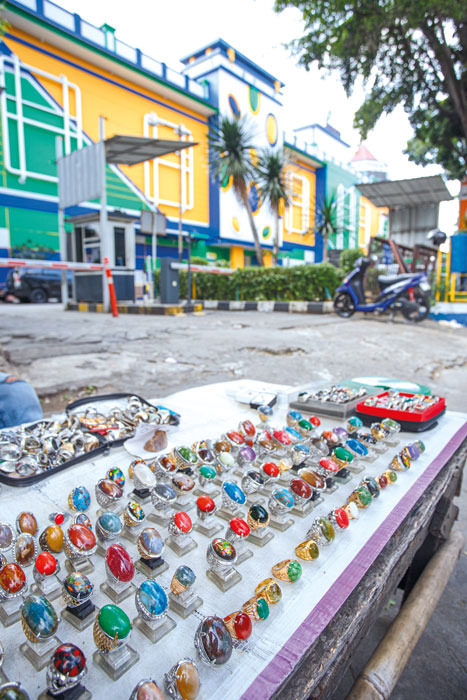
Directly across the station, the Rawa Bening Market draws in shoppers for its particular merchandise: gemstones. Though not historical, this bustling commercial hub is one the city’s more prominent gemstone markets. Nearby, other historical and cultural spots can be found through the narrow alleys, such as the Bio Shia Jin Kong Temple – also known as Dharma Kumala Temple – located on Jalan Bekasi Timur IX, Gang 1, Rawa Bunga. The temple’s name refers to Kongco Shia Jin Kong, revered in Chinese belief as the god of medicine. Historically, the temple was known for its practice of traditional healing, which became a distinctive hallmark of the monastery. Although these healing practices have since been discontinued, the temple continues to serve as a place of worship for the Buddhist community.
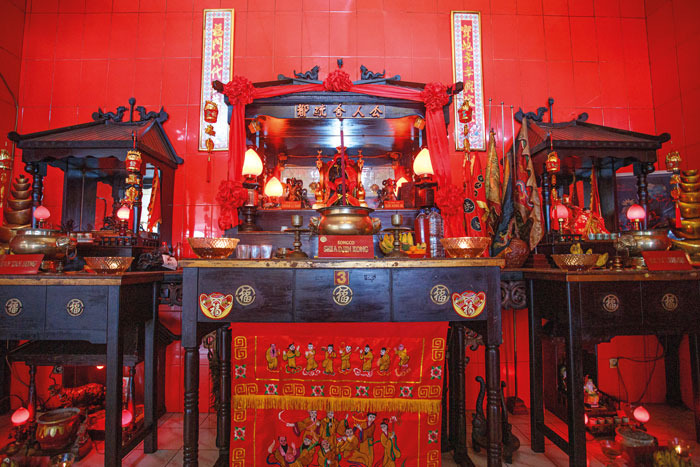
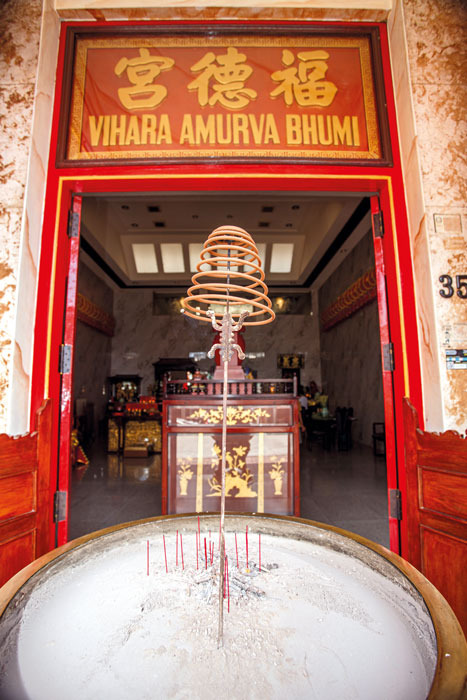
Another religious destination is Amurva Bhumi Temple, situated within Pasar Lama Jatinegara (old market or Pasar Mester – not to be confused with Pasar Jatinegara). This temple is recognised as the oldest in East Jakarta and the second oldest in the capital after Jin De Yuan Temple on Petak Sembilan, Glodok. The temple has stood for more than three centuries and is dedicated to Pak Kung Lao Ye, a deity believed to represent prosperity and success in trade. Its location near a busy marketplace is particularly fitting, as many traders visit to offer prayers in the hope of achieving commercial success.
Pasar Lama Jatinegara itself is among the oldest and most historic markets in Jakarta, dating back to the 1770s. A visit to the market reveals a rich tapestry of communities and ethnicities interacting in a lively, dynamic setting. Many people come not only to shop for daily necessities but also to seek out some now legendary eateries, including: Bis Kota coffee; traditional pastries at the longstanding Gelora Bakery; and classic dishes at Gado-Gado Encim.
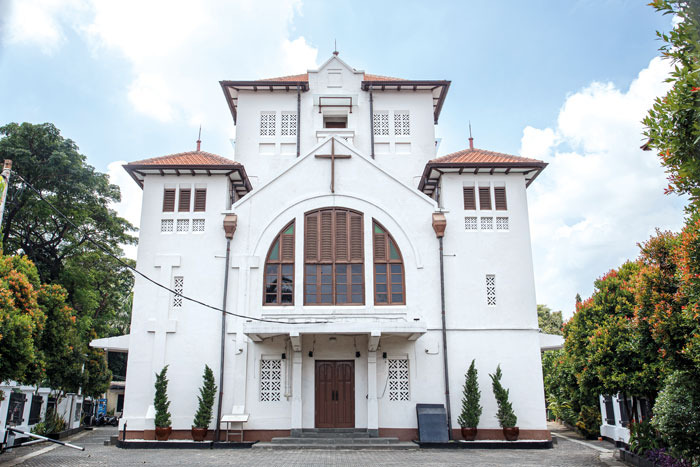
Following the main road (Jl. Matraman Raya), one comes to an important junction. Here stands GPIB Koinonia Jatinegara, widely regarded as the earliest church in eastern Batavia, built around 1889 when it was known as Bethelkerk. It was renovated again between 1911 and 1916, but architecturally, it features a vernacular style with European influences, including a Dutch gable roof and a Greek cross within the pediment.
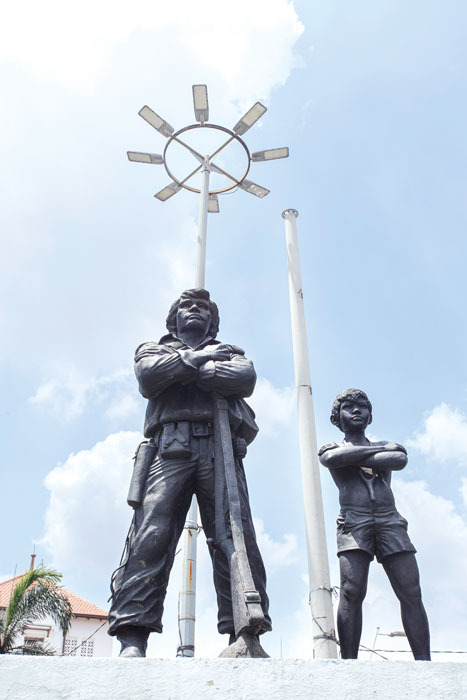
A very unique moment happens here every year – ironically, on Eid al-Fitr. The surrounding is where public Eid prayers take place, which are backdropped beautifully by the church’s architecture. A charming reflection of Jakarta’s religious harmony. In front of the church stands the Monumen Perjuangan Jatinegara (Jatinegara Struggle Monument), erected to commemorate the many events and sacrifices of the people of East Jakarta in their fight for independence.
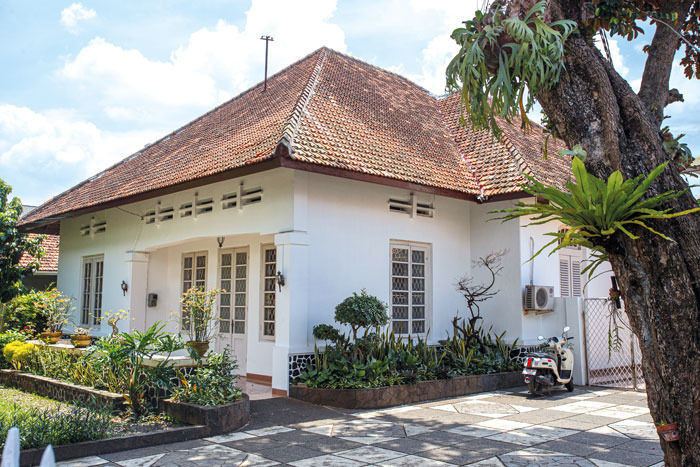
Across the church and monument square is the Urip Sumoharjo Housing Complex, where one can witness the classical architectural character of Indisch-style homes. Formerly known as Generaal Staallaan, this neighbourhood features residences dating back to the early twentieth century. It was once inhabited exclusively by high-ranking Dutch officers and individuals who had rendered distinguished service to the colonial administration – now named after Urip Sumoharjo, a national hero and military pioneer who helped lay the foundations of discipline within the Indonesian National Armed Forces (TNI).
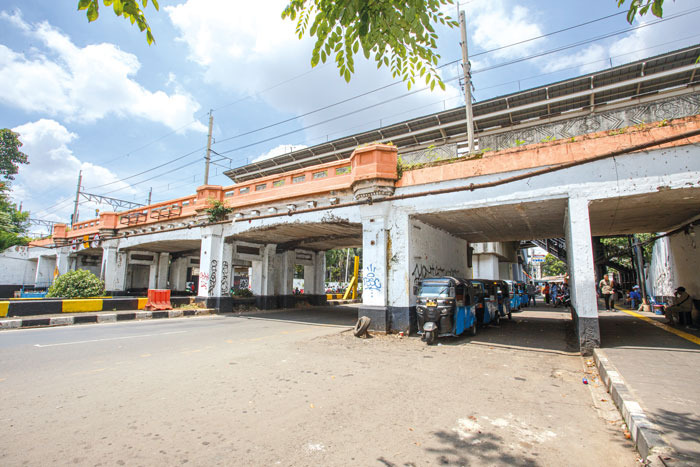
Continuing north on the main road, a significant but not immediately obvious piece of colonial infrastructure stands overhead, melded into new developments. It is the Meester Cornelis Viaduct (now Viaduk Matraman), which served as a railway crossing to Matraman Station. This bridge was built in 1918, coinciding with the opening of the railway line from Manggarai Station to Jatinegara Station. Now defunct and overgrown, the busying crowds that rush through the Commuter Line to-and-from Matraman Station may not know that a piece of colonial history is part of their daily lives.
In many ways, Jatinegara is more than just a historical district, it is a place where memory continues to live in language, architecture, and everyday life. From the enduring call of “Mester” echoing to the layered streets shaped by centuries of change, the area quietly preserves its past while moving forward with the rhythm of the present. As Jakarta continues to evolve, Jatinegara continues to hold traces an old identity, of what was once the home of the “people of the true state.”