


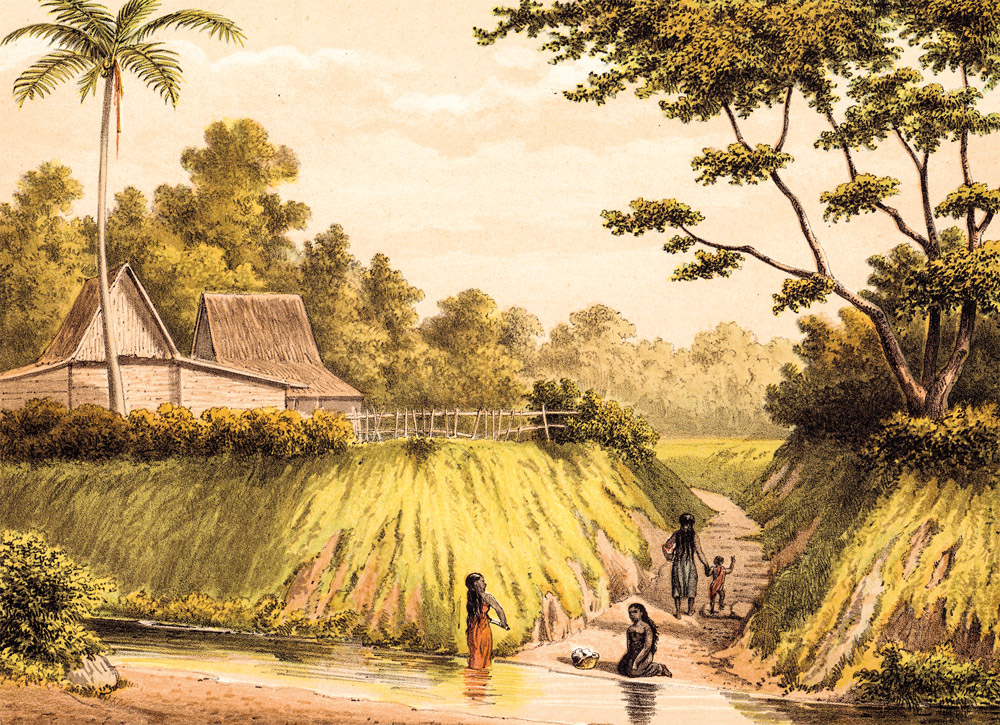
Bathing and cleanliness hold a significant place in Indonesian society, closely connected to the country’s tropical climate, religious beliefs, social customs, and overall well-being. Bathing is not merely a hygienic practice but is deeply rooted in spiritual, communal, and cultural traditions.
When Europeans arrived in Indonesia from the 16th century onward, they were struck by the frequency with which Indonesians bathed—sometimes two or three times a day, which contrasted sharply with European habits at the time. A wipe, instead of a wash, was often the prevailing European standard for cleanliness at the time. For early Western printmakers and photographers, bathing scenes became a captivating subject, offering a glimpse into the everyday rhythms of life in the old East Indies. In this article, Sake Santema from Indies Gallery showcases a few of his antiques depicting bathing in Indonesia.
A Bridge Between the Sacred and the Everyday

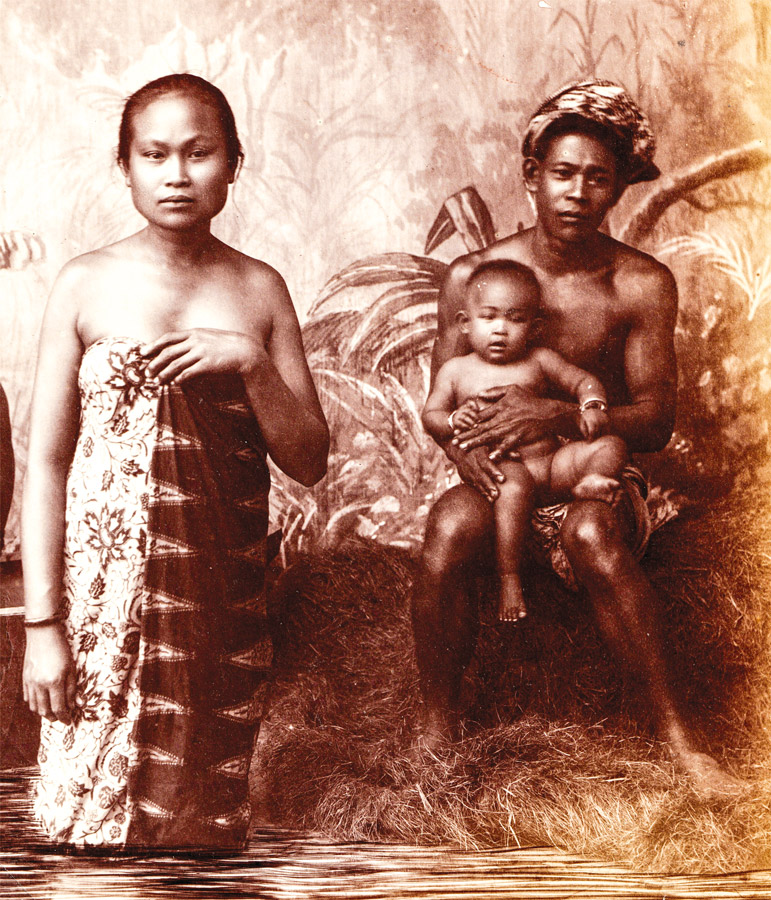
From ancient springs to modern city spas, the Indonesian approach to bathing is a holistic practice that weaves together physical health, spiritual purity, social respect, and cultural pride, connecting past and present in daily life and celebrations. In Java and Bali, rivers and springs are sacred spaces for purification. Not bathing before visits or ceremonies is often considered disrespectful. Three rituals of bathing that are still being practised are described below:
Melukat – The Balinese purification ritual is a spiritual cleansing ceremony intended to remove negative energy and restore balance to both body and mind.
Siraman – In Javanese culture, bathing plays a role in key life events, such as wedding preparations, where the siraman ceremony involves family members blessing the bride and groom with water for purification.
Wudhu – In Islam, the predominant faith in Indonesia, ritual ablutions such as wudhu are performed before prayers and after certain life events, highlighting the relationship between physical and spiritual cleanliness.
Natural Ingredients for Cleansing
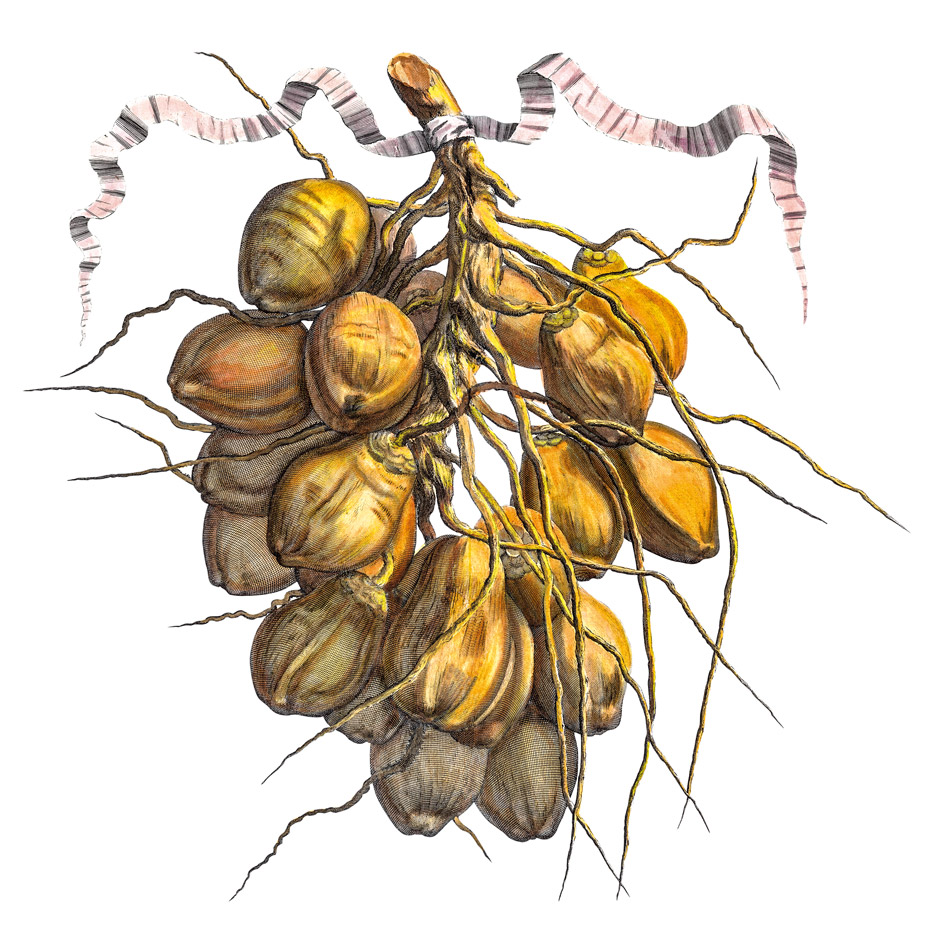
In many Southeast Asian cultures, they used natural alternatives to soap long before Europeans adopted it. Traditional ingredients like lerak (soapberry), coconut oil, jasmine, and other fragrant plants have been used for centuries in traditional cleansing rituals. The Indonesian word for soap, “sabun,” originates from the Arabic word sābūn, which traces back to the Latin word for soap, sāpō. It likely entered through Arabic or Portuguese traders, a linguistic journey across cultures.
Coconut oil boasts a 4,000-year history, originating in Southeast Asia and the Indian subcontinent, where the coconut palm was hailed as the “tree of life.” Coconut oil—known as “minyak kelentik” in Indonesia—served multifaceted roles: treating skin ailments, protecting hair against sun and salt, and playing a part in religious ceremonies.
As European traders introduced it to the West during colonial times, it sparked a global craze. By the 20th century, coconut oil had become a commercial favourite, used in soaps and cosmetics, cherished for its stability and cleansing powers.
Image above: An early print of a coconut tree, labelled in Latin, Malayalam, Arabic, and Sanskrit. Published in the year 1678 in the Netherlands, in a comprehensive record of the plant’s many uses. (Sake Santema Collection)
The Evolution of Spa and Salon Culture
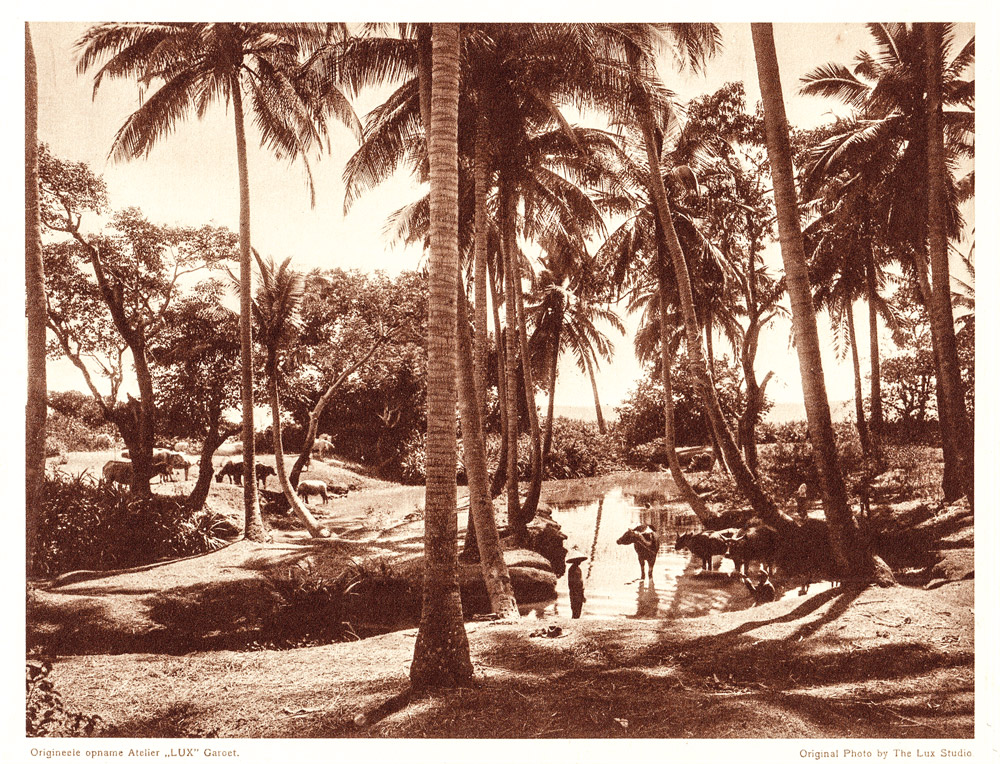
The presence of spas and salons in almost every street is a hallmark of Indonesian infrastructure, the longstanding appreciation for bathing has led to a thriving spa and salon industry that blends traditional and modern approaches.
Treatments such as the Javanese lulur body scrub roots in ancient Javanese royal courts, where it was part of pre-wedding rituals and spa treatments for nobility, symbolising purity and beauty. The blend that typically includes turmeric, rice powder, sandalwood, and fragrant flowers, aiming to soften skin and evoke a sense of calm, are now accessible to people from all walks of life, and a popular wellness treatment, blending tradition with modern spa luxury. Other popular treatments include flower baths, herbal compresses, and aromatherapy, all inspired by time-honoured rituals and believed to offer physical, emotional, and spiritual benefits.
Bathing remains a vital practice that connects the past with the present and shapes the rhythms of daily life and special celebrations.
The antiques in this article are available for purchase through Indies Gallery, while high-quality reprints can be found at Old East Indies.
Indies Gallery & Old East Indies
Jl. Gambuh No.17, Denpasar, Bali
www.indiesgallery.com