


As the new Principal of BINUS SCHool Simprug, Aaron Wise steps into the role with a focus on people: students, teachers, and a community moving with shared purpose. In a conversation with NOW! Jakarta, he tells us how BINUS’s Visible Learning philosophy, wellbeing, technology, and the wider BINA NUSANTARA ecosystem come together to shape a school that is both people-first and future-ready.
NJ: BINUS SCHOOL Simprug is a large school. How do you create a strong sense of community in such a big space?
AW: It has to permeate throughout the whole school. Every employee needs to understand why they are here, from the guards who greet people at the gate to the teachers in the classroom. A strong community depends on caring, professional teachers who recognise that every student is an individual and should be treated as such.
NJ: Visible Learning is often described as making learning clearer for students. What does that look like at BINUS SCHOOL Simprug?
AW: Visible Learning helps students take ownership of their learning. First, students need to know what they are learning from the beginning of the lesson. Second, they need to understand what they must do to be successful. Third, they need to know why they are learning it.
It should not feel like random knowledge being pushed into their heads. A child should be able to say, “I understand why I’m learning this, because it will help me do wonderful things in the future.” When learning is personalised in this way, students own it, become responsible for it, and want to succeed because they understand why it matters.
NJ: Wellbeing and inclusion are now central in schools. How do you make sure students feel genuinely known and supported while still being challenged to grow?
AW: There are two important sides to that. First, you need very caring teachers. Since coming to BINUS SCHOOL Simprug, I have been impressed by how much the teachers genuinely care about their students. They want the best for them and invest time and energy into making sure they are doing well academically, emotionally, and socially.
The second side is having systems and processes in place so that no student falls through the cracks. Some students’ needs are very visible, while others may be quiet or withdrawn. We need to make sure every child receives the care, recognition, and support they need to thrive.

NJ: What is the advantage of BINUS SCHOOL Simprug’s fully aligned International Baccalaureate (IB) journey from early years to graduation?
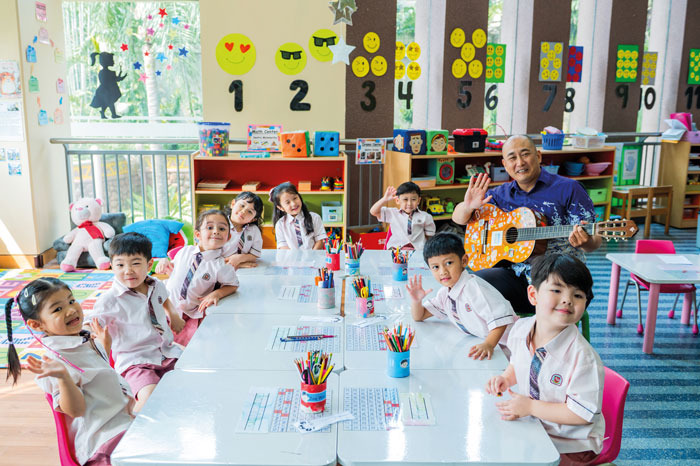
AW: Parents need to understand that these are not completely separate programmes. The early years flow into the rest of the school. That consistency of philosophy, shared understanding, and way of learning is very powerful for a child.
It makes reflection and curiosity natural from an early age. Students who continue from EY1 through to graduation develop a strong understanding of how to learn, how to see the world, and how to identify what they want to become.
NJ: The Journeys Programme sounds like one of the school’s key differentiators. What does a strong student journey look like?
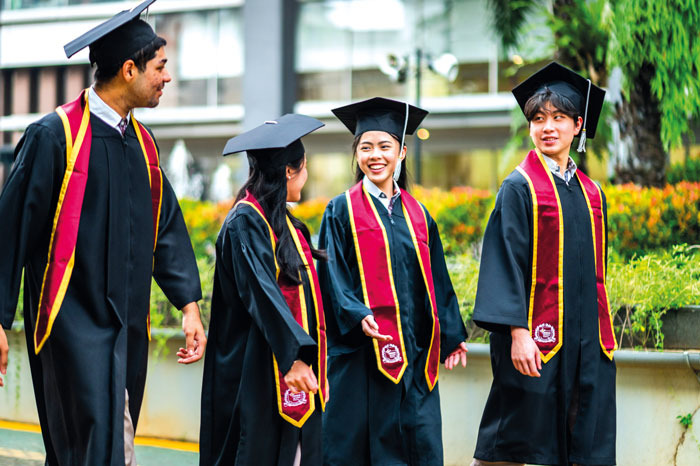
AW: The Journeys Programme reflects what universities are increasingly looking for in students. The best universities no longer look only at academic results. Many students can achieve strong grades, but that does not always mean they have the skills, mindset, or practical experience to succeed at university and beyond.
Our Journeys Programme helps students show a more holistic set of skills. It begins in Year 6, when students explore different areas and discover what feels meaningful and exciting to them. As they move through the grades, the pathway becomes more specialised.
For example, a student who wants to become a doctor may take on specialised projects in medicine, strengthen their science, and deepen their understanding. They can then graduate with certifications and experiences that show they can apply their knowledge practically, demonstrate leadership, and perform under pressure.
NJ: Every school now talks about future readiness, innovation, and technology. What does that mean for BINUS SCHOOL Simprug?
AW: Future readiness is a mindset rather than a capability. Some schools think that if they teach students how to use Google or if they teach them about AI, then they are future-ready. But technologies change.
To be future-ready is to have a mindset of curiosity. It means being able to say, “When new technology comes along, I will learn about it, understand it, and judge whether it is effective or not.” For us, future readiness is about developing higher-level skills through reflection and goal-setting. Students should be able to embrace new technology, understand what it may mean for the future, judge it critically, and use it responsibly.
NJ: How does the wider BINA NUSANTARA ecosystem benefit students?
AW: It directly benefits our students. We have had students as young as primary school working with professors at BINUS University on personal projects, giving them access to some of the best minds in the country. We have university lecturers come into the school and work with our students. Access to university-level expertise here in Indonesia helps inspire them and allows them to see their learning at the next level.
To learn more about BINUS SCHOOL Simprug and its programmes, visit simprug.binus.sch.id
Jl. Sultan Iskandar Muda Kav. G-8, Kebayoran Lama, South Jakarta
+62 804 150 0501
@binusschool_simprug