



The changing scent is unmistakable. In the past five years, Indonesia’s perfumery landscape has transformed from a somewhat obscure niche to a thriving creative industry. Fuelled by a new generation of consumers and a wave of independent brands, the archipelago is now home to one of Southeast Asia’s most dynamic and fast-growing fragrance markets.
Until recently, Indonesia’s perfume industry remained overshadowed by global luxury imports. Today, it is undergoing a major shift. According to Euromonitor (May 2025), fragrance sales are booming both in retail and online, driven by affordable price points and a rising middle class. More Indonesians now own multiple perfumes, and the appeal extends beyond traditional female buyers. Men are increasingly participating in fragrance purchasing, supported by targeted marketing and broader product availability.
The pandemic was a turning point. While 2020 saw a temporary dip in revenue, local perfume transactions nearly doubled by September that year. According to Insight Factory by SOCO (2024), Gen Z fragrance purchases surged by 304%, and millennials followed with 160% growth. This consumer enthusiasm was mirrored by a flood of new brands, many of which emerged during lockdowns and found fertile ground in Indonesia’s expanding digital economy.
Parfumerie RATS, a curated perfume boutique in Jakarta’s lifestyle hub Row 9 in Blok M, emerged in mid-2025 out of increasing consumer interest. In an interview with NOW! Jakarta, co-founder Raynard Randynata noted that “within the first month, we had daily requests from new brands across Jakarta, Bali, Jogja, and Bandung. It was overwhelming.” He describes their shop as offering a curated multisensory experience, where customers can explore 20 brands in depth.
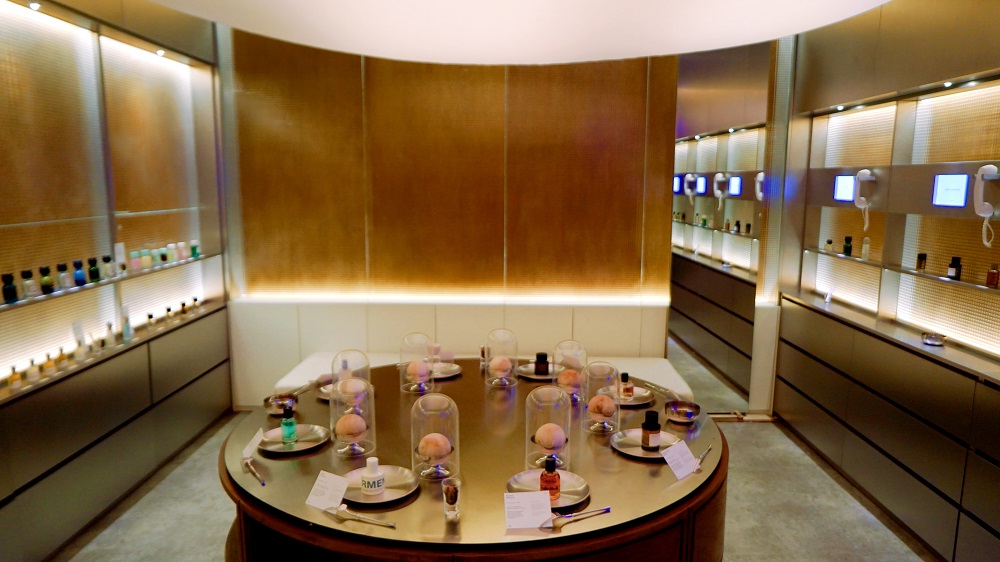

“We want the store to be not just a point of sales, but more… beyond the senses, we also want to educate customers a bit,” Raynard shares. With scent questionnaires and guided consultations, the goal is a personalised experience. “Perfume can be very personal, and sniffing a hundred scents can be overwhelming. So, we try to help them filter and find something they really connect with.”
Their fastest-moving price point? IDR 200,000 to 300,000, proving that value-driven local brands are reshaping buyer expectations. “Customers realise that with curated products, it can still be affordable. The stigma shifts, and you can get quality products without spending too much.”
Scent as Expression

Perhaps, the interesting drive of this wave is that it’s not just volume and price, but also storytelling. Brands like Scents of Pluto have leaned into experimentation and identity. Founded in 2023 by Steven Yoshi, Scents of Pluto focuses on “unique but wearable” creations. Recent releases include a banana sambac blend, a barbershop scent, and their bestseller ‘Cotton Juniper’ described as crystalline and enduring.
“We realised that if we only played it safe, we’d become just another brand,” Steven explained. “People come in shocked: ‘Perfume can smell like this?’ But they leave saying it works. That’s our space, experimental, but still loved.”
Beyond concept, fragrance is becoming a tool of self-expression. Gen Z in particular is driving this shift, favouring unique profiles and collecting scents as part of identity. According to Steven, most customers now own three or more bottles, often switching between local and international brands. Many have outgrown body mists and jumped directly into fine fragrances, seeing scent as both functional and expressive.
The Archipelago’s Natural Advantage
This rise is not built solely on branding. Indonesia produces over 80% of the world’s patchouli, a prized fixative in high-end perfumery. Indonesian jasmine, vetiver, and sandalwood also feature prominently in local blends. Yet, a structural gap persists. While rich in raw materials, much of the essential oil supply is still exported before being refined.
Steven notes, “Most players here are brands or manufacturers. The ones processing raw oils into perfume compositions are still mostly overseas. It’s a missed opportunity.”
With artisan distillers slowly emerging and collaborations between local perfumers and international experts growing, the gap could narrow in the coming years. For now, brands like Earthora incorporate indigenous elements with their stone bottle cap, carved from a real Indonesian mountain rock, is one tactile reminder of fragrance as a cultural artefact.
Despite its momentum, the industry faces challenges. Dupe culture remains widespread, with some consumers still seeking low-cost imitations over original creations. International competition is also intensifying with Middle Eastern brands often undercutting locals with larger bottles at lower prices.

Yet optimism runs high. Indonesian scent profiles are maturing. While other ASEAN markets may still favour sweet or fruity scents, Steven notes a shift toward more complex compositions among Indonesian consumers. Local brands now hold their own in branding, formulation, and storytelling.
The question now is no longer about how far Indonesia’s fragrance industry has become, but how high it can reach. With interest from distributors in Japan and Italy and regional customers from Malaysia and Singapore, internationalisation is already under way.
As Steven puts it, “In 2023, most of the perfume events only had less than ten brands. Now there are over sixty each. The growth is super fast.”