


For the Betawi people native to Greater Jakarta, Eid al-Fitr is a meaningful time dedicated to celebrating the spirit of togetherness, strengthening connections, nurturing ties between neighbours, and preserving their cultural identity through long-held traditions.
Shared customs that spotlight the rich Betawi culinary heritage are especially beloved. For the communal buffalo-sharing ritual Andilan Potong Kebo, community members pool funds to purchase and tend to a buffalo throughout the month of Ramadan. In the lead-up to Eid-al-Fitr, locally known as Lebaran, the animal is slaughtered and its meat shared among neighbours as a symbol of unity and solidarity.
Another cherished tradition is Nyorog, the exchange of rantang (food containers) between family members and neighbours, usually at the beginning and end of Ramadan. Filled with home-cooked traditional dishes, these containers are prepared with care and shared with the utmost respect.
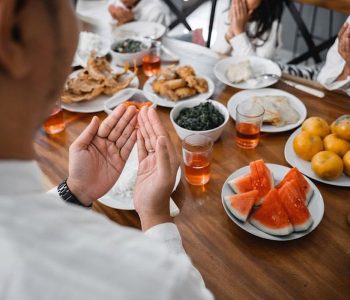
Lebaran celebrations continue with silaturahmi (maintaining social bonds), the tradition of visiting family that often lasts several days. Guests are usually welcomed by the sight of tables generously filled with dishes made with cherished recipes that have been passed down through generations.
If you are fortunate enough to take part in a quintessential Betawi Lebaran, you will likely come across these traditional foods:
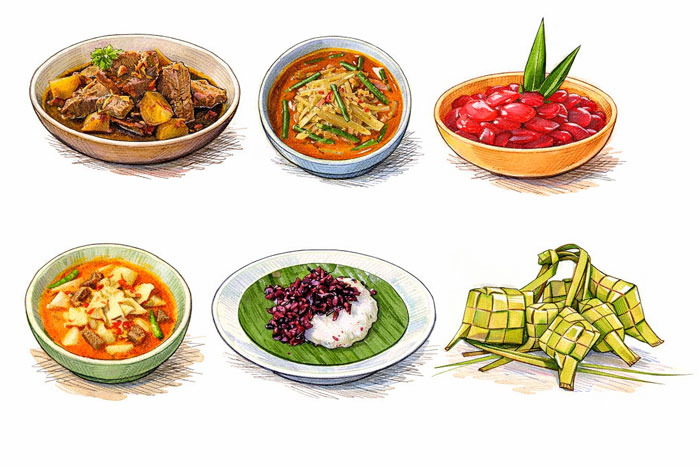
Ketupat
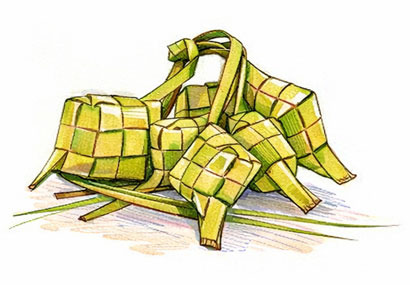
It’s the heart of Lebaran dining: compressed rice cakes wrapped in young coconut leaves called janur. The rice is washed, dried, and salted, then placed inside woven coconut leaves and boiled for about five hours. After the ketupat is hung up to dry, it is ready to be served with sumptuous side dishes. In the Betawi tradition, the ketupat symbolises purity and forgiveness.
Sayur Godog Pepaya
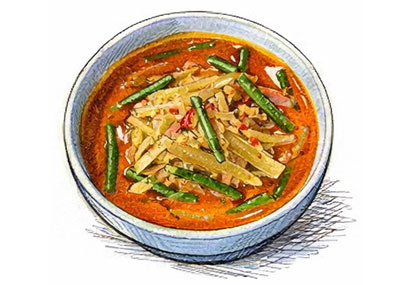
A classic companion to ketupat, this dish features sliced young papaya cooked in savoury coconut milk infused with aromatic spices such as chillies, shallots, garlic, turmeric, lemongrass, galangal, and bay leaves. Ebi (dried shrimp) is added to deepen the umami flavour, while long beans, tempeh, and stinky beans are often included for texture and complexity. It is finished with a generous sprinkle of fried shallots before serving.
Semur Daging
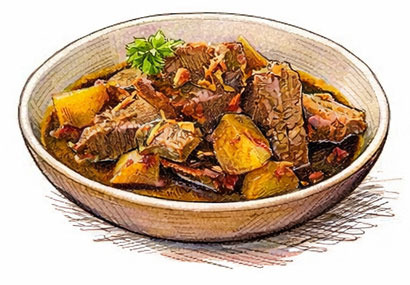
Introduced during the Dutch colonial period, the dish takes its name from the Dutch word smoor, which refers to slow-cooked or braised food. In its original form, Dutch smoor consisted of meat stewed with tomatoes and onions. Over time, the Betawi people adapted the recipe to local tastes by incorporating shallots, garlic, nutmeg, cloves, cinnamon, and generous amounts of kecap manis (sweet soy sauce). These additions give Betawi semur its signature deep brown colour and gently sweet, aromatic flavour. Betawi households typically use beef shank or brisket, cuts prized for becoming exceptionally tender after long, slow cooking.
Sayur Babanci (Ketupat Babanci)
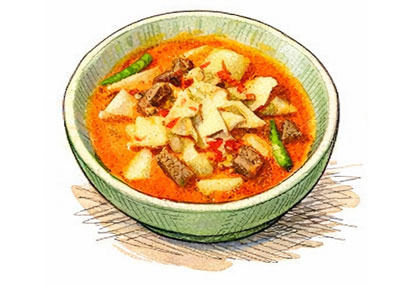
Despite its name, sayur (vegetables), this dish contains no vegetables at all. It is made from sliced beef head, slowly cooked in a thick, richly spiced sauce that is often compared to curry. What sets Sayur Babanci apart is its extraordinary use of ingredients. The sauce is built from roasted grated coconut, young coconut flesh, and an intricate blend of dozens of spices. Among them are now-hard-to-find elements such as kedaung (a black-skinned, green-fleshed seed), botor (winged beans), and tahi angin (yellow, tendril-shaped wild mushroom). The cooking process itself is notably complex, requiring precise spice balancing and careful techniques to tenderise the beef head while preserving its delicate texture.
Manisan Kolang-Kaling
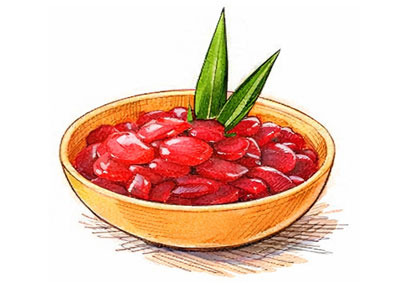
A refreshing sweet treat that offers a light contrast to the rich, savoury dishes served throughout the day. Made from kolang-kaling, the translucent fruit of the sugar palm, the pieces are slowly simmered in sugar syrup infused with pandan leaves and citrus notes, often from kaffir lime leaves or lime juice. The delicately sweet preserve has a pleasantly chewy texture and a fragrant aroma. It’s usually served chilled.
Tape Uli
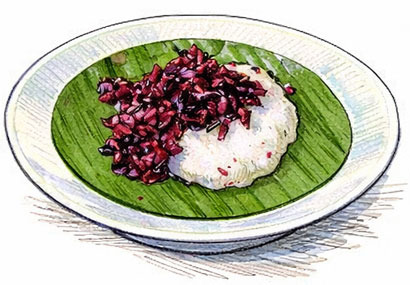
It consists of two components: tape and uli. Tape is made from black glutinous rice fermented with yeast. The rice is thoroughly washed, steamed, then sprinkled with yeast and a little sugar before being wrapped in banana leaves. It is left to ferment for about three days, allowing it to soften, release liquids, and develop its characteristic sweet, slightly tangy flavour. Uli, on the other hand, is made from white glutinous rice that is soaked for several hours and then steamed until cooked. The rice is mixed with grated coconut and a touch of salt, then pounded using a pestle until smooth, sticky, and chewy. This process gives uli its distinctive elastic texture. Served together, the mildly sour sweetness of the tape perfectly complements the savoury of the uli.