


The history of banking in Indonesia is deeply intertwined with its legacy of colonialism and journey towards independence. To explore this rich history, visitors can wander through Kota Tua, West Jakarta, where museums vividly portray the evolution of Indonesian banking,
from the Dutch colonial era to post-Reformasi (reformation).
When visiting Kota Tua, Jakarta’s Old Town, most travellers gravitate towards Fatahillah Square, home to popular museums such as the Jakarta History Museum, Wayang Museum, and the Museum of Fine Arts and Ceramics. However, just beyond the square lies another path worth exploring; one that offers insight into Indonesia’s economic transformation. If you’re taking the KRL Commuter Line, disembark at Jakarta Kota station. From there, with Fatahillah Square in front of you, head left and you’ll quickly find Museum Bank Indonesia and Museum Mandiri.
Before the arrival of Europeans in the 16th century, Nusantara (a Javanese term for Indonesia, meaning “outer islands”) had already developed its own monetary systems. Local currencies included uang kepeng (cash coins with central holes), gold, and silver. Among these, uang picis (small Chinese-style metal coins) was widely used in trade.
The Dutch profoundly impacted the local economy. In 1602, they founded the Vereenigde Oostindische Compagnie (VOC) or Dutch East India Company, which monopolised the spice trade and introduced the Dutch East Indies guilder as its currency.
To support its expanding operations, the VOC established Bank van Courant in 1746, the first bank in Indonesia. Renamed De Bank van Courant en Bank van Leening in 1752, it offered loans secured by gold and valuables and encouraged VOC employees to deposit money through attractive interest rates. However, mismanagement led to its closure not long after.
After the VOC’s dissolution in 1799, the Dutch colonial government took direct control of Nusantara. In 1828, they founded De Javasche Bank, the first true central bank in Indonesia. It was authorised to issue banknotes, regulate currency, and offer credit to both government and private entities. De Javasche Bank helped stabilise the Dutch East Indies guilder, officially adopted as the colony’s currency in 1854.
During World War II, Japan occupied Indonesia (1942) and De Javasche Bank was turned into Nanyo Kyoku, a branch of Japan’s central bank in Southeast Asia. The Japanese issued a new currency, infamously known as uang pisang (“banana money”), which quickly lost value due to hyperinflation, causing severe economic hardship.
Following the proclamation of independence on 17 August 1945, Indonesia faced enormous economic challenges. In response, the new government founded Bank Negara Indonesia (BNI) in 1946, effectively becoming Indonesia’s first national bank. BNI issued the Oeang Republik Indonesia (ORI), the republic’s first official currency, and played a crucial role in financing the independence struggle.
During this transitional period, however, De Javasche Bank continued operating under Dutch control, creating a dual central banking system. The Dutch formally recognised Indonesia’s independence in 1949 but retained control over West Irian (now Papua) and De Javasche Bank until the early 1950s.
In 1953, Indonesia officially nationalised De Javasche Bank, ending Dutch influence over the central banking system. The bank was renamed Bank Indonesia, becoming the nation’s sole central bank. It gained full authority to issue currency, regulate the money supply, shape monetary policy, and supervise the banking sector.
Bank Indonesia also introduced the rupiah as the national currency, replacing the Dutch East Indies guilder and earlier forms of transitional money. This marked a significant milestone in asserting Indonesia’s financial sovereignty.
This story and more are brought to life at Museum Bank Indonesia, which offers a dynamic exploration of Indonesia’s banking and monetary history, framed within the broader context of the country’s political, social, and economic transformations.
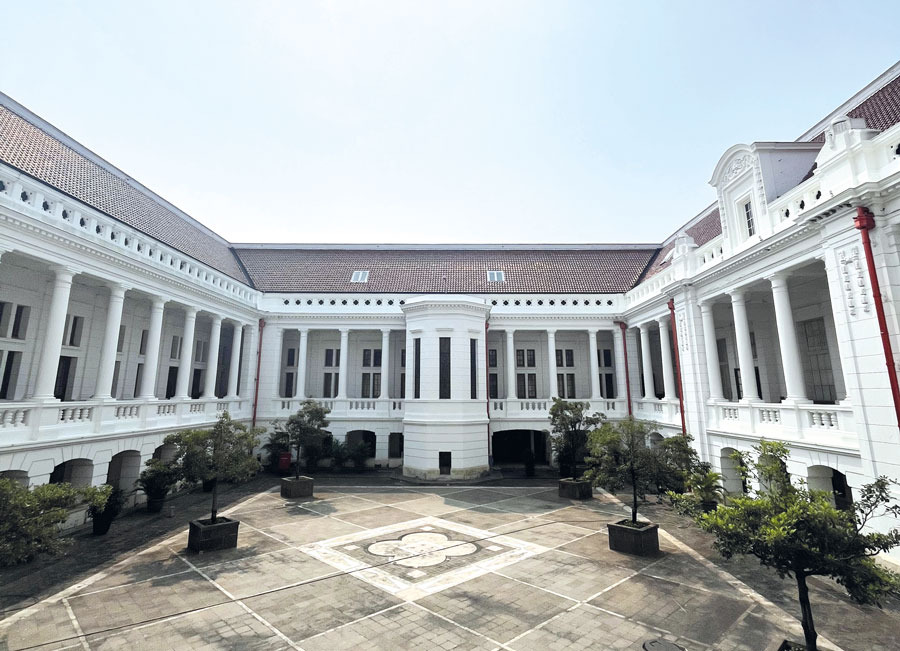
Visitors can explore a rich collection of ancient currencies from the archipelago’s kingdoms, early banknotes and coins, vintage banking machines, and more. Through interactive displays and detailed exhibitions, the museum traces the evolution of Indonesia’s financial institutions from the pre-colonial era to the reform period. A range of multimedia technology, meanwhile, provides an educational experience using dioramas, audio visuals, and simulations.Housed in a beautifully preserved neo-classical building, the museum occupies a site steeped in history. A Protestant church prior to 1628, it later became the office of De Javasche Bank designed by architects J. de Bruijn and C. van de Linde. It also served as the headquarters of Bank Indonesia until 1962, when the institution relocated to Jl. M.H. Thamrin in Central Jakarta.
Adjacent to Museum Bank Indonesia stands another striking European-style building that hosts Museum Mandiri. This grand structure is part of Bank Mandiri’s heritage, tracing its roots to the consolidation of four state-owned banks (Bank Exim, Bank Dagang Negara, Bank Bumi Daya, and Bank Pembangunan Indonesia) during Indonesia’s monetary crisis in 1998–1999.
Long before becoming a museum, the building served as the headquarters of the Nederlandsche Handel-Maatschappij (NHM), a powerful Dutch trading company and merchant bank that continued the legacy of the VOC. While the NHM was founded in 1824, the building was constructed in 1929 and officially opened in 1933.
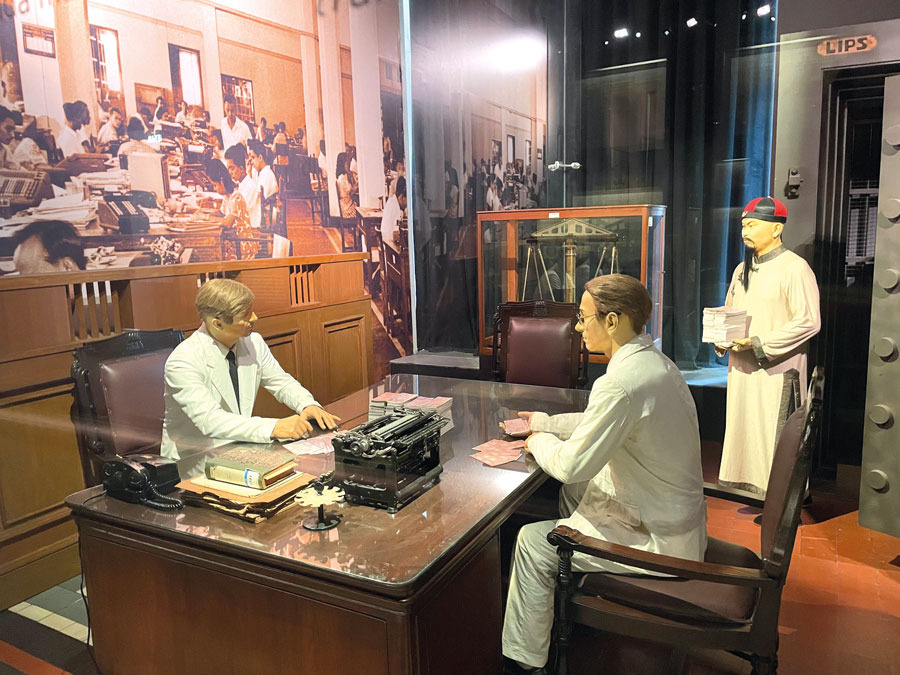
During its operational years, the NHM was central to financial transactions for both European and Chinese communities. Clients could store securities, cash, gold bullion, and even commodities—particularly those gathered through the forced cultivation system—in a secure basement vault. Access to this area was highly restricted, permitted only to select customers and bank officials.
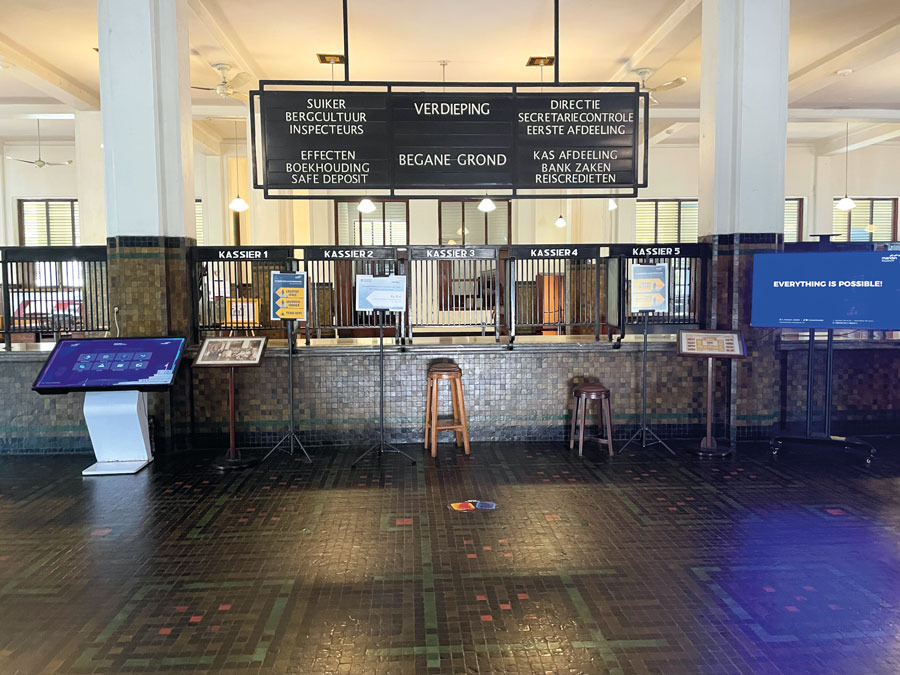
Inside Museum Mandiri, visitors will find various intriguing features that capture the atmosphere of colonial-era banking. Original teller counters remain intact, along with Dutch-language instructions and signage indicating the offices of directors and branch supervisors. A particularly striking detail is the presence of separate teller windows designated for Europeans and Chinese clients, a reflection of the social and economic structure of the time.
During the colonial period, the Chinese community played a pivotal role in commerce and trade. Many operated grocery stores, worked as travelling vendors, or managed plantation businesses. Their economic influence earned them a distinct position within institutions like the NHM, where their financial activities were recognised and accommodated through specialised services.
Visitors can also step into the Banking Hall, an impressive space that showcases original colonial-era banking equipment. At the centre lies a massive cash book, safekeeping records of transaction dates, details, and balances as a testament to the precision of banking operations at the time.
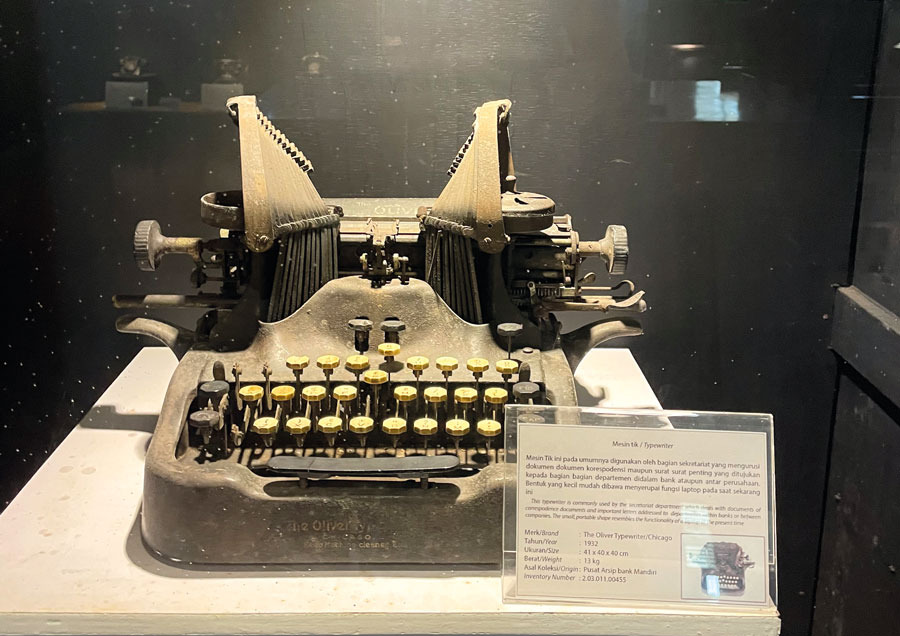
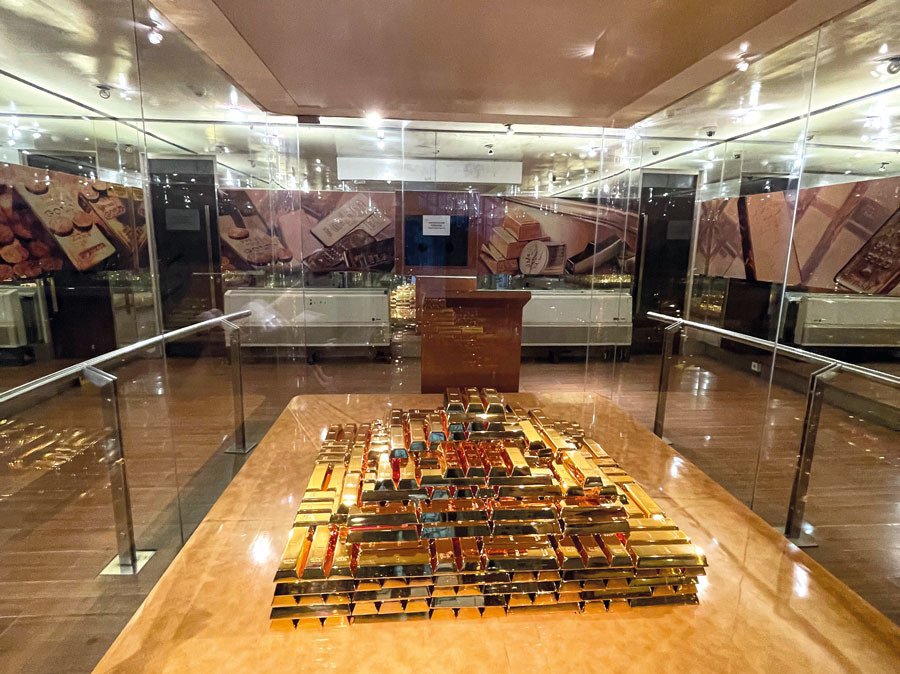
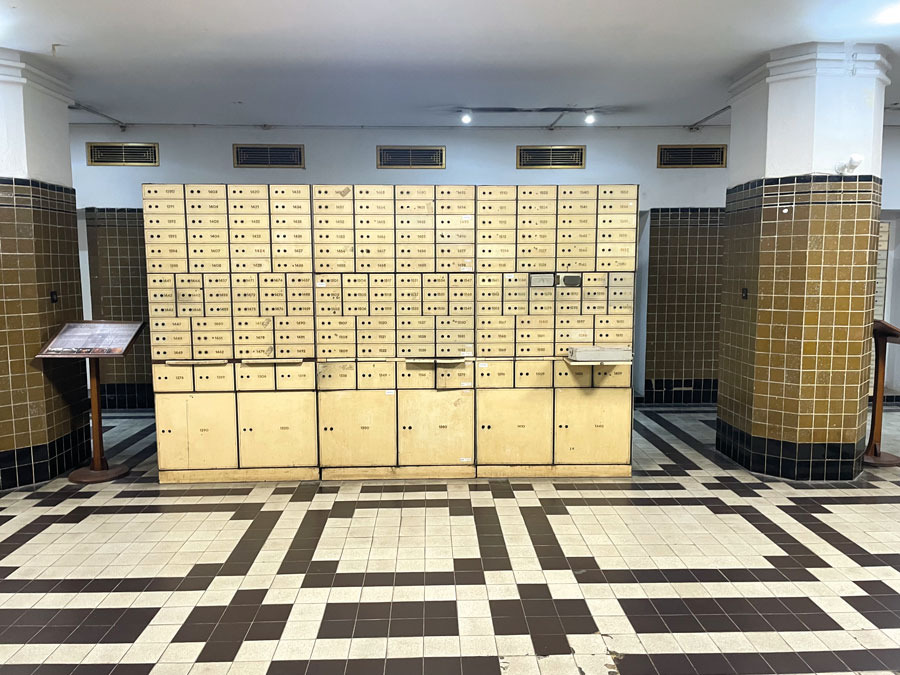
Among the fascinating artifacts on display are a 9.8-kilogram analogue calculator and a 5.5-ton green safe measuring 90-centimetres in diameter located in the basement. The museum also features safe deposit boxes resembling lockers, once used by clients to store valuables, alongside a curated collection of currency and gold bullion.
But the most captivating and iconic feature of the museum is undoubtedly its stained-glass installation. While stained glass can be found in many buildings, the largest and most intricate example is housed here, on the museum’s second floor.
This stained glass window depicts three important scenes. The first is the story of the Dutch sailor Cornelis de Houtman’s journey to discover Indonesia and ultimately pave the way for Dutch traders under the auspices of the VOC to enter Indonesia. The second depicts five figures: four women and one elderly man. The two women in the first two left-hand panels, and a woman and an elderly man in the two right-hand panels, represent the four European seasons: spring, summer, autumn, and winter. The four seasons function almost like a “time machine” for Dutch NHM workers, offering a nostalgic glimpse into seasonal life back home in the Netherlands and to soothe homesickness, evoking the landscapes and emotions tied to each season.
Meanwhile, the central female figure is depicted as Mother Earth Nusantara. Enveloped by volcanoes and dense tropical forests, she embodies the natural beauty and richness of the Indonesian archipelago. Portrayed as graceful and enchanting, this goddess-like figure reflects the way the Dutch viewed Indonesia, not only as a land of breathtaking scenery but also as a place teeming with abundant natural resources. Her depiction reveals both admiration and a romanticised reverence for the archipelago.
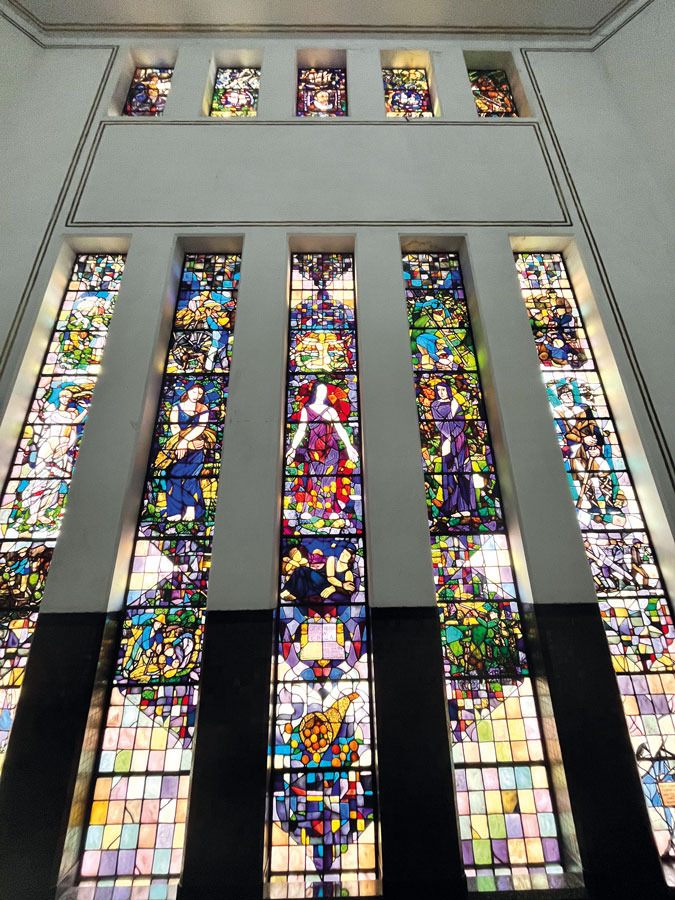
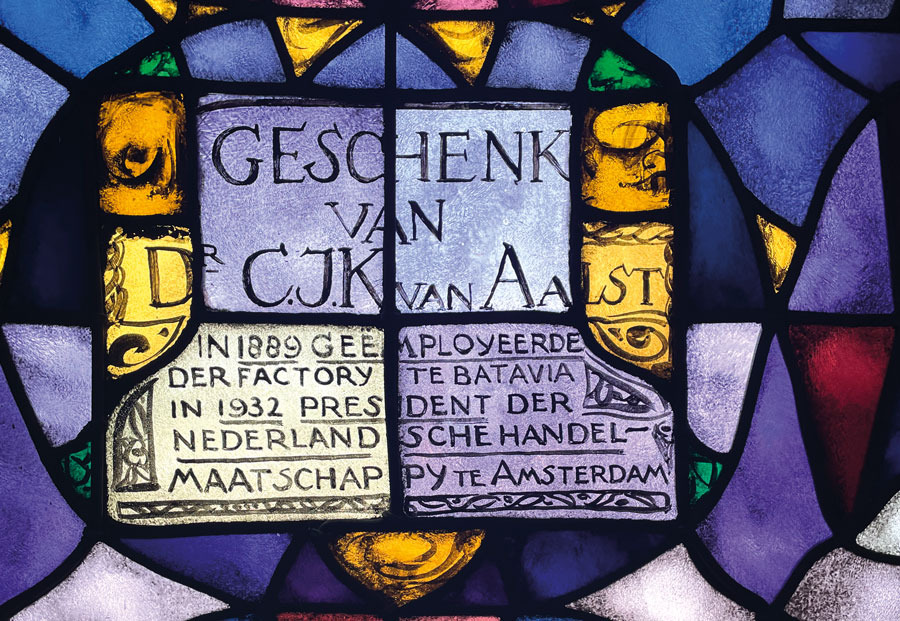
The glass was fired and coloured in Amsterdam, then shipped to Indonesia for installation. The building that now houses the museum was originally constructed by the Dutch firm N.V. Nedam. The stained glass itself was designed and crafted by Dutch artist F.H. Abbing Jr., son of F.H. Abbing, secretary director of NHM in Amsterdam, and produced at the renowned W. Bogtman factory in Haarlem.
One panel bears an inscription in Dutch that translates to: “A Gift from C.J.K. Van Aalst.”. This stained glass was a personal gift from Cornelis Johannes Karel van Aalst, the 10th NHM President. Van Aalst was a highly influential figure, both within the company and in broader Dutch economic and political circles.
Open to the public from Tuesday to Sunday (both are closed on Monday), Museum Bank Indonesia operates from 8am to 3:30pm, and Museum Mandiri from 9am to 3pm.
Museum Bank Indonesia
Jl. Pintu Besar Utara No. 3, Pinangsia, Taman Sari, West Jakarta
+62 8129 1573940
@museum_bi
bi.go.id
Museum Mandiri
Jl. Lapangan Stasiun No. 1, Pinangsia, Taman Sari, West Jakarta
+62 8151 0083413
@museum_mandiri