



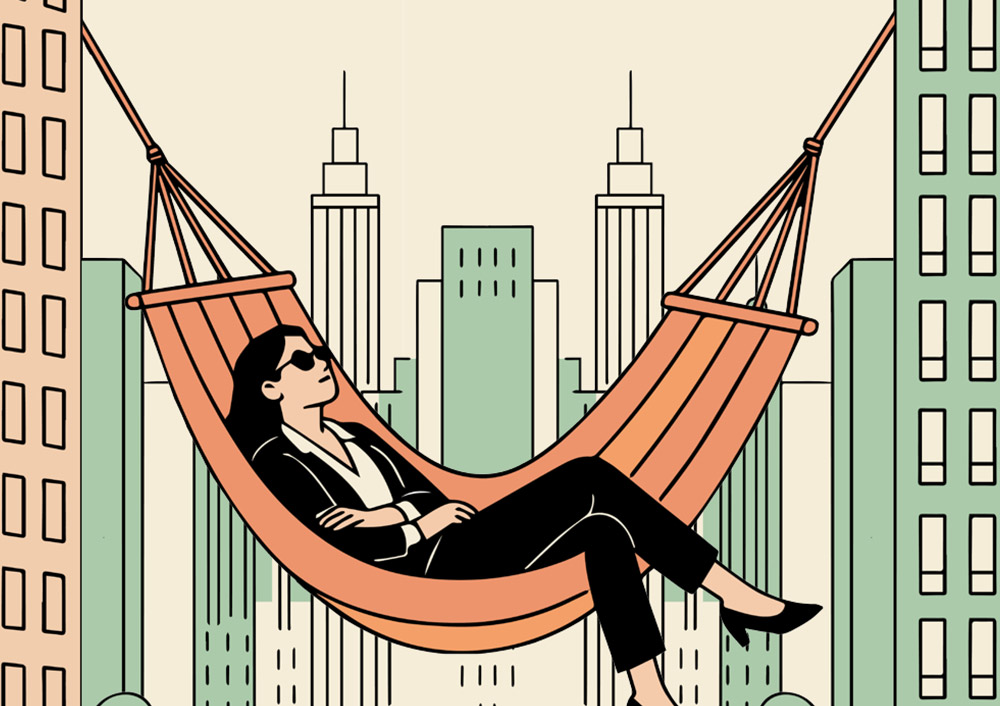
In this two-part feature, Edward Speirs (Part 1) and Widia Arianti (Part 2) explain why our efforts to keep pace with our fast-moving world are counter-productive, and how we can integrate slow living practices into everyday life in Jakarta.
Read: Part 1 | Part 2
Part 1: Fast is good – right?
Think back to when customer service didn’t respond to you quickly enough, the online driver you ordered gets stuck in traffic, or, God forbid, your internet connection suddenly slows down. A frustration creeps up inside, an annoyance caused by our growing impatience. The truth is, we’ve all been spoiled by speed, conditioned to expect a certain pace, from the world around us, from others, and as a result, from ourselves as well.
Yes, we are a society obsessed with speed. Instant deliveries, immediate answers, fast service – hey, time is money, right? Well, that’s certainly the philosophy we have collectively adopted, to the point where we see speed as a sure sign of progress, ‘efficiency,’ we call it. But have we ever considered the downsides of speeding up our lives?
The pitfalls of ‘fast living’ are best epitomised with technology, where the double-edged sword of efficiency is most insidious. You might have heard of the term ‘brain rot’ –referring to the cognitive decline caused by meaningless or trivial online content (and Oxford Dictionary’s 2024 word of the year) – well, it turns out to be true.
Our consumption of quick online content is gradually rewiring our brains. Dopamine, the reward system hormone, is supposed to be a tool that motivates us through tasks and processes, rewarding us with that ‘win’ feeling upon completion, but rapid stimulation through social media is doing the opposite, training our brain that we don’t need hard work to get our dopamine fix.
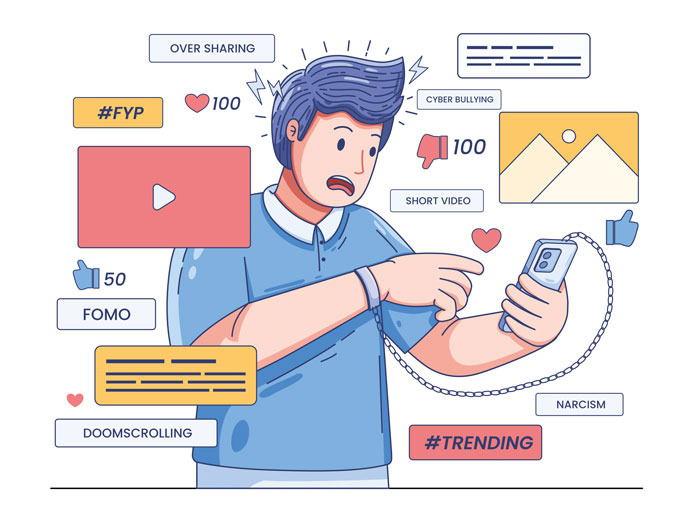
Neuroscience tells us that “the constant use of social media leads to a continued need for attention and cognitive resources. This perpetual engagement interferes with the brain’s ability to focus on more meaningful or important tasks, leading to diminished productivity and cognitive decline,” (Yousef et al., 2025). In other words: fast media is making us slow!
If you’re thinking, ‘sounds like a Gen-Z problem,’ think again. You don’t have to be on TikTok to be a victim of fast technologies: “According to an American Psychological Association (APA) survey, roughly 40% of adults routinely multitask with digital devices, significantly increasing self-reported stress and lowering productivity” (Hasan, 2024).
This is something many of us are guilty of – starting to write an email, but then quickly replying to a Whatsapp, or reviewing some work but, oh wait, I need to order some food for lunch. The paper adds that, whilst it may feel like we are being time-effective by switching tasks, it actually costs us productive time because of the drain of our cognitive load. This causes mental fatigue, tiredness which in some cases leads to anxiety.
But let’s zoom out a little. It’s not simply about personal technology use; it’s about the social environment built around the expectation of speed. We feel the need to always stay ‘on’, be vigilant, pressed by a pervasive sense of urgency because the world around us keeps moving forward, leaving us feeling like we’re constantly lagging behind. Together, this triggers the brain’s alarm system, the amygdala, which tells the hypothalamus to enter fight-or-flight mode: secretion of cortisol, the stress hormone, and adrenaline (epinephrine), the action hormone. Blood sugar and blood pressure rise, heart rate increases.
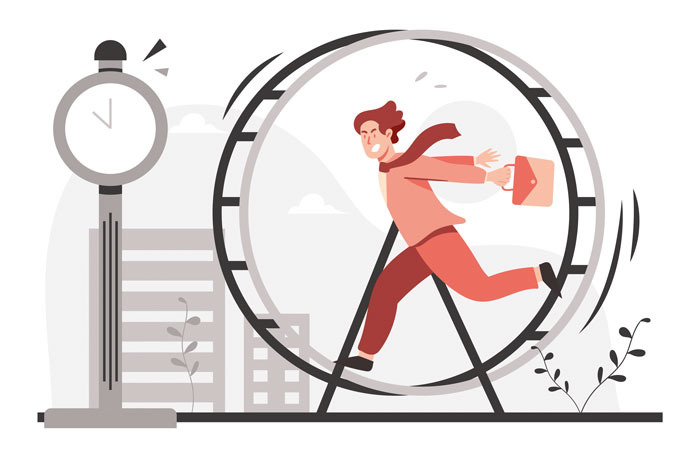
This is by no means to be alarmist. These neurochemical reactions were designed to help us in times of danger, but in our modern, fast-paced world, ‘danger’ is a cocktail of angry clients, tight deadlines and upcoming mortgage payments. These stress hormones were never meant to be prolonged over time. This is what leads to chronic stress, but more commonly, increased mental fatigue and anxiousness, and lower general contentment.
Many of these stimuli are exacerbated in a city like Jakarta, where corporate, environmental and social pressures are constant. A 2025 survey in the Indonesian Journal of Occupational Safety and Health found that more than 40 percent of workers are living with moderate to high stress, while a 2024 study using the New Brief Job Stress Questionnaire pinned the blame on tight deadlines, role confusion, and marathon work hours.
So, what do we do? It’s unrealistic to expect the world around us to change, or for technologies to slow down. We must intentionally carve moments in our lives where we are in control of the pace and rhythm.
Continued in Part 2 Here
For more information:
• Caring Nature Holistic Wellness Center – www.caring-nature.com
• Yousef et al., “Brain Rot in the Digital Era,” Brain Sciences, 2025
• Hasan, “Digital Multitasking and Brain Health,” Annals of Medicine & Surgery, 2024
• Hoffman, “How Mindfulness Improves Sleep” Greater Good Magazine, 2015