




Jakarta Intercultural School (JIS) welcomes NOW! Jakarta for a conversation with Jonathan “Zeb” Johnson (JJ), Principal at the Pondok Indah Elementary School campus, and Jill Bellamy (JB), Principal at the Pattimura Elementary School campus to discuss how learning, community, and student support shape the elementary experience across JIS’ two campuses.
NOW! Jakarta (NJ): Could you briefly introduce yourselves and share a little about your professional backgrounds?
(JJ): This is my first year in Jakarta and at JIS. I’ve worked my whole career in international education. Most recently I was in China at an independent private school. Before that, Abu Dhabi at an American school, and earlier Colombia.
(JB): This is my sixth year at JIS. I’m originally from Australia, and before moving to Jakarta I spent ten years in Bangkok, seven years in Johannesburg, and four years in Seoul.
NJ: JIS has three campuses across Jakarta. For parents, how would you differentiate the campuses, especially Pattimura and Pondok Indah, since both offer Early Years and Elementary?
JJ: The main difference is geography. Pattimura is more convenient for families in central and north Jakarta, particularly with traffic, while Pondok Indah serves more South Jakarta families and is close to the middle and high school campus. Some families transition here when older siblings move into secondary school. Pondok Indah also offers more green space, an “oasis” feel, and expanded athletic facilities.
JB: Location is the biggest factor. Pattimura also carries a strong sense of history as the original campus. When JIS expanded, the goal was to minimise travel time for young children, which is why Pattimura remained elementary-focused. Demographics can differ—Pattimura has many embassy-linked families—but the programme is aligned across campuses, with shared curriculum, collaboration, and smooth transitions.
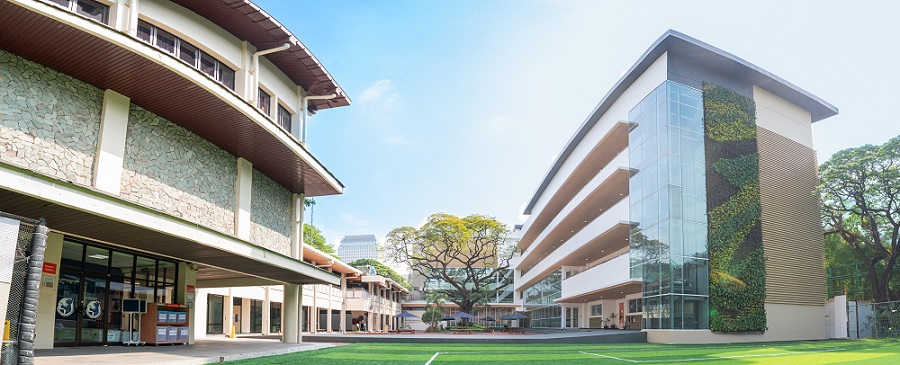
NJ: Pattimura recently underwent a major renovation. What was the reasoning behind it, and how do you provide a similar range of spaces on a smaller site?
JB: Pattimura, one of our older campuses, underwent a renewal to address growing demand in the Early Years and Kindergarten programmes. Due to limited land, a new four-storey building was constructed, expanding capacity from approximately 400 to over 550 students. The renovation carefully preserved essential play and learning spaces, such as the indoor playground, soccer field, gym, library, and makerspace. This smaller campus design maintains a strong sense of community, with its visible and connected layout fostering a warm environment for students, staff, and families.
NJ: What facilities at Pondok Indah were designed to cater to children’s needs?
JJ: Our pool facilities were recently renovated and include two purpose-built pools—a learning pool for younger swimmers and a larger, competition-spec pool with safety as a priority. There’s also a dry-land classroom that supports aquatics safety learning and doubles as a teaching space on rainy days.
We also have a two-storey, forest-themed library that functions as a central hub, so much so that some students choose it even during outdoor playtime. Connected to it is a makerspace focused on design thinking, with materials ranging from cardboard and wood to VR, robotics, a 3D printer, and a laser cutter. Our focus isn’t on shiny tools, but on purposeful learning integrated into units across grade levels.
NJ: JIS dates back to 1951, with Pattimura as the original campus. How does that heritage shape student experience?
JB: Alumni play a big role in keeping that history alive. At Pattimura, we’re building a visual history wall, with students contributing ideas about the school’s past. Iconic symbols like the Pattimura tree also matter, many graduating seniors return to it for photos. I think these traditions help students see themselves as part of a longer story, give them a sense of belonging.
JJ: Indonesia is not just a backdrop for us, it is central to learning too. Students engage with local history and culture, including experiences like gamelan, so while the education is world-class, students also feel connected to Jakarta and Indonesia rather than feeling like the school could be “anywhere.”
NJ: JIS is known for emphasising cultural diversity. What does diversity look like across the campuses?
JJ: Demographics can shift year to year and grade to grade. But no campus is dominated by a single culture. We have students from across Asia, Africa, Europe, North America, Australia, and a variety of faiths.
JB: When diversity is embraced properly, it enriches learning. Students build open-mindedness and friendships across language, culture, and differences. We’re also inclusive in terms of learning needs, which adds another dimension to diversity.
NJ: Pattimura and Pondok Indah follow the same curriculum for Early Years and Elementary, can you explain it broadly?
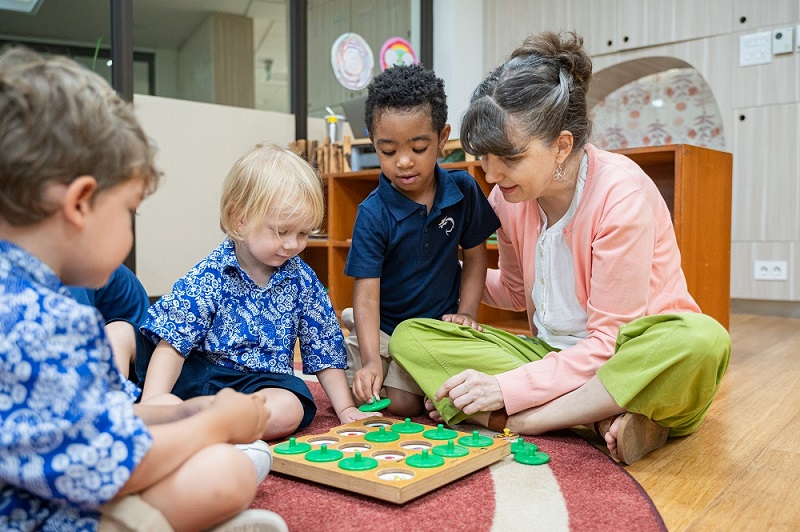
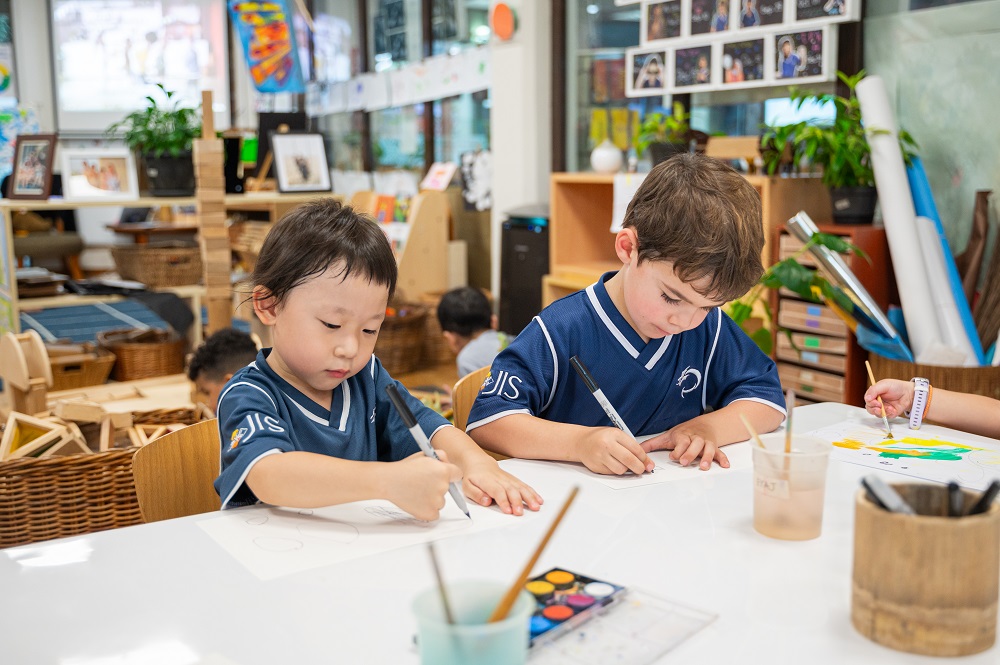
JJ: Yes. Our approach focuses on teaching the whole child across four interconnected dimensions– Communication and Collaboration, Social and Environmental Relationships, Physical and Emotional Self, and Critical and Creative Thinking–all supported by inquiry. In Early Years, learning is designed through careful observation, here, children’s interests and curiosities guide the learning process.
JB: We reviewed early childhood curricula from several countries, identified what aligned with our values, and worked with a consultant around inquiry and assessment. From there, our teachers developed a guiding framework of our own. Rather than following a boxed programme, early literacy and numeracy are embedded alongside motor development, communication, and problem-solving.
We also see strong data showing students entering Kindergarten are confident in early literacy and numeracy. Because learning is student-driven, each year can look different. One class might explore volcanoes, another skyscrapers, other animals, all while still developing the same foundational skills.
JJ: Parents sometimes assume play-based learning lacks rigour, but we see the opposite. Students develop inquiry skills, collaboration, emotional awareness, and early academic confidence that prepare them for future learning, and for future success in a world that will look very different from how it has looked in the past.
NJ: At the Primary School level, students encounter a broader range of subjects and experiences, including Specialist Classes, education that honours Indonesia, and community engagement. How does this shape the student experience?
JJ: At this stage, learning broadens while still focusing on the whole child. Specialist Classes play a key role by giving students structured opportunities beyond core academics, including technology, the visual and performing arts, Bahasa Indonesia, and physical education. From choir, printmaking, and robotics to gamelan, dance, and swimming, these classes help students explore interests, build confidence, and develop skills in different ways.
JB: Honouring Indonesia is embedded throughout the programme, both in and beyond the classroom. Students engage with language, traditions, and cultural themes through inquiry-based units, alongside music, dance, storytelling, and celebrations such as Independence Day, Lunar New Year, and Idul Fitri. Indonesia Week offers a focused opportunity for deeper exploration through workshops, performances, and guest experts– we also have United Nations Week celebrating the nationalities across the community,
NJ: How is service learning implemented?
JJ: Service learning is integrated into the curriculum from elementary onwards. Students take part in leadership initiatives like the Green Dragons, working with local partners through ongoing relationships that build empathy, responsibility, and real-world awareness.
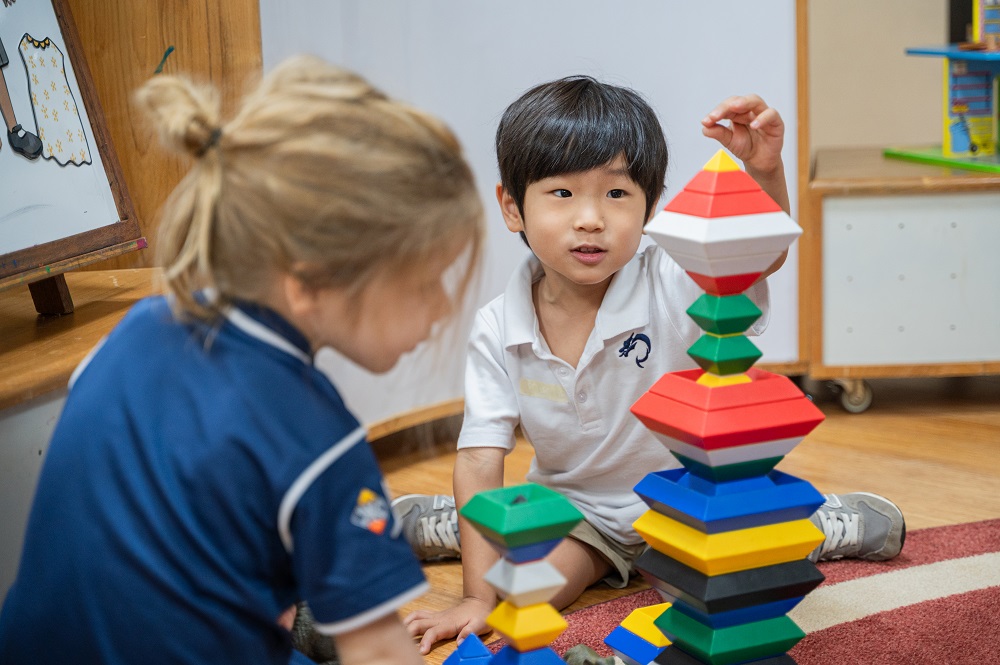
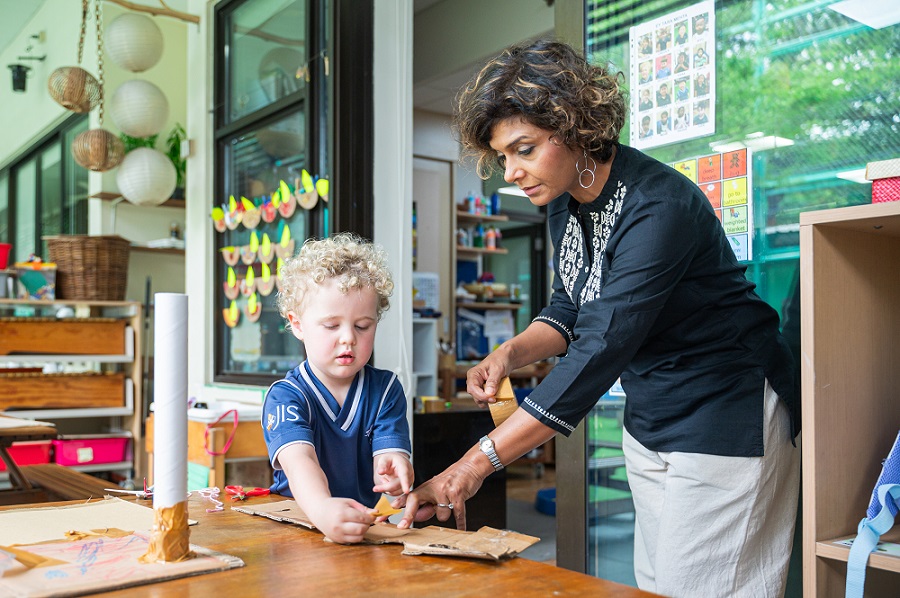
NJ: A key highlight at Pattimura is the JIS Learning Center (JLC) Elementary Programme for students with moderate-to-severe learning needs. Can you share more about this important part of the campus and how its specialised approaches support students?
JB: This is our fifth year with the JIS Learning Center. The elementary programme is based at Pattimura, where it began, and it has since expanded into secondary as students progressed into middle school. We currently support six students in elementary and around twelve in secondary.
JIS is inclusive by design, many students with mild to moderate needs are supported in mainstream classrooms through Support Services. JLC is for students who require more intensive, individualised support across learning, communication, social-emotional development, and life skills. Each student has an Individualised Learning Plan, which may include speech therapy, occupational therapy, or behavioural support. Integration with age peers varies, whether through selected academic subjects or specialist classes such as PE, art, music, or dance, depending on what works best for each child.
JJ: JLC also enriches the wider school community. Students learn to value different ways of thinking, and we’ve even created supported pathways, such as a high school student volunteering in Early Years to build real-world skills and confidence.
NJ: Educational support is also available beyond JLC. Why are Support Services especially important in the early years?
JJ: Support Services focus on early intervention and ongoing monitoring, offering tailored academic, language, and social-emotional support. By working closely with families and teachers, support becomes part of learning rather than something separate.
NJ: How do you prepare students to transition from elementary to middle school?
JB: We create intentional transition experiences. Middle school teachers first visit elementary classrooms, then Grade 5 students spend a full day on the secondary campus. Students also attend performances and events there—from drama and dance to sports—so the space feels familiar before they move up.
JJ: Older students also come down to lead learning experiences, like a balloon-rocket design activity for Grade 2, so younger students connect with older role models. Kindergarten students visit the secondary campus too, these interactions reduce fear and build belonging.
NJ: To close, what’s your favourite thing about your campus?
JJ: Hard to pick one! But I love the theatre because it’s where students build confidence. You can watch a shy student become someone who can present in front of hundreds.
JB: For Pattimura, it’s the courtyard and the Pattimura tree. It’s like a piazza, a central meeting place for parents, students, and staff. The smaller campus can be a limitation, but it also creates closeness and community.
JJ: New students here also settle quickly, thanks largely to the welcoming student and parent community.
To find out more about both of these elementary schools, please visit jisedu.or.id