


“If landscape shapes flavour and culture gives it meaning, biodiversity is the source of Nusantara’s remarkable spectrum of flavours.”
Indonesia as Edible Biodiversity
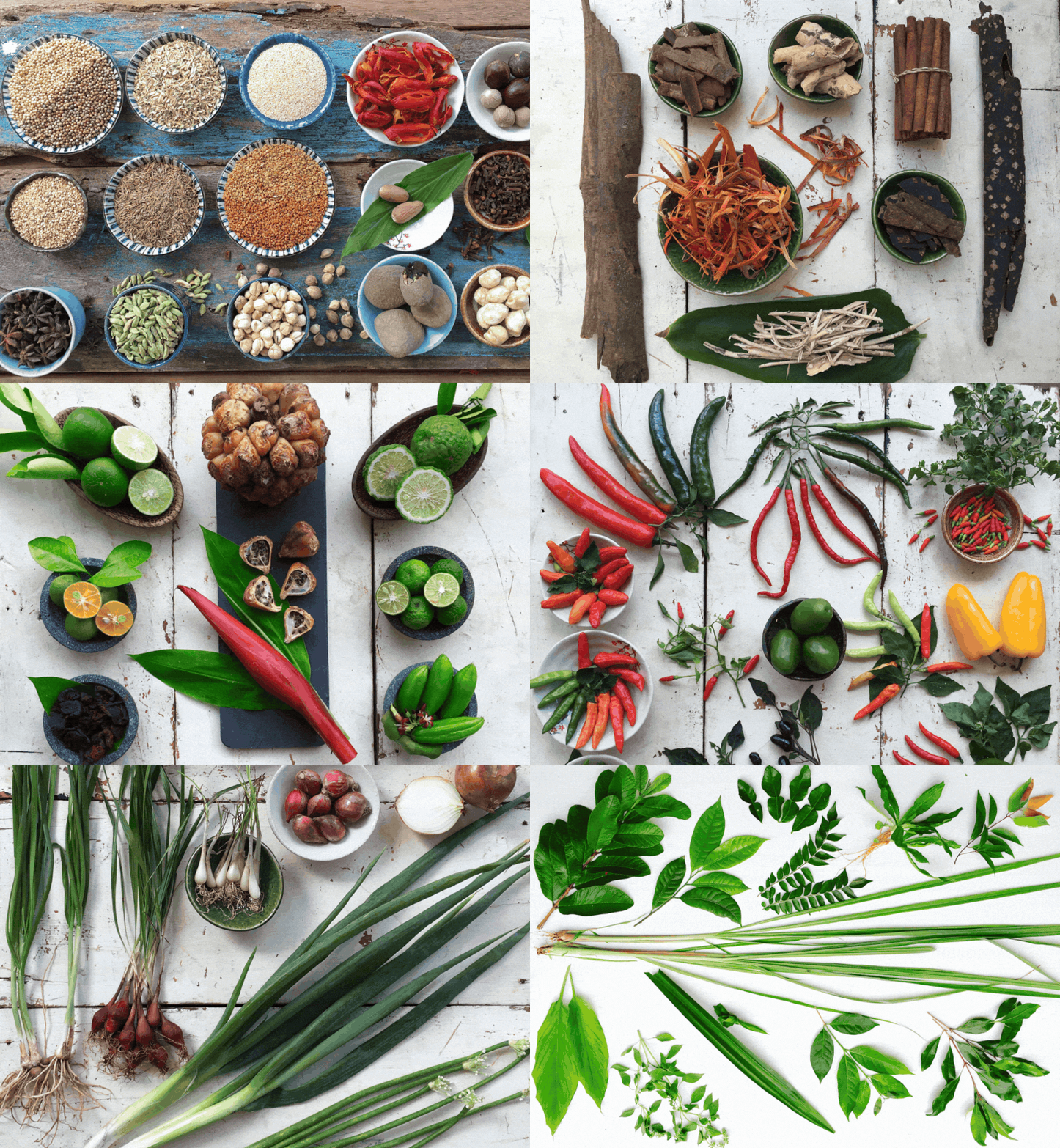
Indonesia is often celebrated for its rich culinary traditions, yet the true foundation of ‘Nusantara gastronomy’ lies much deeper. In reality, it stems from the nation’s extraordinary biodiversity. Rather than attempting to catalogue every edible ingredient, this exploration focuses on the foundational elements that structure cuisine, what we’re terming the “flavour builders,” i.e. the components that shape taste, nourishment, and resilience across Nusantara gastronomy.
Stretching across more than 17,000 islands, Indonesia encompasses volcanic highlands, tropical rainforests, mangrove coasts, savannas, coral seas, and fertile valleys (which we covered in Part 1 of this series). Each landscape nurtures distinct ingredients, and over centuries, communities have transformed this biodiversity into diverse culinary traditions.
Unlike cuisines built around a limited pantry, Nusantara gastronomy is constructed from a constellation of spices, herbs, souring agents, natural sweeteners, salts, umami ingredients and fats. These ingredients vary from island to island, shaped by ecology, climate, and cultural knowledge — forming the edible wealth that defines Indonesia’s culinary identity.
Want to hear from Helianti in person?
She and other incredible speakers will be at Ubud Food Festival from 28 – 31 May 2026.
Spices: The Aromatic Architecture of Nusantara
Long before Indonesia became a nation, the archipelago shaped global history through spices. Yet beyond cloves and nutmeg, Nusantara’s spice diversity is far richer – a living architecture of nuts, roots, barks, seeds, and flowers.
At the foundation of many Indonesian spice blends are the root spices – turmeric, ginger, galangal, kencur, and fingerroot – collectively known as temu-temuan. These roots form the base of bumbu, defining regional cuisines across the archipelago.
Nut-based spices such as kemiri (candlenut) provide creaminess and body to spice pastes, while kluwak contributes earthy depth to dishes such as rawon and brongkos. Nutmeg, native to the Banda Islands, adds warmth and subtle sweetness across savoury and sweet preparations.
Indonesia is also home to remarkable endemic peppers. Andaliman from North Sumatra delivers citrusy numbing notes central to Batak cuisine. Cubeb pepper (kemukus) adds aromatic warmth, while long pepper (cabe jamu) contributes gentle heat and medicinal undertones.
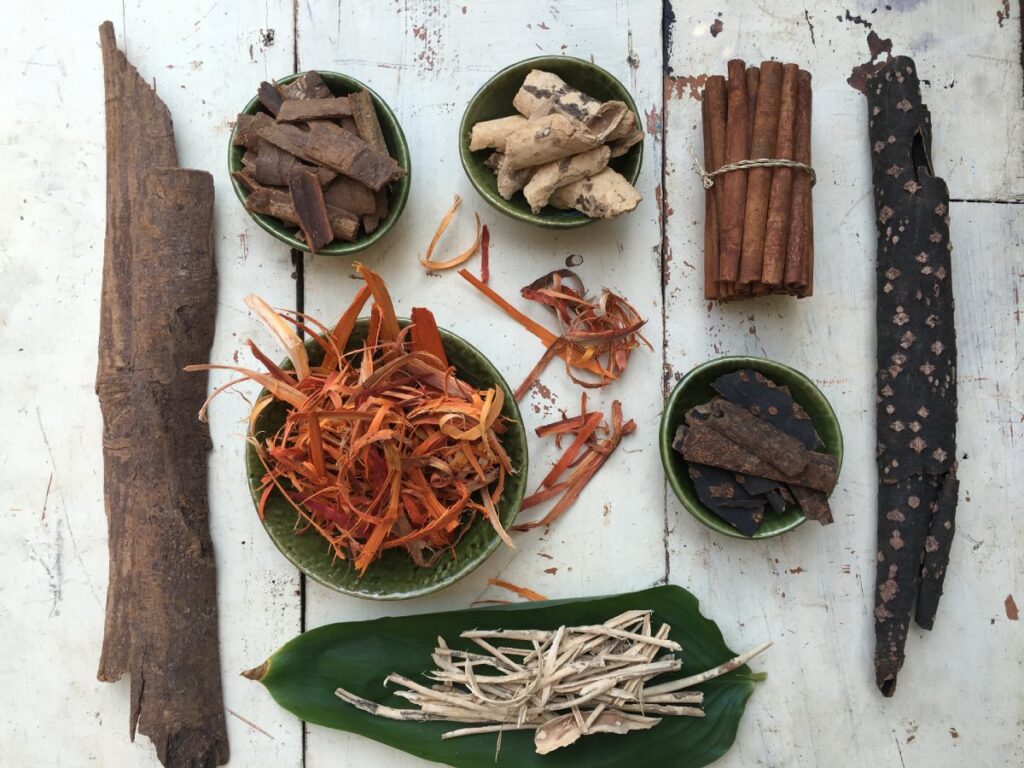
Bark spices further expand this spectrum — cassia cinnamon from Kerinci, pulosari from Java, along with mesoyi (massoia), krangean (Litsea cubeba), and kayu kulim (garlic tree bark) — are often found in ceremonial dishes, slow-cooked stews, and traditional herbal drinks, lending warmth, depth, and aromatic complexity to Nusantara cuisine.
Seed spices such as coriander, fennel, cumin, fenugreek, and cardamom reflect centuries of trade, while flower spices, including cloves and star anise, add fragrant top notes.
Together, these spices create layered flavour systems that are complex, balanced, and deeply rooted in biodiversity.
Aromatic Herbs: The Fragrant Layer
If spices provide structure, herbs bring freshness and vitality. Many grow in home gardens, forest edges, and agroforestry landscapes, reflecting the close relationship between communities and ecosystems.
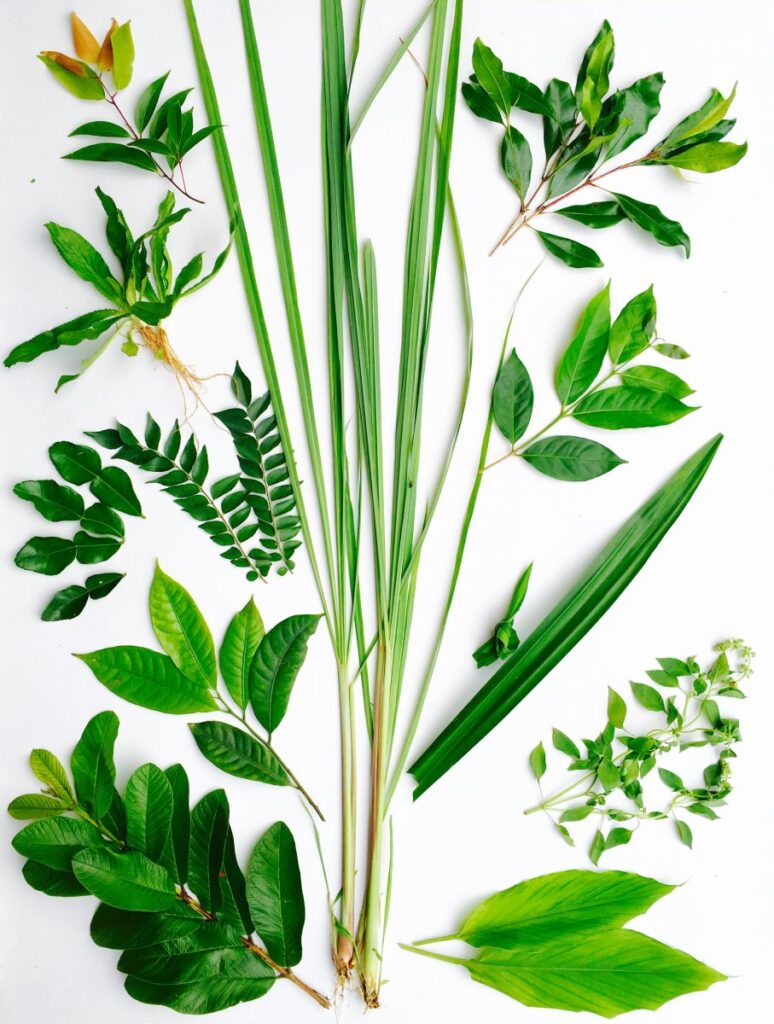
Across the archipelago, daun salam, daun jeruk, pandan, kemangi, and lemongrass form foundational aromas. In West Java, walangan (sawtooth coriander) and kencur leaves contribute refreshing herbal notes.
Sumatra offers particularly distinctive herb diversity. Temurui (salam koja), daun kesum (laksa leaf), ruku-ruku (sacred basil), bangun-bangun (Indian borage), and turmeric leaves shape regional gulai, curries, and soups. These herbs create layered fragrance — citrusy, earthy, and peppery — characteristic of Sumatran cuisine.
In Central Java, aromatic leaves extend beyond savoury cooking. Nutmeg, clove, and cassia leaves are used in wedang uwuh, a traditional herbal tisane where spices and leaves are steeped into a warming drink.
Used generously, these herbs create freshness, reflect seasonality, and embed landscape into everyday cooking.
Chillies: Heat, Aroma, and Identity
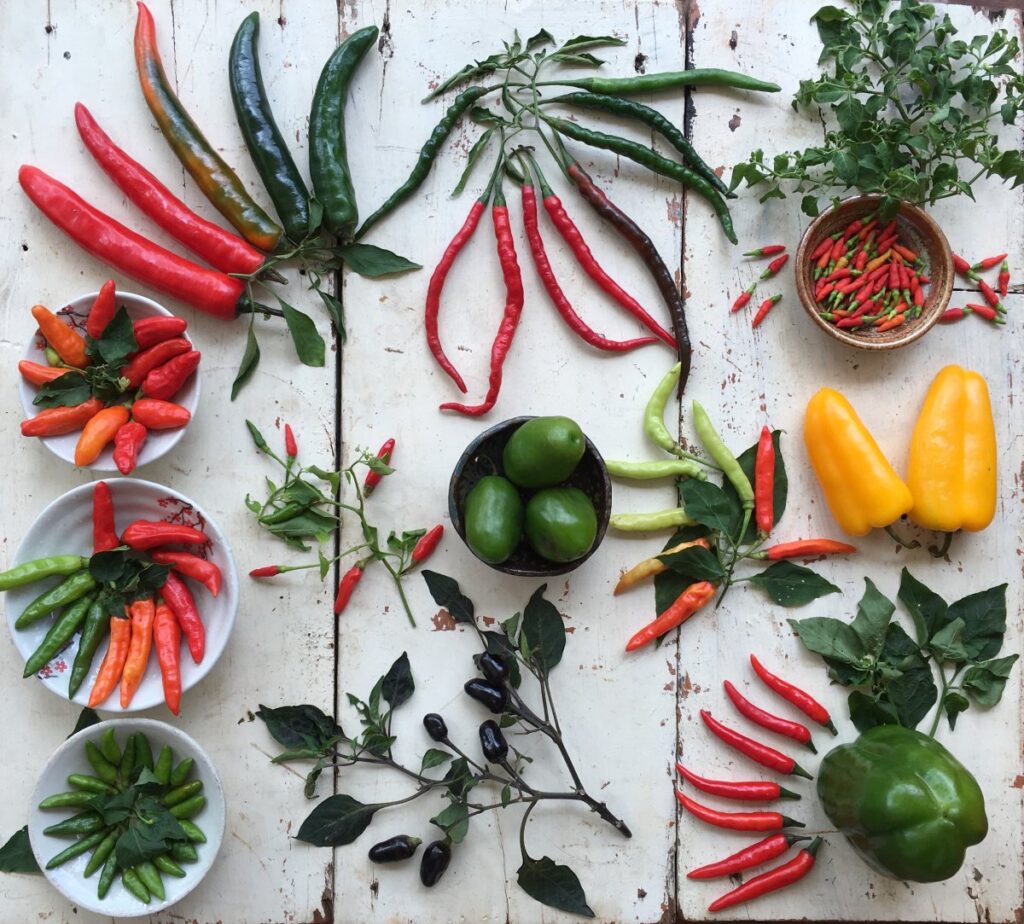
Chillies are central to Nusantara flavour building, contributing not only heat but also aroma, colour, and depth. Although introduced through global trade in the 16th century, earlier sources of heat already existed.
In Java, Madura, and Bali, fresh cabe jamu or tabia bun, the fresh form of long pepper, was traditionally used. When ripe, it offers a unique flavour described as strawberry-like with spicy heat, reflecting indigenous approaches to heat before modern chillies became widespread.
Today, Indonesia’s chilli diversity reflects varied landscapes and culinary traditions. In West Java, cabe gendot, often referred to as the Javanese habanero, delivers intense heat ranging from 100,000 to 350,000 Scoville Heat Units (SHU), while in Flores, chilli padi reaches similar heat levels, contributing sharp intensity to eastern Indonesian dishes. Kalimantan’s forest ecosystems produce wild chillies known as cabe hutan, including cabai Hiyung from South Kalimantan, which is reported to be up to 17 times hotter than regular chillies, making it one of Indonesia’s most potent local varieties. In Toraja, cabe katokkon — a round, aromatic chilli with heat levels reaching around 691,000 SHU, combining strong spiciness with fruity complexity. Cabe putih or cabe domba from Manado delivers heat of around 82,000 SHU. Meanwhile, the widely used cabai rawit (bird’s eye chilli), ranges from 50,000 to 225,000 SHU, depending on growing conditions and regional varieties.
Used fresh, crushed, sautéed, fermented, or made into sambal, chillies shape not only heat but also aroma, colour, and culinary identity. From indigenous long peppers to modern chilli diversity, the archipelago’s relationship with heat reflects adaptation, biodiversity, and evolving culinary traditions — another essential dimension of Nusantara’s flavour architecture.
Fresh Aromatic Base: The Foundation of Nusantara Flavour
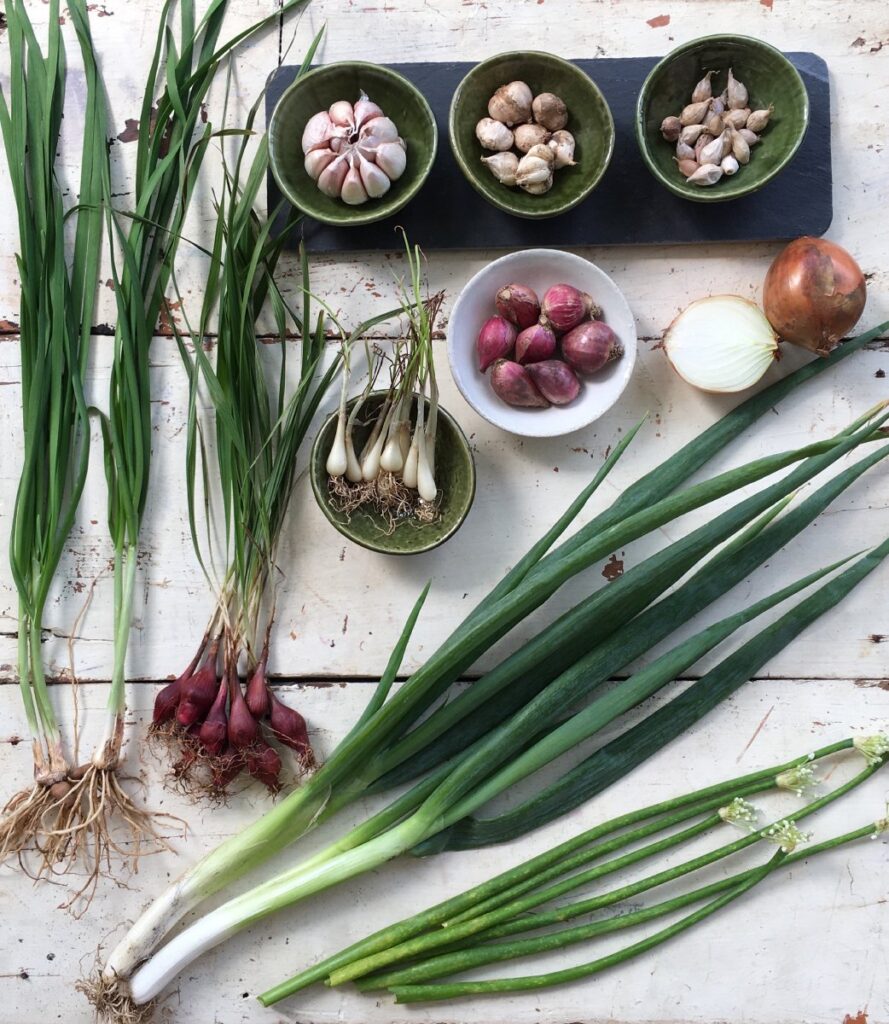
Before dried spices and aromatic herbs are added, many Nusantara dishes begin with a fresh aromatic base. These ingredients form the foundation of bumbu, creating the first layer of flavour that defines the character of a dish.
Shallots and garlic are the most widely used, forming the backbone of countless preparations across the archipelago. Onions, spring onions, and kucai (garlic chives) further contribute sweetness, sharpness, and freshness depending on the region and cooking method.
Indonesia’s biodiversity also offers lesser-known endemic allium varieties. Bawang Batak from North Sumatra adds distinctive pungency to regional dishes, while lokio — small wild shallots found in highland regions — provide a more delicate aroma. In eastern Indonesia, bawang Dayak, traditionally used both in cooking and herbal preparations, reflects the deep connection between food and medicinal knowledge.
Sourness: Brightness of the Tropical Archipelago
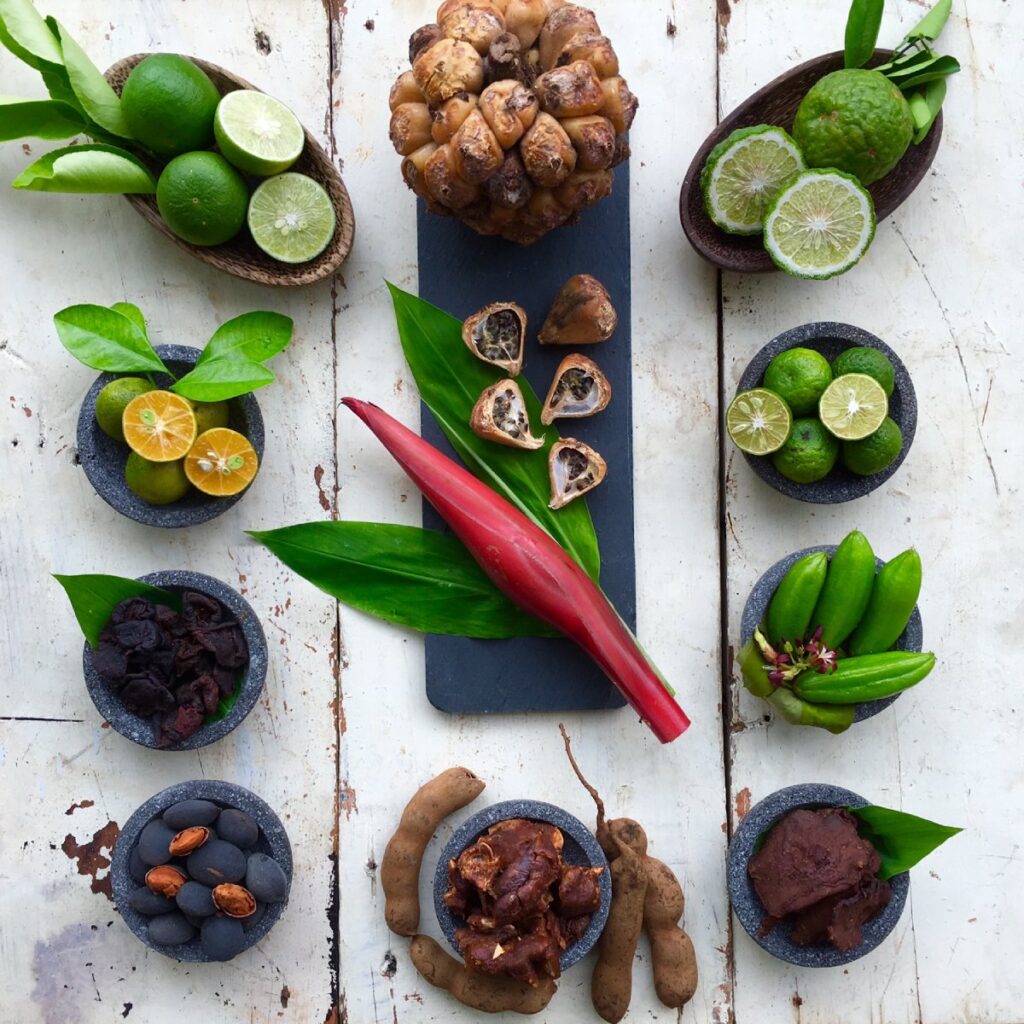
Sourness plays a defining role in Nusantara cuisine, balancing spices, fats, and coconut-rich dishes. Across the archipelago, souring agents reflect tropical abundance and ecological diversity.
Tamarind (asam jawa) is widely used across Java and Sumatra. Fermented sourness also plays an important role — asam sunti from Aceh and palm vinegars from aren or coconut provide deeper acidity.
In Sumatra, asam kandis offers mellow sourness, while asam gelugur delivers sharper citrus notes. Hyper-local ingredients such as asam galing from Muara Jambi and belimbing tanah add further diversity.
Torch ginger fruit (asam cikala), velvet tamarind (asam kranji), and belimbing wuluh contribute vibrant brightness. Citrus diversity — jeruk nipis, jeruk limo, jeruk purut, and lemon cui — further enhances seafood, sambals, and soups.
In Nusantara gastronomy, sourness is never singular: it can be fruity, fermented, herbal, or citrusy, reflecting biodiversity across landscapes.
Sweetness: Natural Sugars of the Archipelago
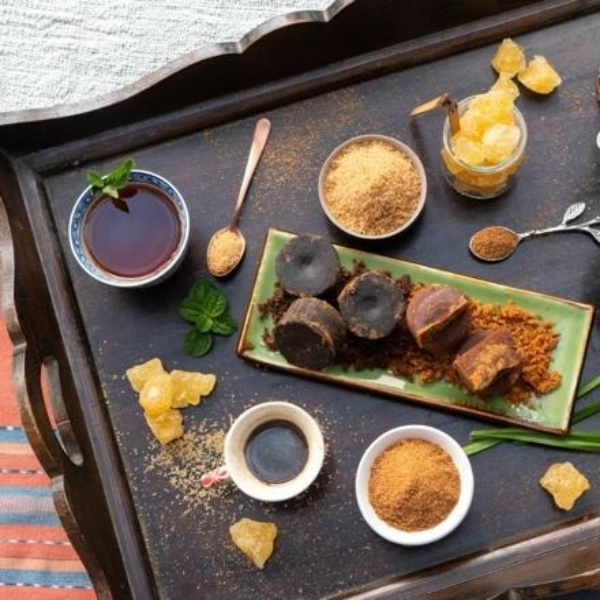
Sweetness in Nusantara cuisine emerges from diverse landscapes rather than refined sugar alone.
Coconut sugar, widely produced in lowland and coastal regions, offers gentle caramel sweetness suited for beverages, desserts, and savoury dishes. Forest-grown aren sugar provides deeper sweetness with smoky undertones shaped by traditional processing.
In drier landscapes, lontar sugar from East Nusa Tenggara delivers a more neutral sweetness compared to other palm-based sugars, ideal for all purpose culinary application. Recent development also include sorghum-based sugar, extracting the nectar from its stalk and processed into syrup or crystal sugar.
Mangrove ecosystems contribute nipa palm syrup, which offers subtle salty and umami notes. This distinctive profile makes it not only a versatile sweetener but also a promising gluten-free alternative for kecap manis (sweet soy).
Sugarcane also holds an important place in Nusantara’s traditional sweeteners. Believed to have originated in Papua, sugarcane spread across the archipelago through ancient trade routes and cultural exchange. Traditionally, sugarcane juice was slow-cooked and reduced into solid or liquid sweeteners, similar to the production of coconut and aren sugar.
These sweeteners demonstrate how geography shapes flavour, linking ecosystems to culinary identity.
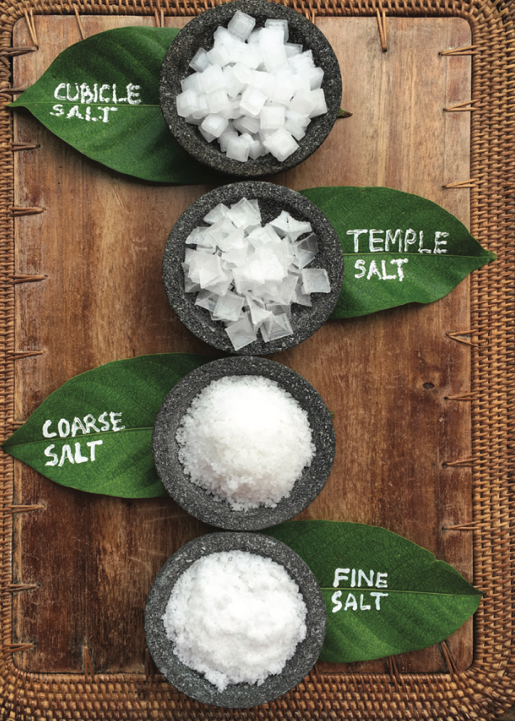
Salt & Umami: Mineral and Fermented Depths
Salt in Nusantara gastronomy reflects diverse landscapes. Coastal regions such as Bali, Madura, and Nusa Tenggara produce traditional sea salt shaped by local ecosystems. Inland varieties expand this diversity — Krayan mountain salt from North Kalimantan originates from highland springs, while Grobogan produces mineral-rich volcanic salt. In Papua’s highlands, communities create rare black salt from filtered plant ash.
Beyond mineral salts, fermentation builds umami. Terasi (shrimp paste) varies widely across regions — from Bangka Belitung’s clean profile to the deeper intensity of Cirebon and Sidoarjo, and maritime traditions in eastern Indonesia.
Plant-based umami builders also play an important role. Tempe semangit in Central Java adds pungent depth, while daun sengkubak and daun bekai from Kalimantan function as natural flavour enhancers. Vegan terasi from fermented kluwak further demonstrates biodiversity-driven umami.
Kecap manis, Indonesia’s iconic sweet soy sauce, combines fermented soybeans with palm sugar, creating a balance of sweetness, salinity, and umami that defines many Nusantara dishes.
Fat: Carriers of Aroma and Texture
Fats act as carriers of aroma, binders of spices, and creators of texture. Across the archipelago, fat sources reflect diverse ecosystems.
Coconut remains the most dominant, shaping dishes from Sumatra’s curries to eastern Indonesian stews. Beyond functionality, coconut contributes distinct flavour.
Forests also contribute unique fats. Illipe nut butter from Kalimantan and kenari nuts from Maluku provide richness rooted in local ecosystems. In Papua, buah merah produces a rich oil-like extract that functions similarly to coconut milk while contributing vibrant red colour and earthy taste.
Candlenut, though categorised as a spice, releases oils that bind and soften spice pastes. Animal fats vary regionally — beef fat in West Sumatra, pork fat in Bali, and fish oils in coastal communities.
Together, these fats shape texture, aroma, and mouthfeel, another dimension of Nusantara’s flavour biodiversity.
Biodiversity as the Future of Nusantara Gastronomy
The diversity of spices, herbs, souring agents, sweeteners, salts, and fats reveals the true wealth of Nusantara gastronomy. Beyond culinary elements, these ingredients are expressions of landscapes, ecosystems, and generations of knowledge.
This biodiversity is also increasingly relevant globally. Through Javara’s experience exporting Indonesian spices and herbs to countries across Europe, the Middle East, Asia, Australia, and the Americas, it becomes clear that although these ingredients are native to Indonesia, their applications extend far beyond Nusantara cuisine. Forest peppers, aromatic leaves, and palm sugars are now used across diverse culinary traditions and contemporary gastronomy.
History offers precedent. Nutmeg and clove, once native only to Maluku, shaped global culinary traditions, from European baking to Middle Eastern spice blends. Today, Indonesia’s broader biodiversity of flavour builders holds similar potential.
As global food systems face climate and sustainability challenges, this biodiversity also offers resilience. Many of these ingredients thrive in diverse ecosystems while supporting smallholder farmers and regenerative landscapes.
Nusantara gastronomy, therefore, is not only a heritage of the past but a pathway forward, rooted in biodiversity, shaped by culture, and increasingly relevant to the global table.
Read Ibu Helianti’s other features on our website for free:
Culture: The Living Intelligence that Translates Nature into Taste
Archipelagic Landscapes of Taste: Indonesia’s Culinary Advantage