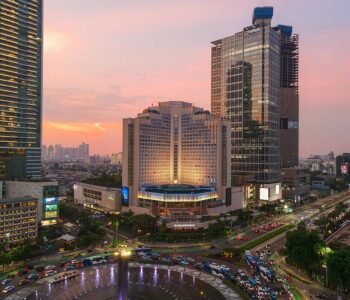



Indonesian photographers have turned their lenses toward the communities of Jakarta’s coastals, capturing powerful visual narratives that reveal the day-to-day realities of life on the frontlines. Their images portray a complex story of resilience, vulnerability, and the evolving relationship between people and their shifting environment.
Indonesia’s coastline extends for over 54,716 km—making it the second longest in the world after Canada (202,080 km). Over 60% of Indonesia’s population lives along the coast. Yet, coastal life is becoming increasingly uncertain: rising seas, sinking land, erosion, and flooding are amongst the risks, and whilst they are sudden catastrophes, they are all impending dangers, slowly and inevitably encroaching.
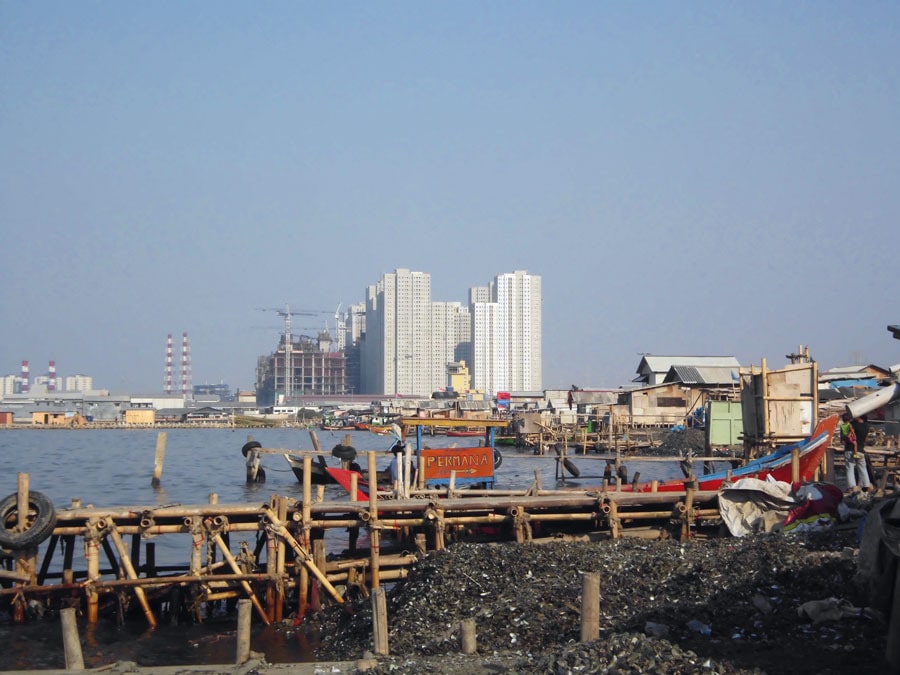
Jakarta itself is highly vulnerable to climate change due to its geographical location. Situated on the coast and intersected by large river estuaries, Jakarta’s coastals face growing environmental challenges, compounded by urban planning that often fails to align with the city’s natural conditions. Its coastline along Jakarta Bay stretches for 46,2 kilometers, encompassing critical coastal areas and river estuaries. The city, which is home to over 10 million people, also experiences significant coastal erosion and sinking, with some areas sinking by as much as 25cm per year.
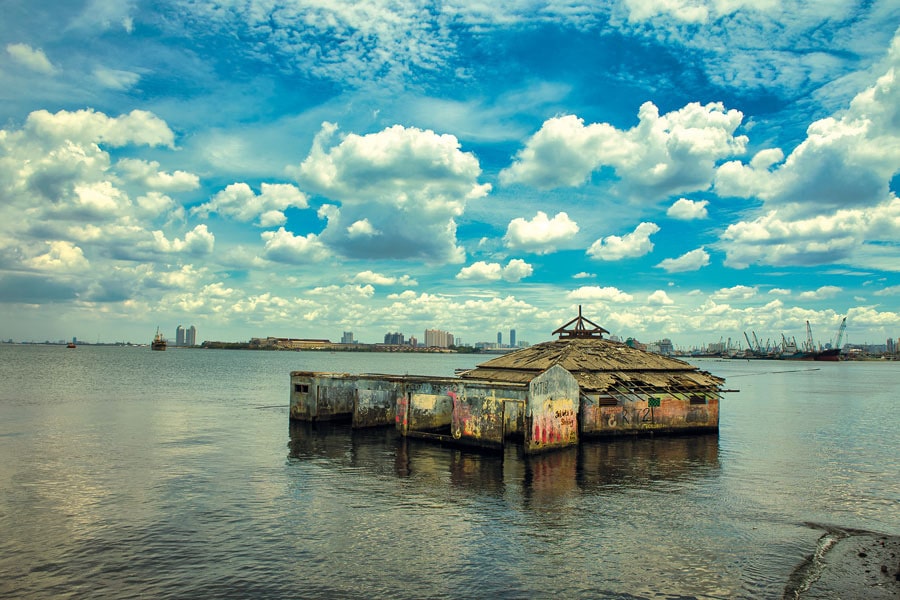
The prediction that Jakarta will sink in the coming decades is not merely distant speculation. It’s already unfolding. A poignant example is the Wal Adhuna Mosque in Muara Baru, Penjaringan, North Jakarta. Photographer Dikye Ariani has documented the mosque’s haunting condition, turning it into a visual testimony of the city’s gradual submersion. Once a vibrant place of worship, the mosque now lies behind a massive retaining wall near Sunda Kelapa harbour, submerged for more than 15 years. It stands as a quiet witness to the creeping advance of the sea and the slow sinking of Jakarta’s coastals in the north.
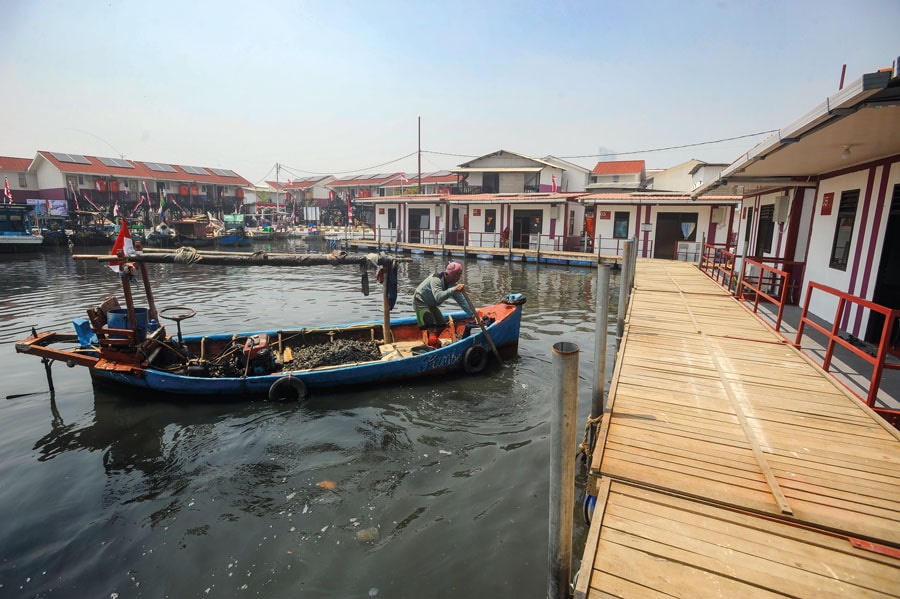
Nafiah Solikhah and Arie Basuki once stood on ground carpeted with thousands of discarded green mussel shells. Kampung Kerang Hijau (literally “green mussel village”) is a hub for mussel processing along Jakarta’s northern coastals, nestled within the Muara Angke area. It is here that floating houses began to appear, hastily constructed during the 2024 presidential campaign under orders from the Minister of Defense. These structures, situated on the edge of the village, arrived without clear land rights for the residents who were expected to live in them. Just inland, however, a different story unfolds. The long-established community of Muara Angke has been adapting quietly for decades. Their homes, built by hand and shaped by lived experience, now remain dry even as tidal floods regularly inundate the surrounding streets. Through Arie Basuki’s lens, this contrast comes to life. His photographs reveal a landscape not guided by official master plans, but sculpted by resilience—born from necessity, deep-rooted commitment, and the steady rhythm of the sea.
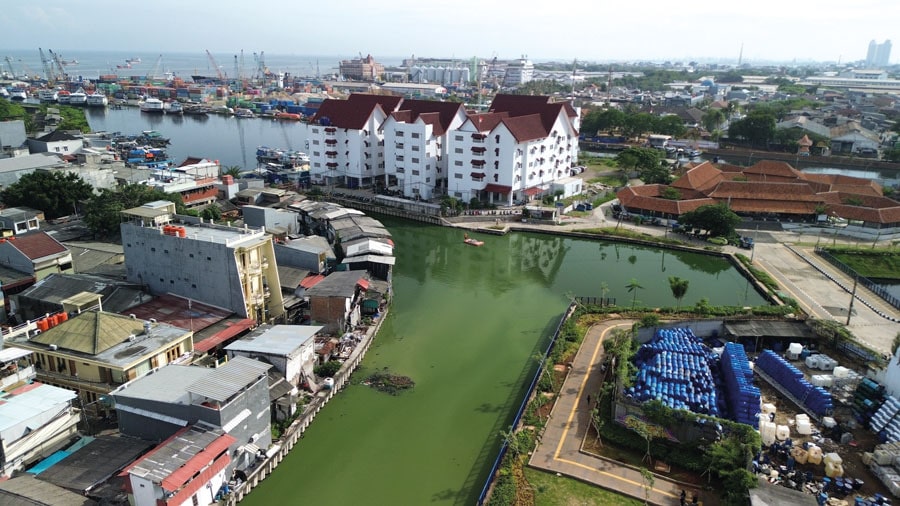
Further northeast, Kampung Susun Akuarium offers another kind of response. Once evicted under the narrative of flood control, the kampung was rebuilt through collective struggle and political negotiation, and co-designed with architects, activists, and allies. In this process, they transformed from eviction victims into survivors. Yuan Adriles tries to strengthen through his pictures that the kampung stands not only as a home, but as proof of what is possible. In 2024, the kampung received the Gold Medal of World Habitat Award for its model of dignified, community-led housing.
But not all struggles find recognition. In Kampung Dadap, technically in the Banten province but just a stone’s throw from Jakarta’s PIK 2 reclamation zone, a massive concrete embankment now cuts through the coastline. Part of the National Capital Integrated Coastal Development (NCICD) project, praised as a national infrastructure yet criticised globally, it displaces as it protects. In 2022, the Intergovernmental Panel on Climate Change (IPCC) classified the NCICD project as “maladaptive” in its Sixth Assessment Report on Impacts, Adaptation, and Vulnerability. While billed as climate adaptation, it leaves Jakarta’s community coastals like Dadap vulnerable to eviction in the name of development. Photographer Aan Melliana has closely observed the lives unfolding along this contested shore. Her images reveal a community where productivity and danger coexist. Despite it all, the people of Dadap look toward the future with quiet determination.
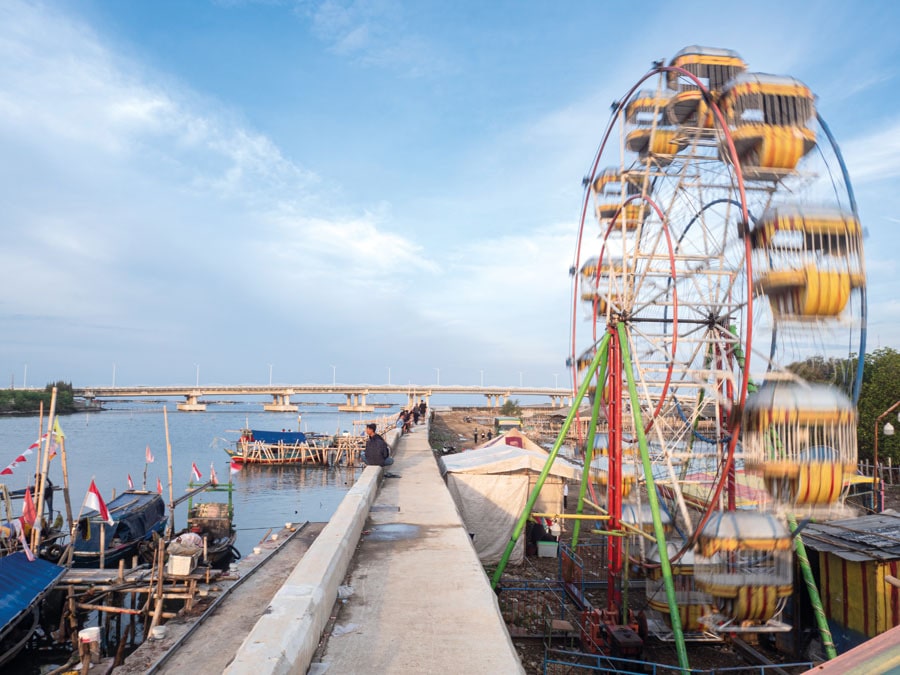
Meanwhile, photographer Abyan Madani shared his pictures from the labyrinth of Jakarta’s waterways; a quiet force of laborers out of sight. Clad in blue uniforms, the Pasukan Biru (Jakarta’s “blue troops”) descend into canals to dredge sediment, remove waste, and keep water flowing. Jakarta’s resilience is built not only on walls and pumps, but on the physical efforts of those who wade knee-deep in its infrastructure each day. While large-scale flood projects and engineering solutions dominate public attention, it is this relentless, manual work that holds a system together.
That work also takes place within fragile urban sanitation. For example, only two percent of households in Jakarta are connected to a centralised sewerage system (World Bank, 2013). Most rely on septic tanks, many of which leak or are rarely desludged. Even when desludged, waste often bypasses treatment.
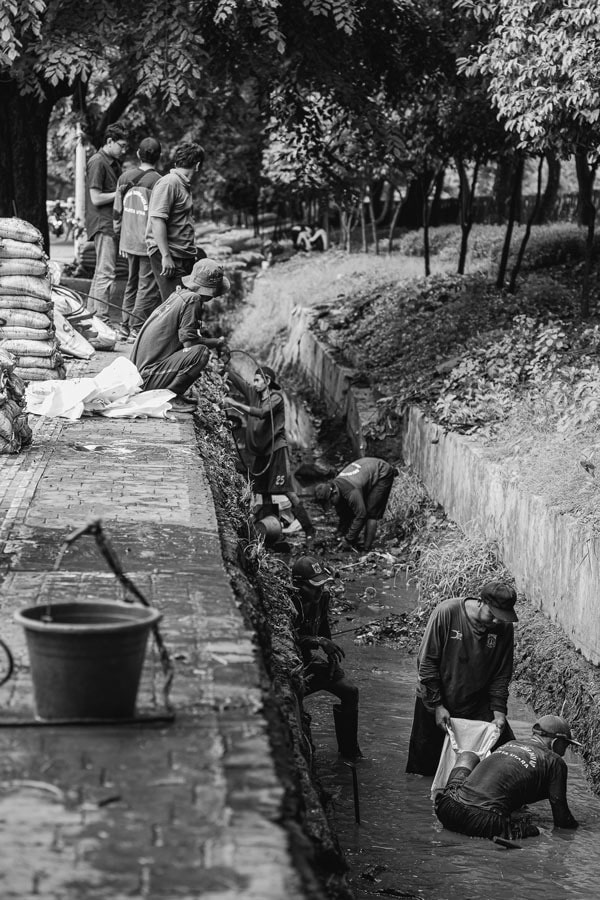
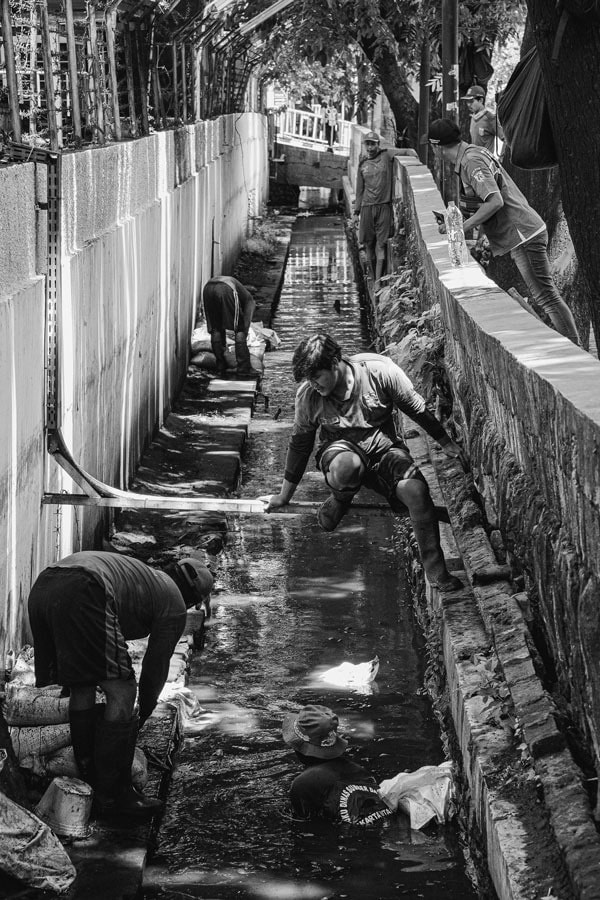
Day in and day out, Jakarta’s Pasukan Biru clears clogged drains and guards water gates, unsung heroes in the fight against urban flooding. Photo by Abyan Madan.
The overflow, both literal and systemic, ends up in canals and sewers, where the Pasukan Biru are left to manage its consequences. As sociologist AbdouMaliq Simone writes, “people are infrastructure.” In cities where formal systems are insufficient, it is human presence, cooperation, and improvisation that keep things running. The Pasukan Biru embody this principle: they are not just maintenance workers funded by people’s money, but living in parts of Jakarta’s urban metabolism. True climate adaptation cannot rely on physical infrastructure alone. It must also recognise the knowledge and labor of those on the frontlines. To live with water, Jakarta must first acknowledge those who live in it—knee-deep, every day, keeping the city from drowning.
The photographers’ works were brought together in the exhibition, Living at the Urban Seafront, held at the Bremen Center for Building Culture in Germany from 14 March to 30 April 2025. The exhibition was also presented at the Goethe-Institut Jakarta from 6 May to 1 June 2025, as part of the Goethe-Haus Foyer programme.