


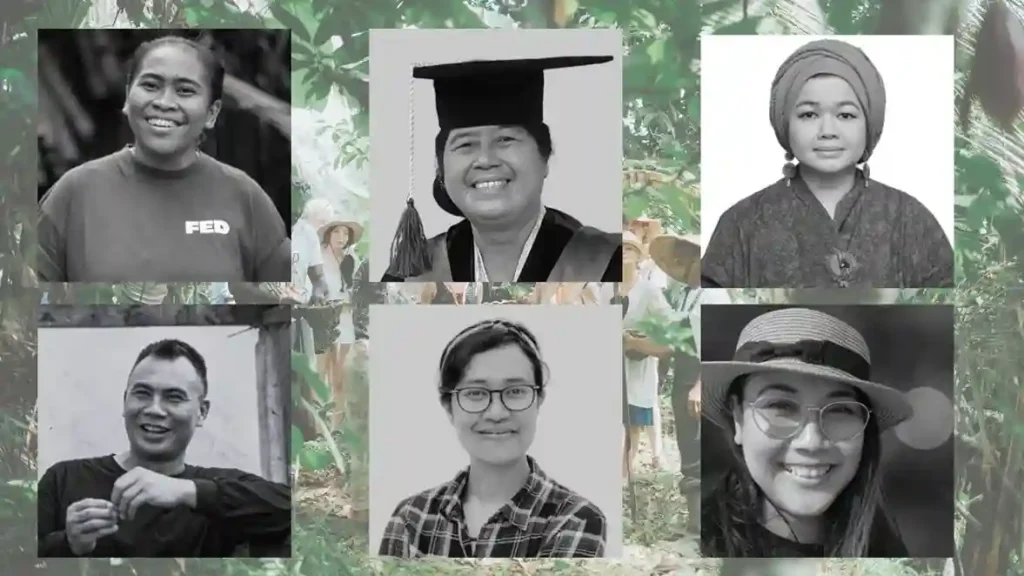
Across Indonesia’s vast and varied archipelago, there are those protecting and nurturing the nation’s natural environment. From rice paddies to coffee plantations, cacao groves, and the blue expanse of coastal waters, this protection is being led by farmers, researchers, entrepreneurs, and cultural advocates who understand that food is not simply sustenance. It is heritage, identity, and the thread that connects a community to its land.
This May, some of these remarkable individuals will gather in Ubud for one of Southeast Asia’s most celebrated culinary events. The Ubud Food Festival 2026, running from 28 to 31 May, has placed these everyday heroes at the centre of the conversation with its theme: Farmers: Guardians of the Land and Sea. The festival will bring together chefs, growers, artisans, and food lovers for four days of food talks, cooking shows, food tours, and extraordinary dining experiences, with its heart at Taman Kuliner.
“We are placing farmers firmly at the centre of the table,” says Festival Founder and Director Janet DeNeefe. “They are not simply suppliers. They are protectors of biodiversity, carriers of knowledge and custodians of culture. Every dish begins with their work, their care and their commitment to the land and sea.”
Here are five Indonesians heading to Ubud who embody that spirit — each doing their part, in their own way, to protect and preserve the country’s agricultural and culinary future.
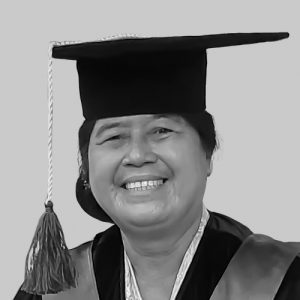
Prof. Dr. Ni Luh Kartini: The Soil Scientist Who Grew Up in the Fields
Long before she held a professorial title, Ni Luh Kartini was a girl from Bulian Village in North Bali, raised in a farming community where the soil beneath her feet was not just dirt — it was life. That childhood connection to the land would go on to shape more than three decades of pioneering work in organic agriculture and sustainable food systems.
As a lecturer and researcher at Udayana University, Prof. Kartini has dedicated her career to understanding and restoring soil health. Her research spans soil science, organic fertilisers, and beneficial microorganisms — the invisible ecosystem that makes productive farming possible. She developed the SaBiCaITaLA model, an approach that integrates sustainable practices into farming communities, and has championed the establishment of organic farming villages and agro-tourism initiatives across Bali.
What sets Prof. Kartini apart is that her work has never stayed within the walls of the university. She works directly alongside farming communities, translating research into real-world solutions. Her contributions have been recognised with the “Women Who Inspire Women” Award in 2010, the Environmental Pioneer Award from the Indonesian Ministry of Environment in 2017, and the Bali Mandara Parama Nugraha Award that same year.
At Ubud Food Festival 2026, her presence will serve as a reminder that healthy soil is the foundation of everything on our plates.
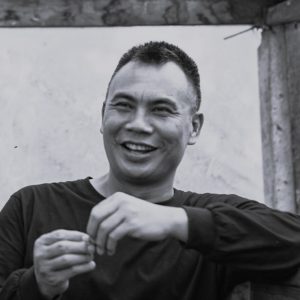
I Wayan Arca Bertayasa: From Cocktail Shaker to Coffee Farm
There are not many coffee producers who have also shaped cocktail menus in Hong Kong. But I Wayan Arca Bertayasa has always moved between worlds — and it is precisely that breadth of experience that makes his coffee so distinctive.
Arca began his career in hospitality, working as a mixologist alongside Scottish chef Will Meyrick at well-known Bali establishments including Sarong, Mama San, and Hujan Locale. He honed his craft across Southeast Asia and beyond, developing a refined palate and a deep understanding of how quality ingredients can elevate an experience.
In 2010, he made the decision to return to his village and take over his father’s coffee legacy.
The result was Ulian, a brand built on high-quality, fully washed Kintamani coffee beans, grown in the cool volcanic highlands of Bali. Arca brought his hospitality instincts with him — understanding that storytelling, presentation, and community networks were just as important as the beans themselves. As one of the few English speakers in his village, he became a connector, building relationships within the wider coffee community and advocating for sustainable production practices.
At the Ubud Food Festival, Arca will lead the Arca Coffee and Kintamani Farm Tour, taking visitors on a sensory journey through the coffee and citrus orchards that thrive in Bali’s volcanic highlands — a chance to understand the land that gives the coffee its character.
Helianti Hilman: Reconnecting Smallholders to the World
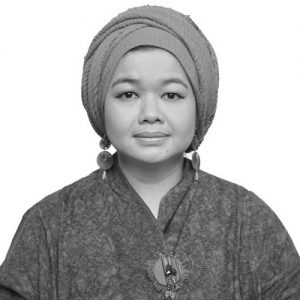
When Helianti Hilman founded JAVARA in 2008, she had a clear vision: Indonesia’s extraordinary biodiversity — its thousands of indigenous ingredients, ancient grains, and forgotten flavours — deserved a place not just on local tables, but on the world stage. More importantly, the farmers who cultivated these treasures deserved to benefit from them.
JAVARA became the bridge. Through the organisation, thousands of smallholder farmers and food artisans from across the archipelago gained access to national and global markets, selling biodiversity-based products that tell the story of where they come from.
It was a model that put culture and ecology at the centre of commerce.
Helianti did not stop there. She founded Sekolah Seniman Pangan to nurture grassroots food entrepreneurs, and later initiated Pasti Collective, a multistakeholder co-operative that allows ethical, biocultural food enterprises to grow through shared resources and market access. Her most recent endeavour, community-based Bioculture Gastronomy, goes a step further — curating immersive food experiences that celebrate biodiversity, seasonality, and the cultural landscapes of Indonesia’s many regions. She writes for NOW! Jakarta with a dedicated column, Nusa Gastronomy.
Her work has attracted international recognition from the Skoll Foundation and the Schwab Foundation, and coverage from global media including Channel News Asia, DW, NHK, and The Guardian. At the Ubud Food Festival, she brings a vision of Indonesian food that is as forward-looking as it is deeply rooted.
Agung Widyastuti: Growing Chocolate and Empowering Farmers
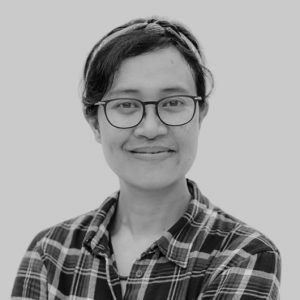
Bali may be famous for its rice terraces and tropical fruits, but it is also home to some of the finest cacao in the world. Agung Widyastuti has spent more than a decade making sure that is no longer a secret.
As Director of Yayasan Kalimajari, a Bali-based NGO with reach stretching from Aceh to Papua, Agung has led sustainable cocoa and seaweed programmes that combine ecological practice with genuine community development. Since 2011, she has helmed the Sustainable Cocoa Programme in Jembrana Regency, applying a Market System Development approach to strengthen the entire cocoa ecosystem — from what happens in the soil to how the product reaches international buyers.
Central to her work is the empowerment of farmers who have historically been marginalised in the global supply chain — particularly women and young farmers.
Through her collaboration with Koperasi Kakao Kerta Semaya Samaniya (KSS), she has helped producers improve fermentation techniques to meet international standards, and supported the cooperative in earning a Silver Award at Cacao of Excellence in Amsterdam in 2023. She has spoken at the International Symposium on Cocoa Research in Montpellier, France, and initiated the Bali International Cocoa Festival, placing the island on the global map for premium, community-grown cacao.

Meilati Batubara: The Keeper of Culinary Memory
Indonesia is home to hundreds of distinct regional cuisines, each carrying centuries of history in its spices, techniques, and traditions. Meilati ‘Mei’ Batubara has dedicated her career to making sure those stories are not lost.
As Executive Director of Yayasan Gastronomi NUSA Indonesia and co-founder of Gastronomi Indonesia NUSA, Mei champions sustainable food practices and equitable food policies while conducting deep research into indigenous recipes and ingredients. Her “Pusaka Rasa Nusantara” project has been a landmark effort to document regional food traditions and the cultural stories woven through them — a living archive of Indonesia’s culinary identity.
Her work is not purely academic.
Through Toko RASANUSA, Mei actively promotes Indonesian artisanal products, creating market pathways for producers of traditional goods. Through SOKOLA RASA, she develops culinary education programmes that connect the next generation to the knowledge of their ancestors. At the Ubud Food Festival, she will explore the humble banana through the session Banana Across the Archipelago: One Ingredient, Many Stories — a fitting illustration of how a single ingredient can carry an entire world of meaning.
Made Masak: Food Forager and Nomadic Chef
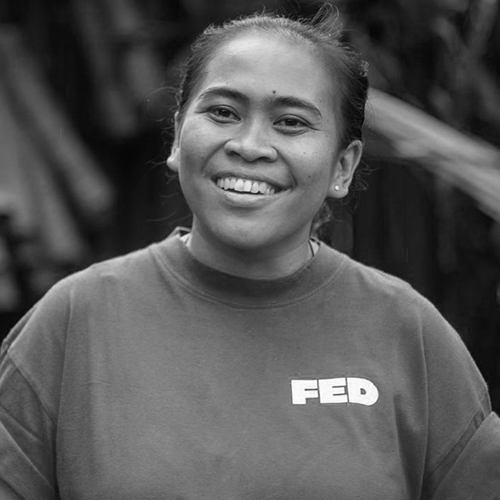
Dewa Ayu Made, known as Made Masak, is a Balinese nomadic chef who began her career with a deep passion for food forests, aiming to reconnect people with their food sources and nature.
She believes that, as humans, we are part of nature, yet often forget this connection. Since then, Made has focused on sharing her greatest teacher, nature, encouraging others to live in harmony with Mother Earth, which led her to become a nomadic chef and forager. Her recent work includes a collaboration with Dome at Potato Head, where she led a talk on foraging and ancestral food forests, hosted a foraging dinner, and conducted training on local plants with the team.
At Ubud Food Festival 2026 she’ll be leading a Food Foraging Tour, and speaking on a panel on Indonesian cuisine at Bumi Kinar.
The Guardians Gather in Ubud
What connects these five individuals is a belief that the way a society grows, harvests, trades, and eats reflects its deepest values. Whether it is a professor restoring the health of Balinese soil, an entrepreneur opening global markets to smallholder farmers, a coffee producer honouring his father’s legacy, a cocoa advocate lifting women farmers into the global value chain, or a researcher preserving the recipes of a thousand islands – each is, in their own way, a guardian.
The Ubud Food Festival 2026 offers a rare opportunity to hear these voices together, to eat the food they represent, and to understand what is at stake when the knowledge, the land, and the traditions they protect are left unguarded. From 28 to 31 May, Ubud becomes not just a destination for food lovers, but a gathering place for those who believe that the future of what we eat begins with the people who tend the earth.
For more information, visit ubudfoodfestival.com.